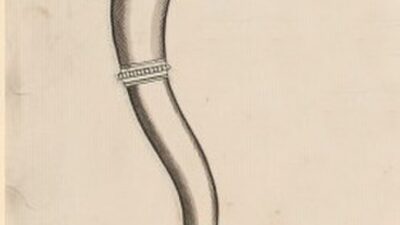
शास्त्र विंग · वाद्य-पट्टिका · Instrument Plate
रणसिंगा
Ransingha
अन्य नामनरसिंहा · नरसिंगा · रामसिंगा · रणसींगा
परिचय
Overviewरणसिंगा तांबे की दो अर्धचंद्राकार नलियों से बनी 'S' आकार की गरजती तुरही है — सुषिर वर्ग का संकेत-वाद्य, जिसमें न छेद, न वाल्व, न तार। कभी युद्धघोष का प्रतीक रही यह 'युद्ध का सींग' आज कुमाऊँ-गढ़वाल की छोलिया नृत्य मंडली, हिमाचल की देवता-यात्रा, नेपाल के पंचे बाजा और सिख जुलूसों में गूँजती है।
अंग्रेज़ी में पढ़ें · Read in English
The ransingha is an S-shaped blaring trumpet made from two crescent copper tubes — a Sushira signalling instrument with no holes, no valves and no strings. Once a symbol of the war-cry, this 'war horn' today rings out in the Chholiya-dance troupes of Kumaon-Garhwal, the deity-processions of Himachal, Nepal's Panche Baja and Sikh parades.
वर्गीकरण
ClassificationNatya Shastra Category
सुषिर (Sushira - wind instruments)
रणसिंगा सुषिर वर्ग का वाद्य है — इसमें ध्वनि हवा के प्रवाह से उत्पन्न होती है। बजाने वाला होंठों को कसकर धातु के मुखनाल में फूँक मारता है, और होंठों के कंपन से नाद उत्पन्न होता है। इसमें न कोई छेद होता है और न कोई वाल्व — यह एक 'प्राकृतिक तुरही' (natural trumpet) है जो केवल कुछ गिने-चुने स्वर (हार्मोनिक्स) ही निकाल सकती है।
The ransingha belongs to the Sushira (wind/aerophone) category — sound is produced by air. The player buzzes tightly-pursed lips into a metal mouthpiece, and the vibration of the lips creates the tone. It has no finger-holes and no valves — it is a 'natural trumpet' (lip-reed aerophone) capable of sounding only a few fixed harmonic pitches.
Western Category
Natural (valveless) trumpet — lip-reed aerophone
Western Family
Brass / labrosone family (like the alphorn, herald's trumpet or Tibetan dungchen — a signalling horn rather than a melodic instrument)
Sub Classification
बनावट
PhysicalDescription Hindi
रणसिंगा तांबे या पीतल (तांबा-मिश्र धातु) से बना एक लंबा, घुमावदार तुरही-वाद्य है। इसकी सबसे विशिष्ट पहचान इसकी दो अर्धचंद्राकार धातु की नलियाँ हैं जो जुड़कर अंग्रेज़ी के 'S' अक्षर जैसी आकृति बनाती हैं; इन्हें अलग-अलग जोड़कर अर्धचंद्र (C) आकार में भी बजाया जा सकता है। एक सिरे पर पतला मुखनाल होता है जहाँ से फूँका जाता है और दूसरे सिरे पर चौड़ा घंटीनुमा मुँह (bell) होता है जहाँ से गरजती ध्वनि निकलती है।
Description English
The ransingha is a long, curved copper (or copper-alloy/brass) trumpet. Its most distinctive feature is a pair of crescent-shaped metal tubes joined to form an 'S' shape; the sections can be reassembled into a crescent (C) configuration. A narrow mouthpiece at one end is blown into, while the other end flares into a wide bell from which the powerful, resonant blast emerges.
Body
Two curved tubes joined into an S-shape (can be reconfigured into a crescent/C)
दो घुमावदार नलियाँ जुड़कर 'S' आकृति (अर्धचंद्र 'C' में भी परिवर्तनीय)
Copper or copper-alloy / brass sheet, hammered and joined; the related 'ramsinga' uses four thin telescoping pipes fitting one inside another
तांबा या तांबा-मिश्र धातु / पीतल की चादर, हथौड़े से गढ़ी और जोड़ी हुई; समरूप 'रामसिंगा' में चार पतली नलियाँ एक के भीतर एक फिट होती हैं
Varies widely — roughly 60-140 (many are collapsible/telescoping for transport)
The conical metal tubing itself acts as the resonating air-column, ending in a flared bell that projects the sound over long distances
Strings
None — the ransingha is a wind instrument with no strings
None
None — though sustained blown notes themselves act as a droning fanfare
Bow
लागू नहीं (वायु वाद्य)
Not applicable (wind instrument)
Not applicable
0
The instrument is sounded by breath and lips, not a bow
Tuning Pegs
लागू नहीं
Not applicable
No pegs — the ransingha has no strings to tune. The few available pitches are the natural harmonics of the fixed air column.
Bridge
लागू नहीं
Not applicable
No bridge on a wind instrument
Not applicable
Frets
रणसिंगा में न फ्रेट होते हैं, न छेद और न वाल्व। वादक केवल अपने होंठों के दबाव व फूँक की तीव्रता बदलकर हार्मोनिक श्रेणी के दो-तीन स्वर ही निकाल पाता है — इसीलिए यह मधुर राग बजाने का नहीं, बल्कि घोषणा एवं गर्जन का वाद्य है।
The ransingha has no frets, no finger-holes and no valves. By varying lip pressure and breath intensity the player can only sound two or three notes of the harmonic series — which is why it is an instrument of announcement and thunderous fanfare, not of melodic raga elaboration.
ध्वनि-चरित्र
SoundTonal Character Hindi
रणसिंगा की ध्वनि गहरी, भारी और दूर तक गूँजने वाली है — एक वीर, गर्जनशील नाद जो पहाड़ी घाटियों में मीलों तक सुनाई देता है। इसका स्वर उत्सव और युद्ध दोनों का उद्घोष करता है; यह मन में साहस, श्रद्धा और उत्सव का भाव जगाता है।
Tonal Character English
The ransingha's sound is deep, heavy and far-carrying — a heroic, blaring note that echoes for miles across Himalayan valleys. Its tone heralds both festival and battle; it stirs courage, reverence and celebration in the listener.
Timbre
Brassy, raw, powerful and slightly buzzing — a commanding open blast rather than a refined melodic tone
Range
Very limited — only a few fixed harmonic pitches; used for sustained calls and rhythmic blasts, not scalar melody
Dynamic Range
Loud to very loud by design — built to signal and project across open, hilly terrain without amplification
Techniques
सुनने का मार्गदर्शन
The Listening Guideरणसिंगा को अकेली धुन की तरह नहीं, उसके परिवेश में सुनिए। छोलिया नृत्य देखिए — ढोल-दमाऊँ की थाप पर दो रणसिंगा एक-दूसरे को उत्तर देते हैं और तलवारें चमकती हैं। यह वाद्य स्वर नहीं, संकेत देता है — आगमन, शौर्य और मंगल का। इसकी गर्जना में पूरा पहाड़ बोलता है।
अंग्रेज़ी में पढ़ें · Read in English
Do not listen to the ransingha as a 'tune' on its own — hear it in its setting. Watch a Chholiya-dance video where two ransinghas answer each other over the beat of dhol and damau while swords flash. Notice that this instrument signals rather than melodises — announcing arrival, valour, auspiciousness. Its blast contains the whole drama of the mountains.
अन्य विवरण
More DetailsTimbre
Brassy, raw, powerful and slightly buzzing — a commanding open blast rather than a refined melodic tone
रोचक तथ्य
Margin Notesयुद्ध का सींग — रणसिंगा का नाम ही इसका इतिहास है — 'रण' (युद्ध) और 'सिंगा' (सींग)। प्राचीन युद्धों में इसकी गर्जना सेना को सचेत करती, आक्रमण का संकेत देती और विजय की घोषणा करती थी। आग्नेयास्त्रों के आने के बाद इसकी सामरिक भूमिका समाप्त हो गई, पर लोक-परंपरा में यह जीवित रहा।
The name ransingha is its history — 'ran' (war) and 'singa' (horn). In ancient battles its blast alerted troops, signalled attack and proclaimed victory. Firearms ended its martial role, but folk tradition kept it alive.
छोलिया नृत्य की जान — उत्तराखंड के प्रसिद्ध छोलिया (छलिया) तलवार-नृत्य में रणसिंगा प्रमुख वाद्य है। ढोल, दमाऊँ और नगाड़े की थाप पर रणसिंगा की ललकार पर नर्तक तलवार और ढाल के साथ युद्ध-नृत्य करते हैं — यह प्रायः विवाह और शुभ जुलूसों की शोभा बढ़ाता है।
In Uttarakhand's famous Chholiya (Chhaliya) sword-dance the ransingha is a lead instrument. Over the beat of dhol, damau and nagara, dancers perform a mock battle with sword and shield to the horn's call — often gracing weddings and auspicious processions.
नेपाल का पंचे बाजा — नेपाल में 'नरसिंगा' पंचे बाजा (पाँच वाद्यों का समूह) और दमाई बाजा का अंग है, जिसे परंपरागत रूप से दमाई समुदाय के वादक विवाह और मांगलिक अवसरों पर बजाते हैं। वहाँ इसका 'C' आकार का रूप विशेष प्रचलित है।
In Nepal the 'narsingha' is part of the Panche Baja (five-instrument ensemble) and Damai Baja, traditionally played by Damai-community musicians at weddings and auspicious occasions. Its C-shaped form is especially common there.
नरसिंह अवतार से नाता — एक व्युत्पत्ति के अनुसार 'नरसिंहा' नाम भगवान विष्णु के 'नरसिंह' (आधा मनुष्य–आधा सिंह) अवतार से जुड़ा है, जिससे इसे शक्ति और रक्षा का प्रतीक माना जाता है। इसी कारण यह मंदिर-यात्राओं और धार्मिक जुलूसों में पवित्र वाद्य के रूप में गूँजता है।
By one etymology the name 'Narsingha' is linked to Vishnu's 'Narasimha' (half-man, half-lion) avatar, making it a symbol of power and protection. For this reason it sounds as a sacred instrument in temple-processions and religious parades.
सवाल-जवाब
Questions & Answersरणसिंगा क्या है?
रणसिंगा (नरसिंहा) तांबे या पीतल से बना एक लंबा घुमावदार तुरही-वाद्य है, जिसकी दो अर्धचंद्राकार नलियाँ जुड़कर 'S' आकृति बनाती हैं। यह सुषिर (वायु) वर्ग का संकेत-वाद्य है जो प्राचीन काल में युद्ध की घोषणा और आज लोक-अनुष्ठानों में बजता है।
रणसिंगा का अर्थ क्या है?
'रणसिंगा' दो शब्दों से बना है — 'रण' यानी युद्ध और 'सिंगा/शृंग' यानी सींग। इसका अर्थ है 'युद्ध का सींग', क्योंकि प्राचीन काल में इसे युद्ध का संकेत देने के लिए फूँका जाता था।
रणसिंगा कहाँ बजाया जाता है?
रणसिंगा उत्तराखंड (कुमाऊँ-गढ़वाल), हिमाचल प्रदेश, नेपाल और दक्षिणी बिहार में बजाया जाता है। यह छोलिया तलवार-नृत्य, मंदिर की देवता-यात्राओं, नेपाल के पंचे बाजा और सिख धार्मिक जुलूसों का प्रमुख वाद्य है।
क्या रणसिंगा पर राग बजाया जा सकता है?
नहीं। रणसिंगा में न छेद होते हैं, न वाल्व — यह केवल कुछ हार्मोनिक स्वर ही निकाल सकता है। इसलिए यह मधुर राग-विस्तार का नहीं, बल्कि घोषणा, गर्जन और वीर-भाव के उद्घोष का वाद्य है।
रणसिंगा और नरसिंहा में क्या अंतर है?
ये एक ही वाद्य के अलग-अलग नाम हैं। 'रणसिंगा' नाम इसके युद्ध-संकेत रूप ('रण' = युद्ध) पर जोर देता है, जबकि 'नरसिंहा/नरसिंगा' नाम को भगवान विष्णु के नरसिंह अवतार से जोड़ा जाता है। 'रामसिंगा' इसका समरूप संस्करण है।
नमूना-पट्टी
The Specimen Table| नाम | रणसिंगा · Ransingha |
|---|---|
| अन्य नाम | नरसिंहा · नरसिंगा · रामसिंगा · रणसींगा · Narsingha / Narsinga · Ramsinga |
| प्रकार | वाद्य · Instruments |
साझा कीजिए · Share this Plate