शास्त्र विंग · वाद्य-पट्टिका · Instrument Plate
पुल्लांगुष़ल
Pullanguzhal
अन्य नामपुल्लांकुष़ल (तमिल वर्तनी) · வேணு / Venu (संस्कृत नाम) · कुष़ल / Kuzhal (लघु तमिल नाम) · ओडकुष़ल / Oodakuzhal (मलयालम)
परिचय
Overviewपुल्लांगुष़ल दक्षिण भारत की आड़ी बाँस-वंशी है — वेणु और कुष़ल का तमिल नाम, कृष्ण की मुरली का सजीव रूप। बिना चाबी और तार वाली यह खोखली नली कर्नाटक संगीत में मानव-कंठ के सबसे निकट मानी जाती है। सारभा शास्त्री ने इसे कच्चेरी मंच पर प्रतिष्ठित किया और 'फ़्ल्यूट माली' टी. आर. महालिंगम ने गमक-प्रधान गायन-शैली गढ़कर सिद्ध किया कि बाँस भी गा सकता है; आज शशांक और कुडमालूर जनार्दनन जैसे कलाकार इसे शास्त्रीय और फ़िल्म-मंच दोनों पर जीवंत रखे हुए हैं।
अंग्रेज़ी में पढ़ें · Read in English
The pullanguzhal is South India's transverse bamboo flute — the Tamil name for the venu and kuzhal, the living form of Krishna's murali. Keyless and stringless, this hollow reed is held to be the closest of Carnatic instruments to the human voice. Sarabha Sastri enthroned it on the kacheri stage, and 'Flute Mali' T. R. Mahalingam, forging a gamaka-rich vocal style, proved that bamboo too can sing; today artists like Shashank and Kudamaloor Janardanan keep it alive on both the classical and the film stage.
वर्गीकरण
ClassificationNatya Shastra Category
सुषिर (Sushira - wind / hollow instruments)
नाट्यशास्त्र के चार वाद्य-वर्गों में पुल्लांगुष़ल 'सुषिर' (खोखले, वायु-चालित) वर्ग में आता है। इसमें ध्वनि तार या चर्म से नहीं, बल्कि खोखले बाँस के भीतर वायु-स्तंभ के कंपन से उत्पन्न होती है — फूँक की धार छिद्रों की खुली-बंद स्थिति के साथ मिलकर स्वर बनाती है।
Among the four instrument classes of the Natya Shastra, the pullanguzhal belongs to the 'Sushira' (hollow, air-blown) category. Its sound arises not from strings or membranes but from the vibration of an air column inside a hollow bamboo tube — the edge-tone of the breath combining with open and closed finger holes to shape each note.
Western Category
Woodwind — side-blown (transverse) flute
Western Family
Transverse flute family (akin to the Western concert flute and the North Indian bansuri, but keyless, bamboo-bodied, and tuned/played for Carnatic gamaka)
Sub Classification
बनावट
PhysicalDescription Hindi
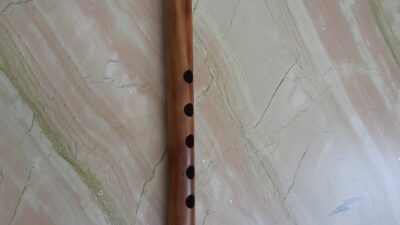
पुल्लांगुष़ल एक अंगूठे जितनी मोटी और लगभग बारह अंगुल लंबी खोखली बाँस की नलिका है, जिसे बग़ल से (आड़ी पकड़कर) फूँका जाता है। एक सिरे के पास एक फूँक-छिद्र (मुख-रंध्र) होता है और उसके नीचे आठ पास-पास रखे स्वर-छिद्र। इसमें न कोई चाबी होती है, न धातु का पुर्ज़ा — केवल बाँस, हवा और अंगुलियाँ। दक्षिण भारतीय वंशी के लिए केरल और दक्षिण तमिलनाडु का मोटी दीवार वाला, सघन और गहरे रंग का बाँस पसंद किया जाता है, जो गोल और मधुर स्वर देता है।
Description English
The pullanguzhal is a hollow bamboo tube about the thickness of a thumb and roughly twelve finger-widths long, blown from the side (held transversely). Near one end sits a blowing hole (embouchure), and below it eight closely-spaced finger holes. It has no keys and no metal parts — only bamboo, breath, and fingers. The South Indian flute favours the thicker-walled, denser, darker bamboo of Kerala and southern Tamil Nadu, which yields a round, mellow tone.
Body
Straight cylindrical tube, closed just above the blowing hole, open at the far end
सीधी बेलनाकार नली — फूँक-छिद्र के ठीक ऊपर बंद, दूसरे सिरे पर खुली
Bamboo (traditionally thick-walled, dense bamboo from Kerala / southern Tamil Nadu)
बाँस (परंपरागत रूप से केरल / दक्षिण तमिलनाडु का मोटी दीवार वाला सघन बाँस)
30-60 (varies with pitch/shruti — concert flutes are longer and lower-pitched)
The bore of the bamboo tube itself acts as the resonating air column; the closed end near the embouchure reflects the standing wave
Blowing Hole
मुख-रंध्र / फूँक-छिद्र
Mukha-randhra (embouchure hole)
एक सिरे के पास बना छिद्र जिसकी धार पर वादक तिरछी फूँक मारता है; यहीं वायु विभाजित होकर नलिका के भीतर कंपन उत्पन्न करती है।
A hole near one end across whose edge the player directs an angled breath; here the air splits and sets the tube's air column vibrating.
Finger Holes
8 (some older/Hindustani-style designs use 6-7)
फूँक-छिद्र के नीचे पास-पास बने आठ स्वर-छिद्र, जिन्हें दोनों हाथों की अँगुलियों से पूरी तरह या अंशतः ढककर स्वर और सूक्ष्म गमक निकाले जाते हैं। सारभा शास्त्री और टी. आर. महालिंगम की देनों में सातवें/आठवें छिद्र का जोड़ा जाना कर्नाटक शैली के गमक-प्रधान वादन के लिए निर्णायक रहा।
Eight closely-spaced tone holes below the embouchure, fully or partly covered by the fingers of both hands to produce notes and fine gamaka. The addition of the seventh/eighth hole by Sarabha Sastri and T. R. Mahalingam was decisive for the gamaka-rich Carnatic style of playing.
Half-holing and rolling of the fingers (rather than keys) create the continuous oscillations (gamaka) central to Carnatic music
Tuning
पुल्लांगुष़ल किसी एक श्रुति (पिच) में बनी होती है — वादक अपनी आवाज़ या संगत के अनुसार अलग-अलग लंबाई/मोटाई की वंशियाँ रखते हैं। कर्नाटक मंच पर प्रायः नीची श्रुति की लंबी वंशी प्रयुक्त होती है।
Each pullanguzhal is built to a single shruti (pitch); players keep a set of flutes of different length/thickness to match a voice or ensemble. Carnatic concerts often favour a longer, lower-pitched flute.
A skilled player covers about two and a half octaves through over-blowing and cross-fingering
Keys And Pads
इसमें पश्चिमी बाँसुरी जैसी कोई चाबी या पैड नहीं होते — यही 'खुली' बनावट गमक और मींड जैसी निरंतर स्वर-सरकनों को संभव बनाती है।
Unlike the Western flute it has no keys or pads — this 'open' construction is precisely what makes continuous pitch-slides (gamaka and meend) possible.
Binding
धागा-बंधन
Thread binding
बाँस के दोनों सिरों पर प्रायः धागा या सूत लपेटा जाता है ताकि नमी और तनाव से बाँस चटके नहीं।
Thread or twine is often wound at both ends of the bamboo to keep it from cracking under humidity and stress.
ध्वनि-चरित्र
SoundTonal Character Hindi
पुल्लांगुष़ल का स्वर गोल, हवादार और मधुर होता है — कर्नाटक शैली में यह मानव-कंठ की तरह गमक से भरा, फिसलता और लहराता हुआ सुनाई देता है। मोटे दक्षिणी बाँस की देन इसे एक गहरी, मखमली गूँज देती है जो लंबी आलापी में ध्यानमग्न कर देती है।
Tonal Character English
The pullanguzhal's tone is round, airy, and sweet — in the Carnatic style it sings like the human voice, full of sliding, oscillating gamaka. The thick southern bamboo lends it a deep, velvety resonance that turns long, slow passages meditative.
Timbre
Warm, breathy, vocal; rich low register and a bright, penetrating upper octave
Range
About 2.5 octaves (extended through over-blowing and cross-fingering)
Dynamic Range
Intimate whisper to clear projection; expressive rather than loud — traditionally unamplified in chamber concerts
Techniques
सुनने का मार्गदर्शन
The Listening Guideपुल्लांगुष़ल का रस लेना हो तो किसी शांत क्षण में एक कर्नाटक बाँसुरी कच्चेरी सुनिए। पहले धीमी आलापना पकड़िए — बिना ताल के राग खुलता है और अँगुलियों की सूक्ष्म गमक से हर स्वर काँपता है। फिर कृति और कल्पना-स्वर में मृदंगम के साथ लयबद्ध संवाद सुनिए। मोहनम या हंसध्वनि जैसे उजले रागों से शुरू कीजिए — इन्हीं में वंशी की मिठास सबसे खुलकर सामने आती है।
अंग्रेज़ी में पढ़ें · Read in English
To savour the pullanguzhal, choose a quiet moment and hear a Carnatic flute kacheri. First catch the slow alapana — watch how the player unfolds the raga without rhythm, every note trembling with the fine gamaka of the fingers. Then hear the dialogue with rhythm in the kriti and kalpana-swara. Begin with bright ragas like Mohanam or Hamsadhwani — in them the flute's sweetness opens most fully.
परिचय
Identity- Year Of Origin
- 1890
अन्य विवरण
More Details- System English
- Each pullanguzhal is built to a single shruti (pitch); players keep a set of flutes of different length/thickness to match a voice or ensemble. Carnatic concerts often favour a longer, lower-pitched flute.
- Range Note
- A skilled player covers about two and a half octaves through over-blowing and cross-fingering
- System
- पुल्लांगुष़ल किसी एक श्रुति (पिच) में बनी होती है — वादक अपनी आवाज़ या संगत के अनुसार अलग-अलग लंबाई/मोटाई की वंशियाँ रखते हैं। कर्नाटक मंच पर प्रायः नीची श्रुति की लंबी वंशी प्रयुक्त होती है।
Tuning
Timbre
Warm, breathy, vocal; rich low register and a bright, penetrating upper octave
रोचक तथ्य
Margin Notesबच्चा-प्रतिभा 'फ़्ल्यूट माली' — टी. आर. महालिंगम (1926-1986) बचपन में ही मंच पर छा गए थे और 'फ़्ल्यूट माली' कहलाए। उन्होंने पुल्लांगुष़ल पर कंठ-गायन जैसी गमक-प्रधान शैली गढ़ी, जिसने बाद की हर पीढ़ी को प्रभावित किया।
T. R. Mahalingam (1926-1986) dazzled audiences as a young child and came to be called 'Flute Mali'. He forged a vocal, gamaka-rich style on the pullanguzhal that shaped every generation after him.
आठवाँ छिद्र और कर्नाटक अनुकूलन — पारंपरिक वंशी में छह-सात छिद्र होते थे; सारभा शास्त्री और बाद में माली ने सातवें/आठवें छिद्र तथा मोटी दीवार वाले बाँस को अपनाकर वंशी को कर्नाटक की जटिल गमक-रचनाओं के लिए सक्षम बनाया।
Traditional flutes had six or seven holes; Sarabha Sastri and later Mali adopted the seventh/eighth hole and thicker-walled bamboo, enabling the flute to handle the intricate gamaka-laden compositions of Carnatic music.
एक श्रुति, कई वंशियाँ — क्योंकि पुल्लांगुष़ल किसी एक श्रुति (पिच) में बनी होती है, वादक अलग-अलग लंबाई और मोटाई की कई वंशियाँ रखते हैं — मंच पर श्रुति के अनुसार वंशी बदल लेते हैं, ठीक जैसे कोई गायक अपनी 'की' चुनता है।
Because each pullanguzhal is fixed to a single shruti (pitch), players keep several flutes of differing length and thickness — swapping flutes on stage to match the shruti, much as a singer chooses a key.
तिरुक्कुरल में वंशी — दो हज़ार वर्ष पुराने तमिल ग्रंथ तिरुक्कुरल का 66वाँ दोहा वंशी (कुष़ल) और वीणा (याष़) की मिठास की तुलना बच्चों की तुतली बोली से करता है — जो वंशी की सांस्कृतिक जड़ों की प्राचीनता दर्शाता है।
The 66th couplet of the two-thousand-year-old Tamil classic Tirukkural compares the sweetness of the flute (kuzhal) and lute (yaazh) to the lisping speech of children — a measure of how ancient the flute's cultural roots are.
सवाल-जवाब
Questions & Answersपुल्लांगुष़ल क्या है?
पुल्लांगुष़ल दक्षिण भारत की आड़ी बाँस-वंशी है — 'बाँसुरी' का तमिल नाम और संस्कृत के 'वेणु' का रूप। यह कर्नाटक संगीत का प्रमुख एकल वाद्य है, जिसमें आठ स्वर-छिद्र और एक फूँक-छिद्र होता है, कोई चाबी नहीं होती।
पुल्लांगुष़ल और उत्तर भारतीय बाँसुरी में क्या अंतर है?
दोनों आड़ी बाँस-वंशियाँ हैं, पर पुल्लांगुष़ल कर्नाटक गमक-प्रधान शैली के लिए बनी-बजाई जाती है और प्रायः मोटी दीवार वाले बाँस तथा आठ छिद्रों के साथ होती है; उत्तर भारतीय बाँसुरी हिंदुस्तानी मींड-प्रधान शैली के लिए, पतले बाँस और प्रायः छह-सात छिद्रों के साथ होती है।
पुल्लांगुष़ल को कर्नाटक मंच पर किसने प्रतिष्ठित किया?
सारभा शास्त्री (1872-1904) ने बाँस की वंशी को पहली बार कर्नाटक कच्चेरी मंच पर प्रतिष्ठित किया। बाद में टी. आर. महालिंगम ('फ़्ल्यूट माली', 1926-1986) ने कंठ-गायन जैसी गमक-प्रधान शैली गढ़कर वादन में क्रांति की।
पुल्लांगुष़ल किस चीज़ से बनी होती है?
यह बाँस से बनी होती है — दक्षिण भारतीय वंशी के लिए केरल और दक्षिण तमिलनाडु का मोटी दीवार वाला, सघन और गहरे रंग का बाँस पसंद किया जाता है, जो गोल और मधुर स्वर देता है। इसमें कोई चाबी या धातु का पुर्ज़ा नहीं होता।
क्या पुल्लांगुष़ल फ़िल्म-संगीत में प्रयुक्त होती है?
हाँ — यह दक्षिण भारतीय (तमिल-तेलुगू) फ़िल्म-संगीत का प्राण-स्वर है, विशेषकर इलैयाराजा और ए. आर. रहमान की रचनाओं में। हिंदी सिनेमा में आड़ी बाँसुरी की भूमिका प्रायः उत्तर भारतीय बाँसुरी निभाती है, पर रहमान जैसी अखिल-भारतीय रचनाओं में पुल्लांगुष़ल की मिठास भी सुनाई देती है।
नमूना-पट्टी
The Specimen Table| नाम | पुल्लांगुष़ल · Pullanguzhal |
|---|---|
| अन्य नाम | पुल्लांकुष़ल (तमिल वर्तनी) · வேணு / Venu (संस्कृत नाम) · कुष़ल / Kuzhal (लघु तमिल नाम) · ओडकुष़ल / Oodakuzhal (मलयालम) · मुरळी / Murali (कन्नड़) · Pullankuzhal (also: Pullanguzhal) |
| उद्गम | 1890 |
| प्रकार | वाद्य · Instruments |
साझा कीजिए · Share this Plate