शास्त्र विंग · वाद्य-पट्टिका · Instrument Plate
पेना
Pena
अन्य नामपेना (Pena) · बेना / बाना (Bena / Bana — Bangladesh) · टिंगतेलिया / टिंगतालिया (Tingtelia / Tingtalia — Tangkhul Naga) · Pena (also: Bana, Bena, Tingtelia)
परिचय
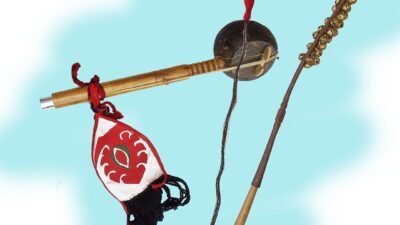
Overviewपेना मणिपुर की मैतेई सभ्यता का सबसे प्राचीन और सबसे मार्मिक वाद्य है — आधे नारियल-खोल की खाल-मढ़ी पेटी और घोड़े-बाल की एक ही तार से बना एकतारा धनुष-वाद्य। प्रश्नचिह्न-सी मुड़ी उसकी धनुष (पेना चेइजिंग) जब सरकती है तो घंटियों की झनकार के बीच एक पतली, कंठ-सी करुण ध्वनि उठती है। लाइ हराओबा के देव-आवाहन से लेकर पेना यकाइरोल की वीरगाथाओं तक, यह वाद्य मैतेई अस्मिता का जीवंत प्रतीक है — आज लुप्तप्राय, पर 'लाइहुई' जैसे प्रयासों से पुनर्जीवित होता हुआ।
अंग्रेज़ी में पढ़ें · Read in English
The pena is the oldest and most poignant instrument of Manipur's Meitei civilization — a single-string bowed fiddle made from a hide-covered half-coconut resonator and one horsehair string. When its question-mark bow (Pena Cheijing) slides across the shell, a thin, voice-like cry rises amid the jingle of small bells. From the deity-invocations of Lai Haraoba to the heroic ballads of Pena Yakairol, the instrument is a living emblem of Meitei identity — endangered today, yet being revived through efforts such as the Laihui institution.
वर्गीकरण
ClassificationNatya Shastra Category
तत (Tata - stringed instruments)
नाट्यशास्त्र के 'तत' (तार वाले) वर्ग के अनुसार पेना एक एकतारा धनुष-वाद्य है — ध्वनि तार पर धनुष के घर्षण से उत्पन्न होती है, इसलिए यह घर्षण-चालित तार-वाद्य (bowed chordophone) की श्रेणी में आता है।
In the Tata (stringed) category of the Natya Shastra framework, the pena is a single-string bow-driven instrument — sound is produced by friction of the bow against the string, placing it among the friction-activated chordophones (bowed lutes).
Western Category
Bowed string instrument (single-string spike fiddle)
Western Family
Spike-fiddle / bowed-lute family (kin to the ravanahatha and other one-string folk fiddles of South Asia)
Sub Classification
बनावट
PhysicalDescription Hindi
पेना दो भागों से बना एक सरल किंतु अभिव्यंजक एकतारा धनुष-वाद्य है — एक नारियल-खोल की गूँजपेटी (पेना मरु / पेनामसा) और एक प्रश्नचिह्न जैसे मुड़े हुए धनुष (पेना चेइजिंग)। इसकी बनावट अत्यंत मितव्ययी है, फिर भी इसकी एक ही तार से मानवीय कंठ जैसी करुण ध्वनि निकलती है।
Description English
The pena is a simple yet deeply expressive single-string bowed instrument made of two parts — a coconut-shell resonator (Pena Maru / Penamasa) and a question-mark-shaped curved bow (Pena Cheijing). Its construction is minimal, yet a single string yields a plaintive, voice-like tone.
Body
Rounded resonator on a straight spike-neck (spike-fiddle form)
सीधी दंड-गर्दन पर गोल गूँजपेटी (स्पाइक-फिडल रूप)
Half coconut shell for the sound box, with a bamboo (or wooden) neck
गूँजपेटी के लिए आधा नारियल का खोल, गर्दन के लिए बाँस (या लकड़ी)
30-40 (neck approx. 10-11 inches / 25-28 cm)
Half coconut shell (Pena Maru / Penamasa, also called dhorr) with two drilled holes — one covered with dried animal hide (iguana or ox skin) acting as the sound membrane, the other left open
Strings
A single melody string, traditionally of twisted horsehair
The pena has no sympathetic strings — its resonance comes entirely from the coconut-shell chamber and hide membrane
No separate drone strings; the single string carries both melody and its own sustained tone
Bow
पेना चेइजिंग (चोर)
Pena Cheijing (Chorr)
Wooden bow strung with horsehair, with a curved metal flourish at one end resembling a question mark; some bows carry tiny metal (brass) bells that jingle as it moves
40-50
Drawn across the single string while the player simultaneously presses and slides on the string to sound different pitches; the jingling bells add a rhythmic shimmer
Tuning Pegs
कान (Kaan)
Kaan
A single bamboo peg (kaan) at the neck controls string tension and pitch; the scroll/tail-piece to which the string is tied is called the mogra
Bridge
सेतु (नारियल-झिल्ली पर)
Bridge (over the hide membrane)
A small bridge transmits the string's vibration onto the hide-covered coconut membrane, which acts as the primary sounding board
Wood or bamboo
Frets
पेना पूर्णतः फ्रेटलेस है — वादक एकमात्र तार को उँगली से दबाकर और सरकाकर स्वर बदलता है, जिससे 'मींड' जैसी सतत सुर-सरकन और सूक्ष्म स्वर-भाव संभव होते हैं।
The pena is entirely fretless — the player changes pitch by pressing and sliding a finger on the single string, enabling continuous glide (meend-like portamento) and fine microtonal shading.
ध्वनि-चरित्र
SoundTonal Character Hindi
पेना की ध्वनि पतली, नासिक और गहरी करुणा से भरी होती है — एकल तार होते हुए भी यह मानवीय कंठ के अत्यंत निकट लगती है, मानो कोई धीमे स्वर में विनती या स्तुति गा रहा हो। नारियल-खोल की गूँज इसे एक मिट्टी-सी, आदिम गर्माहट देती है।
Tonal Character English
The pena's tone is thin, nasal, and steeped in a deep pathos — despite its single string it sits remarkably close to the human voice, as if softly pleading or invoking. The coconut-shell resonance lends it an earthy, primeval warmth.
Timbre
Reedy, nasal, plaintive; a raw single-string cry with a soft buzzing edge from the hide membrane
Range
Roughly one to two octaves, produced entirely by finger-stopping the single string
Dynamic Range
Intimate — designed for close ritual and narrative singing rather than large-hall projection; expressive in soft, speech-like gradations
Techniques
सुनने का मार्गदर्शन
The Listening Guideपेना का रस लेना हो तो किसी शांत क्षण में आँखें मूँदकर सुनिए। पहले पेना यकाइरोल (कथा-गायन) से शुरू कीजिए, जहाँ वादक स्वयं गाते हुए पेना बजाता है — देखिए कैसे एकमात्र तार आवाज़ की छाया बन जाता है। फिर लाइ हराओबा के आवाहन सुनिए, जहाँ पेना की रोती-सी पुकार और धनुष से बँधी घंटियों की झनकार एक अनुष्ठानिक समाधि रचती है। यह भव्यता का नहीं, अंतरंगता और भक्ति का संगीत है।
अंग्रेज़ी में पढ़ें · Read in English
To hear the pena, choose a quiet moment and listen with eyes closed. Begin with Pena Yakairol (narrative singing), where the player sings while bowing — notice how the string shadows the voice. Then hear the Lai Haraoba invocations, where the pena's plaintive cry and the jingle of the bow-bells weave a ritual trance. This is not music of grandeur but of intimacy and devotion.
अन्य विवरण
More DetailsTimbre
Reedy, nasal, plaintive; a raw single-string cry with a soft buzzing edge from the hide membrane
रोचक तथ्य
Margin Notesएक वाद्य, तीन नाम — यही एकतारा धनुष-वाद्य मणिपुर में 'पेना', तांगखुल नागाओं में 'टिंगतेलिया/टिंगतालिया' और बांग्लादेश में 'बाना/बेना' कहलाता है — एक ही ध्वनि-परंपरा की सीमापार यात्रा।
This same single-string fiddle is called 'Pena' in Manipur, 'Tingtelia/Tingtalia' among the Tangkhul Naga, and 'Bana/Bena' in Bangladesh — one sound-tradition travelling across borders.
पेना के अंगों के मैतेई नाम — गूँजपेटी को 'पेना मरु / पेनामसा' (या 'धोर'), धनुष को 'पेना चेइजिंग' (या 'चोर'), तान-कील को 'कान' और पूँछ-सिरे को 'मोगरा' कहते हैं — हर अंग का अपना मैतेई नाम है।
The resonator is 'Pena Maru / Penamasa' (or 'dhorr'), the bow 'Pena Cheijing' (or 'chorr'), the tuning peg 'kaan', and the tail-scroll 'mogra' — each part has its own Meitei name.
लाइ हराओबा का हृदय — लाइ हराओबा — 'देवताओं का आमोद' — मैतेई सृष्टि-उत्सव में माइबा और माइबी पेना के स्वर पर देवताओं का आवाहन करते हैं। पेना के बिना यह अनुष्ठान अधूरा माना जाता है।
In Lai Haraoba — 'the merrymaking of the gods', the Meitei creation festival — the maiba and maibi invoke the deities to the sound of the pena. The ritual is considered incomplete without it.
राजदरबार से लुप्ति की कगार तक — कभी प्राचीन कंगलैपाक के राजसी समारोहों की शान रहा पेना आज लुप्तप्राय है — पर खांगेम्बम मंगी सिंह की 'लाइहुई' संस्था कार्यशालाओं, प्रदर्शनों और प्रशिक्षण से इसे नई पीढ़ी तक पहुँचा रही है।
Once the pride of royal ceremonies in ancient Kangleipak, the pena is now endangered — yet Khangembam Mangi Singh's 'Laihui' institution is carrying it to a new generation through workshops, performances, and training.
सवाल-जवाब
Questions & Answersपेना क्या है?
पेना मणिपुर का एक पारंपरिक एकतारा धनुष-वाद्य है, जो आधे नारियल-खोल की गूँजपेटी और घोड़े-बाल की एक तार से बना होता है। यह मैतेई सभ्यता का प्राचीन वाद्य है और लाइ हराओबा उत्सव का केंद्रीय अंग है।
पेना कितने तार का होता है?
पेना में केवल एक ही तार होता है, परंपरागत रूप से घोड़े के बाल से बनी। सारी धुन इसी एकमात्र फ्रेटलेस तार पर उँगली के दबाव और सरकन से निकलती है।
पेना का लाइ हराओबा से क्या संबंध है?
लाइ हराओबा सनामाही (मैतेई धर्म) का सृष्टि-उत्सव है, जिसमें माइबा (पुजारी) और माइबी (पुजारिन) पेना के स्वर पर देवताओं का आवाहन करते हैं। पेना के बिना यह अनुष्ठान अधूरा माना जाता है।
पेना को और किन नामों से जाना जाता है?
मणिपुर में इसे 'पेना' कहते हैं; तांगखुल नागा इसे 'टिंगतेलिया/टिंगतालिया' और बांग्लादेश में इसे 'बाना/बेना' कहा जाता है — यह एक ही सीमापार लोक-वाद्य परंपरा है।
क्या पेना आज भी बजाया जाता है?
हाँ, पर यह एक लुप्तप्राय कला है — मणिपुर में केवल लगभग 145 सक्रिय पेना वादक बचे बताए जाते हैं। खांगेम्बम मंगी सिंह की 'लाइहुई' संस्था और मयांगलाम्बम मंगांगसना जैसे कलाकार इसे पुनर्जीवित कर रहे हैं।
नमूना-पट्टी
The Specimen Table| नाम | पेना · Pena |
|---|---|
| अन्य नाम | पेना (Pena) · बेना / बाना (Bena / Bana — Bangladesh) · टिंगतेलिया / टिंगतालिया (Tingtelia / Tingtalia — Tangkhul Naga) · Pena (also: Bana, Bena, Tingtelia) |
| प्रकार | वाद्य · Instruments |
साझा कीजिए · Share this Plate