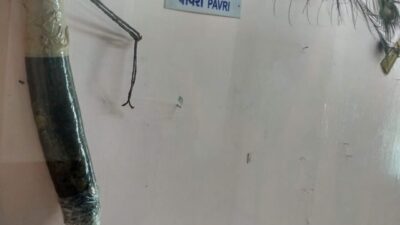
शास्त्र विंग · वाद्य-पट्टिका · Instrument Plate
पावरी
Pavri
अन्य नामपावरी · पावरी नाच का वाद्य · Pawari · Pavari
परिचय
Overviewपावरी पश्चिमी भारत की आदिवासी पट्टी का सुषिर लोकवाद्य है — सूखी लौकी के वायु-कोष, बाँस की दो नलियों और ताड़-पत्ते के भोंपू से गढ़ा, मोम से सील किया हुआ। इसकी बैगपाइप-सी निरंतर, तीखी धुन पर वार्ली और कोकणा आदिवासी पावरी नाच (तर्फा नाच) में घेरे बनाकर झूमते हैं। तर्फा से इसका फ़र्क़ बस इतना कि तर्फा अगले सिरे से और पावरी लौकी के बीच से फूँकी जाती है। आज बहुत कम वादक बचे हैं, पर डांग दरबार और लोक-महोत्सवों में इसकी धुन अब भी गूँजती है।
अंग्रेज़ी में पढ़ें · Read in English
The pavri is a sushira folk instrument of Western India's Adivasi belt — carved from a dried-gourd wind-chest, two bamboo pipes and a palm-leaf horn, sealed with beeswax. To its bagpipe-like, unbroken, reedy tune the Warli and Kokna Adivasis sway in rings in the Pavri Nach (Tarpha Nach). It differs from the tarpa only in that the tarpa is blown from the front end and the pavri from the centre of the gourd. Few players remain today, yet its tune still rings out at the Dang Durbar and folk festivals.
वर्गीकरण
ClassificationNatya Shastra Category
सुषिर (Sushira - wind / hollow instruments)
पावरी नाट्यशास्त्र के सुषिर वर्ग का लोकवाद्य है — फूँक से उत्पन्न वायु ईख की जीभी (reed) को कंपित कर ध्वनि उत्पन्न करती है, जैसे शहनाई, अलगोज़ा और तर्फा में होता है। भारत सरकार का सांस्कृतिक पोर्टल इसे 'सुषिर वाद्य' श्रेणी में सूचीबद्ध करता है।
In the Sushira (wind) category of the Natya Shastra, the pavri is a folk aerophone in which breath sets a reed vibrating to produce sound, like the shehnai, algoza and tarpa. India's official cultural portal (Ministry of Culture) lists it under 'sushir vadya' (wind instruments).
Western Category
Reed aerophone (bagpipe-type / hornpipe with a gourd wind-cap)
Western Family
Reedpipe family — structurally akin to the pungi/been and the bagpipe: a continuously-blown double-pipe reed instrument with a gourd air reservoir
Sub Classification
बनावट
PhysicalDescription Hindi
पावरी एक हस्तनिर्मित आदिवासी सुषिर वाद्य है जो सूखी लौकी (तुम्बे) के वायु-कोष, उसमें जड़ी दो बाँस की नलियों और ताड़/खजूर के पत्ते से बने भोंपू (हॉर्न) से बनता है। हर जोड़ मधुमक्खी के मोम से सील किया जाता है। यह अपने भाई-वाद्य तर्फा जैसा ही है, किंतु तर्फा को अगले (पतले) सिरे से फूँका जाता है जबकि पावरी को लौकी के बीच से फूँका जाता है — यही दोनों में मुख्य अंतर है।
Description English
The pavri is a handmade Adivasi wind instrument built from a dried bottle-gourd air reservoir, two bamboo pipes set into it, and a flared horn (bell) rolled from dried palm/toddy leaf. Every joint is sealed with beeswax. It closely resembles its sibling the tarpa, but the tarpa is blown from its narrow front end while the pavri is blown from the centre of the gourd — this is the chief difference between the two.
Body
Bulbous gourd wind-chest feeding two parallel pipes that end in a flared leaf horn
गोल-फूला लौकी वायु-कोष जिससे दो समानांतर नलियाँ निकलकर पत्ते के फैले भोंपू में मिलती हैं
Dried bottle gourd (lauki/tumba) wind-chest, bamboo pipes, dried palm/toddy-leaf horn, beeswax sealant
सूखी लौकी (तुम्बा) का वायु-कोष, बाँस की नलियाँ, सूखे ताड़/खजूर के पत्ते का भोंपू, मधुमक्खी के मोम की सीलिंग
45-90 (varies by maker; the related tarpa can reach 2-6 feet)
The dried gourd acts as an air-reservoir/wind-chest; the leaf horn amplifies and projects the reeds' buzzing tone for open-air dance
Strings
Sound is made by reeds, not strings; the 'voices' are the two bamboo pipes
Not applicable — the drone pipe, not sympathetic strings, gives the continuous bagpipe-like undertone
A dedicated bamboo pipe with no finger-holes (or fewer) that sustains a fixed note throughout the performance, bagpipe-fashion
Bow
लागू नहीं (धनुष नहीं)
N/A (no bow — it is blown, not bowed)
N/A
N/A
N/A — the pavri is sounded by continuous mouth-blowing, not a bow
Tuning Pegs
लागू नहीं
N/A
No pegs; pitch of the melody pipe is set by the bore and finger-holes, fine-tuned with beeswax around the reed
Bridge
लागू नहीं
N/A
No bridge; the gourd wind-chest and leaf horn form the acoustic body
N/A
Frets
पावरी में फ्रेट नहीं होते; धुन वाली नली पर बने कुछ छिद्रों को उँगलियों से खोलकर-बंद करके स्वर बदले जाते हैं, और फूँक निरंतर बहती रहती है।
The pavri has no frets; pitch on the melody pipe is changed by opening and closing a few finger-holes while the breath flows continuously.
ध्वनि-चरित्र
SoundTonal Character Hindi
पावरी की ध्वनि तीखी, नासिक और निरंतर होती है — बैगपाइप जैसी भिनभिनाती धुन जिसके नीचे बिना रुके आधार-स्वर बहता रहता है। खुले मैदान, पहाड़ी ढलानों और नाच के घेरे को भेदने के लिए इसकी आवाज़ ऊँची और भरी हुई होती है।
Tonal Character English
The pavri's tone is reedy, nasal and unbroken — a buzzing, bagpipe-like melody riding over a ceaseless drone. It is loud and full, built to carry across open fields, hill slopes and a circle of dancers.
Timbre
Buzzing, penetrating double-reed timbre with a continuous droning undertone (bagpipe-like)
Range
Narrow — a few notes of a pentatonic/folk melodic scale on the melody pipe, over a single fixed drone
Dynamic Range
Loud and fairly constant by design — an outdoor, high-projection instrument rather than a soft indoor one
Techniques
सुनने का मार्गदर्शन
The Listening Guideपावरी को शास्त्रीय एकल की तरह नहीं, नाच के साथ सुनिए। नीचे बहते ड्रोन और ऊपर घूमती सरल धुन के मेल को पकड़िए; ध्यान दीजिए कि वादक गोलाकार श्वास से बिना रुके मिनटों बजाता रहता है। जब पद-संचालन की गति के साथ धुन तेज़ हो, तब नाच अपने चरम पर होता है।
अंग्रेज़ी में पढ़ें · Read in English
Do not listen to the pavri like a classical solo — listen to it with the dance. Notice how one note flows below without ever stopping (the drone) while a simple melody circles above. The player sounds it for minutes without breaking breath — that is the wonder of circular breathing. When the tune quickens with the footwork, the dance is at its peak.
अन्य विवरण
More DetailsTimbre
Buzzing, penetrating double-reed timbre with a continuous droning undertone (bagpipe-like)
रोचक तथ्य
Margin Notesएक वाद्य, दो नाम — क्षेत्र और समुदाय के अनुसार यही वाद्य कहीं 'पावरी', कहीं 'तर्फा' और कहीं 'पावरी/तर्फा' दोनों कहलाता है; इसी कारण इसके नृत्य को पावरी नाच और तर्फा नाच — दोनों नामों से जाना जाता है।
Depending on region and community, the same instrument is called 'pavri' in some places, 'tarpa' in others, and both elsewhere; hence its dance is known by both names — Pavri Nach and Tarpha Nach.
प्रकृति से गढ़ा वाद्य — पावरी के हर हिस्से में स्थानीय पर्यावरण बसा है — वायु-कोष सूखी लौकी का, नलियाँ बाँस की, भोंपू ताड़/खजूर के पत्ते का, और जोड़ों की सीलिंग मधुमक्खी के मोम से। कोई धातु या कारख़ाना नहीं, पूरी तरह हस्तनिर्मित।
Every part of the pavri holds the local environment — the wind-chest of dried gourd, the pipes of bamboo, the horn of palm/toddy leaf, the joints sealed with beeswax. No metal, no factory — entirely handmade.
पिरामिड बनाते नर्तक — पावरी नाच में स्त्री-पुरुष कमर पकड़कर जटिल रचनाएँ और पिरामिड-सी आकृतियाँ बनाते हैं, और पावरी की धुन के साथ पूर्ण तालमेल में तेज़ पद-संचालन करते हैं — प्रायः स्त्री और पुरुष अलग-अलग समूहों में।
In the Pavri Nach, men and women hold each other by the waist to form intricate patterns and pyramid-like structures, executing quick footwork in complete sync with the pavri's tune — often in separate groups of men and women.
वार्ली चित्रकला का केंद्र — वार्ली चित्रों में वाद्य-वादक को प्रायः घेरे के ठीक केंद्र में दिखाया जाता है, जिसके चारों ओर हाथ पकड़े नाचते स्त्री-पुरुष सर्पिल बनाते हैं — जनजातीय जीवन में इस वाद्य-नृत्य की केंद्रीयता का प्रमाण।
In Warli paintings the wind-player is often shown right at the centre of a ring, with men and women dancing hand-in-hand in a spiral around him — proof of how central this instrument-and-dance is to tribal life.
सवाल-जवाब
Questions & Answersपावरी क्या है?
पावरी पश्चिमी भारत (उत्तर-पश्चिम महाराष्ट्र और गुजरात के डांग) का एक आदिवासी सुषिर लोकवाद्य है, जो सूखी लौकी के वायु-कोष, बाँस की दो नलियों और पत्ते के भोंपू से बनता है। इसकी बैगपाइप-सी निरंतर धुन पर वार्ली और कोकणा आदिवासी पावरी नाच करते हैं।
पावरी और तर्फा में क्या अंतर है?
दोनों बहुत मिलते-जुलते सगे भाई-वाद्य हैं और लौकी, बाँस व पत्ते से बनते हैं। मुख्य अंतर फूँकने की जगह का है — तर्फा को अगले (पतले) सिरे से और पावरी को लौकी के बीच से फूँका जाता है। इसी कारण पावरी नाच को तर्फा नाच भी कहते हैं।
पावरी कौन बजाता है और किन अवसरों पर?
इसे मुख्यतः वार्ली, कोकणा और डांगी आदिवासी समुदाय बजाते हैं — फ़सल-कटाई के उल्लास, होली के डांग दरबार और धुले-नंदुरबार के विवाहों में। आज बहुत कम लोग ही इसे बजाना जानते हैं।
पावरी बैगपाइप जैसी क्यों सुनाई देती है?
क्योंकि वादक 'गोलाकार श्वास' का प्रयोग करता है — नाक से साँस लेते हुए मुँह से हवा फूँकता रहता है, जिससे धुन कभी नहीं टूटती; और एक नली निरंतर आधार-स्वर (ड्रोन) देती है जबकि दूसरी पर धुन बजती है।
क्या पावरी एक संकटग्रस्त वाद्य है?
हाँ। दस्तावेज़ बताते हैं कि अब बहुत कम व्यक्ति ही पावरी बजाना जानते हैं। आदिवासी सांस्कृतिक संगठन, लोक-महोत्सव और डांग दरबार जैसे आयोजन इसे जीवित रखने का प्रयास कर रहे हैं।
नमूना-पट्टी
The Specimen Table| नाम | पावरी · Pavri |
|---|---|
| अन्य नाम | पावरी · पावरी नाच का वाद्य · Pawari · Pavari · Pawri · तर्फा / Tarpha (closely related sibling) |
| प्रकार | वाद्य · Instruments |
साझा कीजिए · Share this Plate