शास्त्र विंग · वाद्य-पट्टिका · Instrument Plate
ओणविल्लु
Onavillu
अन्य नामओणविल्लु (मलयालम: ഓണവില്ല്) · पल्लिविल्लु (Pallivillu — मंदिर का समर्पित विल्लु) · ओणम् विल्लु (Onam Villu) · Onavillu (also: Ona-villu, Onam bow)
परिचय
Overviewओणविल्लु — 'ओणम का धनुष' — केरल का वह वाद्य है जिसमें उल्लास और श्रद्धा एक साथ धड़कते हैं। ताड़ या बाँस से बना छोटा धनुष, जिसकी बाँस-फाँक की तंत्री पर पेंसिल-सी छड़ी पड़ते ही टंकार उठती है; और वही 'विल्लु' पंचवर्ण में रँगकर, विष्णु के अवतारों के चित्रों के साथ, पद्मनाभस्वामी मंदिर में समर्पित पवित्र धनुष बन जाता है। कुम्माट्टिकली की लय से लेकर तिरुवोणम के 'ओणविल्लु चार्थल' तक, यह वाद्य केरल की कथा, कला और भक्ति का एक साथ प्रतीक है।
अंग्रेज़ी में पढ़ें · Read in English
The onavillu — 'the bow of Onam' — is the Kerala instrument in which festivity and devotion beat as one. A small bow of palmyra or bamboo whose sliver-string twangs the instant a pencil-thin stick strikes it; and that same 'villu', painted in five colours with the avatars of Vishnu, becomes the sacred bow offered at the Sree Padmanabhaswamy Temple. From the rhythm of Kummattikali to the 'Onavillu Charthal' of Thiruvonam, it is at once a symbol of Kerala's myth, art and faith.
वर्गीकरण
ClassificationNatya Shastra Category
तत (Tata - stringed instruments)
ओणविल्लु तत (तंत्री) वर्ग का एक अनूठा वाद्य है — यह धनुष के आकार का होता है और इसकी तंत्री (डोरी) को एक पतली छड़ी से आघात करके ध्वनि उत्पन्न की जाती है। सारंगी या वायलिन की तरह इसे घर्षण से नहीं, बल्कि प्रहार से बजाया जाता है, अतः यह 'आघातित तंत्री वाद्य' (struck string) है।
The onavillu belongs to the Tata (stringed) category, but in a rare form: it is a bow-shaped instrument whose string is struck with a thin stick to produce sound, rather than being bowed (like sarangi) or plucked. It is therefore a 'struck chordophone' — an idiochord musical bow.
Western Category
Struck musical bow (idiochord percussion-chordophone)
Western Family
Musical bow family (related to the wider stick-and-string bow instruments; struck rather than plucked or bowed)
Sub Classification
बनावट
PhysicalDescription Hindi
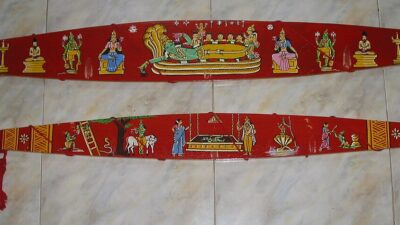
ओणविल्लु दो रूपों में मिलता है, और दोनों 'धनुष' (विल्लु) के आकार के हैं। पहला — वादन-वाद्य के रूप में — ताड़ (पल्मायरा) के गूदे या बाँस से बना एक छोटा, हल्का धनुष होता है जिसकी तंत्री बाँस की पतली फाँक से बनती है; इसे पेंसिल जितनी पतली छड़ी से पीटकर बजाया जाता है। दूसरा — समारोहिक रूप — एक चपटा, दोनों सिरों पर पतला होता लकड़ी का धनुष है जिस पर पंचवर्ण (सफ़ेद, हरा, लाल, पीला, काला) में विष्णु के अवतारों के चित्र बने होते हैं और लाल फुंदने लगे रहते हैं। यही समारोहिक ओणविल्लु श्री पद्मनाभस्वामी मंदिर में समर्पित किया जाता है।
Description English
The onavillu exists in two bow-shaped forms. The first — the musical instrument — is a small, light bow made from the pith of the palmyra stem or from bamboo, whose 'string' is a fine sliver of bamboo; it is played by striking with a pencil-thin stick. The second — the ceremonial form — is a flat wooden bow, tapering on both ends, painted in the five panchavarna colours (white, green, red, yellow, black) with miniatures of Vishnu's avatars and hung with red tassels. This ceremonial onavillu is the one dedicated at the Sree Padmanabhaswamy Temple.
Body
Bow / arc shape (villu)
धनुष / चाप के आकार का (विल्लु)
Musical form: palmyra pith or bamboo. Ceremonial form: kadambu/kadamba, maruthu, jackfruit (chakka), aanjili or mahogany wood
वादन रूप: ताड़ का गूदा या बाँस। समारोहिक रूप: कदम्ब, मरुथु, कटहल (चक्का), आँजिली या महोगनी की लकड़ी
Ceremonial bows ~107-137 cm (3.5 to 4.5 feet); musical form is smaller and hand-held
No enclosed sound-box — the arched stem itself and the taut sliver-string form an open musical bow; resonance comes from the flexed wood/pith and, in performance, the player's hand or body as a resonator
Strings
The playing string(s) — thin sliver(s) of bamboo stretched along the arched bow
None — the onavillu has no sympathetic (tarab) strings, unlike sarangi or sitar
No separate drone strings; the instrument is rhythmic-melodic rather than raga-drone based
Bow
कोल / छड़ी (आघात-छड़)
Striking stick (kol)
A thin wooden stick, roughly the size of a pencil
~15-20
The string is not bowed but struck/tapped with this thin stick to sound it; unlike sarangi's gaj (horsehair bow), here there is no friction bow at all
Tuning Pegs
—
None (no pegs)
The onavillu has no tuning pegs; pitch is set by the tension of the bamboo sliver and modulated live by finger pressure on the string
Bridge
—
None / minimal
There is no carved wooden bridge as on sarangi; the string rides directly on the flexed bow
N/A
Frets
ओणविल्लु में फ्रेट नहीं होते। वादक तंत्री पर उँगली के दबाव को घटा-बढ़ाकर ध्वनि का चरित्र और पिच बदलता है।
The onavillu is fretless. The player varies finger pressure on the string to change the acoustic quality and pitch.
ध्वनि-चरित्र
SoundTonal Character Hindi
ओणविल्लु की ध्वनि तीखी, टंकार-भरी और लयात्मक है — एक 'टंग-टंग' सी गूँज जो ओणम के उत्सवी वातावरण की धड़कन बन जाती है। यह गहरे, गायन-सदृश स्वर वाला वाद्य नहीं, बल्कि एक उल्लासमय, ताल-प्रधान लोक-ध्वनि है।
Tonal Character English
The onavillu's sound is bright, twanging and rhythmic — a 'tung-tung' resonance that becomes the pulse of the Onam festive atmosphere. It is not a deep, voice-like melodic instrument but a joyous, rhythm-forward folk sound.
Timbre
Bright, plucky, wooden-twang timbre with a short decay
Range
Narrow — a handful of pitches around a central tone, shaped by finger pressure
Dynamic Range
Modest — carries in intimate folk-dance and procession settings rather than large concert halls
Techniques
सुनने का मार्गदर्शन
The Listening Guideओणविल्लु सुनने-देखने का सही समय ओणम है। कुम्माट्टिकली या ओणपाट्टु में इसकी टंकार को ताल के साथ पकड़िए — एक पतली छड़ी की चोट कैसे पूरे नाच की धड़कन बन जाती है, यह अनुभव कीजिए। फिर पद्मनाभस्वामी मंदिर के 'ओणविल्लु चार्थल' के दृश्यों में देखिए कि यही धनुष कैसे मौन होकर, रंगों और चित्रों में, भक्ति बन जाता है।
अंग्रेज़ी में पढ़ें · Read in English
The best time to hear the onavillu is Onam. In a Kummattikali or Onapaattu performance, follow its twang against the beat — watch how the tap of a thin stick becomes the pulse of the whole dance. Then look at footage of the temple's 'Onavillu Charthal', where the same bow falls silent and, as painted images, becomes a medium of devotion.
अन्य विवरण
More Details- Timbre
- Bright, plucky, wooden-twang timbre with a short decay
रोचक तथ्य
Margin Notesएक नाम, दो धनुष — ओणविल्लु एक ही नाम से दो वस्तुओं को कहता है — कुम्माट्टिकली के साथ बजने वाला आघातित बाँस-वाद्य, और मंदिर में समर्पित चित्रित लकड़ी का धनुष। भाषाविदों के लिए यह दिलचस्प है कि 'विल्लु' (धनुष) का आकार ही दोनों को जोड़ता है।
Onavillu names two objects at once — the struck bamboo instrument played with Kummattikali, and the painted wooden bow offered at the temple. What links them is simply the shape of the 'villu' (bow).
41 दिन का व्रत — विलयिल वीडु परिवार समारोहिक ओणविल्लु बनाने से पहले 41 दिनों तक व्रत और संयम का पालन करता है। एक ऋतु में प्रायः 12 विल्लु — छह प्रकारों के जोड़े (दशावतारम्, अनन्तशयनम्, श्रीराम पट्टाभिषेकम्, कृष्णलीला, शास्ता और विनायक) — बनाए जाते हैं।
The Vilayil Veedu family keeps 41 days of vratha and discipline before making the ceremonial onavillu. In a season they typically make 12 bows — pairs of six types (Dashavatharam, Ananthashayanam, Sri Rama Pattabhishekam, Krishnaleela, Sastha and Vinayaka).
आघात, न कि घर्षण — सारंगी या रावणहत्था धनुष (गज़) के घर्षण से बजते हैं, पर ओणविल्लु की तंत्री को पतली छड़ी से पीटकर बजाया जाता है — यह एक दुर्लभ 'आघातित तंत्री वाद्य' है, जो तत और अवनद्ध (आघात) दोनों के बीच का सेतु-सा लगता है।
The sarangi and ravanhatha sound through the friction of a bow (gaj), but the onavillu's string is struck with a thin stick — making it a rare 'struck string' instrument that seems to bridge the stringed and percussion families.
पंचवर्ण का नियम — चित्रित ओणविल्लु में केवल पाँच प्राकृतिक रंग — सफ़ेद, हरा, लाल, पीला और काला — प्रयुक्त होते हैं। इन्हीं से अनन्तशयनम् और दशावतार जैसे दृश्य उकेरे जाते हैं, जो परम्परागत द्रविड़ भित्ति-चित्र शैली का पालन करते हैं।
The painted onavillu uses only five natural colours — white, green, red, yellow and black. From these are drawn scenes like Ananthasayanam and the Dasavatharam, following the traditional Dravidian mural style.
सवाल-जवाब
Questions & Answersओणविल्लु क्या है?
ओणविल्लु केरल का एक धनुष के आकार का वाद्य है। इसके दो रूप हैं — एक वादन-वाद्य, जो ताड़ या बाँस से बना छोटा धनुष है और जिसकी बाँस-फाँक की तंत्री को पतली छड़ी से पीटकर बजाया जाता है; और एक समारोहिक चित्रित धनुष, जो श्री पद्मनाभस्वामी मंदिर में ओणम पर समर्पित किया जाता है।
ओणविल्लु कैसे बजाया जाता है?
वादन-ओणविल्लु की बाँस की तंत्री को पेंसिल जितनी पतली छड़ी से आघात (प्रहार) करके बजाया जाता है। उँगली के दबाव को घटा-बढ़ाकर ध्वनि का रंग और पिच बदला जाता है। यह मुख्यतः ओणम के कुम्माट्टिकली लोक-नृत्य की लय-संगत के लिए है।
ओणविल्लु का पद्मनाभस्वामी मंदिर से क्या सम्बन्ध है?
तिरुवोणम के दिन श्री पद्मनाभस्वामी मंदिर में 'ओणविल्लु चार्थल' होता है, जब पंचवर्ण में विष्णु के अवतारों से चित्रित धनुष भगवान को अर्पित किए जाते हैं। तिरुवनन्तपुरम का विलयिल वीडु परिवार ही इन्हें बनाने का वंशानुगत अधिकार रखता है और निर्माण से पहले 41 दिन व्रत करता है।
क्या ओणविल्लु हिन्दी फ़िल्म-संगीत में प्रयोग होता है?
नहीं। ओणविल्लु केरल की लोक और मंदिर-परम्परा का वाद्य है; बॉलीवुड या ग्रामोफोन-युग के हिन्दी संगीत में इसका कोई प्रलेखित प्रयोग नहीं है। यह ओणम और मलयाली सांस्कृतिक पहचान का प्रतीक है।
ओणविल्लु में कौन-से रंग प्रयोग होते हैं?
समारोहिक ओणविल्लु केवल पाँच रंगों — पंचवर्ण: सफ़ेद, हरा, लाल, पीला और काला — में चित्रित होता है, जो पारम्परिक द्रविड़ चित्रशैली का पालन करता है।
नमूना-पट्टी
The Specimen Table| नाम | ओणविल्लु · Onavillu |
|---|---|
| अन्य नाम | ओणविल्लु (मलयालम: ഓണവില്ല്) · पल्लिविल्लु (Pallivillu — मंदिर का समर्पित विल्लु) · ओणम् विल्लु (Onam Villu) · Onavillu (also: Ona-villu, Onam bow) |
| प्रकार | वाद्य · Instruments |
साझा कीजिए · Share this Plate