शास्त्र विंग · वाद्य-पट्टिका · Instrument Plate
ओबो
Oboe
अन्य नामओबोए · हॉटबॉय (Hautbois) · Oboe (also: Hoboy, Hautboy)
परिचय
Overviewओबो पश्चिम का दोहरी-रीड वाला काष्ठ-वाद्य है, जिसकी पतली, नासिकीय, विलापी आवाज़ को अक्सर 'रोता हुआ' कहा जाता है। भारत में इसका असली घर हिंदुस्तानी राग-मंच नहीं, बल्कि स्वर्ण-युग के बंबई फ़िल्मी ऑर्केस्ट्रा रहे, जहाँ गोवा और एंग्लो-इंडियन वादकों ने इसे उदास गीतों के अंतरालों में करुणा का स्वर बनाकर बसाया। शहनाई का यह पश्चिमी जुड़वाँ, ऑर्केस्ट्रा को 'A' सुर देने वाला, अपनी दोहरी सरकंडा-जीभ से हर धुन में विरह की एक बारीक लकीर खींच देता है।
अंग्रेज़ी में पढ़ें · Read in English
The oboe is the West's double-reed woodwind, whose thin, nasal, plaintive voice is often called 'weeping'. In India its true home was not the Hindustani raga stage but the golden-era Bombay film orchestras, where Goan and Anglo-Indian players settled it into the interludes of sad songs as a voice of pathos. This Western twin of the shehnai — the instrument that gives the orchestra its 'A' — draws with its cane double reed a fine line of longing through every melody.
वर्गीकरण
ClassificationNatya Shastra Category
सुषिर (Sushira - wind / aerophone instruments)
यद्यपि ओबो एक पश्चिमी वाद्य है, नाट्यशास्त्र के चतुर्विध वर्गीकरण के अनुसार यह 'सुषिर' (फूँक से बजने वाले खोखले) वाद्यों की श्रेणी में आता है — जैसे बाँसुरी और शहनाई। इसमें ध्वनि हवा के स्तंभ के कंपन से उत्पन्न होती है, यहाँ दोहरी सरकंडा-जीभ (double reed) के माध्यम से।
Although the oboe is a Western instrument, within the four-fold classification of the Natya Shastra it belongs to the 'Sushira' (blown, hollow) category alongside the bansuri and shehnai. Its sound is produced by a vibrating air column, here excited through a cane double reed.
Western Category
Woodwind (double reed)
Western Family
Oboe family — double-reed aerophones (relatives: cor anglais / English horn, oboe d'amore, bassoon, and the ancestral shawm)
Sub Classification
बनावट
PhysicalDescription Hindi
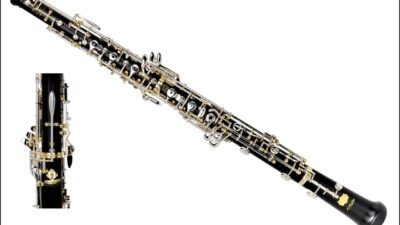
ओबो एक लगभग 62-65 सेंटीमीटर लंबा, शंक्वाकार भीतरी नली (conical bore) वाला काष्ठ-वाद्य है जो तीन जोड़ों — ऊपरी जोड़, निचला जोड़ और घंटी (bell) — में खुलता है। इसके मुख पर कोई मुखनली नहीं होती; इसके बजाय सरकंडे की दो पतली पत्तियों से बनी 'दोहरी रीड' होती है जिसे वादक होंठों के बीच दबाकर फूँकता है। शरीर पर चाँदी-मुलम्मे वाली धातु की चाबियाँ (keys) जटिल रूप से लगी होती हैं।
Description English
The oboe is a woodwind roughly 62-65 cm long with a conical inner bore, opening into three joints — the upper joint, lower joint, and bell. It has no mouthpiece; instead a 'double reed' of two thin blades of cane is gripped between the lips and blown. An intricate array of silver-plated metal keys covers the body.
Body
Straight, slender tube flaring into a small bell
सीधी, पतली नली जो एक छोटी घंटी में खुलती है
Grenadilla / African blackwood (Dalbergia melanoxylon); historically boxwood, sometimes cocobolo or violetwood
ग्रेनडिला / अफ़्रीकी काली लकड़ी (डालबर्गिया मेलानॉक्सीलॉन); पहले बॉक्सवुड, कभी-कभी कोकोबोलो या वायलेटवुड
62-65
Conical bore acts as the resonating air column; the flaring bell projects and shapes the tone
Strings
Not a stringed instrument — the oboe is a wind (aerophone) instrument; tone is produced by a vibrating air column
None — the oboe has no strings
None
Bow
दोहरी रीड (सरकंडे की जीभ)
Double reed
Two bound blades of cane (Arundo donax), scraped by hand and lashed to a metal staple
7 (reed assembly)
The reed is the sound generator — held between the lips and made to vibrate by controlled air pressure (embouchure); the oboe has no bow, being a wind instrument
Tuning Pegs
चाबियाँ (कीज़)
Keys
Silver-plated nickel-silver keywork built on the Conservatoire (Gillet) system; pressing keys opens and closes tone holes to change pitch
Bridge
जोड़ (सॉकेट-कॉर्क)
Joints / cork tenons
Cork-wrapped tenons join the three body sections airtight; the reed seats into a cork-lined socket at the top
Cork and metal
Frets
ओबो में फ्रेट या तार नहीं होते — स्वर चाबियों और तानछिद्रों (tone holes) के संयोजन से बनते हैं, जबकि सूक्ष्म पिच-नियंत्रण होंठों के दबाव (embouchure) और साँस से किया जाता है।
The oboe has no frets or strings — pitches are formed by combinations of keys and tone holes, while fine pitch control comes from lip pressure (embouchure) and breath.
ध्वनि-चरित्र
SoundTonal Character Hindi
ओबो की आवाज़ पतली, तीक्ष्ण, नासिकीय और गहरी करुणा से भरी होती है — मानो कोई एकाकी स्वर पूरे ऑर्केस्ट्रा के बीच रो रहा हो। यही 'प्लेंटिव' (विलापी) गुण उसे उदासी, विरह और लालसा के मार्मिक क्षणों के लिए आदर्श बनाता है।
Tonal Character English
The oboe's tone is thin, penetrating, reedy, and steeped in pathos — as if a single voice weeps amid the whole orchestra. This 'plaintive' quality makes it ideal for poignant moments of sorrow, separation, and longing.
Timbre
Reedy, penetrating, slightly nasal, warm yet piercing; instantly recognisable and hard to bury in an ensemble
Range
About B♭3 to A6 (roughly two and a half octaves), with skilled players reaching higher; a non-transposing (concert-pitch) instrument in C
Dynamic Range
Narrower than flute or clarinet — the small double reed resists very loud playing, but excels at intimate, controlled soft phrases
Techniques
सुनने का मार्गदर्शन
The Listening Guideओबो को पहचानना सीखने के लिए किसी पुराने, उदास हिंदी गीत का अंतराल (इंटरल्यूड) ग़ौर से सुनिए — जहाँ गायकी थमती है और एक पतली, नासिकीय, रोती-सी धुन उभरती है, वह अक्सर ओबो या उसका चचेरा क्लैरिनेट होता है। फिर मॉरिकोने की 'गैब्रिएल्स ओबो' सुनिए, जहाँ ओबो की आवाज़ अपने शुद्धतम, नंगे रूप में खुलती है। अंत में मोत्ज़ार्ट का ओबो कॉन्सर्टो सुनिए, जहाँ वह पूरे ऑर्केस्ट्रा के सामने अकेला गाता है।
अंग्रेज़ी में पढ़ें · Read in English
To learn to recognise the oboe, listen closely to the interlude of an old, sad Hindi film song — where the singing pauses and a thin, nasal, weeping melody rises, it is often the oboe or its cousin the clarinet. Then hear Morricone's 'Gabriel's Oboe' — this is the oboe's purest, most naked voice. Finally listen to Mozart's Oboe Concerto, where it sings alone before the whole orchestra.
परिचय
Identity- Year Of Origin
- 1657
अन्य विवरण
More DetailsTimbre
Reedy, penetrating, slightly nasal, warm yet piercing; instantly recognisable and hard to bury in an ensemble
रोचक तथ्य
Margin Notesट्यूनिंग का सम्राट — हर पश्चिमी ऑर्केस्ट्रा में परंपरा है कि प्रधान ओबो-वादक कॉन्सर्ट से पूर्व 'A' (440 Hz) स्वर बजाता है और बाक़ी सभी वाद्य उसी पर सुर मिलाते हैं। इसका कारण ओबो की पिच की स्थिरता और उसकी भेदक, स्पष्ट आवाज़ है जो शोर के बीच भी सुनी जा सकती है।
In every Western orchestra there is a tradition that the principal oboist sounds the 'A' (440 Hz) before a concert and all other instruments tune to it. The reason is the oboe's stable pitch and its penetrating, clear tone that can be heard even amid noise.
रीड बनाने की तपस्या — ओबो-वादक की आधी कला रीड बनाने में है। सरकंडे (Arundo donax) की पत्तियों को हाथ से चाकू और सैंडपेपर से छीलकर, बाँधकर, आकार देकर हर वादक अपनी रीड स्वयं तैयार करता है — और एक अच्छी रीड कुछ ही घंटों में घिस भी सकती है।
Half of an oboist's art lies in reed-making. Scraping blades of cane (Arundo donax) by hand with knife and sandpaper, binding and shaping them, each player prepares their own reeds — and a good reed can wear out within hours.
शॉम से ओबो तक — ओबो का पूर्वज मध्यकालीन 'शॉम' था — एक तेज़, कर्कश दोहरी-रीड वाद्य जो सैन्य और मेलों का संगीत बजाता था। 17वीं सदी में फ़्रांसीसी दरबारी वादकों ने उसे परिष्कृत कर एक नरम, सभा-योग्य वाद्य में बदल दिया, जिससे आधुनिक ओबो जन्मा।
The oboe's ancestor was the medieval 'shawm' — a loud, raucous double-reed instrument that played military and fairground music. In the 17th century French court players refined it into a softer, chamber-worthy instrument, from which the modern oboe was born.
फ़िल्मी ऑर्केस्ट्रा की गोवा-विरासत — स्वर्ण-युग के हिंदी फ़िल्म-संगीत के वाद्यवृंद बड़े पैमाने पर गोवा-मूल के संगीतकारों और अरेंजरों द्वारा रचे जाते थे, जो पश्चिमी वाद्य — वायलिन, तुरही, क्लैरिनेट और ओबो — बजाते और स्वरबद्ध करते थे। इन्हीं की बदौलत उदास गीतों के अंतरालों में ओबो की करुण आवाज़ भारतीय कानों तक पहुँची।
The orchestras of golden-era Hindi film music were built largely by Goan musicians and arrangers, who played and scored Western instruments — violin, trumpet, clarinet, and oboe. It is thanks to them that the oboe's plaintive voice reached Indian ears in the interludes of sad songs.
सवाल-जवाब
Questions & Answersओबो क्या है?
ओबो एक पश्चिमी काष्ठ-वाद्य (woodwind) है जो सरकंडे की 'दोहरी रीड' से बजता है। इसकी पतली, नासिकीय, विलापी आवाज़ को अक्सर 'रोता हुआ' कहा जाता है, और यह सिम्फ़नी ऑर्केस्ट्रा की वुडविंड पंक्ति का केंद्रीय वाद्य है।
क्या ओबो भारतीय संगीत में प्रयोग होता है?
ओबो हिंदुस्तानी शास्त्रीय या लोक-संगीत का पारंपरिक वाद्य नहीं है, किंतु स्वर्ण-युग (लगभग 1945-1965) के हिंदी फ़िल्मी ऑर्केस्ट्रा में इसका उपयोग होता था — उदास गीतों के अंतरालों और प्रति-धुनों में करुण रंग भरने के लिए, क्लैरिनेट और बाँसुरी के साथ वुडविंड पंक्ति में।
ओबो और शहनाई में क्या संबंध है?
दोनों 'दोहरी-रीड' वाद्य हैं और दोनों की आवाज़ करुण तथा गायकी-सी होती है। ओबो को अक्सर शहनाई का पश्चिमी जुड़वाँ कहा जाता है — शहनाई भारतीय संगीत में वही भावनात्मक भूमिका निभाती है जो ओबो पश्चिमी संगीत में निभाता है।
ऑर्केस्ट्रा ओबो के सुर पर ही क्यों मिलाता है?
कॉन्सर्ट से पहले प्रधान ओबो-वादक 'A' (440 Hz) स्वर बजाता है और बाक़ी सभी वाद्य उसी पर सुर मिलाते हैं, क्योंकि ओबो की पिच स्थिर होती है और उसकी भेदक, स्पष्ट आवाज़ शोर के बीच भी साफ़ सुनी जा सकती है।
ओबो की सबसे प्रसिद्ध धुन कौन सी है?
एन्नियो मॉरिकोने की 'गैब्रिएल्स ओबो' (फ़िल्म 'द मिशन', 1986) संभवतः ओबो के लिए लिखी गई सबसे प्रसिद्ध धुन है — इसकी नग्न, विलापी सुंदरता ओबो के भाव को शुद्धतम रूप में दिखाती है।
नमूना-पट्टी
The Specimen Table| नाम | ओबो · Oboe |
|---|---|
| अन्य नाम | ओबोए · हॉटबॉय (Hautbois) · Oboe (also: Hoboy, Hautboy) |
| उद्गम | 1657 |
| प्रकार | वाद्य · Instruments |
साझा कीजिए · Share this Plate