शास्त्र विंग · वाद्य-पट्टिका · Instrument Plate
मोहोरी
Mohori
अन्य नाममहुरी (Mahuri) · मोहुरी (Mohuri) · ମହୁରୀ (Odia) · Mangala Badya (मंगल वाद्य)
परिचय
Overviewमोहोरी (महुरी) ओडिशा की दोहरी-नरकट वाली छोटी शहनाई है — लकड़ी की शंक्वाकार नली, पीतल का फैला घंटा, और सात स्वर-छिद्रों से निकलती तीखी, उजली, मंगलमयी पुकार। इसे 'मंगल वाद्य' कहा जाता है; ढोल-नगाड़े के साथ यह विवाह, व्रतोपनयन, मंदिर-पर्व और कंधा आदिवासी शोभायात्राओं की अनिवार्य धड़कन है। दलखाई-रसरकेली से लेकर गंडबाजा वाद्यवृंद तक, अखंड-श्वास से बजती इसकी धुन ओडिशा की उत्सव-आत्मा है — और आज एक विलुप्तप्राय, संरक्षण-योग्य विरासत।
अंग्रेज़ी में पढ़ें · Read in English
The mohori (mahuri) is Odisha's small double-reed shawm — a conical wooden pipe, a flared brass bell, and a piercing, bright, auspicious cry from its seven finger holes. Called a 'mangala vadya', it is, with dhol and nagara, the indispensable pulse of weddings, sacred-thread ceremonies, temple festivals and Kandha tribal processions. From Dalkhai and Rasarkeli to the Gandabaja ensemble, its circular-breathed melody is the festive soul of Odisha — and today an endangered heritage worth preserving.
वर्गीकरण
ClassificationNatya Shastra Category
सुषिर (Sushira - wind instruments)
नाट्यशास्त्र की चतुर्विध वाद्य-व्यवस्था में मोहोरी 'सुषिर' (फूँक से बजने वाले) वर्ग में आती है। इसमें वादक होंठों के बीच दोहरी नरकट (डबल-रीड) को दबाकर फूँकता है और नली से गुज़रती वायु-स्तंभ के कंपन से स्वर उत्पन्न होते हैं।
In the fourfold instrument system of the Natya Shastra, the mohori belongs to the 'Sushira' (blown / wind) category. The player blows across a double reed held between the lips, and pitch is produced by the vibrating air-column travelling down the pipe and out through the metal bell.
Western Category
Double-reed shawm (oboe / conical-bore aerophone family)
Western Family
Shawm family — the Odia sibling of the North Indian shehnai and the South Indian nadaswaram; a folk-processional conical oboe with a flared metal bell
Sub Classification
बनावट
PhysicalDescription Hindi
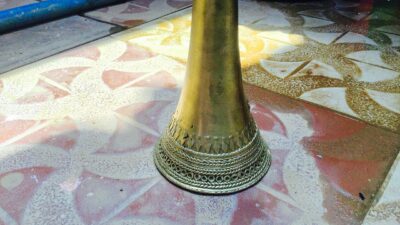
मोहोरी एक छोटी-सी दोहरी-नरकट वाली शहनाई-वर्ग की वाद्य है, जो लकड़ी (या बाँस) की शंक्वाकार नली और नीचे लगे पीतल के फैलते हुए घंटे (बेल) से बनी होती है। ऊपरी सिरे पर एक पतली दोहरी नरकट लगी रहती है जिसे वादक होंठों में दबाकर फूँकता है; नली में सामान्यतः सात स्वर-छिद्र होते हैं जिन पर उँगलियाँ रखकर स्वर बदले जाते हैं। इसकी बनावट लोक-प्रयोग के लिए मज़बूत और वहन में हल्की होती है।
Description English
The mohori is a small double-reed shawm made of a conical wooden (or bamboo) pipe fitted at its lower end with a flared brass bell. A slender double reed is set at the top, gripped between the player's lips and blown; the pipe generally carries seven finger holes that the player covers and uncovers to change pitch. Its build is rugged for outdoor folk use and light enough to carry in processions.
Body
Slender conical pipe widening into a flared brass bell
पतली शंक्वाकार नली जो नीचे जाकर पीतल के फैले घंटे में खुलती है
Wood (often hardwood; sometimes bamboo) for the pipe, brass for the bell and mouth ferrule
नली के लिए लकड़ी (प्रायः कठोर काष्ठ; कभी-कभी बाँस), घंटे और मुख-चूड़ी के लिए पीतल
30-45 (approx.)
Flared brass bell that projects and colours the tone, giving the mohori its bright, carrying, open-air voice
Strings
None — the mohori is a wind (sushira) instrument and has no strings; sound comes from a vibrating double reed and air column
Not applicable to a wind instrument
The mohori itself carries no drone; in ensemble the sustained drone/rhythm is supplied by accompanying percussion (dhol, nagara/tamak) and, in some pairings, a second held-note shawm
Reed
नरकट / रीड (दोहरी)
Reed (double reed)
Double reed — two thin blades of cane bound together that beat against each other when blown
दोहरी नरकट — नरकट की दो पतली पत्तियाँ आपस में बँधी, जो फूँकने पर परस्पर कंपन करती हैं
मोहोरी की आत्मा उसकी दोहरी नरकट में बसती है; इसी के कारण इसका स्वर शहनाई और नादस्वरम जैसा तीखा, नासिक और दूर तक जाने वाला होता है। नरकट को समय-समय पर बदला और भिगोया जाता है।
The mohori's soul lives in its double reed; this is what gives it a piercing, nasal, far-carrying voice like the shehnai and nadaswaram. The reed is periodically moistened and replaced.
Finger Holes
स्वर छिद्र
Finger holes
Generally 7
नली पर सामान्यतः सात छिद्र होते हैं; उँगलियों से इन्हें ढककर और खोलकर वादक स्वर एवं मींड (glide) साधता है। छिद्रों के आंशिक ढकाव से सूक्ष्म श्रुतियाँ निकाली जाती हैं।
The pipe typically has seven holes; by covering and uncovering them the player produces pitches and glides (meend). Half-covering holes yields microtonal shades.
Bell
घंटा / मुख (पीतल)
Bell (brass)
Flared brass bell at the lower end that amplifies and brightens the tone for outdoor and processional use
निचले सिरे पर लगा पीतल का फैला घंटा, जो ध्वनि को उजला और दूरगामी बनाकर खुले मैदान और शोभायात्रा के लिए उपयुक्त करता है
Frets
मोहोरी में फ्रेट नहीं होते; यह वायु वाद्य है और स्वर उँगलियों से छिद्र ढककर तथा फूँक के दाब से साधे जाते हैं, जिससे मींड और लोक-गमक स्वाभाविक रूप से आते हैं।
The mohori has no frets; being a wind instrument, pitch is shaped by covering finger holes and by breath pressure, allowing natural meend (glides) and folk gamak (oscillation).
ध्वनि-चरित्र
SoundTonal Character Hindi
मोहोरी की आवाज़ तीखी, उजली, नासिक और मंगलमयी है — दूर तक गूँजती हुई। यह उल्लास और शुभ का उद्घोष करती है; ढोल-नगाड़े के साथ मिलकर यह विवाह-मंडप से लेकर आदिवासी शोभायात्रा तक उत्सव की धड़कन बन जाती है।
Tonal Character English
The mohori's voice is piercing, bright, nasal and auspicious — carrying far across open ground. It announces joy and blessing; paired with dhol and nagara it becomes the very pulse of celebration, from the wedding pandal to the tribal procession.
Timbre
Reedy, bright, nasal shawm timbre — akin to shehnai and nadaswaram but with a rustic, open-air folk edge
Range
Roughly one to two octaves, set by the seven finger holes and breath/reed control (a folk melodic range rather than a wide classical compass)
Dynamic Range
Loud and projecting by nature — built to be heard over drums in the open air; capable of tender, plaintive phrases in solo temple playing
Techniques
सुनने का मार्गदर्शन
The Listening Guideमोहोरी को सुनना हो तो पहले उसकी अटूट स्वर-धारा पर ठहरिए — वादक साँस भीतर खींचते हुए भी गाल की हवा से फूँकता रहता है, इसलिए धुन कभी टूटती नहीं। फिर ढोल-नगाड़े के साथ उसकी नोक-झोंक पकड़िए। दलखाई या रसरकेली की धुन से शुरुआत कीजिए — इन्हीं में मोहोरी की उत्सवी आत्मा खुलती है, और मंदिर के मंगल-वादन में उसकी दूर तक जाती शुभ पुकार सुनिए।
अंग्रेज़ी में पढ़ें · Read in English
When listening to the mohori, first notice its unbroken, continuous stream of sound — the player keeps blowing even while breathing in. Then catch its interplay with dhol and nagara: how it weaves a bright melody over the folk beat. Start with a Dalkhai or Rasarkeli tune — the mohori's festive soul opens in these; and hear its prayer-like, far-carrying cry in a temple's mangala playing.
अन्य विवरण
More DetailsTimbre
Reedy, bright, nasal shawm timbre — akin to shehnai and nadaswaram but with a rustic, open-air folk edge
रोचक तथ्य
Margin Notesमोहोरी और उपेंद्र भंज — परंपरा में मोहोरी और ताल-वाद्यों की टोली 16वीं शताब्दी के महाकवि उपेंद्र भंज की शास्त्रीय रचनाओं तक को बजाती रही है — यह दर्शाता है कि यह 'लोक' वाद्य ओडिशा की उच्च काव्य-परंपरा से भी जुड़ी रही।
By tradition, bands of mohori with percussion have rendered even the classical compositions of the 16th-century master poet Upendra Bhanja — showing that this 'folk' instrument has also been tied to Odisha's high poetic tradition.
ढोल-मोहोरी की जोड़ी — ओडिशा में 'ढोल-मोहोरी' एक जुड़वाँ मुहावरा है — मोहोरी उजली धुन बुनती है और ढोल-नगाड़ा उसकी लय गढ़ते हैं; भद्रक जैसे अंचलों की 'ढोल-मोहोरी' प्रस्तुतियाँ प्रसिद्ध हैं।
In Odisha 'dhol-mohori' is a twinned idiom — the mohori weaves the bright melody while the dhol and nagara build its rhythm; the 'dhol-mahuri' performances of regions like Bhadrak are well known.
पूरे भारत की एक ही मंगल-ध्वनि — मोहोरी, शहनाई, नादस्वरम, सुंदरी — नाम अलग, आत्मा एक। भारत के अलग-अलग कोनों में यह दोहरी-नरकट शंक्वाकार वाद्य हर शुभ अवसर की साझी पुकार बन गई। मोहोरी उसी परंपरा की ओडिशाई आवाज़ है।
Mohori, shehnai, nadaswaram, sundari — different names, one soul. In every corner of India this conical double-reed instrument became the shared cry of every auspicious occasion. The mohori is that tradition's Odia voice.
सवाल-जवाब
Questions & Answersमोहोरी (महुरी) क्या है?
मोहोरी ओडिशा की एक पारंपरिक दोहरी-नरकट वाली सुषिर (वायु) वाद्य है — शहनाई और नादस्वरम के परिवार की। लकड़ी की शंक्वाकार नली और पीतल के घंटे से बनी यह 'मंगल वाद्य' (शुभ वाद्य) कहलाती है और विवाह, मंदिर-पर्व तथा लोक-नृत्यों में बजती है।
मोहोरी को मंगल वाद्य क्यों कहते हैं?
'मंगल वाद्य' का अर्थ है 'शुभ वाद्य'। परंपरा में मोहोरी की ध्वनि शुभता का उद्घोष मानी जाती है; विवाह में इसका बजना अनुष्ठान की पूर्णता का संकेत होता है, इसलिए हर शुभ अवसर पर यह अनिवार्य रही है।
मोहोरी और शहनाई में क्या संबंध है?
दोनों एक ही दोहरी-नरकट शंक्वाकार शहनाई-परिवार की हैं। शहनाई उत्तर भारत की और मंच पर शास्त्रीय प्रतिष्ठा-प्राप्त है, जबकि मोहोरी ओडिशा की लोक-अनुष्ठान वाद्य है। दक्षिण का नादस्वरम भी इसी परिवार का है।
मोहोरी कहाँ और किन अवसरों पर बजती है?
यह मुख्यतः ओडिशा (विशेषकर पश्चिमी ओडिशा) में विवाह, व्रतोपनयन, मंदिर-पर्व, अंत्येष्टि-शोभायात्रा और कंधा आदिवासी जुलूसों में ढोल-नगाड़े के साथ बजती है। दलखाई, रसरकेली, घुमुरा जैसे लोक-नृत्यों और 'गंडबाजा' वाद्यवृंद में यह अग्रणी स्वर होती है।
क्या मोहोरी आज भी बची है?
मोहोरी विलुप्ति के कगार पर मानी जाती है — घटती माँग और अल्प आय के कारण नई पीढ़ी इससे दूर हुई है। इसे बचाने के लिए पद्मपुर में 'बोदासंबर मोहोरी महोत्सव' होता है और सरकार वृद्ध मोहोरिया कलाकारों को मासिक पेंशन देती है।
नमूना-पट्टी
The Specimen Table| नाम | मोहोरी · Mohori |
|---|---|
| अन्य नाम | महुरी (Mahuri) · मोहुरी (Mohuri) · ମହୁରୀ (Odia) · Mangala Badya (मंगल वाद्य) |
| प्रकार | वाद्य · Instruments |
साझा कीजिए · Share this Plate