शास्त्र विंग · वाद्य-पट्टिका · Instrument Plate
मद्दलम
Maddalam
अन्य नामമദ്ദളം (Malayalam) · मदलम / मद्दलम · Madhalam · Maddale (variant spelling)
परिचय
Overviewमद्दलम केरल का पीपे-सा दो-मुँहा ढोल है, जो कटहल की एक ही लकड़ी से तराशा जाता है और कथकली के मंच पर चेंडा के साथ अभिनय की धड़कन बनता है। इसके तीन रूप — शुद्ध, टोप्पि और वीर मद्दलम — मंदिर-मेलम, पंचवाद्यम और अनुष्ठानों में अलग-अलग भूमिकाएँ निभाते हैं। बास और झनकार के इसी संवाद ने इसे केरल की अनुष्ठानिक आत्मा का स्वर बना दिया है।
अंग्रेज़ी में पढ़ें · Read in English
The maddalam is Kerala's barrel-shaped, double-headed drum, carved from a single block of jackwood, that becomes the pulse of the acting alongside the chenda on the Kathakali stage. Its three forms — suddha, toppi and vira maddalam — play distinct roles in temple melam, Panchavadyam and ritual. This very dialogue of bass and ring has made it the voice of Kerala's ritual soul.
वर्गीकरण
ClassificationNatya Shastra Category
अवनद्ध (Avanaddha - membranophones / drums)
नाट्यशास्त्र के चार वाद्य-वर्गों में मद्दलम 'अवनद्ध' (चमड़े से मढ़े ताल-वाद्य) वर्ग में आता है — जहाँ ध्वनि खोखले काष्ठ-कोश पर मढ़ी झिल्ली (चमड़े) पर आघात से उत्पन्न होती है। यह उसी परिवार का है जिसमें मृदंग और पखावज आते हैं।
In the four instrument classes of the Natya Shastra, the maddalam belongs to 'Avanaddha' (skin-covered percussion) — where sound arises from striking a stretched membrane over a hollow wooden shell. It belongs to the same family as the mridangam and pakhawaj.
Western Category
Double-headed barrel drum (membranophone)
Western Family
Barrel-drum family — a horizontal, hand-played membranophone related in construction to the mridangam and pakhawaj, but native to Kerala's temple and Kathakali traditions
Sub Classification
बनावट
PhysicalDescription Hindi
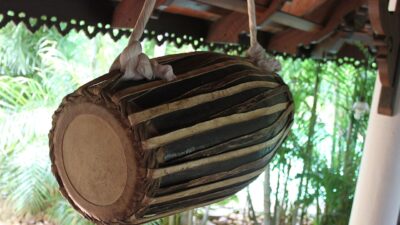
मद्दलम एक बड़ा, पीपे (बैरल) के आकार का दो-मुँहा ढोल है जिसे परंपरागत रूप से कटहल (प्लाव) की एक ही लकड़ी के ठोस टुकड़े को खोखला करके बनाया जाता है। इसके दोनों सिरों पर अलग-अलग व्यास की चमड़े की झिल्लियाँ मढ़ी होती हैं — दाहिना मुख (वलन्तला) ऊँचे, तीखे स्वर का और बायाँ मुख (इडन्तला) गहरे, मन्द्र बास का। वादक इसे कमर से पट्टे द्वारा लटकाकर, क्षैतिज रूप से शरीर के सामने रखकर दोनों हाथों से बजाता है।
Description English
The maddalam is a large, barrel-shaped, double-headed drum, traditionally carved by hollowing a single solid block of jackwood (plavu). Its two ends carry leather membranes of different diameters — the right face (valanthala) high and sharp in pitch, the left face (idanthala) deep and bass. The player suspends it from the waist by a strap, holding it horizontally in front of the body, and strikes both heads with the hands.
Body
Barrel / bulging cylinder, widest at the middle
पीपे जैसा — बीच में उभरा हुआ बैरल आकार
Solid jackwood (wood of the jackfruit tree, Artocarpus heterophyllus), hollowed from a single log
कटहल की ठोस लकड़ी (प्लाव), एक ही लट्ठे को खोखला करके तराशी हुई
60-65 (approx., varies by type)
Single enclosed wooden barrel shell that couples the two membranes for a full, projecting tone without amplification
Heads
2
Two circular leather membranes of unequal diameter, laced onto the barrel ends
असमान व्यास की दो गोल चमड़े की झिल्लियाँ, बैरल के दोनों सिरों पर कसी हुई
Layered animal hide (multiple leather rings — a central playing skin held by outer tension rings)
प्रदर्शन से पहले झिल्ली पर पके चावल/आटे का लेप लगाकर स्वर को साधा जाता है और प्रदर्शन के बाद पोंछ दिया जाता है (मृदंग की भाँति, पर प्रायः स्थायी नहीं)।
Before a performance, a paste of cooked rice or flour is applied to tune the pitch of the head and wiped off afterward (similar in principle to the mridangam, but usually not permanent).
Lacing And Bracing
वार / चमड़े की डोरियाँ
Leather braces / lacing
दोनों मुखों को जोड़ती हुई चमड़े की डोरियाँ बैरल के चारों ओर लिपटी रहती हैं; इन्हें कस या ढीला करके तथा चमड़े के छल्लों की संख्या बदलकर तनाव और स्वर साधा जाता है।
Leather braces run around the barrel connecting both heads; tension and pitch are adjusted by tightening or loosening them and by varying the number of leather rings.
Finger Caps
अँगुली-टोपियाँ (थिम्बल)
Finger caps / thimbles
शुद्ध मद्दलम बजाते समय वादक प्रायः दाहिने हाथ की अँगुलियों पर कठोर टोपियाँ पहनते हैं जिससे वलन्तला पर तीखी, धातु-सी झनकार उत्पन्न होती है। (सत्यापन-योग्य विवरण)
When playing the suddha maddalam, performers often wear hard caps on the fingers of the right hand to draw a crisp, metallic ring from the valanthala. (Detail flagged for verification)
Playing Position
मद्दलम को कमर के गिर्द बँधे पट्टे से क्षैतिज लटकाया जाता है; वादक खड़े होकर दोनों हाथों से दोनों मुख बजाता है — दाहिना हाथ वलन्तला पर लय-अलंकरण, बायाँ हाथ इडन्तला पर बास।
The maddalam hangs horizontally from a waist strap; the player stands and strikes both faces with both hands — the right hand on the valanthala for rhythmic ornament, the left on the idanthala for bass.
Variants
मद्दलम के तीन प्रमुख प्रकार प्रचलित हैं, जिनके संदर्भ और आकार भिन्न हैं:
Three principal types of maddalam are in use, differing in context and build:
ध्वनि-चरित्र
SoundTonal Character Hindi
मद्दलम की ध्वनि भरी-पूरी, गोल और गहरी है — इडन्तला की मन्द्र गड़गड़ाहट और वलन्तला की तीखी झनकार मिलकर एक जीवंत, नृत्य-प्रेरक स्पंदन रचती हैं। कथकली के मंच पर यह अभिनय की मुद्राओं और भावों के साथ धड़कती है।
Tonal Character English
The maddalam's tone is full, round and deep — the low rumble of the idanthala and the sharp ring of the valanthala together create a living, dance-driving pulse. On the Kathakali stage it throbs in step with the gestures and emotions of the actor.
Timbre
Warm and resonant with a bright, cutting attack on the treble face; earthy and booming on the bass face
Range
Rhythmic (unpitched) instrument spanning a deep bass to a sharp treble register across its two faces
Dynamic Range
Very wide — from soft finger-taps accompanying delicate padams to thunderous full-hand strokes in climactic scenes and temple melam
Techniques
सुनने का मार्गदर्शन
The Listening Guideमद्दलम का रस लेना हो तो पहले एक कथकली दृश्य देखिए — देखिए कैसे मद्दलम अभिनेता के भाव के साथ मृदु पड़ता और चेंडा के साथ गरजता है। फिर पंचवाद्यम सुनिए, जहाँ टोप्पि मद्दलम धीमी लय से आरंभ कर उन्माद तक पहुँचता है। बास (इडन्तला) और झनकार (वलन्तला) के संवाद को पहचानिए — यही इसकी आत्मा है।
अंग्रेज़ी में पढ़ें · Read in English
To understand the maddalam, first listen to a Kathakali scene — notice how it softens with the actor's emotion and thunders with the chenda at the climax. Then hear Panchavadyam, where the toppi maddalam begins slow and accelerates into ecstasy. Attend to the dialogue between bass (idanthala) and ring (valanthala) — that is the maddalam's soul.
श्रवण-कक्ष · The Listening Room
देखें-सुनें
Maddalam Kathakali Drum instrument
Maddalam, Drum, percussion instrument, Traditional, training, Kalamandalam, Kerala, India
kerala percussion instrument maddalam
परिचय
Identity- Year Of Origin
- 1600
अन्य विवरण
More DetailsTimbre
Warm and resonant with a bright, cutting attack on the treble face; earthy and booming on the bass face
रोचक तथ्य
Margin Notesएक ही लकड़ी की काया — मद्दलम की बैरल-काया परंपरागत रूप से कटहल के एक ही ठोस लट्ठे को धैर्यपूर्वक खोखला करके तराशी जाती है — जोड़ी हुई लकड़ी से नहीं। यही अखंड काया इसकी भरी-पूरी गूँज का रहस्य है।
The maddalam's barrel is traditionally carved by patiently hollowing a single solid log of jackwood — not from joined pieces. This unbroken body is the secret of its full resonance.
वलन्तला और इडन्तला — केरल के ढोलों में दाहिने और बाएँ मुख को क्रमशः 'वलन्तला' और 'इडन्तला' कहते हैं। मद्दलम में वलन्तला तीखी झनकार देता है और इडन्तला गहरा बास — इन दोनों का संवाद ही वाद्य की भाषा है।
In Kerala drums the right and left faces are called 'valanthala' and 'idanthala' respectively. On the maddalam the valanthala gives sharp ring and the idanthala deep bass — the dialogue of the two is the instrument's language.
कलामण्डलम और पुनर्जीवन — 1930 में महाकवि वल्लत्तोल नारायण मेनन द्वारा स्थापित केरल कलामण्डलम ने कथकली और मद्दलम-वादन को संस्थागत गुरुकुल-प्रशिक्षण देकर पतन से उबारा और नई पीढ़ियों तक पहुँचाया।
Founded in 1930 by the poet Vallathol Narayana Menon, the Kerala Kalamandalam rescued Kathakali and maddalam playing from decline through institutional gurukula training and carried them to new generations.
मृदंग-पखावज का दक्षिणी बंधु — अवनद्ध वर्ग के बैरल-ढोल होने के नाते मद्दलम संरचना में मृदंग और पखावज का सगोत्र है — दो असमान मुख, हाथ से वादन — पर इसकी लकड़ी (कटहल), प्रसंग (कथकली/मंदिर) और शैली इसे सर्वथा केरलीय बनाती हैं।
As a barrel drum of the Avanaddha class, the maddalam is kin in construction to the mridangam and pakhawaj — two unequal faces, hand-played — yet its wood (jackwood), context (Kathakali/temple) and style make it distinctly Keralan.
सवाल-जवाब
Questions & Answersमद्दलम क्या है?
मद्दलम केरल का एक बड़ा, पीपे के आकार का दो-मुँहा ढोल है जिसे कटहल की एक ही लकड़ी से तराशा जाता है। इसे हाथों से बजाया जाता है और यह कथकली, पंचवाद्यम तथा मंदिर-उत्सवों के मेलम का प्रमुख ताल-वाद्य है।
मद्दलम किस लकड़ी से बनता है?
मद्दलम की काया परंपरागत रूप से कटहल (प्लाव) की एक ही ठोस लकड़ी को खोखला करके बनाई जाती है, जिसके दोनों सिरों पर चमड़े की झिल्लियाँ मढ़ी जाती हैं।
मद्दलम के कितने प्रकार होते हैं?
मद्दलम के तीन प्रमुख प्रकार हैं — शुद्ध मद्दलम (कथकली और मेलम के लिए, सबसे पवित्र और बड़ा), टोप्पि मद्दलम (पंचवाद्यम का बास-वाद्य), और वीर मद्दलम (विशिष्ट अनुष्ठानों के लिए)।
मद्दलम और चेंडा में क्या अंतर है?
चेंडा डंडों से बजने वाला बेलनाकार ढोल है जो तीखी, गूँजती ध्वनि देता है, जबकि मद्दलम हाथों से बजने वाला बैरल-ढोल है जो भरा-पूरा, गोल बास देता है। कथकली में दोनों साथ बजते हैं — चेंडा वीर/उग्र भावों में और मद्दलम कोमल/भाव-प्रधान दृश्यों में प्रमुख होता है।
मद्दलम पंचवाद्यम में क्या भूमिका निभाता है?
पंचवाद्यम — केरल की पाँच-वाद्य मंदिर-वृंद-रचना (तिमिल, मद्दलम, इडक्का, कोम्बु, इलत्तालम) — में टोप्पि मद्दलम गहरे बास का आधार प्रदान करता है और वृंद की क्रमशः तीव्र होती लय-यात्रा को थामे रखता है।
नमूना-पट्टी
The Specimen Table| नाम | मद्दलम · Maddalam |
|---|---|
| अन्य नाम | മദ്ദളം (Malayalam) · मदलम / मद्दलम · Madhalam · Maddale (variant spelling) · शुद्ध मद्दलम (Suddha Maddalam) · टोप्पि मद्दलम (Toppi Maddalam) |
| उद्गम | 1600 |
| प्रकार | वाद्य · Instruments |
साझा कीजिए · Share this Plate