शास्त्र विंग · वाद्य-पट्टिका · Instrument Plate
कछुआ सितार
Kachhwa Sitar
अन्य नामकच्छपी वीणा (Kacchapī Veena) · कच्छप वीणा (Kachchapa Veena) · Kachua Sitar · Kachchawa Sitar
परिचय
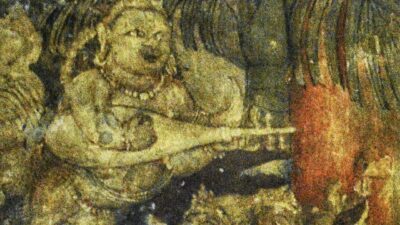
Overviewकछुआ सितार / कच्छपी वीणा भारतीय तंत्री-वाद्य परंपरा का वह प्राचीन रूप है जिसका अनुनादक कछुए की पीठ जैसा होता था — 'कच्छप' यानी कछुआ, और इसी आकृति-साम्य से इसका नाम पड़ा। आरम्भिक सितार का चपटा-तूम्बा रूप 'कछुआ' कहलाता था और वही आधुनिक सितार का पूर्वज है; उधर देवी सरस्वती के हाथ की वीणा भी 'कच्छपी' कही जाती है। अजंता की गुफा में एक किन्नर आज भी यह वीणा थामे दिखता है। वाद्य अब दुर्लभ है, पर इसकी गूँज उत्तर की सितार और दक्षिण की सरस्वती वीणा — दोनों में जीवित है।
अंग्रेज़ी में पढ़ें · Read in English
The kachhwa sitar / kacchapi veena is that ancient form in the Indian stringed-instrument tradition whose resonator resembled a tortoise's back — 'kachchapa' means tortoise, and it is from this resemblance that it takes its name. The early sitar's flat-gourd form was called 'kachua', and it is the ancestor of the modern sitar; meanwhile the veena in goddess Saraswati's hands is also called 'kacchapi'. In a cave at Ajanta a kinnara is still shown holding this veena. The instrument is rare now, but its resonance lives on in both the northern sitar and the southern Saraswati veena.
वर्गीकरण
ClassificationNatya Shastra Category
तत (Tata - stringed instruments)
तत वर्ग में कछुआ सितार / कच्छपी वीणा एक तंत्री-वाद्य है जो तारों को नखी/मिज़राब से झंकृत (pluck) करने पर ध्वनि उत्पन्न करता है। इसका अनुनादक कछुए की पीठ के आकार का चपटा तूम्बा या काष्ठ-कवच होता है।
In the Tata (stringed) category, the kachhwa sitar / kacchapi veena is a plucked chordophone that produces sound when its strings are struck with a plectrum (nakhi/mizrab). Its resonator is a flattened gourd or wooden shell shaped like the back of a tortoise.
Western Category
Plucked string instrument (long-necked composite lute)
Western Family
Lute family — ancestral / archaic form in the sitar and veena lineage, distinguished by a tortoise-shell-shaped resonator
Sub Classification
बनावट
PhysicalDescription Hindi
कछुआ सितार अथवा कच्छपी वीणा एक तंत्री-वाद्य है जिसकी सबसे विशिष्ट पहचान उसका अनुनादक है — एक कछुए (कच्छप) की पीठ के आकार का चपटा, गोलाई-लिए हुए तूम्बा या लकड़ी का कवच। संस्कृत में 'कच्छप' का अर्थ ही कछुआ है, और इसी आकृति-साम्य के कारण इस वाद्य को यह नाम मिला। सितार के आरम्भिक रूप में तूम्बा लगभग चपटा — कछुए की पीठ जैसा — होता था, इसीलिए ऐसे सितार को 'कछुआ' या 'कच्छवा' सितार कहा गया।
Description English
The kachhwa sitar (kacchapi veena) is a plucked string instrument whose most distinctive feature is its resonator — a flattened, rounded gourd or wooden shell shaped like the back of a tortoise (kachchapa). In Sanskrit 'kachchapa' literally means tortoise, and it is from this resemblance that the instrument takes its name. In the early sitar the gourd was almost flat — like a tortoise's back — and such a sitar was therefore called 'kachua' or 'kachchawa'.
Body
Tortoise-shell / flattened rounded gourd (dome resembling a tortoise's back)
कछुए की पीठ जैसा चपटा-गोलाकार तूम्बा / कवच
Traditionally a dried bottle-gourd (tumba) shaped or carved to a flat tortoise-back; sometimes a wooden shell carved as a model of a tortoise; neck of seasoned tun (toona) or teak wood
परंपरागत रूप से सूखा लौकी-तूम्बा जिसे चपटी कछुआ-पीठ आकृति में गढ़ा जाता है; कभी-कभी कछुए के प्रतिरूप में तराशा हुआ काष्ठ-कवच; गर्दन तून या सागवान की लकड़ी की
100-120 (neck plus resonator, sitar-form)
Single tortoise-back gourd/wooden chamber; in later sitar forms a secondary smaller gourd (tumba) could be added at the top of the neck
Strings
Primary plucked melody strings. The archaic kachchawa sitar carried three strings (like the earliest sitars and the been); the exact stringing of the ancient kacchapi veena is not documented in surviving texts.
The early tortoise-back kachchawa sitar did not carry the many sympathetic (tarab) strings of the modern sitar; these were a later development as the instrument evolved into today's sitar.
Rhythm/drone strings (chikari) plucked for rhythmic punctuation in the developed sitar; not clearly attested for the earliest tortoise-back form
Plectrum
मिज़राब / नखी
Mizrab / Nakhi
Wire plectrum worn on the index finger (mizrab), or a plectrum in the shape of a fingernail (nakhi) as used on veenas
Strings are plucked (struck), not bowed — inward and outward strokes (da, ra) produce the melodic line and rhythmic drone
Tuning Pegs
खूंटी
Khunti
Wooden lateral pegs set into the neck that adjust main-string pitch by direct rotation
Bridge
घोड़ी / जवारी
Ghodi / Javari
A flat, gently curved bridge seated on the tortoise-back resonator. The 'javari' — a subtle flattened curvature — gives the buzzing, sustaining timbre characteristic of the sitar-veena family.
Wood (often deer-horn or hardwood on the playing surface)
Frets
सितार-रूप में गर्दन पर घुमावदार, बँधे हुए (चल) पर्दे (frets) होते हैं जिन्हें राग के अनुसार खिसकाया जा सकता है; इससे मीड और सूक्ष्म स्वर-लगाव सम्भव होते हैं। प्राचीन कच्छपी वीणा की पर्दा-व्यवस्था का विवरण उपलब्ध नहीं है।
In the sitar form the neck carries curved, tied (movable) frets that can be shifted according to the raga, enabling meend and microtonal nuance. The fretting arrangement of the ancient kacchapi veena is not documented.
ध्वनि-चरित्र
SoundTonal Character Hindi
कछुआ सितार की ध्वनि झंकार-प्रधान, गूँजती हुई और मधुर होती है — कछुए की पीठ जैसा अनुनादक एक गोल, भरा-पूरा नाद देता है, जबकि जवारी उसमें एक लम्बी, गुनगुनाती अनुगूँज भर देती है। तीन तारों वाले आरम्भिक रूप का स्वर सरल किन्तु गहरा और ध्यानमग्न होता है।
Tonal Character English
The kachhwa sitar's tone is plucked, resonant and sweet — the tortoise-back resonator gives a round, full sound, while the javari bridge lends it a long, humming sustain. The three-stringed archaic form has a simple yet deep, meditative voice.
Timbre
Warm, ringing, buzzing-sustain (javari) plucked-lute timbre
Range
Roughly two to two-and-a-half octaves around the tonic (Sa) in the archaic three-string form
Dynamic Range
Moderate — an intimate solo and accompaniment voice rather than a loud projecting one
Techniques
सुनने का मार्गदर्शन
The Listening Guideइस वाद्य को समझने का सबसे अच्छा रास्ता इसके वंशजों से होकर जाता है। पहले किसी सादे, धीमे सितार-आलाप को सुनिए और उसकी झंकार-प्रधान गहराई महसूस कीजिए — यही कछुआ सितार की जड़ है। फिर दक्षिण की सरस्वती वीणा का एकल सुनिए, जिसे कच्छपी वीणा की उत्तराधिकारी माना जाता है। जवारी की गुनगुनाहट और मीड की तरलता में इस प्राचीन कछुआ-रूप की आत्मा आज भी बसती है।
अंग्रेज़ी में पढ़ें · Read in English
To 'listen' to this instrument is to recognise its echo in its descendants. Hear an early, simple three-stringed sitar or a been — the plain, deep voice of the tortoise form hides there. Then hear a Saraswati veena solo, which carries the ancient soul of the kacchapi veena. Attend to the humming sustain of the javari and the fluidity of meend — these are the signatures of this family.
परिचय
Identity- Year Of Origin
- 450
अन्य विवरण
More Details- Timbre
- Warm, ringing, buzzing-sustain (javari) plucked-lute timbre
रोचक तथ्य
Margin Notesआकृति से नाम — भारतीय वाद्य-परंपरा में अनुनादक की आकृति से वाद्यों के नाम पड़े — कच्छपी वीणा कछुए (कच्छप) जैसी और कपिशीर्ष वीणा बंदर के सिर जैसी। यह प्रकृति-प्रेरित नामकरण की एक सुंदर मिसाल है।
In the Indian instrument tradition, instruments were named for the shape of their resonator — the kacchapi veena after a tortoise (kachchapa) and the kapisheersh veena after a monkey's head. It is a fine example of nature-inspired nomenclature.
सितार का पूर्वज — जब सितार का तूम्बा लगभग चपटा — कछुए की पीठ जैसा — था, तब उसे 'कछुआ' या 'कच्छवा' सितार कहा जाता था। बाद में तूम्बा बड़ा और गोलाकार होता गया, तरब के तार जुड़े, और आज का सितार बना। इस प्रकार कछुआ सितार आधुनिक सितार का सीधा पूर्वज है।
When the sitar's gourd was almost flat — like a tortoise's back — it was called the 'kachua' or 'kachchawa' sitar. Later the gourd grew larger and rounder, sympathetic strings were added, and today's sitar emerged. The kachhwa sitar is thus a direct ancestor of the modern sitar.
सरस्वती की वीणा — अनेक परंपराओं में देवी सरस्वती के हाथ की वीणा को 'कच्छपी वीणा' कहा गया है। इसी कारण यह वाद्य केवल संगीत का नहीं, बल्कि विद्या, वाणी और कला का भी प्रतीक बन गया।
In many traditions the veena in goddess Saraswati's hands is called the 'kacchapi veena'. For this reason the instrument became a symbol not only of music but also of learning, speech and the arts.
खोया हुआ विवरण — प्राचीन कच्छपी वीणा का नाम तो अनेक स्रोतों में मिलता है, किन्तु इसकी सटीक बनावट — तारों की संख्या, पर्दे, वादन-शैली — का कोई पूर्ण विवरण सुरक्षित नहीं है। जो कुछ हम जानते हैं, वह मूर्तिकला, भित्तिचित्रों और परवर्ती सितार-रूप से अनुमानित है।
The name of the ancient kacchapi veena appears in many sources, but no complete description of its exact construction — string count, frets, playing style — survives. What we know is inferred from sculpture, murals and the later sitar form.
सवाल-जवाब
Questions & Answersकछुआ सितार (कच्छपी वीणा) क्या है?
यह एक प्राचीन भारतीय तंत्री-वाद्य है जिसका अनुनादक कछुए (कच्छप) की पीठ जैसा होता था। संस्कृत में 'कच्छप' का अर्थ कछुआ है, और इसी आकृति के कारण इसे यह नाम मिला। चपटे तूम्बे वाला यह रूप आधुनिक सितार का पूर्वज माना जाता है।
कछुआ सितार का सितार से क्या संबंध है?
आरम्भिक सितार का तूम्बा लगभग चपटा — कछुए की पीठ जैसा — होता था, इसीलिए ऐसे सितार को 'कछुआ' या 'कच्छवा' सितार कहा गया। बाद में तूम्बा बड़ा-गोलाकार हुआ और तरब-तार जुड़े, जिससे आज का सितार बना। इस प्रकार कछुआ सितार आधुनिक सितार का सीधा पूर्वज है।
क्या कच्छपी वीणा सरस्वती की वीणा है?
हाँ, अनेक परंपराओं में देवी सरस्वती के हाथ की वीणा को 'कच्छपी वीणा' कहा जाता है। इससे यह वाद्य विद्या, वाणी और कला का प्रतीक बन गया। दक्षिण भारत की सरस्वती वीणा को भी इसी प्राचीन कच्छपी वीणा की उत्तराधिकारी माना जाता है।
कछुआ सितार / कच्छपी वीणा का सबसे प्राचीन चित्र कहाँ है?
अजंता की गुफा संख्या 1 के पद्मपाणि बोधिसत्त्व भित्तिचित्र (लगभग 450–490 ई.) में एक किन्नर 'कच्छप वीणा' थामे दिखाया गया है — यह इस वाद्य का सबसे प्रसिद्ध प्राचीन दृश्य-प्रमाण है।
क्या कछुआ सितार आज भी बजाया जाता है?
यह विशिष्ट प्राचीन रूप आज दुर्लभ है और मुख्यतः इतिहास, मूर्ति-कल्पना और अजंता के भित्तिचित्रों में जीवित है। इसकी वादन-परंपरा इसके वंशजों — उत्तर की सितार और दक्षिण की सरस्वती वीणा — के माध्यम से आगे बढ़ी है।
नमूना-पट्टी
The Specimen Table| नाम | कछुआ सितार · Kachhwa Sitar |
|---|---|
| अन्य नाम | कच्छपी वीणा (Kacchapī Veena) · कच्छप वीणा (Kachchapa Veena) · Kachua Sitar · Kachchawa Sitar · Tortoise Sitar / Tortoise Veena |
| उद्गम | 450 |
| प्रकार | वाद्य · Instruments |
साझा कीजिए · Share this Plate