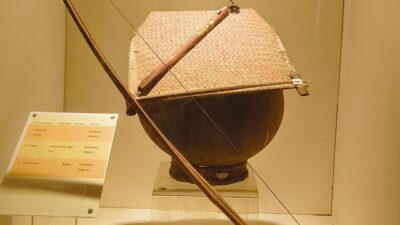
शास्त्र विंग · वाद्य-पट्टिका · Instrument Plate
घुमुरा
Ghumura
अन्य नामघुमुरा · घुमरा (Ghumra) · घुमुरा नाट / Ghumura Naat · घुमुरा बाजा / Ghumra Baja
परिचय
Overviewघुमुरा पश्चिमी ओडिशा के कालाहांडी का हस्ताक्षर लोक-मार्शल वाद्य है — मिट्टी का घट-आकार ढोल जिस पर पशु-चर्म की मढ़ी लगाई जाती है, और जिसे कलाकार छाती से बाँधकर नाचते हुए बजाता है। इसकी 'घुमु-घुमु' गूँज ने ही इसे यह नाम दिया; जनजातीय मूल, रियासती युद्ध-दरबार और आधुनिक मंच — तीनों की यात्रा इसमें समाई है।
अंग्रेज़ी में पढ़ें · Read in English
Ghumura is the signature folk-martial instrument of Kalahandi in western Odisha — an earthen pitcher-shaped drum with an animal-skin head, played strapped to the chest while dancing. Its 'ghumu-ghumu' resonance gave it its very name; the journey of tribal origin, princely war-and-court, and the modern stage is all contained within it.
वर्गीकरण
ClassificationNatya Shastra Category
अवनद्ध (Avanaddha - membranophones / covered percussion drums)
नाट्यशास्त्र के अवनद्ध वर्ग में घुमुरा आता है — वह वाद्य जिसकी ध्वनि खींची हुई चमड़े की झिल्ली (मढ़ी) पर हाथ के आघात से उत्पन्न होती है। मिट्टी की घट-आकृति और उस पर मढ़ा चमड़ा इसे अवनद्ध (मढ़े हुए) वाद्य की श्रेणी में रखता है।
In the Avanaddha (membranophone) category of the Natya Shastra, Ghumura is a covered percussion instrument whose sound is produced by striking a stretched animal-skin membrane with the hands. Its earthen pitcher-shaped body with a skin lacing over the mouth places it firmly among the 'covered' (avanaddha) drums.
Western Category
Membranophone (hand-struck goblet/pitcher drum)
Western Family
Single-headed clay-bodied hand drum family (related in playing posture to the goblet drums such as the darbuka, but uniquely earthen-bodied and chest-worn)
Sub Classification
बनावट
PhysicalDescription Hindi
घुमुरा एक घट-आकार (मटकीनुमा) मिट्टी का ढोल है — बड़ा उभरा हुआ पेट और अपेक्षाकृत सँकरा मुँह। मुँह पर पशु-चर्म की पतली झिल्ली मढ़ी जाती है, और नीचे का बड़ा पेट अनुनाद-कक्ष का काम करता है। वादक इसे गले में डोरी से लटकाकर छाती पर बाँधता है और नाचते-नाचते दोनों हाथों से बजाता है — यही इसकी सबसे अनूठी पहचान है।
Description English
The Ghumura is a pitcher-shaped (pot-bellied) earthen drum — a large bulging belly narrowing to a comparatively small mouth. A thin animal-skin membrane is laced over the mouth, while the wide belly below acts as the resonance chamber. The player slings it from the neck by a cord and ties it against the chest, striking it with both hands while dancing — its single most distinctive feature.
Body
Pitcher / pot-bellied (large rounded belly, narrow neck and mouth)
घट या मटकी के आकार का — बड़ा गोल पेट, सँकरा गला और मुँह
Baked clay / terracotta (traditional); some modern makers use metal or fibre bodies for durability
पकी हुई मिट्टी / टेराकोटा (परंपरागत); कुछ आधुनिक कारीगर टिकाऊपन के लिए धातु या फ़ाइबर का पेट बनाते हैं
~60 (about two feet tall)
The bulbous earthen belly beneath the drumhead — its wide-then-narrow profile gives the deep, rolling 'ghumu-ghumu' boom that names the instrument
Strings
Not applicable — Ghumura is a membranophone (a drum), not a stringed instrument. It has no melody strings.
None. Tension of the head — not sympathetic strings — governs the pitch and ring.
None.
Bow
लागू नहीं (हाथों से बजाया जाता है)
N/A — played with bare hands
The Ghumura is struck directly with the open palms and fingers; no bow or stick is used on the head
N/A
Both palms and fingers strike the skin head; the player controls open (resonant) and closed (muted) tones by hand placement while moving in the dance
Tuning Pegs
चर्म-रस्सी / बद्धी (लेसिंग)
Skin lacing / bindings
Instead of pegs, the head is held and tensioned by leather thongs or cord lacing around the pot's neck; heating the head near a fire tightens it to raise the pitch before performance
Bridge
लागू नहीं
N/A
Not applicable to a membranophone
N/A
Frets
फ्रेट का प्रश्न ही नहीं उठता — यह ढोल है। स्वर-रंग हाथ की स्थिति (खुला/बंद आघात), आघात-बल और झिल्ली के खिंचाव से बदलता है।
Frets are not applicable — it is a drum. Tonal colour is shaped by hand position (open vs muted strokes), striking force, and head tension.
Head
मढ़ी / चर्म-मुख
Drumhead (membrane)
पशु-चर्म की पतली झिल्ली — परंपरागत रूप से गोह (मॉनिटर छिपकली) की खाल का उल्लेख मिलता है; कुछ विवरणों में हिरण या 'बउता' गाय के चर्म का भी उल्लेख है।
A thin animal-skin membrane — traditionally described as monitor-lizard (godhi) hide; some accounts also mention deer or 'Bouta' cow skin.
मुख के केंद्र में लगभग चार इंच का काला धब्बा (स्याही जैसा भार-लेप) होता है जो गहरी, गूँजती ध्वनि देता है।
A roughly four-inch black patch (a weighting/tuning paste akin to syahi) sits at the centre of the head, deepening and steadying the resonant tone.
Worn How
धारण-विधि
Manner of wearing
गले में डाली गई डोरी से घुमुरा को छाती के सामने टाँगा जाता है, ताकि दोनों हाथ मुक्त रहें और वादक बजाते हुए नृत्य कर सके।
Slung by a neck-cord so the drum hangs against the chest, freeing both hands so the performer can play and dance simultaneously.
ध्वनि-चरित्र
SoundTonal Character Hindi
घुमुरा की ध्वनि गहरी, गोल और गूँजती हुई है — 'घुमु-घुमु' की लयबद्ध प्रतिध्वनि, जिससे इसका नाम पड़ा। मिट्टी का पेट इसे एक मिट्टी-सी, वीर-रस से भरी बूम देता है जो खुले मैदान और युद्ध-नृत्य के लिए उपयुक्त है।
Tonal Character English
The Ghumura's tone is deep, round and reverberant — the rhythmic 'ghumu-ghumu' echo from which it takes its name. The clay belly lends an earthy, martial boom well suited to open-air performance and war-dance.
Timbre
Warm, woody-earthen, with a rolling low-mid resonance and a defined 'thap' attack from the palm
Range
Percussive (unpitched to loosely pitched); a single resonant fundamental with muted and open colours rather than a melodic range
Dynamic Range
Wide and powerful — from soft conversational patterns to thunderous massed-ensemble crescendos that drive the dance's martial climax
Techniques
सुनने का मार्गदर्शन
The Listening Guideघुमुरा को मंच पर सामूहिक रूप में सुनिए। पहले धीमी लय पर ध्यान दीजिए — कैसे 'घुमु-घुमु' गूँज पैरों की थाप से जुड़ती है। फिर गति-वृद्धि को महसूस कीजिए, जहाँ दर्जनों घुमुरा एक साथ चरम पर पहुँचते हैं और 'निशान' व 'ताल' की झनझनाहट मैदान को हिला देती है।
अंग्रेज़ी में पढ़ें · Read in English
Enjoy Ghumura in its massed stage form, not solo. First follow the slow tempo — how the 'ghumu-ghumu' resonance locks to the footwork. Then feel the acceleration, where dozens of Ghumura drums crest together and the clash of 'Nishan' and 'Taal' shakes the whole ground. It is an experience to watch, hear and feel in the body.
अन्य विवरण
More DetailsTimbre
Warm, woody-earthen, with a rolling low-mid resonance and a defined 'thap' attack from the palm
रोचक तथ्य
Margin Notesछाती पर बँधा नृत्य-ढोल — घुमुरा को गले की डोरी से छाती पर टाँगकर बजाया जाता है, जिससे वादक के दोनों हाथ और पूरा शरीर नृत्य के लिए मुक्त रहते हैं। इसी कारण घुमुरा में 'वाद्य-वादन' और 'नृत्य' का भेद मिट जाता है।
The Ghumura is slung on the chest by a neck-cord so both hands and the whole body remain free to dance. This is why the distinction between 'playing' and 'dancing' dissolves in Ghumura.
युद्ध-ढोल से लोक-नृत्य तक — कालाहांडी की रियासत में घुमुरा दरबारी नृत्य और युद्ध का ढोल दोनों था। रियासतों के विलय के बाद इसका सैन्य संदर्भ लुप्त हुआ, पर लोक-उत्सव और शक्ति-आराधना में यह जीवित रहा और आज पश्चिमी ओडिशा की सांस्कृतिक पहचान बन गया।
In the princely state of Kalahandi, Ghumura was both a court dance and a war-drum. After the states merged its military context faded, but it lived on in folk festival and Shakti worship, and today it has become the cultural identity of western Odisha.
निशान और ताल — राधा-कृष्ण का प्रतीक — घुमुरा अकेले नहीं बजता; इसके साथ बड़ा नगाड़ा 'निशान' और झाँझ 'ताल' प्रमुख साथी हैं, जिन्हें लोक-परंपरा में राधा-कृष्ण का प्रतीक माना गया है। मादल, ढोल और मोहरी भी सामूहिक स्वर में जुड़ते हैं।
Ghumura is not played alone; its chief companions are the large kettledrum 'Nishan' and the cymbals 'Taal', regarded in folk tradition as symbols of Radha and Krishna. The madal, dhol and mahuri also join the collective voice.
आठ हज़ार वर्ष पुरानी गूँज? — कालाहांडी के गुडाहांडी और नुआपाड़ा के योगीमठ की गुफा-चित्रकला में घुमुरा-जैसी आकृतियों का दावा किया जाता है, जिन्हें कुछ विद्वान लगभग 8000 ई.पू. का मानते हैं — यदि सही हो, तो यह भारत के प्राचीनतम वाद्य-चित्रणों में से एक होगा।
Cave art at Gudahandi (Kalahandi) and Yogimatha (Nuapada) is claimed to show Ghumura-like forms dated by some scholars to around 8000 BCE — if correct, among the oldest depictions of a musical instrument in India.
सवाल-जवाब
Questions & Answersघुमुरा क्या है?
घुमुरा पश्चिमी ओडिशा के कालाहांडी ज़िले का एक पारंपरिक घट-आकार (मटकीनुमा) चर्म-ढोल है। इसे गले की डोरी से छाती पर बाँधकर, दोनों हाथों से बजाते हुए नाचा जाता है। यह 'घुमुरा नृत्य' नामक लोक-मार्शल नृत्य की धुरी है।
घुमुरा किस चीज़ से बनता है?
इसका शरीर पकी हुई मिट्टी (टेराकोटा) का घट-आकार होता है, जिसके सँकरे मुँह पर पशु-चर्म की पतली झिल्ली मढ़ी जाती है। मुख के केंद्र में लगभग चार इंच का काला भार-धब्बा गहरी, गूँजती ध्वनि देता है।
घुमुरा नाम कैसे पड़ा?
नाम इसकी अपनी ध्वनि से बना है — थाप पर उठती 'घुमु-घुमु' गूँज से। व्युत्पत्ति 'घुम्+उ+रा' मानी जाती है: 'घुम' घट-आकृति, 'उ' शिव और 'रा' कंपमान ध्वनि; इसे स्त्री जल-पात्र 'घुमुरी' से भी जोड़ा जाता है।
घुमुरा के साथ कौन से वाद्य बजते हैं?
घुमुरा के प्रमुख साथी बड़ा नगाड़ा 'निशान' और झाँझ 'ताल' हैं, जिन्हें राधा-कृष्ण का प्रतीक माना जाता है। मादल, ढोल और मोहरी (शहनाई-सदृश) भी सामूहिक स्वर में जुड़ते हैं।
घुमुरा का सांस्कृतिक महत्व क्या है?
घुमुरा कालाहांडी व पश्चिमी ओडिशा की सांस्कृतिक पहचान है। किंवदंती में यह युद्ध-ढोल था जो आगे लोक-नृत्य बना; आज यह दशहरा, नुआखाई व उत्सवों में और गणतंत्र-दिवस परेड (1999) जैसे राष्ट्रीय मंचों पर ओडिशा का प्रतिनिधित्व करता है।
नमूना-पट्टी
The Specimen Table| नाम | घुमुरा · Ghumura |
|---|---|
| अन्य नाम | घुमुरा · घुमरा (Ghumra) · घुमुरा नाट / Ghumura Naat · घुमुरा बाजा / Ghumra Baja · Ghumura (also: Ghumra) |
| प्रकार | वाद्य · Instruments |
साझा कीजिए · Share this Plate