कहानियाँ विंग · कहानी · Film Music · 1955
चार पंक्तियाँ जिन्होंने एक राष्ट्र को परिभाषित किया
Four Lines That Defined a Nation: The Story of Shree 420
१९५५ में राज कपूर ने एक फ़िल्म नहीं बनाई — उन्होंने नेहरू-युग के भारत की आत्मा को चार पंक्तियों में बाँध दिया।
प्रकाशित3 July 2026
आमुख
श्री ४२० (१९५५) की कहानी — कैसे राज कपूर ने चैपलिन से प्रेरणा लेकर, शैलेंद्र की कविता और शंकर-जयकिशन के संगीत के साथ, एक ऐसी फ़िल्म बनाई जिसका गाना 'मेरा जूता है जापानी' आज भी हर भारतीय की पहचान का गीत है। यह एक संगीतकार-गीतकार-निर्देशक के रचनात्मक संगम की कहानी है।
अंग्रेज़ी में पढ़ें · Read in English
The story of Shree 420 (1955) — how Raj Kapoor, inspired by Chaplin, collaborated with Shailendra and Shankar-Jaikishan to create a film whose signature song 'Mera Joota Hai Japani' became the anthem of Indian identity. A story of creative collaboration at its finest.
चैपलिन की छाया में
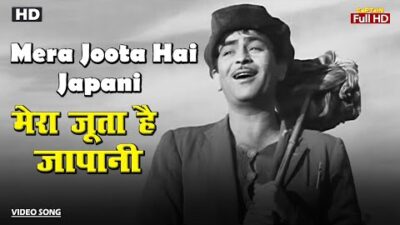
१९५५ में जब राज कपूर ने 'श्री ४२०' की योजना बनाई, उनके मन में चार्ली चैपलिन का वह चरित्र था जिसे दुनिया 'द लिटिल ट्रैम्प' के नाम से जानती थी — एक छोटे-से बंडल के साथ खुली सड़क पर चलता, दुनिया की ठोकरों से अप्रभावित, अपनी गरिमा में अटल। राज कपूर का 'राजू' भारतीय था — नई आज़ादी की उम्मीद लिए।
अंग्रेज़ी में पढ़ें · Read in English
When Raj Kapoor planned Shree 420 in 1955, he had in mind Charlie Chaplin's Little Tramp — walking the open road with a small bundle, unbowed by the world's indignities, secure in his own dignity. But Raj Kapoor's Raju was not an imitation — he was Indian, and in his identity lay the hope of a newly free nation. For the film's opening sequence, Kapoor needed a song that would establish Raju's character instantly — his poverty, his joy, and above all, his identity. He summoned Shailendra — the former railway worker whose poetry always carried the smell of the earth.
शैलेंद्र की चार पंक्तियाँ
शैलेंद्र ने जब राज कपूर से दृश्य सुना, तो पल भर में 'फिर भी दिल है हिंदुस्तानी' आया। यह सिर्फ एक फ़िल्मी गाने की पंक्ति नहीं थी — १९५५ का भारत वैश्विक प्रभावों के बीच खड़ा था। शैलेंद्र ने इस पूरे परिदृश्य को चार पंक्तियों में समेट दिया।
अंग्रेज़ी में पढ़ें · Read in English
When Shailendra heard the scene description — Raju walking the road in Japanese shoes, British trousers, a Russian red cap — the punchline came to him: 'Phir bhi dil hai Hindustani.' This was not just a film lyric. In 1955, India stood amid global influences — Japanese goods in the market, Western clothes in fashion, Soviet friendship in political discourse. Shailendra contained the entire panorama in four lines and declared: take all of this, but the heart remains Indian.
मुकेश और शंकर-जयकिशन
शंकर-जयकिशन ने खमाज के रंगों में, केहरवा ताल पर धुन बनाई। जानबूझकर सरल — एक मज़दूर का गाना। मनोहरी सिंह की सैक्सोफोन, दत्ताराम का ढोलक — सब मिलकर एक ऐसी ध्वनि बनी जो भारतीय और विश्व-नागरिक दोनों थी। मुकेश ने कई टेक दिए और एक अमर गाना बना।
अंग्रेज़ी में पढ़ें · Read in English
Shankar-Jaikishan composed the tune in Khamaj mode, in Keherwa taal — deliberately simple: this was a worker's song, a wanderer's song, not for the concert hall. Manohari Singh's saxophone, Dattaram's dholak, the sweetness of banjo — together they created a sound simultaneously Indian and cosmopolitan. Mukesh — by then inseparable from Raj Kapoor — sang it through multiple takes. Shankar wanted both childlike innocence and masculine pride in the voice simultaneously. When Mukesh found it, an immortal song was born.
सात दशकों की गूँज
'मेरा जूता है जापानी' बिनाका गीतमाला में शीर्ष पर पहुँचा। स्वतंत्रता दिवस, क्रिकेट, राजनीतिक भाषण — हर जगह गूँजा। सोवियत संघ में दर्शकों ने हाथ उठाकर गाया। सात दशकों बाद भी यह भारत की पहचान का गीत है।
अंग्रेज़ी में पढ़ें · Read in English
"Mera Joota Hai Japani" reached the top of Binaca Geetmala, became one of Radio Ceylon's most-requested songs, and rapidly became India's anthem of identity. It was sung at Independence Day parades, cricket matches, political speeches. In 1971, it rang out at Bangladesh liberation celebrations. In the Soviet Union, where Raj Kapoor was a massive star, audiences raised their hands and sang along. It was the moment Indian cinema first became the voice of a nation on a global stage. Seven decades later, the four-line refrain remains the most immediate answer to the question: what does it mean to be Indian?
परिचय
IdentityEpithet
१९५५ में राज कपूर ने एक फ़िल्म नहीं बनाई — उन्होंने नेहरू-युग के भारत की आत्मा को चार पंक्तियों में बाँध दिया।
In 1955, Raj Kapoor did not just make a film — he captured the soul of Nehruvian India in four lines.
अन्य विवरण
More Details- These four lines say more about India than any political speech ever has.
- राज कपूर
- शैलेंद्र
- शंकर-जयकिशन
- मुकेश
- 1954 — Raj Kapoor begins planning Shree 420, inspired by Chaplin's tramp films — राज कपूर 'श्री ४२०' की योजना बनाते हैं, चैपलिन की ट्रैम्प फ़िल्मों से प्रेरित
- Early 1955 — Shankar-Jaikishan compose and Shailendra writes the song — शंकर-जयकिशन ने धुन बनाई और शैलेंद्र ने बोल लिखे
- 1955 — Shree 420 released; song becomes immediate national hit — 'श्री ४२०' प्रदर्शित; गाना तुरंत राष्ट्रीय हिट बना
- 1955-56 — Tops Binaca Geetmala; Radio Ceylon most-requested — बिनाका गीतमाला में शीर्ष; रेडियो सीलोन पर सबसे अधिक माँगा गया
- 1971 — Sung at Bangladesh Liberation War victory celebrations — बांग्लादेश मुक्तिसंग्राम जीत के जश्न में गाया गया
- Wikipedia: Shree 420. https://en.wikipedia.org/wiki/Shree_420
- Wikipedia: Shailendra (lyricist). https://en.wikipedia.org/wiki/Shailendra_(lyricist)
- Dwyer, Rachel. Filming the Gods. Routledge, 2006.
- Kabir, Nasreen Munni. The Dialogue of Indian Cinema. OUP.
Pull Quotes
Key Figures
Timeline Within Story
References
कहानी-नमूना
The Story Specimen| शीर्षक | चार पंक्तियाँ जिन्होंने एक राष्ट्र को परिभाषित किया · Four Lines That Defined a Nation: The Story of Shree 420 |
|---|---|
| श्रेणी | Film Music |
| प्रकार | विशेष लेख |
| प्रकाशित | 3 July 2026 — admin |
| वर्ष | 1955 |
और कहानियाँ
More Stories from the Atlas
साझा कीजिए · Share this Plate
यह पन्ना आगे बढ़ाइए
सवाल-जवाब
Questions & Answersराज कपूर को 'श्री ४२०' बनाने की प्रेरणा क्या थी? · What inspired Raj Kapoor to make Shree 420?
राज कपूर चार्ली चैपलिन की 'लिटिल ट्रैम्प' फ़िल्मों से गहरे प्रेरित थे — उन्होंने राजू के रूप में भारतीय समकक्ष बनाया।
Raj Kapoor was deeply inspired by Charlie Chaplin's 'Little Tramp' films — he created an Indian equivalent in the character of Raju, a wanderer arriving in Bombay with hope but no money.
'मेरा जूता है जापानी' इतना लोकप्रिय क्यों हुआ? · Why did Mera Joota Hai Japani become so popular?
गाने ने चार पंक्तियों में भारतीय पहचान की सार्वभौमिक सच्चाई पकड़ी: विदेशी सामान, हिंदुस्तानी दिल। स्वतंत्रता के बाद के भारत में यह सही समय पर सही संदेश था।
The song captured a universal truth about Indian identity in four lines: foreign goods, Indian heart. In post-Independence India, this was exactly the right message at exactly the right time.