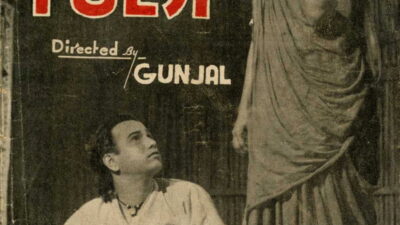
गीत विंग · गीत-पट्टिका · Song Plate
रानी तुमको करोड़ों बधैया
Rani Tumko Karodo Badhaiya
रानी पर करोड़ों बधाइयाँ बरसाता एक गीत — 1941 की फ़िल्म तुलसी से।
भावउत्सव · Festive
भाषाhindi स्वरूपUnknown
श्रेय
The Creditsसूत्र-वाक्य · The Hook
सूत्र-वाक्य
रानी पर करोड़ों बधाइयाँ बरसाता एक गीत — 1941 की फ़िल्म तुलसी से।
In EnglishA song showering a million congratulations on the queen, from the 1941 film Tulsi.
पट्टिका-लेख
The Monographपरिचय Overview
'रानी तुमको करोड़ों बधैया' तुलसी (1941) का एक उत्सव-गीत है, जिसे हरिश्चंद्र बाली ने पंडित फणि के बोलों पर रचा। शीर्षक — रानी को करोड़ों बधाइयाँ — इसे एक उत्सवपूर्ण, आशीर्वाद-भरा गीत बनाता है, जो फ़िल्म के दूसरे 'बधैया' गीत के साथ विषयगत रूप से जुड़ा है। उपलब्ध स्रोतों में गायकों के नाम दर्ज नहीं हैं।
अंग्रेज़ी में पढ़ें · Read in English
'Rani Tumko Karodo Badhaiya' is a celebratory song from Tulsi (1941), composed by Harishchandra Bali with lyrics by Pandit Phani. The title — a million congratulations to the queen — marks it as a festive, blessing-laden number, paired thematically with the film's other 'badhaiya' song. Singer credits are not documented in available sources.
काव्य The Poetry
'बधैया' गीत उत्तर भारतीय संगीत में एक सुपरिभाषित लोक-शास्त्रीय विधा है: शुभकामनाओं का गीत, आनंद के क्षणों में गाया जाने वाला — बच्चे का जन्म, विवाह, राज-उत्सव। एक रानी को 'करोड़ों बधैया' देना — करोड़ों शुभकामनाएँ — उसे उसकी प्रतिष्ठा के अनुरूप भव्य बनाना है। पंडित फणि ने बधैया की विशिष्ट संचयी ऊर्जा के साथ काम किया: यह गीत सामान्यतः एक या छोटे समूह की आवाज़ से शुरू होता है और अधिक उत्सव-प्रतिभागियों के जुड़ने पर गति पकड़ता है। इसका वक्तृत्व-ढंग आह्वान और आशीर्वाद है — यह गीत कहानी नहीं कहता बल्कि शुभकामना देने की क्रिया को स्वयं रूपांतरित करता है। 'रानी' संबोधन इस पारंपरिक गाँव-आशीर्वाद को एक राज-प्रासादीय स्वर में उठाता है।
अंग्रेज़ी में पढ़ें · Read in English
The 'badhaiya' song is a well-defined folk-classical genre in North Indian music: the song of congratulation, sung at moments of joy — the birth of a child, a wedding, a royal celebration. To wish a 'karodo badhaiya' — a million congratulations — to a queen (rani) is to scale the gesture to her status, making the conventional form appropriately grand. Pandit Phani worked with the badhaiya form's characteristic cumulative energy: the song typically begins with one voice or small ensemble and gathers momentum as more celebrants join. Its rhetorical mode is invocation and blessing rather than narrative — the song does not tell a story but enacts the act of wishing well. In 1941 Hindi cinema, badhaiya songs were indispensable for wedding and court scenes; their folk origins gave them an authenticity that more sophisticated compositions could not replicate. 'Rani Tumko Karodo Badhaiya' deploys all these conventions while inserting the regal address 'Rani' to lift the conventional village blessing into a palatial register.
कहानी The Story
तुलसी (1941) दादा गुंजाल निर्देशित फ़िल्म थी, संगीत हरिश्चंद्र बाली का और बोल पंडित फणि के। कलाकारों में त्रिलोक कपूर, शालिनी, श्रीनिवास, नीला, बद्री प्रसाद, जमशेद और अनंत मराठे थे। फ़िल्म का शीर्षक 'तुलसी' — वैष्णव हिंदू परिवारों में पूजनीय तुलसी पौधे का संदर्भ — एक भक्ति या नैतिक आख्यान का सुझाव देता है। हरिश्चंद्र बाली 1940 के दशक के हिंदी सिनेमा में धार्मिक और सामाजिक विषयों पर काम करने वाले संगीतकार थे; पंडित फणि की रचनाएँ भी भक्ति और घरेलू-गीत दोनों स्वरों में थीं। अभिनेता-गायक-संगीतकार बद्री प्रसाद कास्ट में प्रमुखता से थे और कई गीतों में फ़िल्म की मुख्य गायक आवाज़ थे। 'रानी तुमको करोड़ों बधैया' एक उत्सव-आशीर्वाद गीत है, जो फ़िल्म के दूसरे 'बधैया' गीत के साथ जोड़ी बनाता है — हिंदी फ़िल्मों की युग्म-उत्सव गीत की एक शास्त्रीय शैली में। कलाकारों के एक समूह ने इस उत्सव-गीत में भाग लिया, जिसमें बद्री प्रसाद भी गायकों में शामिल थे।
अंग्रेज़ी में पढ़ें · Read in English
Tulsi (1941) was directed by Dada Gunjal with music by Harishchandra Bali and lyrics by Pandit Phani. The cast included Trilok Kapoor, Shalini, Srinivas, Neela, Badri Prasad, Jamshed, and Anant Marathe. The film's title 'Tulsi' refers to the sacred basil plant — an object of veneration in Vaishnavite Hindu households — suggesting a devotional or moral narrative. Harishchandra Bali was a composer who worked across religious and social subjects in 1940s Hindi cinema; Pandit Phani's lyrics similarly ranged from devotional to domestic-lyric registers. Badri Prasad (the actor-singer-composer) appears prominently in the cast and was the film's main singing voice in several numbers. 'Rani Tumko Karodo Badhaiya' — 'a million congratulations to you, O Queen' — is a celebratory benediction song, pairing thematically with the film's other 'badhaiya' number ('Badhaiya Ae Ji Badhaiya') in a classic Hindi film pattern of paired celebration songs. The assembled cast members performed this festive number, with Badri Prasad among those who sang.
वर्गीकरण
ClassificationGenre
अन्य विवरण
More Details- https://www.hindilyrics4u.com/movie/tulsi_1941.htm
- https://www.imdb.com/title/tt0216305/
- https://bombaymann2.blogspot.com/2020/05/film-tulsi1941.html
References
रोचक तथ्य
Margin Notesतुलसी (1941) अपना शीर्षक पवित्र तुलसी के पौधे (ऑसिमम टेन्युइफ़्लोरम) से लेती है, जिसे वैष्णव हिंदू घरों में देवी तुलसी के अवतार के रूप में पूजा जाता है; इस भक्ति-संबद्धता ने फिल्म के नैतिक-कथा ढाँचे को आकार दिया।
अंग्रेज़ी में पढ़ें · Read in English
Tulsi (1941) takes its title from the sacred basil plant (Ocimum tenuiflorum), venerated in Vaishnavite Hindu households as an embodiment of the goddess Tulsi; this devotional association shaped the film's moral-narrative frame.
फिल्म की कलाकार सूची में दिखाई देने वाले बद्री प्रसाद 1940 के दशक के हिंदी सिनेमा में एक साथ अभिनेता, गायक और संगीतकार के रूप में सक्रिय थे — उस युग के दुर्लभ त्रि-कार्यात्मक कलाकारों में से एक।
अंग्रेज़ी में पढ़ें · Read in English
Badri Prasad, who appears in the film's cast, was simultaneously an actor, singer, and music composer active across 1940s Hindi cinema — one of the era's rare triple-function artists.
फिल्म में दो 'बधैया' गीत थे — उत्सवधर्मी शुभकामनाओं का एक युग्मित ढाँचा जो दरबारी या उत्सव दृश्यों के लिए एक जानबूझकर अपनाई गई हिंदी फिल्म संगीत परिपाटी थी।
अंग्रेज़ी में पढ़ें · Read in English
The film contained two 'badhaiya' songs — a paired structure of celebratory benedictions that was a deliberate Hindi film musical convention for court or festive scenes.
निर्देशक दादा गुंजाल प्रारंभिक ध्वनि युग के एक सक्रिय फिल्मकार थे; संगीतकार हरिश्चंद्र बाली ने 1940 के दशक भर मुख्यतः भक्ति और सामाजिक फिल्म विषयों पर काम किया।
अंग्रेज़ी में पढ़ें · Read in English
Director Dada Gunjal was an active filmmaker of the early sound era; Harishchandra Bali, the composer, worked primarily in devotional and social film subjects through the 1940s.
नमूना-पट्टी
The Specimen Table| शीर्षक | रानी तुमको करोड़ों बधैया · Rani Tumko Karodo Badhaiya |
|---|---|
| फ़िल्म | तुलसी · 1941 |
| वर्ष · युग | 1941 |
| गीतकार | Pandit Phani |
| संगीतकार | Harishchandra Bali |
| स्वरूप | Unknown |
| भाषा | hindi |
| भाव | उत्सव · Festive |
| बोल-स्थिति | केवल झलक |
जुड़े हुए पन्ने
Connected Plates · The Graph Made Visibleअटलस में कोई पन्ना अकेला नहीं — इस गीत से जुड़े गीत, कलाकार, फ़िल्म, राग-ताल-विधा, सब यहाँ से खुलते हैं।
कलाकार · The Artists
फ़िल्म · The Film
साझा कीजिए · Share this Plate