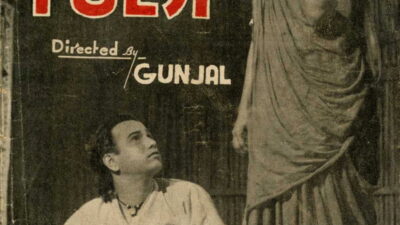
गीत विंग · गीत-पट्टिका · Song Plate
मन के मन से तार मिला
Mann Ke Mann Se Taar Mila
मन से मन के तार मिलाने का एक गीत — 1941 की फ़िल्म तुलसी से।
भावशांत · दार्शनिक
भाषाhindi स्वरूपUnknown
श्रेय
The Creditsसूत्र-वाक्य · The Hook
सूत्र-वाक्य
मन से मन के तार मिलाने का एक गीत — 1941 की फ़िल्म तुलसी से।
In EnglishA song of inner harmony — tuning heart to heart — from the 1941 film Tulsi.
पट्टिका-लेख
The Monographपरिचय Overview
'मन के मन से तार मिला' तुलसी (1941) का एक गीत है, जिसे हरिश्चंद्र बाली ने पंडित फणि के बोलों पर रचा। शीर्षक — एक मन के तार दूसरे मन से मिलाना — फ़िल्म के भक्ति-विषय के अनुकूल आध्यात्मिक स्वर में एक चिंतनशील, दार्शनिक रचना की ओर संकेत करता है। उपलब्ध स्रोतों में गायकों के नाम दर्ज नहीं हैं।
अंग्रेज़ी में पढ़ें · Read in English
'Mann Ke Mann Se Taar Mila' is a song from Tulsi (1941), composed by Harishchandra Bali with lyrics by Pandit Phani. The title — tuning the strings of one heart to another — suggests a reflective, philosophical piece in the spiritual register favoured by the film's devotional theme. Singer credits are not documented in available sources.
काव्य The Poetry
शीर्षक 'मन के मन से तार मिला' में 'तार' का रूपक अत्यंत सांद्र है — संगीत-तार, तारयंत्र का तार, दो आत्माओं के बीच का वह सूत्र जो केवल तभी कंपित होता है जब दोनों वाद्य एक सुर में होते हैं। 'मन के मन से' की आवृत्ति उस अनुनाद की ध्वनि है जिसे यह पंक्ति वर्णित करती है। यह श्रृंगार का प्रेम-संबंध नहीं, सूफ़ी और भक्ति परंपराओं का वह दार्शनिक आयाम है जिसमें 'मन' (चित्त, अंतःकरण) दूसरे 'मन' के साथ — या परमात्मा के साथ — एक सुर में आता है। गीतकार पंडित फणि, जिन्होंने तुलसी (1941) के गाने लिखे, उस भक्ति-दार्शनिक शैली में काम करते थे जो तुलसी के नाम वाली फ़िल्म के लिए स्वाभाविक थी। रचना भजन-आधारित संगीत में ढली होगी जैसा हरिश्चंद्र बाली की उस दौर की शैली दर्शाती है।
अंग्रेज़ी में पढ़ें · Read in English
The title 'Mann Ke Mann Se Taar Mila' — 'Let the strings of one heart connect with another heart' — employs the metaphor of 'taar' (string, wire, telegraph thread, musical string) to describe spiritual or emotional attunement between two minds or souls. The repetition of 'mann ke mann se' (from heart to heart) creates a chiastic echo that enacts, in its very sound, the act of resonance it describes. This is not the romantic heart-connection of shringara poetry but the philosophical-devotional register of the Sufi and Bhakti traditions, in which 'mann' (heart-mind, the inner seat of awareness) attunes itself to another through the 'taar' — a string that vibrates only when tuned, only when two instruments reach the same pitch. Lyricist Pandit Phani, who wrote the songs for Tulsi (1941), worked in the devotional and philosophical mode appropriate to a film whose title invokes the sacred tulsi plant. The imagery suggests that the song may have been placed at a scene of spiritual union — a devotee recognising the divine, or a human being finding their counterpart. Harishchandra Bali's musical setting for Tulsi drew from the classical light-bhajan tradition.
कहानी The Story
तुलसी (1941) दादा गुंजल निर्देशित एक हिंदी फ़िल्म थी, संगीत हरिश्चंद्र बाली का और गीत पंडित फणि के। कलाकारों में त्रिलोक कपूर, शालिनी, श्रीनिवास, नीला, बद्री प्रसाद, जमशेद और अनंत मराठे थे। 'तुलसी' शीर्षक स्वयं ही हिंदू गृह-देवालय के पवित्र तुलसी पौधे का स्मरण कराता है — विष्णु और गृह-भक्ति से जुड़ा — जो फ़िल्म की आध्यात्मिक दिशा का संकेत देता है। फ़िल्म के अन्य गाने जैसे 'स्वर्ग है भारत देश हमारा' और 'सुनो प्रभु जी मेरी पुकार' इस भक्ति-प्रधान संगीत-शैली की पुष्टि करते हैं। पंडित बद्री प्रसाद फ़िल्म में अभिनय के साथ-साथ गायन भी कर रहे थे — आरंभिक सवाक दौर की अभिनेता-गायक परंपरा का विस्तार। हरिश्चंद्र बाली लघु-स्टूडियो क्षेत्र के संगीतकार थे जिनके श्रेय में 1940 के आरंभिक दशक की कई भक्ति-प्रधान फ़िल्में हैं।
अंग्रेज़ी में पढ़ें · Read in English
Tulsi (1941) was a Hindi film directed by Dada Gunjal, with music by Harishchandra Bali and lyrics by Pandit Phani. The cast included Trilok Kapoor, Shalini, Srinivas, Neela, Badri Prasad, Jamshed, and Anant Marathe. The film's title invokes the tulsi plant — the sacred basil of the Hindu domestic altar, associated with Vishnu and with domestic piety — signalling a devotional or spiritual orientation to the narrative. Songs such as 'Svarg Hai Bharat Desh Hamara' and 'Suno Prabhu Ji Meri Pukaar' documented from this film confirm its dominantly devotional musical register. 'Mann Ke Mann Se Taar Mila' belongs to this same mode: the philosophical song of spiritual attunement. Pandit Badri Prasad, who appears in the cast of Tulsi, also sang in the film — a continuation of the tradition of actor-singer hybrid roles common in the early sound era and into the 1940s. Harishchandra Bali was a composer active in the smaller-studio sector of Hindi cinema whose credits include several devotional-themed productions of the early 1940s.
वर्गीकरण
ClassificationGenre
अन्य विवरण
More Details- https://en.wikipedia.org/wiki/Tulsi_(film)
- https://www.hindilyrics4u.com/movie/tulsi_1941.htm
- https://bombaymann2.blogspot.com/2020/05/film-tulsi1941.html
References
रोचक तथ्य
Margin Notesतुलसी (1941) का निर्देशन दादा गुंजाल ने किया, जिसमें त्रिलोक कपूर और बद्री प्रसाद जैसे कलाकार शामिल थे — बद्री प्रसाद ने फ़िल्म में गायन भी किया, जो प्रारंभिक हिंदी सिनेमा की अभिनेता-गायक मिश्रित प्रथा को जारी रखता है।
अंग्रेज़ी में पढ़ें · Read in English
Tulsi (1941) was directed by Dada Gunjal and featured a cast including Trilok Kapoor and Badri Prasad — Badri Prasad also sang in the film, continuing the actor-singer hybrid practice of early Hindi cinema.
फ़िल्म का शीर्षक हिंदू घरेलू पूजा के केंद्र में मौजूद पवित्र तुलसी के पौधे की ओर संकेत करता है, और इसका संगीत मुख्यतः भक्ति-प्रधान था, जिसमें 'सुनो प्रभु जी मेरी पुकार' और 'स्वर्ग है भारत देश हमारा' जैसे गीत 'मन के मन से तार मिला' के साथ दर्ज हैं।
अंग्रेज़ी में पढ़ें · Read in English
The film's title refers to the sacred tulsi (holy basil) plant central to Hindu domestic worship, and its musical score was dominantly devotional, with songs such as 'Suno Prabhu Ji Meri Pukaar' and 'Svarg Hai Bharat Desh Hamara' documented alongside 'Mann Ke Mann Se Taar Mila'.
गीतकार पंडित फणि ने तुलसी और 1941 की एक दूसरी फ़िल्म बधैया ऐ जी बधैया — दोनों के लिए लिखा, जो स्टूडियो की भक्ति-प्रधान प्रस्तुतियों में संगीत निर्देशक हरिश्चंद्र बाली के साथ उनके कार्य-संबंध को दर्शाता है।
अंग्रेज़ी में पढ़ें · Read in English
Lyricist Pandit Phani wrote for both Tulsi and a second 1941 film Badhaiya Ae Ji Badhaiya, indicating a working relationship with music director Harishchandra Bali across the studio's devotional productions.
गीत के शीर्षक में दो मनों को जोड़ने वाला तार-रूपक ('तार') एक अखिल-भारतीय संगीतमय रूपक से लिया गया है, जो मीराबाई की कविता में और आध्यात्मिक तादात्म्य को संबोधित करने वाले कई कबीर दोहों में भी मिलता है।
अंग्रेज़ी में पढ़ें · Read in English
The string metaphor ('taar') connecting two minds (manns) in the song's title draws on a pan-Indian musical metaphor that also appears in Mirabai's poetry and in several Kabir dohas addressing spiritual attunement.
नमूना-पट्टी
The Specimen Table| शीर्षक | मन के मन से तार मिला · Mann Ke Mann Se Taar Mila |
|---|---|
| फ़िल्म | तुलसी · 1941 |
| वर्ष · युग | 1941 |
| गीतकार | Pandit Phani |
| संगीतकार | Harishchandra Bali |
| स्वरूप | Unknown |
| भाषा | hindi |
| भाव | शांत · दार्शनिक |
| बोल-स्थिति | केवल झलक |
जुड़े हुए पन्ने
Connected Plates · The Graph Made Visibleअटलस में कोई पन्ना अकेला नहीं — इस गीत से जुड़े गीत, कलाकार, फ़िल्म, राग-ताल-विधा, सब यहाँ से खुलते हैं।
कलाकार · The Artists
फ़िल्म · The Film
साझा कीजिए · Share this Plate