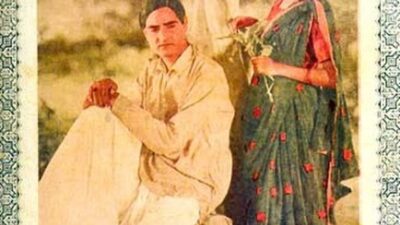
गीत विंग · गीत-पट्टिका · Song Plate
क्यूँ खिले फूल
Kyu Khile Phul
फूल क्यूँ खिले — 1941 की फ़िल्म मासूम से एक चिंतनशील गीत।
भावउदास · Reflective
भाषाhindi स्वरूपUnknown
श्रेय
The Creditsसूत्र-वाक्य · The Hook
सूत्र-वाक्य
फूल क्यूँ खिले — 1941 की फ़िल्म मासूम से एक चिंतनशील गीत।
In EnglishWhy did the flowers bloom — a reflective lyric from the 1941 film Masoom.
पट्टिका-लेख
The Monographपरिचय Overview
1941 की सामाजिक फ़िल्म मासूम का एक गीत, संगीत मुंशी मुबारक हुसैन। शीर्षक फूलों के खिलने के बारे में एक उदास प्रश्न रखता है, जो एक चिंतनशील या रोमांटिक स्वर का संकेत देता है। रिकॉर्डिंग अब दुर्लभ है, और इस गीत का गायक प्रचलित सूचियों में दर्ज नहीं है।
अंग्रेज़ी में पढ़ें · Read in English
A song from the 1941 social drama Masoom, composed by Munshi Mubarak Hussain. The title poses a wistful question about the blooming of flowers, suggesting a reflective or romantic register. The recording is now scarce, and the singer for this number is not documented in the standard catalogues.
काव्य The Poetry
'क्यूँ खिले फूल' का शीर्षक-प्रश्न हिंदी फ़िल्म-गीत की संक्षिप्त अर्थव्यवस्था में रोमांटिक परंपरा की आत्मिक जिज्ञासा को उठाता है। पुष्प-खिलने का ऋतु-बिंब संस्कृत और उर्दू-हिंदी काव्य दोनों परंपराओं में सबसे पुराने बिंबों में से एक है, जहाँ वसंत और फूल लगातार तृप्ति के बजाय बढ़े हुए विरह से जुड़े हैं। इस परंपरा की विरह-धारा में, प्रिय के बिना सौंदर्य आनंद नहीं बल्कि यातना है: फूल किसी ऐसे व्यक्ति के लिए खिलते हैं जो उन्हें देख नहीं सकता, या ऐसे व्यक्ति के लिए जिसकी आंतरिक अवस्था सौंदर्य को ग्रहण करने में सक्षम नहीं है। पंक्ति के आरंभ में 'क्यूँ' (क्यों) तथ्यात्मक उत्तर नहीं माँगता बल्कि प्रकृति की उदासीन प्रसन्नता से एक भावनात्मक अलगाव दर्ज करता है। शीर्षक की संक्षिप्तता — तीन अक्षर — एक विशाल भावात्मक अवकाश खोलती है, जिससे गीत का मुख्य भाग बाहरी सौंदर्य और आंतरिक विनाश के बीच की खाई का अन्वेषण कर सके।
अंग्रेज़ी में पढ़ें · Read in English
The title question 'Kyu Khile Phul' — why did the flowers bloom? — poses the existential interrogation of the Romantic tradition within the compressed economy of the Hindi film song. The seasonal image of blossoming is one of the most ancient in both Sanskrit and the Urdu-Hindi lyric traditions, where spring and flowers are consistently associated with heightened longing rather than its satisfaction. In the viraha strand of this tradition, beauty without the beloved is not joy but torment: flowers bloom for someone who cannot see them, or for a person whose inner state cannot receive beauty. The word 'kyu' (why) at the head of the line does not ask for a factual answer but registers an emotional estrangement from the natural world's indifferent cheerfulness. The title's spareness — three syllables — opens a vast affective space, allowing the lyric body to explore the gap between outward beauty and inward devastation.
कहानी The Story
मासूम (1941) — 'निर्दोष' — अमजद, रमोला, मज़हर ख़ान, महताब, अनीस और ख़्वाजा सबीर अभिनीत एक सामाजिक नाटक था। रमोला उस काल की कई नौशाद फ़िल्मों में दिखीं, जिनमें माला (1941) भी शामिल है, जो बंबई फ़िल्म परिपथ में उनकी सक्रिय उपस्थिति दर्शाता है। संगीत मुंशी मुबारक हुसैन का था। फ़ाइल के गुणवत्ता-नोट में अर्ज़ू लखनवी को संभावित गीतकार के रूप में सुझाया गया है — यदि प्रमाणित हो, तो यह साउंडट्रैक को हिंदी सिनेमा में सक्रिय एक महत्त्वपूर्ण लखनऊ-प्रशिक्षित उर्दू साहित्यिक आवाज़ से जोड़ेगा। फ़िल्म का शीर्षक 'मासूम' (निर्दोष, निष्कलंक, भोला) कमज़ोरी और अन्याय से जुड़ी एक कथा को रेखांकित करता है — ऐसी शैलियाँ जो चिंतनशील, प्रश्नवाचक गीतों को आमंत्रित करती हैं। 'क्यूँ खिले फूल' उस शोकगीत या प्रश्नात्मक ढंग से संबंधित है जो ऐसे सामाजिक नाटक अपने पात्रों की उस आंतरिक उलझन व्यक्त करने के लिए उपयोग करते थे जब एक ऐसी दुनिया उनकी मासूमियत का दयालुता से उत्तर नहीं देती।
अंग्रेज़ी में पढ़ें · Read in English
Masoom (1941) — 'Innocent' — was a social drama featuring Amjad, Ramola, Mazhar Khan, Mahtab, Anees and Khwaja Sabir. Ramola appeared in multiple early Naushad films of the period, including Mala (1941), reflecting her active presence in the Bombay film circuit. Munshi Mubarak Hussain composed the score. The quality notes in the entity file suggest Arzu Lakhnavi as a likely lyricist for the film's songs — if confirmed, this would link the soundtrack to a significant Lucknow-trained Urdu literary voice active in Hindi cinema. The film's title 'Masoom' (innocent, pure, guileless) framed a narrative concerned with vulnerability and injustice, genres that lent themselves to reflective, questioning songs. 'Kyu Khile Phul' — 'Why did the flowers bloom?' — belongs to the elegiac or questioning mode that such social dramas used to articulate their characters' inner bewilderment at a world that did not answer their innocence with kindness.
वर्गीकरण
ClassificationGenre
अन्य विवरण
More Details- https://en.wikipedia.org/wiki/Masoom_(1941_film)
- https://www.hindigeetmala.net/movie/masoom_1941.htm
References
रोचक तथ्य
Margin Notesमासूम (1941) की मुख्य कलाकार टोली में मज़हर ख़ान और रामोला शामिल थे — रामोला 1941 की कई बॉम्बे प्रस्तुतियों में नज़र आईं, जिनमें नौशाद की शुरुआती फ़िल्म माला भी शामिल है, जो स्टूडियो सर्किट में उनके लिए एक सक्रिय वर्ष होने का संकेत देता है।
अंग्रेज़ी में पढ़ें · Read in English
Masoom (1941) featured Mazhar Khan and Ramola among its lead cast — Ramola appeared in multiple Bombay productions of 1941, including the early Naushad film Mala, indicating an active year for her in the studio circuit.
फ़िल्म के संगीतकार मुंशी मुबारक हुसैन उन संगीत निर्देशकों में शामिल थे जो उस संक्रमण काल में सक्रिय थे, इससे पहले कि स्वर्णिम युग के संगीतकार उभरें जिन्होंने 1940 के दशक के अंत और 1950 के दशक में हिंदी फ़िल्म संगीत पर वर्चस्व स्थापित किया।
अंग्रेज़ी में पढ़ें · Read in English
Munshi Mubarak Hussain, the film's composer, was among the music directors active in the transitional period before the emergence of the Golden Era composers who would come to dominate Hindi film music through the late 1940s and 1950s.
फ़िल्म का शीर्षक 'मासूम' असुरक्षा को लेकर एक सामाजिक-नाटकीय चिंता को रेखांकित करता है — यह प्रारंभिक हिंदी सिनेमा का एक बार-बार दोहराया जाने वाला भाव है, जहाँ भोलापन या ग़रीबी नायक-नायिका को एक अन्यायपूर्ण समाज की दया पर छोड़ देती थी।
अंग्रेज़ी में पढ़ें · Read in English
The film's title 'Masoom' (Innocent) frames a social-drama concern with vulnerability — a recurring motif in early Hindi cinema where guilelessness or poverty placed protagonists at the mercy of an unjust society.
नमूना-पट्टी
The Specimen Table| शीर्षक | क्यूँ खिले फूल · Kyu Khile Phul |
|---|---|
| फ़िल्म | मासूम · 1941 |
| वर्ष · युग | 1941 |
| संगीतकार | Munshi Mubarak Hussain |
| स्वरूप | Unknown |
| भाषा | hindi |
| भाव | उदास · Reflective |
| लोकप्रियता | Obscure |
| बोल-स्थिति | केवल झलक |
जुड़े हुए पन्ने
Connected Plates · The Graph Made Visibleअटलस में कोई पन्ना अकेला नहीं — इस गीत से जुड़े गीत, कलाकार, फ़िल्म, राग-ताल-विधा, सब यहाँ से खुलते हैं।
कलाकार · The Artists
फ़िल्म · The Film
साझा कीजिए · Share this Plate