गीत विंग · गीत-पट्टिका · Song Plate
नवेली अलबेली
Naveli Albeli
'धर्म' का वह इकलौता गीत जो किसी नामित स्वर के बजाय मंडली ने गाया — गीत कोश इसका श्रेय केवल 'कोरस' को देता है।
भावउत्सव · चुलबुला
भाषाhindi
श्रेय
The Creditsसूत्र-वाक्य · The Hook
सूत्र-वाक्य
'धर्म' का वह इकलौता गीत जो किसी नामित स्वर के बजाय मंडली ने गाया — गीत कोश इसका श्रेय केवल 'कोरस' को देता है।
In EnglishThe one song of Dharm sung by a chorus rather than a named voice — the Geet Kosh credits it simply to 'Chorus'.
पट्टिका-लेख
The Monographपरिचय Overview
'नवेली अलबेली' 'धर्म' (1945) का चौथे क्रम पर दर्ज गीत है और एलबम का इकलौता ऐसा गीत जिसमें किसी व्यक्तिगत गायक का श्रेय नहीं। हिंदी फ़िल्म गीत कोश इसका श्रेय 'कोरस' को देता है; माईस्वर इसे 'विभिन्न कलाकार' दर्ज करता है और हिंदीगीतमाला गायक का ख़ाना ख़ाली छोड़ता है — तीनों स्रोत इस पर सहमत हैं कि यह किसी नामित एकल गायक का नहीं, मंडली का गीत था। संगीत सज्जाद हुसैन का है, और बोल एचएफ़जीके के अनुसार 'बालम', यानी बालम परदेसी के। इस रिक्ति को कास्ट-सूची के सबसे संभावित नाम से भरने के बजाय यह प्रविष्टि गायक-खाना ख़ाली छोड़ती है — अभिलेख यही कहता है।
अंग्रेज़ी में पढ़ें · Read in English
'Naveli Albeli' is the fourth-listed song of Dharm (1945) and the only one in the album with no individual singer credit. The Hindi Film Geet Kosh credits it to 'Chorus'; MySwar records it as 'various artists' and hindigeetmala leaves the singer column blank — three sources that agree it was an ensemble rather than a named soloist. Music is by Sajjad Hussain, and HFGK gives the lyric to Balam, that is Baalam Pardesi. Rather than fill the gap with the most plausible name from the rest of the cast list, this entry leaves the singers field empty, which is what the record actually says.
संगीत The Music
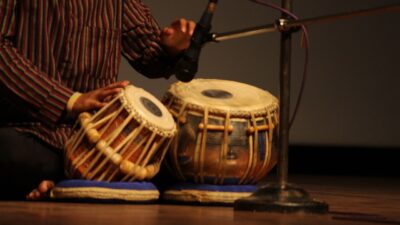
इस गीत के संगीत के बारे में कुछ भी दर्ज नहीं है और कोई रिकॉर्डिंग नहीं मिली, इसलिए इसकी ध्वनि का कोई भी वर्णन गढ़ा हुआ ही होगा। गायक-श्रेय की अनुपस्थिति सावधानी के साथ इतना संकेत ज़रूर देती है कि यह सामूहिक या कोरस गीत रहा होगा, क्योंकि 'विभिन्न कलाकार' का चिह्न ये सूचियाँ प्रायः मंडली-गीतों पर ही लगाती हैं। 1945 की किसी सोशल फ़िल्म में सामूहिक गीत आमतौर पर उत्सव या छेड़छाड़ के दृश्य में आते थे — कोई विवाह, कोई त्योहार, युवतियों की टोली — और ढोलक तथा तालियों पर टिकी सरल दोहराव वाली धुन पर बनते थे ताकि कोरस उन्हें उठा सके। सज्जाद हुसैन ने यहाँ ऐसा कुछ लिखा या नहीं, यह अज्ञात है; उनकी दर्ज रुचि एकल स्वरों के लिए कठिन धुनें रचने में थी, जिससे मंडली-गीत उनके हाथ में कुछ अप्रत्याशित लगता है।
अंग्रेज़ी में पढ़ें · Read in English
Nothing about this song's music is documented and no recording has been found, so any description of its sound would be invention. What the absence of a singer credit does suggest, cautiously, is a group or chorus number, since 'various artists' is the tag these catalogues most often apply to ensemble sides. Group songs in a 1945 social were typically staged as celebration or teasing — a wedding, a festival, a crowd of young women — and were built on a simple repeating melody over dholak and handclaps so that a chorus could carry it. Whether Sajjad Hussain wrote anything of the kind here is unknown; his documented interest lay in demanding melodic lines for solo voices, which makes an ensemble number slightly unexpected in his hands.
काव्य The Poetry
कोई बोल नहीं बचे और यहाँ कुछ संग्रहीत नहीं है। शीर्षक साधारण हिंदुस्तानी के दो शब्द हैं जो साथ मिलकर एक रूढ़ पद बनाते हैं: 'नवेली', यानी नवविवाहिता या नई आई हुई, और 'अलबेली', यानी वह स्त्री जो उमंग से भरी, बनावट-रहित और थोड़ी मनमौजी हो। यह जोड़ी किसी घर या दृश्य में प्रवेश करती युवती के लिए प्रचलित विशेषण है, और यह विरह की नहीं बल्कि उत्सव और छेड़छाड़ की शब्दावली से आती है — इसीलिए यह प्रविष्टि भाव को 'चंचल' मानती है। दो शब्दों के इस पाठ से आगे इसके बोलों के बारे में ज़िम्मेदारी से कुछ नहीं कहा जा सकता। हिंदी फ़िल्म गीत कोश यह अवश्य दर्ज करता है कि इसे किसने लिखा — वह इस रिकॉर्ड को 'बालम', यानी बालम परदेसी, को देता है, न कि उस संयुक्त जोड़ी को जिसे ऑनलाइन सूचियाँ हर गीत के सामने दोहराती हैं।
अंग्रेज़ी में पढ़ें · Read in English
No lyric text survives and none is stored here. The title is two words of ordinary Hindustani used together as a set phrase: naveli, newly-wed or newly-come, and albeli, the woman who is high-spirited, unaffected, a little wilful. The pairing is a stock descriptor for a young woman entering a household or a scene, and it belongs to the vocabulary of celebration and teasing rather than of longing — which is why this entry classifies the mood as playful. Beyond that reading of two words, nothing can responsibly be said about the text itself. The Hindi Film Geet Kosh does record who wrote it, giving this side to Balam — Baalam Pardesi — rather than to the joint pair the online catalogues repeat against every track.
कहानी The Story
'धर्म' स्टार प्रोडक्शंस की एक सोशल फ़िल्म थी, निर्देशक रमणिक देसाई — 1945 की उन रिलीज़ों में से एक जिनका पूरा बचा हुआ निशान एक श्रेय-पंक्ति और एक गीत-सूची है। इसकी कास्ट — ई. बिलिमोरिया, लीला पांडे, माधुरी, माया देवी, जमशेदजी, इस्माइल, जी. मोहम्मद, कुमार, प्रेमी, रतन बाई — के साथ किसी पात्र का नाम दर्ज नहीं है, और कहानी का कोई सारांश नहीं मिला। इस संदर्भ में 'नवेली अलबेली' का बिना-श्रेय गायक कोई अपवाद नहीं बल्कि एक लक्षण है: 1940 के दशक का फ़िल्म-गीत दस्तावेज़ीकरण दशकों बाद तवों के लेबल और स्टूडियो-प्रचार से जोड़ा गया था, और जहाँ लेबल पर नाम नहीं था, वहाँ नाम कभी वापस नहीं मिला।
अंग्रेज़ी में पढ़ें · Read in English
Dharm was a Star Productions social directed by Ramnik Desai, one of the 1945 releases whose entire surviving trace is a credit line and a song list. Its cast — E. Billimoria, Leela Pande, Madhuri, Maya Devi, Jamshedji, Ismail, G. Mohammed, Kumar, Premi, Rattan Bai — has no recorded character names attached to it, and no summary of the story has been traced. In that context the uncredited singer of 'Naveli Albeli' is less an anomaly than a symptom: film-song documentation of the 1940s was assembled decades later from disc labels and studio publicity, and where a label carried no name, none has ever been recovered.
विरासत The Legacy
इस गीत का कोई स्वतंत्र बाद-जीवन है ही नहीं: न पुनर्प्रकाशन, न संकलन, न उल्लेख, और इसका गायक अज्ञात। अभिलेख में इसकी एकमात्र भूमिका संरचनात्मक है — यह उन सात सूचीबद्ध शीर्षकों में से एक है जिनके सहारे 'धर्म' के संगीत को 'दिन रात' से अलग किया जा सका, क्योंकि यह हिंदीगीतमाला और माईस्वर दोनों की 'धर्म' सूची में आता है, जबकि दादा चांदेकर के आठ गीत हिंदीगीतमाला की 'दिन रात' सूची में भी मिलते हैं। इसे सजाने के बजाय एक ईमानदार अधूरी प्रविष्टि के रूप में रखना यह भी दिखाता है कि 1940 के दशक का गीत-दस्तावेज़ कहाँ तक ही पहुँच सकता है: एक शीर्षक, एक संगीतकार, दो गीतकार, और वहाँ एक ख़ाली जगह जहाँ कभी एक आवाज़ थी।
अंग्रेज़ी में पढ़ें · Read in English
This song has no independent afterlife at all: it is not reissued, not anthologised, not cited, and its performer is unknown. Its only role in the record is structural — it is one of the seven catalogued titles that let Dharm's soundtrack be separated from Din Raat's, since it appears in both hindigeetmala's and MySwar's Dharm listings while the eight Dada Chandekar songs appear in hindigeetmala's Din Raat listing as well. Kept here as an honest stub rather than dressed up, it also marks the limit of what 1940s film-song documentation can deliver: a title, a composer, two lyricists, and a blank where a voice used to be.
वर्गीकरण
ClassificationGenre
अन्य विवरण
More Details- https://en.wikipedia.org/wiki/List_of_Hindi_films_of_1945
- https://myswar.co/album/dharma-1945
- https://www.hindigeetmala.net/movie/dharma_1945.htm
- https://en.wikipedia.org/wiki/Sajjad_Hussain_(composer)
- https://indiancine.ma/EDV/info
- https://www.hindigeetmala.net/movie/din_raat.htm
- https://www.hindi-movies-songs.com/hfgk/
References
रोचक तथ्य
Margin Notes'धर्म' के बोल सूचीबद्ध सातों गीतों में शेवन रिज़वी और बालम परदेसी को संयुक्त रूप से श्रेय किए गए हैं, इसलिए उनमें से किसी एक गीत को किसी एक के नाम नहीं किया जा सकता। शेवन रिज़वी 1970 के दशक तक लिखते रहे; बालम परदेसी का नाम 1940 के दशक के लगभग चालीस गीतों पर मिलता है, पर उनका कोई जीवन-वृत्त कभी नहीं मिला।
अंग्रेज़ी में पढ़ें · Read in English
Dharm's lyrics are credited jointly to Shewan Rizvi and Baalam Pardesi across all seven catalogued songs, so none of those can be attributed to one of them individually. Shewan Rizvi went on writing into the 1970s; Baalam Pardesi's name appears on around forty 1940s film songs but no biographical record of him has ever been traced.
कई ऑनलाइन गीत-सूचियाँ 'धर्म' के साथ पंद्रह गीत दिखाती हैं। उनमें से आठ — सभी दादा चांदेकर के संगीत में, संतोख नदीम के बोल, स्नेहप्रभा प्रधान, परेश बनर्जी और राजकुमारी के स्वर — असल में 'दिन रात' (1945) के हैं, जो रूप के. शोरी की एक अलग फ़िल्म है। उनमें से केवल सात ही वास्तव में 'धर्म' के हैं; और 'धर्म' का एक और गीत — 'आने वाले जब आएँगे' — उन सूचियों से बिलकुल ग़ायब है।
अंग्रेज़ी में पढ़ें · Read in English
Several online song databases list Dharm with fifteen songs. Eight of those — all composed by Dada Chandekar to lyrics by Santokh Nadim and sung by Snehaprabha Pradhan, Paresh Banerjee and Rajkumari — actually belong to Din Raat (1945), a different film directed by Roop K. Shorey. Only seven of them are genuinely Dharm's; a further Dharm song, 'Aanewale Jab Aayenge', is missing from those listings altogether.
नमूना-पट्टी
The Specimen Table| शीर्षक | नवेली अलबेली · Naveli Albeli |
|---|---|
| फ़िल्म | धर्म · 1945 |
| वर्ष · युग | 1945 |
| गीतकार | बालम परदेसी |
| संगीतकार | Sajjad Hussain |
| भाषा | hindi |
| भाव | उत्सव · चुलबुला |
| लोकप्रियता | Obscure |
| बोल-स्थिति | केवल झलक |
जुड़े हुए पन्ने
Connected Plates · The Graph Made Visibleअटलस में कोई पन्ना अकेला नहीं — इस गीत से जुड़े गीत, कलाकार, फ़िल्म, राग-ताल-विधा, सब यहाँ से खुलते हैं।
कलाकार · The Artists
फ़िल्म · The Film
साझा कीजिए · Share this Plate