गीत विंग · गीत-पट्टिका · Song Plate
बोले रे पंछी बोले
Bole Re Panchi Bole
एक पुरुष स्वर और एक स्त्री स्वर, दोनों के नाम कभी दर्ज नहीं हुए, आम के पेड़ पर बोलते पंछी को जवाब देते हुए — 'बचपन' का सबसे सुरक्षित बचा गीत।
भावचुलबुला · रोमांटिक
भाषाhindi स्वरूपयुगल
श्रेय
The Creditsसूत्र-वाक्य · The Hook
सूत्र-वाक्य
एक पुरुष स्वर और एक स्त्री स्वर, दोनों के नाम कभी दर्ज नहीं हुए, आम के पेड़ पर बोलते पंछी को जवाब देते हुए — 'बचपन' का सबसे सुरक्षित बचा गीत।
In EnglishA man's voice and a woman's voice, neither of them ever named, answering a bird calling from a mango tree — the best-preserved song from Bachpan.
पट्टिका-लेख
The Monographपरिचय Overview
'बोले रे पंछी बोले' एक युगल गीत है — एक अज्ञात पुरुष स्वर और एक अज्ञात स्त्री स्वर; बचे हुए रिकॉर्ड को डिजिटल करने वाले शोधकर्ता दोनों में से किसी का नाम नहीं बता सके, और सूचियों में भी कोई नाम नहीं है। यह हिंदी फ़िल्म-गीत की सबसे पुरानी छवियों में से एक पर टिका है — आम के पेड़ से बोलता पंछी, और सुनने वाले का मन अपनी ही बेचैनी से उसका उत्तर देता हुआ। 'बचपन' के दस गीतों में यही एक है जिस पर कुछ विस्तार से लिखा गया — 2019 में फ़िल्म-इतिहासकार अरुणकुमार देशमुख के एक लेख में — और संग्राहक द्वारा किया गया इसका ट्रांसफ़र 2 मिनट 35 सेकंड चलता है।
अंग्रेज़ी में पढ़ें · Read in English
'Bole Re Panchhi Bole' is a duet between an unidentified male and an unidentified female voice; the researchers who transferred the surviving disc could put no names to either, and the catalogues offer none. It is built on one of the oldest images in Hindi film song — a bird calling from a mango tree while the listener's heart answers with its own restlessness. Of Bachpan's ten songs it is the one that has been written about at any length, in a 2019 essay by the film historian Arunkumar Deshmukh, and the collector's transfer of it runs 2 minutes 35 seconds.
संगीत The Music
गीत दो स्वरों के आदान-प्रदान के रूप में रचा गया है, और 1945 में इसका अर्थ था दो गायकों का एक ही माइक्रोफ़ोन पर खड़े होकर 78-आरपीएम का एक पूरा पहलू एक बार में रिकॉर्ड करना — ट्रांसफ़र 2 मिनट 35 सेकंड चलता है, और पूरी रिकॉर्डिंग इतनी ही है। भातखंडे-प्रशिक्षित एस. एन. त्रिपाठी, जो तब स्वतंत्र संगीतकार के रूप में तीन साल पूरे कर चुके थे, रचना को उस हल्के लोक-मधुर रंग में रखते हैं जिसकी माँग गाँव में बसी बाल-कथा करती है, न कि उस शास्त्रीय मुहावरे में जो वे लिख सकते थे। राग, ताल या लय के बारे में उस समय कुछ दर्ज नहीं हुआ, और रिकॉर्ड पर भी ऐसी कोई सूचना नहीं है।
अंग्रेज़ी में पढ़ें · Read in English
The song is cast as a two-voice exchange, which in 1945 meant two singers standing at one microphone and cutting a single 78-rpm side straight through — the transfer runs 2 minutes 35 seconds, and that is the entire recording. S. N. Tripathi, Bhatkhande-trained and by then three years into his career as an independent composer, keeps the piece in the light folk-melodic register that a village-set children's film calls for rather than in the classical idiom he could also write. Nothing about raag, taal or tempo was documented at the time, and the discs carry no such information.
काव्य The Poetry
पंछी — जो बोलता है और जिससे पूछा जाता है कि वह क्या कह रहा है — हिंदी फ़िल्म-काव्य की एक जमी हुई युक्ति है, और वह इसलिए काम करती है क्योंकि इससे गीतकार भावना को बिना किसी स्वीकारोक्ति के बाहर रख सकता है: बोलता पंछी है, मन बस प्रतिक्रिया करता है। आई. सी. कपूर इस संवाद को अमुवा — यानी आम के पेड़, इस युक्ति की मानक डाल — के नीचे रखते हैं, और दोनों स्वरों को यह प्रश्न आपस में उछालने देते हैं, जहाँ हर एक पंछी की चहचहाहट में वही सुनता है जो वह दूसरे से कह नहीं रहा। यह युक्ति इतनी पुरानी है कि हिंदी फ़िल्म-सूचियाँ 'पंछी गीत' को एक स्वतंत्र श्रेणी मानती हैं; इस गीत को उसका समय छवि नहीं बल्कि प्रारूप देता है — पूरी छेड़छाड़ एक शेलैक पहलू में सिमटी हुई।
अंग्रेज़ी में पढ़ें · Read in English
The panchhi — the bird that calls and is asked what it is saying — is a fixed device of Hindi film poetry, and it works because it lets a lyricist externalise feeling without a confession: the bird speaks, the heart merely reacts. I. C. Kapoor sets the exchange under an ambuwa, the mango tree that is the standard perch for this trope, and lets the two voices push the question back and forth between them, each hearing in the bird's noise a version of what they are not saying to each other. The device is old enough that Hindi film catalogues maintain 'panchhi song' as a category in its own right; what dates this one is not the image but the format, a complete flirtation compressed into one shellac side.
कहानी The Story
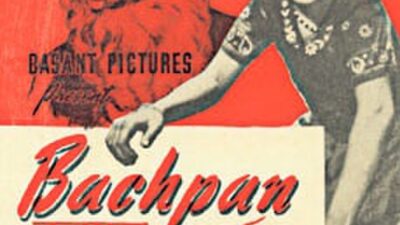
'बचपन' होमी वाडिया की बसंत पिक्चर्स की फ़िल्म थी — वही स्टूडियो जो तब फ़ियरलेस नाडिया की स्टंट फ़िल्मों के लिए जाना जाता था — पर यह एक सामाजिक पारिवारिक नाटक है: भैरव (मज़हर ख़ान), जो बेटे के अंतर्जातीय विवाह के बाद कड़वे होकर पहाड़ पर अकेले रहते हैं, अपनी छोटी भांजी मधु (बेबी माधुरी) के सान्निध्य से धीरे-धीरे पिघलते हैं। मधु का दो बार अपहरण होता है — एक बार मौसी द्वारा, जो उसे धनी विकलांग कमला (बेबी शकुंतला) की सहेली बनाकर बेच देती है, और एक बार कमला की ईर्ष्यालु गवर्नेस द्वारा — और फ़िल्म का अंत गाँव के अध्यापक रमेश (बी. नांदरेकर) तथा उनकी प्रेमिका (चंद्रप्रभा) द्वारा थाने में भैरव को निर्दोष सिद्ध करने पर होता है। कहानी, संवाद और दसों गीत आई. सी. कपूर ने लिखे; संगीत एस. एन. त्रिपाठी का था। इसी गीत के ज़रिए यह फ़िल्म मई 2019 में — रिलीज़ के चौहत्तर साल बाद — 'अतुल्स सॉन्ग अ डे' पर पहली बार आई; साथ में अरुणकुमार देशमुख के लेख ने कथा को बाबूराव पटेल की 'फ़िल्मइंडिया' समीक्षा से पुनर्रचित किया, क्योंकि फ़िल्म का कोई प्रिंट सार्वजनिक रूप से बचा हुआ ज्ञात नहीं है।
अंग्रेज़ी में पढ़ें · Read in English
Bachpan was made by Homi Wadia's Basant Pictures, a studio then known for Fearless Nadia stunt pictures, and it is a social family drama instead: Bhairav (Mazhar Khan), embittered and living alone on a mountainside after his son married outside their caste, is slowly softened by Madhu (Baby Madhuri), the young niece a relative sends to live with him. Madhu is twice abducted — once by the aunt, who sells her as a companion to the wealthy invalid Kamla (Baby Shakuntala), and once by Kamla's jealous governess — and the film ends with the village schoolteacher Ramesh (B. Nandrekar) and his beloved (Chandraprabha) clearing Bhairav's name at the police station. I. C. Kapoor wrote the story, the dialogue and all ten song lyrics; S. N. Tripathi composed the score. This is the song through which the film made its first appearance on Atul's Song A Day in May 2019, seventy-four years after release; the accompanying essay by Arunkumar Deshmukh reconstructed the plot from Baburao Patel's FilmIndia review because no print of the film is known to survive in public hands.
विरासत The Legacy
इस गीत का उत्तरजीवन पूरी तरह अभिलेखीय है। इसका कभी व्यावसायिक पुनःप्रकाशन नहीं हुआ, 1940 के दशक के उस भंडार में इसकी कोई जगह नहीं जिसे रेडियो ने ज़िंदा रखा, और आज यह एक घिसे रिकॉर्ड से किए गए खरखराते ट्रांसफ़र के रूप में मौजूद है, साथ में एक शोध-लेख। फ़िल्म के दस में से आठ गीत इतना भी दावा नहीं कर सकते। इसका दस्तावेज़ी महत्व वास्तविक है: 'बचपन' का यही एकमात्र टुकड़ा है जिससे यह कहा जा सकता है कि फ़िल्म असल में सुनाई कैसी देती थी।
अंग्रेज़ी में पढ़ें · Read in English
The song's afterlife is entirely archival. It was never reissued commercially, it has no presence in the 1940s repertoire that radio kept alive, and it exists today as a noisy transfer from a worn disc uploaded by a collector, alongside a single research essay. That is more than eight of the film's ten songs can claim. Its documentary value is real: it is the only piece of Bachpan from which anything can be said about how the film actually sounded.
वर्गीकरण
ClassificationGenre
अन्य विवरण
More Details- https://en.wikipedia.org/wiki/Bachpan_(1945_film)
- https://www.hindigeetmala.net/movie/bachpan_1945.htm
- https://myswar.co/album/bachpan-1945
- https://atulsongaday.me/2019/05/28/bole-re-panchhi-bole/
- https://en.wikipedia.org/wiki/S._N._Tripathi
- https://en.wikipedia.org/wiki/Homi_Wadia
References
रोचक तथ्य
Margin Notesमई 2019 में 'अतुल्स सॉन्ग अ डे' पर लिखते हुए इतिहासकार अरुणकुमार देशमुख ने इस गीत का श्रेय बस 'अज्ञात स्त्री स्वर, अज्ञात पुरुष स्वर' को दिया — जो 'बचपन' के लगभग पूरे संगीत के लिए रिकॉर्ड की ईमानदार स्थिति है।
अंग्रेज़ी में पढ़ें · Read in English
The historian Arunkumar Deshmukh, writing on Atul's Song A Day in May 2019, credits this song simply to 'unknown female voice, unknown male voice' — the honest state of the record for almost all of Bachpan's soundtrack.
आई. सी. कपूर ने 'बचपन' की कहानी, संवाद और दसों गीत लिखे — 1945 की किसी फ़िल्म के लिए असामान्य रूप से पूरा लेखकीय अधिकार, और जून 1946 के 'फ़िल्मइंडिया' में समीक्षा करते समय बाबूराव पटेल की आलोचना का निशाना भी।
अंग्रेज़ी में पढ़ें · Read in English
I. C. Kapoor wrote Bachpan's story, its dialogue and all ten song lyrics — an unusually complete authorial hand for a 1945 production, and the target of Baburao Patel's criticism when he reviewed the film in FilmIndia in June 1946.
मधु के रूप में फ़िल्म का भार उठाने वाली बेबी माधुरी का असली नाम माह लक़ा था और वे मीना कुमारी तथा अभिनेत्री ख़ुर्शीद जूनियर की सबसे छोटी बहन थीं; आगे चलकर उन्होंने हास्य-अभिनेता महमूद से विवाह किया और गायक लकी अली की माँ बनीं।
अंग्रेज़ी में पढ़ें · Read in English
Baby Madhuri, who carries the film as Madhu, was born Mah Laqa and was the youngest sister of Meena Kumari and of the actress Khurshid Jr.; she later married the comedian Mehmood and was the mother of the singer Lucky Ali.
नमूना-पट्टी
The Specimen Table| शीर्षक | बोले रे पंछी बोले · Bole Re Panchi Bole |
|---|---|
| फ़िल्म | बचपन · 1945 |
| वर्ष · युग | 1945 |
| गीतकार | I. C. Kapoor |
| संगीतकार | S. N. Tripathi |
| स्वरूप | युगल |
| भाषा | hindi |
| भाव | चुलबुला · रोमांटिक |
| लोकप्रियता | Obscure |
| बोल-स्थिति | केवल झलक |
जुड़े हुए पन्ने
Connected Plates · The Graph Made Visibleअटलस में कोई पन्ना अकेला नहीं — इस गीत से जुड़े गीत, कलाकार, फ़िल्म, राग-ताल-विधा, सब यहाँ से खुलते हैं।
कलाकार · The Artists
फ़िल्म · The Film
साझा कीजिए · Share this Plate