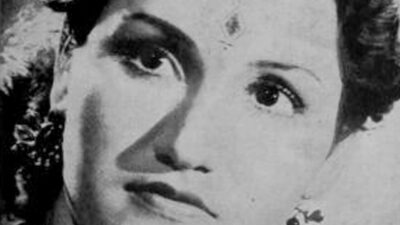
गीत विंग · गीत-पट्टिका · Song Plate
आजा बेदर्दी आजा
Aaja Bedardi Aaja
ज़ीनत बेगम उस प्रियतम को पुकारती हैं जिसे वे पहले ही 'बेदर्दी' कह चुकी हैं — एक ही साँस में बुलावा भी, इल्ज़ाम भी।
भावPlaintive · रोमांटिक · Yearning
भाषाurdu गतिमध्यम स्वरूपएकल महिला
श्रेय
The Creditsसूत्र-वाक्य · The Hook
सूत्र-वाक्य
ज़ीनत बेगम उस प्रियतम को पुकारती हैं जिसे वे पहले ही 'बेदर्दी' कह चुकी हैं — एक ही साँस में बुलावा भी, इल्ज़ाम भी।
In EnglishZeenat Begum calls to a lover she has already named 'the one without pity' — a summons and an accusation in the same breath.
पट्टिका-लेख
The Monographपरिचय Overview
'आजा बेदर्दी आजा' श्याम सुंदर के 'भाई जान' (1945) के संगीत में ज़ीनत बेगम का प्रमुख एकल है। फ़िल्म की तीनों बची हुई सूचियाँ — हिंदीगीतमाला, माईस्वर और अंग्रेज़ी विकिपीडिया — गायिका के रूप में उन्हीं पर सहमत हैं, जिससे यह इस खोई हुई फ़िल्म के उन गिने-चुने गीतों में से है जिनका श्रेय विवादित नहीं। हिंदीगीतमाला इसे अपनी रोमांटिक श्रेणी में रखता है, माईस्वर सिर्फ़ 'फ़िल्मी' कहता है। बोल, पूरे एल्बम की तरह, परतौ लखनवी के हैं।
अंग्रेज़ी में पढ़ें · Read in English
'Aaja Bedardi Aaja' is Zeenat Begum's principal solo in Shyam Sundar's score for Bhai Jaan (1945). All three surviving catalogues of the film — HindiGeetMala, MySwar and English Wikipedia — agree on her as the singer, which makes it one of the few numbers in this lost film whose credit is not in dispute. HindiGeetMala files it under its romantic-songs category; MySwar simply as filmi. Its lyric, like the rest of the album, is by Partau Lakhnavi.
संगीत The Music
ज़ीनत बेगम की आवाज़ श्याम सुंदर के लाहौरी दायरे का दूसरा ध्रुव थी — उन्होंने ही पंजाबी फ़िल्म 'गुल बलोच' (1942) में युवा मोहम्मद रफ़ी के साथ उनका परदा-युगल कराया था — और बंबई में उन्हें वे गीत मिले जो नूर जहाँ के हिस्से नहीं आए। ऐसा बुलावा-गीत धीमी ग़ज़ल-चाल नहीं, चलती हुई लय माँगता है: पंक्ति के सिरे पर दोहराई गई पुकार अपनी लय ख़ुद गढ़ लेती है, और संगीतकार का काम यह है कि यह न्योता इतनी बार लौटे कि ज़िद बन जाए। इस दौर की श्याम सुंदर की संगत हारमोनियम, सारंगी और हल्के हाथ-वाद्यों की बुनियाद पर टिकती है, और आवाज़ के नीचे वाद्यवृंद पतला कर दिया जाता है ताकि उर्दू सुनाई देती रहे।
अंग्रेज़ी में पढ़ें · Read in English
Zeenat Begum's voice was the other pole of Shyam Sundar's Lahore circle — he had given her a screen duet with the young Mohammad Rafi in the Punjabi film Gul Baloch (1942) — and in Bombay she took the songs Noor Jehan did not. A summons-song of this kind wants a walking pulse rather than a slow ghazal tread: the repeated call at the head of the line sets up its own rhythm, and the composer's job is to let the invitation return often enough to become insistent. Shyam Sundar's arrangements in this period lean on harmonium, sarangi and a light hand-drum bed, with the orchestra thinned out under the voice so that the Urdu stays audible.
काव्य The Poetry
'बेदर्दी' — वह जिसमें दर्द न हो, भाव की टीस न हो — हिंदी-उर्दू प्रेम-गीत के सबसे पुराने संबोधनों में से एक है, और यह उलाहना तथा दुलार दोनों एक साथ है: प्रिय को बेदर्द कहना यह स्वीकारना है कि पुकार अब भी जारी है। शीर्षक की बनावट — इल्ज़ाम को घेरता हुआ न्योता — पूरे गीत की दलील का लघु रूप है। परतौ लखनवी उसी सादा लहजे में लिख रहे हैं जिसे 'फ़िल्मइंडिया' ने फ़िल्म की उर्दू में लक्षित किया — लखनऊ की उस अलंकृत ग़ज़ल-भाषा में नहीं जिसके नाम पर उनका तख़ल्लुस है, बल्कि उस सुलभ मुहावरे में जो 1945 का दर्शक हॉल से बाहर साथ ले जा सके। बाबूराव पटेल ने फ़िल्म के बोल को उसका सबसे कमज़ोर हिस्सा माना — यह दर्ज करने लायक़ है, यह जानते हुए भी कि उसी लेखन-टीम के संवाद उन्हें उत्कृष्ट लगे थे।
अंग्रेज़ी में पढ़ें · Read in English
'Bedardi' — the one without dard, without the ache of feeling — is one of the oldest terms of address in the Hindi-Urdu love lyric, and it works as reproach and endearment simultaneously: to call the beloved heartless is to concede that one is still calling. The title's structure, the invitation bracketing the insult, is the whole argument of the song in miniature. Partau Lakhnavi is writing in the plain register that Filmindia noted in the picture's Urdu — not the ornamented ghazal diction of the Lucknow school he was named for, but the accessible idiom a 1945 audience would carry out of the hall. Baburao Patel thought the film's lyrics its weakest element, an assessment worth recording alongside the fact that he found the dialogue of the same writing team excellent.
कहानी The Story
'भाई जान' एक मुस्लिम सामाजिक है — एक नवाबी घराने के दो भाई और उनके बीच आ खड़ी होने वाली नर्तकी बेनज़ीर। परदे पर बेनज़ीर नूर जहाँ थीं; ज़ीनत बेगम, जो कलाकारों की सूची में नहीं हैं, परदे के पीछे से गाती हैं। यह बँटवारा — नायिका अपने गीत ख़ुद गाए और बाक़ी संगीत कोई दूसरी आवाज़ सँभाले — 1945 में आम चलन था, उन आख़िरी बरसों का, जिनके बाद पार्श्वगायक अपने नाम से अलग शोहरत पाने लगे। 'फ़िल्मइंडिया' का कथासार एक ऐसे घर का ब्योरा देता है जो शक, बीमारी और एक पाले हुए बेटे की बदनीयती से भीतर ही भीतर टूटता है, और जहाँ तवायफ़ आख़िरकार अपने नाम से होने वाले नुक़सान के बजाय मौत चुनती है; ऐसी दुनिया में एक अनुत्तरित पुकार का गीत सहज बैठता है।
अंग्रेज़ी में पढ़ें · Read in English
Bhai Jaan is a Muslim social about two brothers in a Nawabi household and the dancing girl Benazeer who comes between them. Noor Jehan played Benazeer on screen; Zeenat Begum, who does not appear in the cast list, sang from behind it. That division — the star singing her own songs while a second voice covers the rest of the score — was standard practice in 1945, the last years before playback singers became separately famous in their own right. Filmindia's synopsis of the film records a household turned in on itself by suspicion, illness and a ward's malice, with the courtesan finally choosing death over the damage her name would do; a song of unanswered summons sits naturally in that world.
विरासत The Legacy
ज़ीनत बेगम का बंबई-कार्यकाल छोटा था और उसका दस्तावेज़ीकरण पतला है; विभाजन के बाद वे पाकिस्तान चली गईं और भारत में उनके नाम से निकले रिकॉर्ड दोबारा जारी नहीं हुए। ऐसे गीत मुख्यतः सूची-प्रविष्टियों के रूप में ही बचते हैं — एक शीर्षक, एक गायिका, एक संगीतकार, एक वर्ष — और इसीलिए यह मायने रखता है कि फ़िल्म की दो सबसे पूरी बची हुई गीत-सूचियाँ, अंग्रेज़ी विकिपीडिया की और हिंदीगीतमाला की, स्वतंत्र रूप से 'आजा बेदर्दी आजा' की गायिका के रूप में उन्हीं का नाम देती हैं। जिस फ़िल्म में यह गीत था वह खो चुकी है, और इस रिकॉर्डिंग का कोई पुनःप्रकाशित प्रतिलेखन फ़िलहाल खोजा नहीं जा सका।
अंग्रेज़ी में पढ़ें · Read in English
Zeenat Begum's Bombay career was brief and is thinly documented; she moved to Pakistan after Partition and the records that carried her name in India were not reissued. Songs like this one survive mainly as catalogue entries — a title, a singer, a composer, a year — which is why it matters that the two fullest surviving song lists for the film, English Wikipedia's and HindiGeetMala's, independently agree in naming her as the singer of 'Aaja Bedardi Aaja'. The film that housed it is lost, and no reissued transfer of the recording is currently traceable.
वर्गीकरण
Classification- Tempo
- Medium
Genre
अन्य विवरण
More Details- https://en.wikipedia.org/wiki/Bhai_Jaan
- https://www.hindigeetmala.net/movie/bhaijan.htm
- https://myswar.co/album/bhaijaan-1945
- https://archive.org/stream/filmindia194511unse#page/68/mode/2up
- https://en.wikipedia.org/wiki/List_of_Hindi_films_of_1945
References
रोचक तथ्य
Margin Notes'भाई जान' (1945) का कोई प्रिंट आज ज्ञात नहीं है। यह फ़िल्म 1940 के दशक की खोई हुई हिंदी फ़िल्मों में गिनी जाती है — इसलिए इसके गीतों के शीर्षक और 'फ़िल्मइंडिया' का नवंबर 1945 का कथासार तथा समीक्षा ही इसके बचे हुए अवशेष हैं।
अंग्रेज़ी में पढ़ें · Read in English
No print of Bhai Jaan (1945) is known to survive. The film is counted among the lost Hindi productions of the 1940s, so its song titles and Filmindia's November 1945 synopsis and review are effectively all that remain of it.
'भाई जान' यूनाइटेड फ़िल्म्स की पहली ही फ़िल्म थी — बंबई की एक बहुत छोटी इकाई। 'फ़िल्मइंडिया' के अनुसार निर्माताओं को इसे पूरा करने के लिए 'कई स्टूडियो खटखटाने' पड़े, यही वजह है कि चित्र की तकनीकी गुणवत्ता रील-दर-रील बदलती दिखाई देती है।
अंग्रेज़ी में पढ़ें · Read in English
Bhai Jaan was the maiden production of United Films, a very small Bombay unit; Filmindia reported that the makers appeared to have 'knocked through several studios' to finish it, which is why the picture's technical quality shifts visibly from reel to reel.
फ़िल्म के नौ के नौ गीत परतौ लखनवी ने लिखे, जिनका नाम 'फ़िल्मइंडिया' के निर्माण-विवरण में 'संवाद और गीत' के अंतर्गत केवल 'परताओ लखनवी' के रूप में दर्ज है — जबकि कहानी और संवाद चुग़ताई तथा ख़लील की जोड़ी ने सँभाले।
अंग्रेज़ी में पढ़ें · Read in English
All nine lyrics in the film were written by Partau Lakhnavi, who is credited in the Filmindia production panel simply as 'Partao Lucknavi' under 'Dialogues & Songs' — the picture's writing team of Chughtai and Khalil handling story and dialogue.
नमूना-पट्टी
The Specimen Table| शीर्षक | आजा बेदर्दी आजा · Aaja Bedardi Aaja |
|---|---|
| फ़िल्म | भाई जान · 1945 |
| वर्ष · युग | 1945 — pre independence |
| गायक | Zeenat Begum |
| गीतकार | परतौ लखनवी |
| संगीतकार | Shyam Sundar |
| स्वरूप | एकल महिला |
| गति | मध्यम |
| भाषा | urdu |
| भाव | Plaintive · रोमांटिक · Yearning |
| लोकप्रियता | Obscure |
| बोल-स्थिति | केवल झलक |
जुड़े हुए पन्ने
Connected Plates · The Graph Made Visibleअटलस में कोई पन्ना अकेला नहीं — इस गीत से जुड़े गीत, कलाकार, फ़िल्म, राग-ताल-विधा, सब यहाँ से खुलते हैं।
मिलते-जुलते गीत · Related Songs
कलाकार · The Artists
फ़िल्म · The Film
साझा कीजिए · Share this Plate