शास्त्र विंग · राग-पट्टिका · Raag Plate
हिंडोल
Hindol
वसंत और विकास का राग · The Raag of Spring and Blossoming
भावचंचल · तरुण · आनंदपूर्ण · हल्का · ताज़ा
गतिmadhya_to_drut ऊर्जातीव्र
अन्य नामHindola · हिंडोला · The Spring Raag · The Swing Raag
स्वर-चित्र · The Swara Panel
आरोह — अवरोह · The Ascent and the Descent
तीव्र स्वर — Ma♯ — बिंदुदार नारंगी में।
आरोह · Aroha चढ़ती हुई सीढ़ी
अवरोह · Avaroha उतरती हुई सीढ़ी
तीव्र स्वर — ऊपर की ओर चिह्न (◌॑)सˊ = तार सप्तक का षड्ज
हिंडोल एक पेंटाटोनिक राग है जो केवल 5 स्वर का उपयोग करता है: सा ग म॑ ध नि — पूरी तरह से रे और प को छोड़ देता है।
अंग्रेज़ी में पढ़ें · Read in English
Hindol is a PENTATONIC raag using only 5 notes: Sa Ga Ma♯ Dha Ni — completely omitting Re (the 2nd) and Pa (the 5th). This creates an unusual scale with large intervallic leaps. The absence of Re and Pa makes Hindol exceptionally bright and open, with an airy, springtime quality that feels fresh and playful. Hindol is one of the oldest raags documented in Indian music theory, and its pentatonic structure may reflect ancient traditions.
वर्जित स्वर — अवरोह में: Re, Pa
पकड़ · पहचान वाक्यांश
ग म॑ ध, ध नि सˊ
Ga Ma♯ Dha, Dha Ni Sa'
सरल, हल्का वाक्य जो हिंडोल के चंचल, वसंत-काल चरित्र को दर्शाता है।
अंग्रेज़ी में पढ़ें · Read in English
Simple, light phrase that captures Hindol's playful, springtime character. Missing the lower notes (Re, Pa) creates an open, airy quality.
वादी–संवादी टिप्पणी · Vadi–Samvadi note
Vadi — The most important note. In Hindol, Dha gives a light, airy quality quite different from the grand Dha of Hameer.
Samvadi — The supporting note — creates harmony with Dha.
चलन · स्वर-यात्रा
सा ग म॑, म॑ ध नि सˊ, सˊ नि ध, ध म॑ ग स
Sa Ga Ma♯, Ma♯ Dha Ni Sa', Sa' Ni Dha, Dha Ma♯ Ga Sa
हिंडोल की बहती, गीतमय प्रगति खुली पेंटाटोनिक संरचना पर जोर देती है।
अंग्रेज़ी में पढ़ें · Read in English
Hindol's flowing, lyrical progression emphasizes the open pentatonic structure. Creates a light, dance-like quality.
न्यास स्वर — Sa, Ga, Dha अनुवादी — Sa, Ma♯, Ni
विशेष स्वर-वाक्य
Characteristic Phrasesसमय और भाव
Time Theory & Moodसमय-सिद्धांत · Time Theory
प्रातः काल (सुबह)
वसंत की सुबह राग — परंपरागत रूप से सुबह की शुरुआत में गाया जाता है।
Spring morning raag — traditionally performed in early morning hours (Pratah Kaal). Associated with the season of spring (Vasant Ritu), blossoms, and renewal.
Spring
भाव और गति · Mood & Tempo
श्रृंगार & हास्य · Love & Joy
हिंडोल तरुण प्रेम, चंचलता, और वसंत की खुशी व्यक्त करता है। हल्का और उत्सवी।
madhya_to_drut
ऊर्जा · Energyतीव्र
स्तर · Levelbeginner_friendly — हिंडोल अपनी पेंटाटोनिक संरचना के कारण सबसे सरल राग है। लेकिन असामान्य अंतराल के लिए सावधान ध्वनि की आवश्यकता ह…
लक्षण गीत · The Mnemonic Verse
लक्षण गीत
हिंडोल कल्यण परिवार
रे पा वर्जित विचार
सा ग म॑ ध नि सा
वसंत खुशियों की भरमार
अंग्रेज़ी में पढ़ें · Read in English
Hindol Kalyan parivaar
Re pa varjit vichar
Sa ga m' dha ni sa
Vasant khushiyonki bharmar
Hindol of the Kalyan family omits Re and Pa. Using Sa Ga Ma♯ Dha Ni Sa — spring and joy abound.
पट्टिका-लेख
The Monographपरिचय Introduction
राग हिंडोल हिंदुस्तानी संगीत प्रणाली के सबसे प्राचीन और सरल राग में से एक है। एक पेंटाटोनिक राग केवल 5 स्वरों का उपयोग करते हुए, यह बड़ी खाली जगाओं के साथ एक असामान्य अंतराल संरचना बनाता है।
अंग्रेज़ी में पढ़ें · Read in English
Raag Hindol is one of the most ancient and simplest raags in the Hindustani music system. A pentatonic raag using only 5 notes (Sa Ga Ma♯ Dha Ni), it omits both Re (2nd) and Pa (5th), creating an unusual intervallic structure with large gaps. This open structure gives Hindol an airy, spacious character that feels fresh and light. Hindol is traditionally a spring morning raag, and its mood is celebratory and youthful. The raag is documented in ancient music treatises (Natyashatra) and represents one of the oldest musical traditions. Despite its simplicity, Hindol can be rendered with great sophistication, allowing for subtle ornamentation and expressive depth within its limited note range.
सांस्कृतिक महत्व Cultural Significance
हिंडोल भारतीय संगीत में सबसे पुराने प्रलेखित राग में से एक के रूप में एक अद्वितीय स्थान रखता है।
अंग्रेज़ी में पढ़ें · Read in English
Hindol holds a unique place in Indian music as one of the oldest documented raags. Its association with spring (Vasant Ritu) has made it central to seasonal music traditions. In Indian classical music, Hindol is traditionally performed in spring during the Holi festival season. The raag's simplicity has made it accessible to ordinary people while its sophistication appeals to serious musicians. Hindol represents a bridge to ancient musical traditions.
ऐतिहासिक महत्व Historical Significance
हिंडोल नाट्यशास्त्र में प्रलेखित है, भारत के सबसे पुराने संगीत सिद्धांत ग्रंथों में से एक।
अंग्रेज़ी में पढ़ें · Read in English
Hindol is documented in the Natyashatra, one of the oldest music theory texts in India. The raag has been continuously performed for over a thousand years, making it one of the oldest extant raags in world music. Its ancient roots and association with spring and festival celebrations have kept it popular throughout Indian history. In modern times, Hindol remains popular in classical concerts and is particularly performed during spring season.
शिक्षा
Teaching & Learning| बंदिश | ताल · लय | बोल |
|---|---|---|
| Basant Bahar Traditional |
Rupak |
केवल 5 स्वरों के साथ, प्रत्येक स्वर को स्पष्ट रूप से बोलने दें। खुली संरचना प्राकृतिक चुप्पी बनाती है।
अंग्रेज़ी में पढ़ें · Read in English
With only 5 notes, let each note speak clearly. The open structure creates natural silence — embrace it. Don't rush.
हिंडोल में अंतराल अधिकांश राग की तुलना में बड़े हैं। इन बड़े अंतरालों के माध्यम से चिकनी गति का अभ्यास करें।
अंग्रेज़ी में पढ़ें · Read in English
The intervals in Hindol are larger than in most raags (missing Re and Pa creates gaps). Practice moving smoothly across these larger jumps.
हिंडोल एक वसंत राग है — खुशी, चंचलता, और तरुण ऊर्जा दिखाएँ।
अंग्रेज़ी में पढ़ें · Read in English
Hindol is a spring raag — bring out the joy, playfulness, and youthful energy. Don't render it heavily or seriously.
हिंडोल में रे या प का प्रयोग करना, भूल जाना कि यह पेंटाटोनिक है
अंग्रेज़ी में पढ़ें · Read in English
Using Re or Pa, forgetting that Hindol is pentatonic and completely omits these notes
सुधार: Hindol uses ONLY Sa Ga Ma♯ Dha Ni. Never use Re or Pa.
हिंडोल को बहुत धीरे या गंभीरता से प्रदर्शित करना, इसके वसंत-जैसे चरित्र को खोना
अंग्रेज़ी में पढ़ें · Read in English
Rendering Hindol too slowly or seriously, losing its spring-like, playful character
सुधार: Hindol is inherently light and celebratory. Render it with brightness, speed (often drut), and playfulness.
रोचक तथ्य
Margin Notesहिंडोल विश्व संगीत इतिहास के सबसे पुराने प्रलेखित राग में से एक है।
अंग्रेज़ी में पढ़ें · Read in English
Hindol is one of the oldest documented raags in world music history, mentioned in the Natyashatra which was compiled around 2nd-3rd century CE.
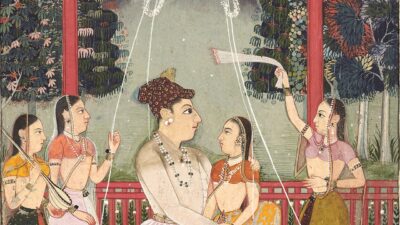
'हिंडोल' शब्द संस्कृत शब्द 'हिंडोल' (झूला) से आता है।
अंग्रेज़ी में पढ़ें · Read in English
The word 'Hindol' comes from the Sanskrit word for 'swing' (hindola). Spring celebrations in India traditionally involve swinging, connecting the raag to the season's festivities.
केवल 5 स्वरों के बावजूद, हिंडोल की असामान्य अंतराल एक अद्वितीय ध्वनि चरित्र बनाती हैं।
अंग्रेज़ी में पढ़ें · Read in English
Despite having only 5 notes, Hindol's unusual intervals (no Re, no Pa) create a unique sonic character that sounds exotic even though it uses fewer notes than most raags.
हिंडोल होली, रंगों के वसंत त्योहार से जुड़ा राग है।
अंग्रेज़ी में पढ़ें · Read in English
Hindol is the raag associated with Holi, the spring festival of colors. Its joyful, playful character makes it the musical embodiment of spring celebration in India.
प्रस्तुति
Performance- Description
- वसंत की सुबह राग — परंपरागत रूप से सुबह की शुरुआत में गाया जाता है। Spring morning raag — traditionally performed in early morning hours (Pratah Kaal). Associated with the season of spring (Vasant Ritu), blossoms, and renewal.
- Prahar Number
- 1
- Prahar Name
- प्रातः काल (सुबह) Pratah Kaal (Early Morning)
- Time Start
- 04:00
- Time End
- 07:00
- Time Flexibility
- strict
- Time Notes
- Strictly an early morning raag, traditionally associated with spring season.
Time
सीखने के लिए
For Learners- Difficulty Level
- beginner_friendly
नमूना-पट्टी
The Specimen Table| नाम | हिंडोल · Hindol |
|---|---|
| थाट | कल्यण |
| आरोह | सा ग म॑ ध नि सˊ |
| अवरोह | सˊ नि ध म॑ ग स |
| पकड़ | ग म॑ ध, ध नि सˊ |
| जाति | औडव-औडव · Audava-Audava |
| तीव्र स्वर | Ma♯ |
| समय | प्रातः काल (सुबह) |
| ऋतु | Spring |
| गति | madhya_to_drut |
| ऊर्जा | तीव्र |
| प्रकृति | Shuddha |
| परिवार | कल्यण परिवार |
| स्तर | beginner_friendly |
| लोकप्रियता | Popular |
| कर्नाटक समतुल्य | Suryakantam · Melakarta 17 |
| पाश्चात्य समतुल्य | Pentatonic Major (no 4th, no 7th) |
| अन्य नाम | Hindola · हिंडोला · The Spring Raag · The Swing Raag |
जुड़े हुए पन्ने
Connected Plates · The Graph Made Visibleअटलस में कोई पन्ना अकेला नहीं — इस राग से गीत, प्रस्तुतियाँ, कलाकार, ताल, घराने और मिलते-जुलते राग, सब यहाँ से खुलते हैं।
प्रसिद्ध प्रस्तुतियाँ · Legendary Renditions
इस राग के कलाकार · Notable Artists
ताल-साथी · Taal Pairings
मिलते-जुलते राग · Similar Raags
शास्त्र-सूत्र · Shastra Threads
श्रवण-कक्ष · The Listening Room
सुनिए — हिंडोल · Hear the Raag
Raag Hindol | Ustad Rashid Khan | Vocal
प्रश्नोत्तर
Questions & Answersराग हिंडोल का आरोहन-अवरोहन क्या है?
आरोहन: सा ग म॑ ध नि सˊ | अवरोहन: सˊ नि ध म॑ ग स (ध्यान दें: रे और प नहीं)
अंग्रेज़ी में पढ़ें · Read in English
What is the arohana and avarohana of Raag Hindol? — Arohana: Sa Ga Ma♯ Dha Ni Sa' | Avarohana: Sa' Ni Dha Ma♯ Ga Sa (Note: no Re, no Pa)
हिंडोल एक पेंटाटोनिक राग क्यों है?
हिंडोल केवल 5 स्वर (सा ग म॑ ध नि) का उपयोग करता है। यह रे (2nd) और प (5th) को पूरी तरह से छोड़ देता है।
अंग्रेज़ी में पढ़ें · Read in English
Why is Hindol a pentatonic raag? — Hindol uses only 5 notes (Sa Ga Ma♯ Dha Ni). It completely omits Re (2nd) and Pa (5th).
हिंडोल किस समय गाया जाता है?
हिंडोल एक सुबह का वसंत राग है। इसे सुबह की शुरुआत में गाया जाता है, विशेष रूप से होली के मौसम में।
अंग्रेज़ी में पढ़ें · Read in English
When is Raag Hindol performed? — Hindol is a spring morning raag performed in early morning, particularly during the Holi season.
हिंडोल का नाम कहाँ से आता है?
हिंडोल शब्द संस्कृत के 'हिंडोल' (झूला) से आता है। होली का त्योहार परंपरागत रूप से झूले झूलना शामिल करता है।
अंग्रेज़ी में पढ़ें · Read in English
Where does the name Hindol come from? — Hindol comes from Sanskrit 'hindola' (swing). The Holi festival traditionally involves swinging celebrations.
हिंडोल प्राचीन संगीत ग्रंथों में कहाँ वर्णित है?
हिंडोल नाट्यशास्त्र में प्रलेखित है, जो भारत का सबसे पुराना संगीत सिद्धांत ग्रंथ है।
अंग्रेज़ी में पढ़ें · Read in English
Where is Hindol mentioned in ancient music texts? — Hindol is documented in the Natyashatra, one of the oldest music theory texts in India.
साझा कीजिए · Share this Plate