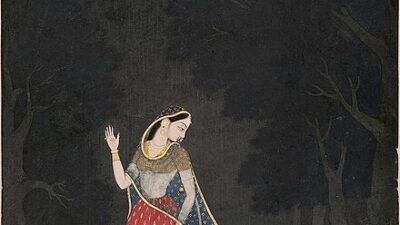
शास्त्र विंग · नायिका-पट्टिका · Nayika Plate
विरहोत्कण्ठिता
Virahotkanthita · Virahot-kanthitā
अलगाव में तड़पती नायिका — जिसका कंठ विरह से रुँध गया है, जिसकी आँखें आँसुओं से भीगी हैं।
अन्य नामविरहतरंगिणी · विरहिणी
एक पंक्तिविरहोत्कण्ठिता वह नायिका है जो प्रिय की दूरी में कराहती, रोती, और याद में व्यग्र रहती है।
परिचय
Overviewविरहोत्कण्ठिता नायिका प्रेम के सबसे कठोर पक्ष को दर्शाती है — अलगाव, दूरी, और अनिश्चितता। यह नायिका विप्रलंभ शृंगार (separation love) का प्रतीक है, जहाँ प्रेम की तीव्रता को विरह के माध्यम से दिखाया जाता है। उसकी पीड़ा, उसकी विरह, उसकी याद — ये सब प्रमाण हैं कि प्रेम केवल आनंद नहीं है, वरन एक गहरी, शक्तिशाली, और कभी-कभी दर्दनाक भावना है। विरहोत्कण्ठिता भारतीय संस्कृति में एक महत्वपूर्ण नायिका है क्योंकि वह दिखाती है कि प्रेम में पीड़ा भी सुंदरता का एक अंग है। उसके आँसु प्रेम के गहन सत्य की गवाही देते हैं। उसका विरह हमें सिखाता है कि सच्चा प्रेम वह नहीं जो सदा खुशियाँ देता है, वरन वह है जो दूरी में भी हमें बाँधे रखता है।
अंग्रेज़ी में पढ़ें · Read in English
Virahotkanthita represents the harshest aspect of love — separation, distance, and uncertainty. This nayika is a symbol of Vipralambha Shringara, where the intensity of love is shown through longing. Her pain, her yearning, her memory — all testify that love is not merely joy but a deep, powerful, and sometimes painful emotion.
Virahotkanthita is important in Indian culture because she shows that pain is also part of love's beauty. Her tears witness to love's profound truth. Her longing teaches us that true love is not that which always brings happiness, but that which binds us together even across distance.
काव्य-पंक्ति · The Verse
काव्य-पंक्ति
विरह की पीड़ा में भी प्रेम जीवंत है, दूरी में भी दिल एक दूजे से जुड़ा है।
— हिंदी काव्य परंपरा Even in separation's pain, love lives on, Distance cannot break the bond between hearts.
वर्गीकरण
Classificationश्रेणी
अष्टनायिका — शृंगार रस की आठ नायिकाएँ
अंग्रेज़ी में पढ़ें · Read in English
Ashtanayika — Eight heroines of Shringara rasa
Emotional State
गहरी पीड़ा और विरह से भरा मन — अकेलापन, निराशा, और भावनात्मक संकट
अंग्रेज़ी में पढ़ें · Read in English
Heart filled with deep anguish and longing — solitude, despair, and emotional crisis
Shringara Type
विप्रलंभ शृंगार (Separation love)
अंग्रेज़ी में पढ़ें · Read in English
Vipralambha Shringara (Love in Separation)
चरित्र
Characterविवरण
विरहोत्कण्ठिता नायिका प्रिय की दूरी में तड़पती है। उसकी आँखें चौबीसों घंटे आँसुओं से भीगी रहती हैं। उसका कंठ विरह से रुँध गया है — वह गाना भूल गई है, हँसना भूल गई है। उसके शरीर पर खिलापन नहीं है, वरन क्षीणता है। वह न खाती है, न सोती है। रात की बेचैनी और दिन की निरर्थकता उसे मार डालती है। हर क्षण, हर पल उसे लगता है कि प्रिय बहुत दूर है। खत का इंतज़ार, संदेश की प्रतीक्षा — ये सब उसका जीवन बन गया है। वह अकेली है, पर न अकेली रहना चाहती है। वह प्रिय को याद करती है, परंतु याद में खुद को खो देती है।
अंग्रेज़ी में पढ़ें · Read in English
Virahotkanthita pines in her beloved's absence. Her eyes remain wet with tears day and night. Her voice is choked with longing — she has forgotten to sing, forgotten to laugh. Her body lacks vitality; she is emaciated. She neither eats nor sleeps. The restlessness of night and meaninglessness of day torment her. Every moment she feels her beloved is far away. Waiting for letters, expecting messages — these have become her life. She is alone, but doesn't want to be. She remembers her beloved, yet loses herself in memory.
Psychology
विरहोत्कण्ठिता का मन विद्रोह और आत्मसमर्पण के बीच झूलता है। कभी वह क्रोधित है, कभी दुःखी। कभी वह सोचती है कि प्रिय उसे भूल गया है, कभी सोचती है कि वह स्वयं को भूल गई है। उसके मन में एक खालीपन है जो कभी नहीं भरता। वह पछताती है — काश मैं उसके साथ गई होती! काश मैं यह सब न होता! पर पछतावे से कोई हल नहीं। उसकी आत्मा का हर अंश प्रिय को पुकारता है।
अंग्रेज़ी में पढ़ें · Read in English
Virahotkanthita's mind oscillates between rebellion and surrender. Sometimes she is angry, sometimes sorrowful. Sometimes she thinks her beloved has forgotten her, sometimes she thinks she has forgotten herself. Her mind carries a void that never fills. She regrets — if only I had gone with him! If only this hadn't happened! But regret brings no solution. Every part of her soul calls out to her beloved.
Visual Appearance
विरहोत्कण्ठिता का रूप क्षीण और मलिन है। उसके चेहरे पर कोई रंग नहीं है। उसकी आँखें सूजी हुई, गहरी, और आँसुओं से भीगी होती हैं। उसका केश अव्यवस्थित है, गहने उतार दिए हैं। उसकी पोशाक मैली, फटी हुई है। उसका शरीर पतला पड़ गया है विरह से। उसके होंठ फीके हैं, उसके पैर लड़खड़ाते हैं। पूरा शरीर एक लंबी पीड़ा की कहानी कहता है।
अंग्रेज़ी में पढ़ें · Read in English
Virahotkanthita's appearance is gaunt and dull. Her face has lost its color. Her eyes are swollen, deep, and wet with tears. Her hair is disheveled, jewels removed. Her clothes are soiled and torn. Her body has become thin from longing. Her lips are pale, her feet unsteady. Her entire body tells a story of prolonged suffering.
Time Of Day
मध्यरात्रि — जब संसार सोता है और वह अकेली जागती है। उस समय उसकी विरह सबसे तीव्र होता है।
अंग्रेज़ी में पढ़ें · Read in English
Midnight — when the world sleeps and she remains awake alone. This is when her longing is most acute.
Season
बरसात की ऋतु — जब बादल गरजते हैं और वर्षा होती है। यह ऋतु विरह की भावना को और भी गहरा कर देती है।
अंग्रेज़ी में पढ़ें · Read in English
Rainy season — when clouds roar and rains pour. This season deepens the feeling of separation.
संगीत में
In MusicRaags Associated
भैरवी राग विप्रलंभ शृंगार का सर्वोत्तम वाहक है। इसकी करुणपूर्ण, गहन, और विषादी प्रकृति विरहोत्कण्ठिता की पीड़ा को पूरी तरह व्यक्त करती है।
मारवा राग में तीक्ष्णता, व्यग्रता, और गहरी पीड़ा है जो विरहोत्कण्ठिता के संकट को दर्शाती है।
Songs Embodying
Compositions
नृत्य में
In Danceविवरण
नृत्य में विरहोत्कण्ठिता एक दर्दनाक, वेदनामय नायिका है। नृत्यांगना का शरीर पीड़ा से झुका हुआ दिखाई देता है। हर गति में विरह, हर अभिनय में दुःख, हर नज़र में आँसू।
अंग्रेज़ी में पढ़ें · Read in English
In dance, Virahotkanthita is a painful, sorrowful heroine. The dancer's body appears bent with anguish. Every movement carries longing, every expression shows sorrow, every glance reveals tears.
Nritya Traditions
Abhinaya Details
चेहरे पर गहरी उदासी, निराशा, और विरह का पूर्ण अभिनय। आँखें अर्ध-बंद, होंठ अलग किए हुए, भ्रू एकत्रित।
Face shows deep sadness, despair, and complete enactment of longing. Eyes half-closed, lips parted, eyebrows furrowed.
शरीर झुका हुआ, मुद्रा दुःख से व्यथित। पैर अस्थिर, हाथ रुँधे हुए।
Body bent, posture expressing pain. Feet unsteady, hands trembling.
आँखें नीचे की ओर (neecha drishti), रो रहीं हैं, याद में खोई हुई।
काव्य में
In Poetryविवरण
संस्कृत और हिंदी काव्य में विरहोत्कण्ठिता का वर्णन अत्यंत मार्मिक है। कालिदास, भवभूति, और आधुनिक कवियों ने इस नायिका की पीड़ा को शब्दों में बाँधा है।
अंग्रेज़ी में पढ़ें · Read in English
In Sanskrit and Hindi poetry, the depiction of Virahotkanthita is deeply touching. Kalidasa, Bhavabhuti, and modern poets have given voice to this heroine's pain.
Famous Verses
सिनेमा में
In Cinemaविवरण
हिंदी फिल्मों में विरहोत्कण्ठिता का दृश्य अत्यंत भावुक होता है। नायिका को अकेली, रोती, याद में भटकती दिखाया जाता है।
अंग्रेज़ी में पढ़ें · Read in English
In Hindi films, scenes of Virahotkanthita are deeply emotional. The heroine is shown alone, crying, and wandering in memories.
Iconic Portrayals
चित्रकला में
In Paintingविवरण
राग माला चित्रकला में विरहोत्कण्ठिता को अकेली, उदास, आँसुओं से भीगी दिखाया जाता है। चित्र में बारिश, उजाड़ दृश्य, और अकेलेपन की भावना होती है।
अंग्रेज़ी में पढ़ें · Read in English
In Ragamala paintings, Virahotkanthita is shown alone, sad, and wet with tears. The painting features rain, desolate scenes, and a feeling of loneliness.
Painting Schools
पहाड़ी चित्रों में विरहोत्कण्ठिता को वर्षा की रात में अकेली दिखाया जाता है।
Typical Imagery
अकेली नायिका, बारिश, उजाड़ महल, टूटे हुए दर्पण, बिखरे फूल, और निराश आकाश।
सांस्कृतिक महत्व
Cultural Significanceभारतीय समाज में विरह को सदैव से एक गहरा और महत्वपूर्ण भाव माना गया है। शास्त्रीय नृत्य, संगीत, और काव्य में विरह को प्रेम की सबसे सच्ची अभिव्यक्ति माना जाता है। विरहोत्कण्ठिता की परंपरा हमें सिखाती है कि जीवन में दुःख भी आते हैं, पर प्रेम की शक्ति से वह सहनीय बन जाते हैं।
अंग्रेज़ी में पढ़ें · Read in English
In Indian society, longing has always been considered a deep and important emotion. In classical dance, music, and poetry, separation is regarded as love's most truthful expression. The tradition of Virahotkanthita teaches us that sorrow comes to life, but the power of love makes it bearable.
सुनने का मार्गदर्शन
The Listening Guideविरहोत्कण्ठिता को सुनते समय, अपने हृदय को खोलें। भैरवी राग में आप एक नायिका की पीड़ा सुनेंगे। हर सुर एक आँसु है, हर नोट एक पीड़ा की कराहन है। यह संगीत तकलीफदेह है, पर उसमें एक सौंदर्य है जो केवल दर्द के माध्यम से ही समझा जा सकता है। जब आप इस संगीत को सुनेंगे, तो आप महसूस करेंगे कि प्रेम केवल खुशियों में नहीं, वरन दूरी में भी, याद में भी, विरह में भी जीवंत है।
अंग्रेज़ी में पढ़ें · Read in English
When listening to Virahotkanthita, open your heart. In Bhairavi raga, you will hear a heroine's pain. Every note is a tear, every sound a moan of anguish. This music is distressing, but it contains a beauty that can only be understood through pain. When you listen, you will feel that love lives not only in joy but in distance, in memory, in longing.
श्रवण-कक्ष · The Listening Room
देखें-सुनें
राग भैरवी — विरह का प्रतीक
नायिका प्रोषितपतिका — विरह का नृत्य
रोचक तथ्य
Margin Notesविरहोत्कण्ठिता का नाम उसकी सबसे विशिष्ट विशेषता से बना है — 'कंठ जो विरह से रुँध गया है'। संस्कृत में 'कंठ' का अर्थ है 'गला' और 'उत्कण्ठा' का अर्थ है 'लालसा'। इसलिए विरहोत्कण्ठिता का अर्थ है जिसका गला विरह की लालसा से रुँध गया है।
The name Virahotkanthita comes from her most distinctive feature — 'a throat choked with longing.' In Sanskrit, 'kantha' means 'throat' and 'utkanth' means 'yearning.' Therefore, Virahotkanthita means one whose throat is choked with the yearning of separation.
अष्टनायिका में विरहोत्कण्ठिता को सबसे दुःखी माना जाता है। वह न तो निश्चित है कि प्रिय कब लौटेगा, न ही वह जानती है कि प्रिय को याद आता है या नहीं। यह अनिश्चितता उसकी पीड़ा को और भी गहरा करती है।
Among the Ashtanayika, Virahotkanthita is considered the most sorrowful. She is neither certain when her beloved will return nor if he remembers her. This uncertainty deepens her suffering.
भैरवी राग, जिसमें विरहोत्कण्ठिता को चित्रित किया जाता है, को 'विरह की रानी' कहा जाता है। यह राग इतना भावुक और करुणपूर्ण है कि श्रोता को भी आँसू आ जाते हैं।
Bhairavi raag, in which Virahotkanthita is depicted, is called the 'Queen of Separation.' This raag is so emotional and compassionate that listeners also shed tears.
हिंदी फिल्मों के शुरुआती दौर में विरहोत्कण्ठिता का चित्रण बहुत प्रसिद्ध था। दिलीप कुमार, राज कपूर, और अन्य अभिनेताओं की फिल्मों में इस नायिका के दृश्य दर्शकों को भावुक कर देते थे।
In the early days of Hindi cinema, the portrayal of Virahotkanthita was very famous. Scenes of this nayika in films of Dilip Kumar, Raj Kapoor, and others would move audiences to tears.
क्या आप जानते हैं?
Did You Knowविरहोत्कण्ठिता की परंपरा भारतीय साहित्य में इतनी मजबूत है कि कई महान कवियों ने इसी नायिका के नाम से ग्रंथ लिखे हैं।
The tradition of Virahotkanthita is so strong in Indian literature that several great poets have written entire works dedicated to this nayika.
माना जाता है कि जब महिलाएँ विरहोत्कण्ठिता को नृत्य में अभिव्यक्त करती हैं, तो उन्हें गहरी भावनात्मक समझ की आवश्यकता होती है क्योंकि यह भूमिका सबसे कठिन और भावुक होती है।
It is believed that when women enact Virahotkanthita in dance, they require deep emotional understanding because this role is the most difficult and emotionally demanding.
राग माला चित्रकला में विरहोत्कण्ठिता को चित्रित करने के लिए चित्रकार अक्सर बारिश, बादल, और अंधकार का उपयोग करते हैं क्योंकि ये नायिका की आंतरिक पीड़ा को बाहरी रूप में दिखाते हैं।
In Ragamala paintings, artists often use rain, clouds, and darkness to depict Virahotkanthita because these external elements reflect her internal pain.
सूक्तियाँ
Words of the Masters“प्रेम में विरह की पीड़ा ही सबसे गहरी सत्यता है।”
“In love, the pain of separation is the deepest truth.”
— — शास्त्रीय परंपरा, नाट्य दर्शन
“दूरी को केवल दूरी न समझो, वह प्रेम की परीक्षा है।”
“Do not see distance as mere separation; it is love's trial.”
— — भारतीय ज्ञान, आध्यात्मिक परंपरा
अनुशंसित श्रवण
Recommended Listeningसवाल-जवाब
Questions & Answersविरहोत्कण्ठिता क्या है?
विरहोत्कण्ठिता वह नायिका है जो प्रिय की दूरी में तड़पती है, आँसुओं से भीगी है, और विरह की पीड़ा से रुँधी है।
इतिहास
The Historyउत्पत्ति — नाट्यशास्त्र काल (1000-2500 BCE अनुमानित) Origin
विरहोत्कण्ठिता नायिका की अवधारणा भरतमुनि के नाट्यशास्त्र में स्पष्ट रूप से दर्ज है। भारतीय नाटक-परंपरा में प्रेम को केवल आनंद के रूप में नहीं दिखाया जाता, वरन उसकी सभी परतों — आशा, निराशा, पीड़ा, और प्रतीक्षा — को दिखाया जाता है।
विकास-यात्रा · Evolution
- प्राचीन काल (500 BCE - 500 CE) भवभूति और कालिदास के समय में विरह को साहित्य और नाटकों में अत्यंत विस्तार से चित्रित किया गया। यह काल विरह-काव्य का स्वर्ण युग था।
- मध्यकाल (500 - 1500 CE) मध्यकालीन संत कवियों और सूफी कवियों ने भी विरह को अपनी रचनाओं का विषय बनाया। राधा-कृष्ण के विरह को भक्ति का माध्यम बनाया गया।
- आधुनिक काल (1800 CE - वर्तमान) हिंदी फिल्मों ने विरह को लाखों दिलों तक पहुँचाया। लता मंगेशकर, आशा भोसले, और अन्य गायकों के विरह-गीत आज भी श्रोताओं को भावुक कर देते हैं।
प्रमुख पड़ाव · Key Milestones
- 1000 भरतमुनि द्वारा नाट्यशास्त्र में विरहोत्कण्ठिता का प्रथम वर्णन
- 200 भवभूति द्वारा 'मालतीमाधव' में विरह का सर्वश्रेष्ठ चित्रण
- 1950 स्वतंत्र भारत में हिंदी सिनेमा में विरह-गीतों का उदय
नमूना-पट्टी
The Specimen Table| नाम | विरहोत्कण्ठिता · Virahotkanthita |
|---|---|
| अन्य नाम | विरहतरंगिणी · विरहिणी |
| श्रेणी | अष्टनायिका — शृंगार रस की आठ नायिकाएँ |
| शृंगार | विप्रलंभ शृंगार (Separation love) |
| काल | नाट्यशास्त्र काल (1000-2500 BCE अनुमानित) |
| प्रकार | नायिकाएँ · Nayikas |
साझा कीजिए · Share this Plate