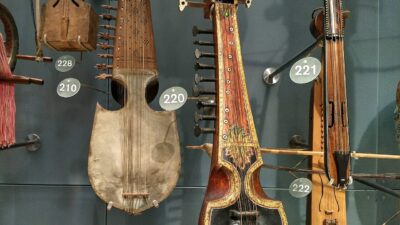
शास्त्र विंग · वाद्य-पट्टिका · Instrument Plate
चिकारा
Chikara
सारंगी का पूर्वज — राजस्थान के बंजारे गाथाकारों की आत्मा · Ancestor of Sarangi — soul of Rajasthan's wandering epic-singers
अन्य नामचिकारी · चिकार · Chikari · Chickara
एक पंक्तिचिकारा तीन-तार वाला एक छोटा लोक फिडल है जो राजस्थान, उत्तर प्रदेश और मध्यप्रदेश के भील, मेना, और बंजारा समुदायों के भटकते बार्डों द्वारा बजाया जाता है — इसे सारंगी परिवार का पूर्वज माना जाता है।
परिचय
Overviewचिकारा भारतीय संगीत के इतिहास में एक अनमोल कड़ी है। यह न केवल सारंगी का पूर्वज है, बल्कि भारत में बोड-तार वाद्य यंत्रों की पूरी परंपरा की एक आरंभिक अभिव्यक्ति है। सहस्राब्दियों पहले जब भील और मेना आदिवासियों ने घोड़े के बालों से बने धनुष से तारों पर रगड़कर ध्वनि उत्पन्न करना सीखा — उसी पल भारतीय बोड-वाद्य परंपरा का जन्म हुआ। चिकारे की लोक-महाकाव्य परंपरा भारत की सबसे पुरानी संगीत-परंपराओं में से एक है। 'पाबूजी की फड़' में चिकारे के साथ भोपा जाति के कलाकार रात भर एक विशाल चित्रपट (scroll painting) के सामने राजा पाबूजी की कहानी गाते हैं। यह एक ऐसी प्रदर्शन-कला है जो संगीत, दृश्य कला, और कहानी-कथन को एक साथ जोड़ती है — और चिकारा इस पूरी परंपरा का संगीत-आधार है। चिकारे और सारंगी का संबंध एक माँ-बेटी का संबंध है। जहाँ सारंगी दरबारी संगीत और हिंदुस्तानी शास्त्रीय परंपरा में परिष्कृत हुई, वहाँ चिकारा लोगों के बीच रही — आदिवासी गाँवों में, रेगिस्तान की रात में, पाबूजी की फड़ के सामने। दोनों एक ही मूल से आए, लेकिन दो अलग रास्तों पर चले। आज चिकारा एक संकटापन्न विरासत है। लेकिन राजस्थान के RIFF (राजस्थान इंटरनेशनल फोक फेस्टिवल) और अन्य अंतरराष्ट्रीय मंचों पर माँगनियार और भील कलाकारों की उपस्थिति ने एक उम्मीद जगाई है। दुनिया के संगीत-प्रेमी इस कच्ची, ईमानदार आवाज़ को सुनकर चौंक जाते हैं — क्योंकि इसमें वह सच्चाई है जो पॉलिश किए हुए शास्त्रीय संगीत में नहीं मिलती।
अंग्रेज़ी में पढ़ें · Read in English
Chikara is a priceless link in Indian music history. It is not only an ancestor of Sarangi, but an early expression of the entire tradition of bowed string instruments in India. Thousands of years ago, when Bhil and Meena tribals learned to produce sound by rubbing horsehair bows across strings — that was the moment Indian bowed instrument tradition was born.
Chikara's folk epic tradition is one of India's oldest musical traditions. In 'Pabuji ki Phad', Bhopa community artists sing King Pabuji's story all night in front of a large scroll painting with Chikara. This is a performance art that combines music, visual art, and storytelling — and Chikara is the musical foundation of this entire tradition.
The relationship between Chikara and Sarangi is like that of mother and daughter. Where Sarangi was refined in court music and Hindustani classical tradition, Chikara remained among the people — in tribal villages, in desert nights, in front of Pabuji's Phad. Both came from the same origin but walked two different paths.
Today Chikara is an endangered heritage. But the presence of Manganiyar and Bhil artists on Rajasthan's RIFF (Rajasthan International Folk Festival) and other international stages has kindled hope. World music lovers are amazed hearing this raw, honest voice — because it contains a truth not found in polished classical music.
काव्य-पंक्ति · The Verse
काव्य-पंक्ति
चिकारे की गमक में सुनाई दे पाबूजी की कहानी, रेत के टीलों में बजती यह आवाज़ — राजस्थान की ज़बानी।
— राजस्थानी लोक परंपरा In Chikara's gamak one hears Pabuji's story, This voice resonating in sand dunes — Rajasthan's own testimony.
वर्गीकरण
ClassificationNatya Shastra
तत वाद्य — तार-युक्त, धनुषाकार वाद्य यंत्र
Tata Vadya — Stringed, bowed instrument
नाट्यशास्त्र के वर्गीकरण में चिकारा 'तत' श्रेणी का धनुषाकार (bowed) वाद्य यंत्र है। सारंगी के पूर्वज के रूप में, यह भारतीय लोक वाद्य-विरासत का एक महत्वपूर्ण सदस्य है।
In Natya Shastra classification, Chikara belongs to 'Tata' — a bowed stringed instrument. As an ancestor of Sarangi, it is an important member of India's folk instrument heritage.
Western
Chordophone
Bowed Lute / Folk Fiddle
पश्चिमी वर्गीकरण में चिकारा एक 'बोड लूट' (bowed lute) या 'फोक फिडल' है — छोटे वायलिन परिवार का एक भारतीय सदस्य।
In Western classification, Chikara is a 'bowed lute' or 'folk fiddle' — an Indian member of the small violin family.
Hornbostel Sachs
321.321-71
Composite chordophone — bowed lute with resonating skin-covered body
सिनेमा में
In Cinemaचिकारे को मुख्यधारा हिंदी सिनेमा में बहुत कम देखा गया है, लेकिन जब भी राजस्थानी ग्रामीण जीवन, भील आदिवासी संस्कृति, या मध्यकालीन लोक गाथाओं का चित्रण किया जाता है, चिकारे की कच्ची, भावुक आवाज़ पृष्ठभूमि में सुनी जा सकती है। 'लगान' (२००१) जैसी फिल्मों में ग्रामीण जीवन के चित्रण में इस तरह के लोक वाद्यों का प्रयोग किया गया। डॉ. विजयराज उपाध्याय जैसे लोक संगीत विद्वानों ने चिकारे को दूरदर्शन के लोक संगीत कार्यक्रमों में प्रस्तुत किया।
अंग्रेज़ी में पढ़ें · Read in English
Chikara has been seen very rarely in mainstream Hindi cinema, but whenever depicting Rajasthani rural life, Bhil tribal culture, or medieval folk narratives, Chikara's raw, emotional sound can be heard in the background. Films like 'Lagaan' (2001) used such folk instruments in depicting rural life. Folk music scholars like Dr. Vijayraj Upadhyay presented Chikara in Doordarshan's folk music programs.
वर्तमान स्थिति
Modern Statusविवरण
चिकारा एक गंभीर संकट में है। राजस्थान और मध्यप्रदेश के आदिवासी समुदायों में जैसे-जैसे शहरीकरण और आधुनिक मनोरंजन का प्रभाव बढ़ रहा है, चिकारे के वादकों की संख्या तेज़ी से घट रही है। इस यंत्र को बनाने वाले कारीगर भी कम हो रहे हैं। हालाँकि, राजस्थान संगीत नाटक अकादमी और कुछ सांस्कृतिक संगठन इसे बचाने के प्रयास कर रहे हैं। अंतरराष्ट्रीय 'वर्ल्ड म्यूज़िक' मंच पर माँगनियार और कालबेलिया कलाकारों के माध्यम से राजस्थानी लोक वाद्यों को एक नई पहचान मिली है।
अंग्रेज़ी में पढ़ें · Read in English
Chikara faces serious endangerment. As urbanization and modern entertainment increase their influence in Rajasthan and Madhya Pradesh's tribal communities, the number of Chikara players is rapidly declining. Artisans who make this instrument are also decreasing. However, Rajasthan Sangit Natak Akademi and some cultural organizations are making efforts to preserve it. Rajasthani folk instruments have gained new recognition on the international 'World Music' stage through Manganiyar and Kalbelia artists.
Estimated Players
500-2,000 active players
Revival Efforts
राजस्थान संगीत नाटक अकादमी और जोधपुर RIFF (राजस्थान इंटरनेशनल फोक फेस्टिवल) के माध्यम से चिकारे को पुनर्जीवित करने के प्रयास।
अंग्रेज़ी में पढ़ें · Read in English
Efforts to revive Chikara through Rajasthan Sangit Natak Akademi and Jodhpur RIFF (Rajasthan International Folk Festival).
बनावट
Physicalविवरण
चिकारा एक छोटा, हल्का, और सुंदर बना लोक फिडल है। इसका शरीर एक खाली लकड़ी के ढाँचे का बना होता है जिसके सामने का भाग जानवर की खाल से ढका होता है — ठीक सारंगी की तरह। शरीर का आकार अंडाकार या नाशपाती के आकार का होता है। गर्दन छोटी और सीधी होती है। यंत्र में तीन मुख्य तार होते हैं जो घोड़े की पूँछ के धनुष (bow) से बजाए जाते हैं। कुछ संस्करणों में एक या दो सहायक 'चिकारी' (drone) तार भी होते हैं जो मुख्य शरीर के बाहर की तरफ लगे होते हैं। यंत्र की लंबाई लगभग ४५-६० सेंटीमीटर होती है। चिकारा को घुटनों के बीच लंबवत (vertically) रखकर बजाया जाता है — ठीक सारंगी की तरह, न कि वायलिन की तरह।
अंग्रेज़ी में पढ़ें · Read in English
Chikara is a small, light, and beautifully made folk fiddle. Its body is made of a hollow wooden frame with the front covered by animal skin — just like Sarangi. The body is oval or pear-shaped. The neck is short and straight. The instrument has three main strings played with a horsehair bow. Some versions also have one or two auxiliary 'chikari' (drone) strings attached on the outside of the main body. Length is approximately 45-60 cm. Chikara is held vertically between the knees — like Sarangi, not like violin.
Dimensions
45-60 cm
15-20 cm
400-700 grams
Strings Or Keys
चिकारे में तीन मुख्य बजाने वाले तार और एक-दो अतिरिक्त ड्रोन तार होते हैं। यह सारंगी की तुलना में सरल है जिसमें ४०+ तार होते हैं।
Chikara has three main playing strings and one or two additional drone strings. It is simpler than Sarangi which has 40+ strings.
3 main + 1-2 drone
Steel, brass, or gut
Tuning
Sa-Pa-Sa ट्यूनिंग — निचले, मध्यम, और ऊँचे स्वर
Sa-Pa-Sa tuning — lower, middle, and upper notes
Sa-Pa-Sa (variable by region and performer)
2-2.5 octaves
Construction
लकड़ी का खाली ढाँचा जिसके सामने का भाग बकरी या हिरण की खाल से ढका होता है। यह खाल ध्वनि को एक विशेष गर्माहट देती है।
Hollow wooden frame with front covered by goat or deer skin. This skin gives the sound a special warmth.
छोटी सीधी गर्दन जिस पर कोई पर्दे नहीं हैं। उंगलियाँ तारों को दबाती हैं लेकिन तारों को नहीं छूती — केवल नाखून का भाग।
Short straight neck with no frets. Fingers press strings but don't touch the neck — only nail portions.
तीन धातु या आँत के तार जो धनुष से बजाए जाते हैं। इनकी व्यवस्था Sa-Pa-Sa जैसी होती है।
Three metal or gut strings played with bow. Their arrangement is like Sa-Pa-Sa.
घोड़े की पूँछ के बालों से बना धनुष जिससे तारों पर रगड़कर ध्वनि उत्पन्न की जाती है।
Bow made from horsehair with which strings are r믭 to produce sound.
एक या दो अतिरिक्त ड्रोन तार जो बजाते समय पृष्ठभूमि में गूँजते रहते हैं।
One or two additional drone strings that resonate in the background while playing.
ध्वनि-चरित्र
SoundTonal Character
चिकारे की ध्वनि कच्ची, भावुक, और मिट्टी की सुगंध से भरी होती है। सारंगी की तुलना में यह अधिक 'खुरदरी' और सीधी है — कोई परिष्कार नहीं, केवल सच्चाई। इसकी आवाज़ में राजस्थान के रेगिस्तान, भील लोक-गाथाओं, और बंजारा जीवन की छवि है। धनुष से निकलती यह ध्वनि एक निरंतर, गाती हुई लहर है। खाल-ढका शरीर इसे एक विशेष गर्माहट देता है जो सुनने वाले को तुरंत प्रभावित करती है।
अंग्रेज़ी में पढ़ें · Read in English
Chikara's sound is raw, emotional, and filled with earthiness. Compared to Sarangi, it is more 'rough' and direct — no refinement, only truth. Its voice conjures images of Rajasthan's desert, Bhil folk epics, and Banjara life. The sound drawn from the bow is a continuous, singing wave. The skin-covered body gives it a special warmth that immediately affects the listener.
Timbre
कच्ची, गर्म, भावुक — लोक महाकाव्यों की आवाज़
अंग्रेज़ी में पढ़ें · Read in English
Raw, warm, emotional — voice of folk epics
Dynamic Range
कम से मध्यम — बाहर और छोटे सभाओं में अच्छा
अंग्रेज़ी में पढ़ें · Read in English
Low to medium — good outdoors and in small gatherings
Comparison
सारंगी की छोटी बहन — कम परिष्कृत लेकिन अधिक सीधी और ईमानदार
अंग्रेज़ी में पढ़ें · Read in English
Sarangi's little sister — less refined but more direct and honest
वादन-तकनीक
Playing Techniqueविवरण
चिकारे को बजाने का तरीका सारंगी से काफी मिलता-जुलता है लेकिन कम जटिल है। वादक यंत्र को घुटनों के बीच लंबवत रखता है। दायाँ हाथ धनुष पकड़ता है और तारों पर क्षैतिज रूप से रगड़ता है। बाया हाथ गर्दन पकड़ता है और उंगलियों के नाखून से तारों को दबाता है — लेकिन उंगलियाँ तारों को पूरी तरह दबाती नहीं, बल्कि नाखून का भाग तार को थोड़ा दबाता है जिससे सुर बदलते हैं। यह 'नाखून-दबाव' (nail pressure) तकनीक चिकारे और सारंगी की एक विशेषता है। धनुष की रफ्तार और दबाव से ध्वनि की तीव्रता नियंत्रित होती है। चिकारे में मुर्की और गमक की तकनीकें विशेष रूप से प्रभावशाली होती हैं।
अंग्रेज़ी में पढ़ें · Read in English
Playing Chikara is quite similar to Sarangi but less complex. The player holds the instrument vertically between the knees. The right hand holds the bow and moves it horizontally across the strings. The left hand holds the neck and presses strings with nail portions of fingers — but fingers don't press strings fully, instead the nail portion slightly presses to change pitch. This 'nail pressure' technique is a specialty of Chikara and Sarangi. Bow speed and pressure control sound intensity. Murki and gamak techniques are particularly effective on Chikara.
Posture
बैठकर, चिकारे को घुटनों के बीच लंबवत रखते हुए — सारंगी जैसी मुद्रा
अंग्रेज़ी में पढ़ें · Read in English
Sitting, holding Chikara vertically between knees — Sarangi-like posture
Techniques
धनुष को तारों पर सीधे घुमाना और एक सरल सुर उत्पन्न करना — शुरुआती अभ्यास।
Drawing the bow straight across strings to produce a simple note — beginner practice.
बाईं उंगली के नाखून से तार पर दबाव देकर सुर बदलना — चिकारे की विशेष तकनीक।
Changing pitch by pressing the string with the left finger's nail — Chikara's special technique.
नाखून को तार पर थोड़ा सरकाते हुए धनुष चलाना जिससे एक मीठी, घुमावदार ध्वनि उत्पन्न होती है।
Moving bow while slightly sliding nail on string, producing a sweet, gliding sound.
नाखून को हल्के से कंपित करते हुए धनुष चलाना — भावनात्मक अभिव्यक्ति के लिए।
Moving bow while lightly vibrating the nail — for emotional expression.
विशेष ताल-क्रम जो भील और मेना लोक महाकाव्य गायन के लिए चिकारे पर बजाए जाते हैं।
Special rhythm patterns played on Chikara for Bhil and Meena folk epic singing.
निर्माण-प्रक्रिया
Making Processविवरण
चिकारे का निर्माण राजस्थान और मध्यप्रदेश के पारंपरिक वाद्य-कारीगर करते हैं। सबसे पहले उपयुक्त लकड़ी चुनी जाती है — नीम, शीशम, या स्थानीय लकड़ी। शरीर को एक ही लकड़ी के टुकड़े से खाली किया जाता है। सामने का भाग बकरी या हिरण की खाल से ढका जाता है जिसे पानी में भिगोकर तना जाता है। गर्दन को अलग से बनाकर शरीर में जोड़ा जाता है। खूँटियाँ, घोड़ी, और तार लगाए जाते हैं। धनुष घोड़े की पूँछ के बालों से बनाया जाता है। पूरी प्रक्रिया में दो से तीन सप्ताह लगते हैं।
अंग्रेज़ी में पढ़ें · Read in English
Chikara is crafted by traditional instrument makers of Rajasthan and Madhya Pradesh. First, suitable wood is selected — neem, rosewood, or local wood. The body is hollowed from a single piece of wood. The front is covered with goat or deer skin, soaked in water and stretched. The neck is made separately and joined to the body. Pegs, bridge, and strings are attached. The bow is made from horsehair. The entire process takes two to three weeks.
Materials
शरीर के लिए — टिकाऊ और गुंजायमान।
For the body — durable and resonant.
शरीर के सामने का भाग ढकने के लिए — ध्वनि को गर्माहट देता है।
To cover the body's face — gives warmth to the sound.
धनुष के लिए — तारों पर रगड़कर ध्वनि उत्पन्न करते हैं।
For the bow — produce sound by rubbing against strings.
मुख्य और ड्रोन तारों के लिए — स्टील या पीतल।
For main and drone strings — steel or brass.
Artisan Centers
राजस्थान के मरुस्थलीय क्षेत्रों में चिकारे के पारंपरिक निर्माता।
Traditional makers of Chikara in Rajasthan's desert regions.
आदिवासी समुदायों में चिकारे का स्वनिर्माण और परंपरागत उपयोग।
Self-making and traditional use of Chikara in tribal communities.
मध्यप्रदेश में चिकारे के कारीगर और बंजारा लोक परंपरा।
Chikara artisans and Banjara folk tradition in Madhya Pradesh.
Time To Craft
2-3 weeks
Price Range
₹1,500-10,000
संगीत-समूह में भूमिका
Role In EnsemblePrimary Role
लोक महाकाव्य गायन में मुख्य मेलोडिक संगत
अंग्रेज़ी में पढ़ें · Read in English
Primary melodic accompaniment in folk epic singing
Solo Capability
चिकारा एकल बजाया जा सकता है — लेकिन यह मुख्यतः गायन के साथ बजाया जाता है।
अंग्रेज़ी में पढ़ें · Read in English
Chikara can be played solo — but it is primarily played alongside singing.
Accompaniment For
लोक महाकाव्यों जैसे 'पाबूजी', 'देवनारायण', 'तेजाजी' के गायन में चिकारा अनिवार्य है।
Chikara is essential in singing folk epics like 'Pabuji', 'Devnarayan', 'Tejaji'.
भटकते जोगी और बंजारा समुदाय चिकारे के साथ अपनी लोक कथाएँ गाते हैं।
Wandering Jogi and Banjara communities sing folk narratives with Chikara.
देवताओं की स्तुति में — विशेषकर माताजी और लोक देवताओं के भजनों में।
In praise of deities — especially in bhajans of Mataji and folk gods.
लोक संगीत में
In Folk Musicचिकारा राजस्थान की 'महाकाव्य-गायन' (epic singing) परंपरा का हृदय है। राजस्थान के देहाती बार्ड — जैसे 'भाट', 'चारण', 'जोगी', और 'भील' — सदियों से चिकारे के साथ लोक महाकाव्य गाते आए हैं। 'पाबूजी की फड़' की गायन परंपरा में, 'देवनारायण' महाकाव्य में, और 'तेजाजी' की कथाओं में चिकारे की आवाज़ अनिवार्य है। भील जनजाति में चिकारा एक पवित्र वाद्य यंत्र है जो धार्मिक अनुष्ठानों में भी प्रयोग होता है। उत्तर प्रदेश के कुछ क्षेत्रों में 'अलहा-उदल' और अन्य लोक महाकाव्यों के गायन में चिकारे का उपयोग होता है।
अंग्रेज़ी में पढ़ें · Read in English
Chikara is the heart of Rajasthan's 'epic singing' tradition. Rural bards of Rajasthan — like 'Bhat', 'Charan', 'Jogi', and 'Bhil' — have sung folk epics with Chikara for centuries. Chikara's sound is essential in the singing tradition of 'Pabuji ki Phad', 'Devnarayan' epic, and 'Tejaji' narratives. In the Bhil tribe, Chikara is a sacred instrument also used in religious rituals. In some areas of Uttar Pradesh, Chikara is used in singing 'Alha-Udal' and other folk epics.
क्षेत्रीय रूप
Regional Variantsमरुस्थलीय क्षेत्र के अनुकूल — सख्त खाल और धातु तार, लोक महाकाव्य गायन के लिए।
Adapted for desert area — firm skin and metal strings, for folk epic singing.
बंजारा और गोंड परंपराओं में प्रयुक्त — कुछ भिन्न आकार और ट्यूनिंग।
Used in Banjara and Gond traditions — slightly different shape and tuning.
बुंदेली लोक महाकाव्य गायन में प्रयुक्त — अलहा-उदल और अन्य वीर-गाथाओं में।
Used in Bundeli folk epic singing — in Alha-Udal and other heroic narratives.
प्रसिद्ध वादक
Famous Playersराजस्थान के माँगनियार लोक-संगीतकार समुदाय ने चिकारे को पीढ़ियों से संजो रखा है। इस समुदाय के वादकों ने अंतरराष्ट्रीय मंच पर राजस्थानी लोक संगीत और चिकारे को प्रस्तुत किया है।
Rajasthan's Manganiyar folk musician community has preserved Chikara for generations. Players from this community have presented Rajasthani folk music and Chikara on the international stage.
राजस्थान के प्रसिद्ध माँगनियार लोक गायक लखा खान ने सारंगी और चिकारे के वादन से राजस्थानी लोक संगीत को अंतरराष्ट्रीय पहचान दिलाई।
Famous Manganiyar folk singer Lakha Khan gave international recognition to Rajasthani folk music through Sarangi and Chikara playing.
राजस्थान के प्रसिद्ध लोक वाद्यकार जिन्होंने चिकारे को एक गंभीर लोक वाद्य के रूप में स्थापित किया और इसके वादन की परंपरा को आगे बढ़ाया।
Famous Rajasthani folk instrumentalist who established Chikara as a serious folk instrument and carried forward its playing tradition.
उदयपुर के लोक संगीत विद्वान जिन्होंने भारतीय लोक वाद्यों पर गहन शोध किया और चिकारे के ऐतिहासिक और संगीत-वैज्ञानिक महत्व को दस्तावेज़ किया।
Udaipur folk music scholar who conducted deep research on Indian folk instruments and documented Chikara's historical and musicological significance.
राजस्थान के प्रसिद्ध लोक वाद्यकार जो सारंगी और चिकारे दोनों में पारंगत हैं और अंतरराष्ट्रीय मंच पर राजस्थानी संगीत का प्रतिनिधित्व करते हैं।
Famous Rajasthani folk instrumentalist proficient in both Sarangi and Chikara, representing Rajasthani music on the international stage.
राग-उपयुक्तता
Raag Suitabilityभैरवी की गहरी भावुकता चिकारे की कच्ची, ईमानदार ध्वनि के साथ एक अद्भुत संयोजन बनाती है।
Bhairavi's deep emotion creates a wonderful combination with Chikara's raw, honest sound.
पीलू राग की लोक-प्रकृति चिकारे के साथ स्वाभाविक रूप से मेल खाती है।
Pilu raag's folk nature naturally matches with Chikara.
काफी राग की लोक परंपरा चिकारे की जनजातीय-लोक पहचान के साथ अनुकूल है।
Kafi raag's folk tradition is compatible with Chikara's tribal-folk identity.
राजस्थान का विशेष राग 'मांड' चिकारे के साथ उसकी घरेलू भूमि पर बेहद प्रभावशाली है।
Rajasthan's special 'Maand' raag is extremely effective with Chikara on its home ground.
घराना-संबंध
Gharana Connectionsचिकारा का मुख्य सांस्कृतिक संबंध राजस्थान की भील, मेना, और माँगनियार परंपरा से है।
Chikara's main cultural connection is with Rajasthan's Bhil, Meena, and Manganiyar tradition.
भटकते जोगी समुदाय की चिकारा-वादन परंपरा जो उत्तर और मध्य भारत में फैली है।
Wandering Jogi community's Chikara playing tradition spread across north and central India.
सीखने का मार्ग
Learning Pathविवरण
चिकारे की शिक्षा कोई औपचारिक प्रणाली नहीं है — यह गुरु-शिष्य परंपरा और पारिवारिक विरासत के माध्यम से सिखाया जाता है। शुरुआत में धनुष पकड़ने और तारों पर रगड़ने की मूल क्रिया सीखी जाती है। दूसरे महीने में नाखून-दबाव तकनीक का अभ्यास। तीसरे महीने से सरल लोक धुनें। एक वर्ष में बुनियादी लोक महाकाव्य की संगत। पूरी महारत के लिए पाँच से सात वर्ष। सारंगी सीखने वालों के लिए चिकारा एक अच्छा प्रारंभिक कदम हो सकता है।
अंग्रेज़ी में पढ़ें · Read in English
There is no formal education system for Chikara — it is taught through guru-shishya tradition and family heritage. Initially, the basic action of holding the bow and drawing it across strings is learned. Second month focuses on nail pressure technique. From third month, simple folk tunes. In one year, basic folk epic accompaniment. Full mastery requires five to seven years. For those wanting to learn Sarangi, Chikara can be a good initial step.
Beginner Steps
पहला सप्ताह — धनुष पकड़ना और तारों पर पहली ध्वनि निकालना।
Week one — holding the bow and producing the first sound on strings.
दूसरे और तीसरे सप्ताह — तीन तारों पर Sa, Pa, Sa बजाना।
Weeks two and three — playing Sa, Pa, Sa on three strings.
दूसरे महीने से — बाईं उंगली के नाखून से सुर नियंत्रण।
From second month — pitch control with left finger's nail.
तीसरे महीने से — राजस्थानी लोक धुनें और भजन।
From third month — Rajasthani folk tunes and bhajans.
सामान्य अवधि
1 year for basic proficiency; 5-7 years for mastery in folk epic accompaniment
संस्थान
राजस्थानी लोक वाद्यों की शिक्षा और संरक्षण में सक्रिय।
Active in teaching and preserving Rajasthani folk instruments.
सबसे प्रामाणिक शिक्षा — परंपरागत परिवारों में पीढ़ी-दर-पीढ़ी।
Most authentic learning — generation to generation in traditional families.
सांस्कृतिक महत्व
Cultural Significanceचिकारे का सांस्कृतिक महत्व राजस्थान की जनजातीय पहचान से अविभाज्य है। यह यंत्र भारत की उस सांस्कृतिक विविधता का प्रतीक है जो दरबारों से नहीं, गाँवों से, जंगलों से, और रेगिस्तानों से उठती है। चिकारे के बिना 'पाबूजी की फड़' अधूरी है, और उसके बिना राजस्थान की लोक-पहचान अधूरी है। UNESCO ने लोक महाकाव्य परंपराओं को विश्व विरासत में शामिल किया है, और चिकारा उन परंपराओं का संगीतमय आधार है। यह यंत्र आदिवासी स्वाभिमान, कहानी-कथन की शक्ति, और भारत की बहुस्तरीय सांस्कृतिक जड़ों का प्रतीक है।
अंग्रेज़ी में पढ़ें · Read in English
Chikara's cultural significance is inseparable from Rajasthan's tribal identity. This instrument symbolizes that cultural diversity of India that arises not from courts but from villages, forests, and deserts. Without Chikara, 'Pabuji ki Phad' is incomplete, and without it, Rajasthan's folk identity is incomplete. UNESCO has included folk epic traditions in world heritage, and Chikara is the musical foundation of those traditions. This instrument symbolizes tribal self-respect, the power of storytelling, and India's multilayered cultural roots.
सुनने का मार्गदर्शन
The Listening Guideचिकारे को पहली बार सुनते समय, इसकी कच्ची, खुरदरी आवाज़ से चौंकना स्वाभाविक है। लेकिन थोड़ी देर सुनने के बाद, उस खुरदरेपन में एक गहरी सच्चाई मिलती है। राजस्थान के RIFF महोत्सव की रिकॉर्डिंग खोजें जहाँ माँगनियार कलाकार चिकारे और सारंगी के साथ प्रस्तुति देते हैं। 'पाबूजी की फड़' की रिकॉर्डिंग खोजें — रात भर चलने वाली इस प्रस्तुति में चिकारे को उसके असली संदर्भ में सुना जा सकता है।
अंग्रेज़ी में पढ़ें · Read in English
When hearing Chikara for the first time, it is natural to be startled by its raw, rough sound. But after listening for a while, a deep truth is found in that roughness. Search for recordings from Rajasthan's RIFF festival where Manganiyar artists perform with Chikara and Sarangi. Search for recordings of 'Pabuji ki Phad' — in this all-night performance, Chikara can be heard in its true context.
श्रवण-कक्ष · The Listening Room
देखें-सुनें
माँगनियार संगीत — राजस्थानी लोक वाद्य · माँगनियार कलाकार · 7:00
राजस्थान के लोक वाद्य — एक परिचय · सांस्कृतिक वृत्तचित्र · 10:00
परिचय
Identity- Year Of Origin
- 1000
वर्गीकरण
Classification- Code
- 321.321-71
- Description
- Composite chordophone — bowed lute with resonating skin-covered body
- Category
- तत वाद्य — तार-युक्त, धनुषाकार वाद्य यंत्र
- Category En
- Tata Vadya — Stringed, bowed instrument
- Description
- नाट्यशास्त्र के वर्गीकरण में चिकारा 'तत' श्रेणी का धनुषाकार (bowed) वाद्य यंत्र है। सारंगी के पूर्वज के रूप में, यह भारतीय लोक वाद्य-विरासत का एक महत्वपूर्ण सदस्य है।
- Description En
- In Natya Shastra classification, Chikara belongs to 'Tata' — a bowed stringed instrument. As an ancestor of Sarangi, it is an important member of India's folk instrument heritage.
Hornbostel Sachs
Natya Shastra
अन्य विवरण
More Details- शरीर — खाल-ढका अनुरणन कक्ष — लकड़ी का खाली ढाँचा जिसके सामने का भाग बकरी या हिरण की खाल से ढका होता है। यह खाल ध्वनि को एक विशेष गर्माहट देती है। · Body — Skin-covered Resonating Chamber
- गर्दन — फ्रेटलेस नेक — छोटी सीधी गर्दन जिस पर कोई पर्दे नहीं हैं। उंगलियाँ तारों को दबाती हैं लेकिन तारों को नहीं छूती — केवल नाखून का भाग। · Neck — Fretless Neck
- तार — तीन मुख्य तार — तीन धातु या आँत के तार जो धनुष से बजाए जाते हैं। इनकी व्यवस्था Sa-Pa-Sa जैसी होती है। · Strings — Three Main Strings
- धनुष — गज — घोड़े की पूँछ के बालों से बना धनुष जिससे तारों पर रगड़कर ध्वनि उत्पन्न की जाती है। · Bow — Gaj
- चिकारी तार — ड्रोन — एक या दो अतिरिक्त ड्रोन तार जो बजाते समय पृष्ठभूमि में गूँजते रहते हैं। · Chikari Strings — Drone
- System
- Sa-Pa-Sa ट्यूनिंग — निचले, मध्यम, और ऊँचे स्वर
- System En
- Sa-Pa-Sa tuning — lower, middle, and upper notes
- Standard Tuning
- Sa-Pa-Sa (variable by region and performer)
- Range
- 2-2.5 octaves
- Timbre
- कच्ची, गर्म, भावुक — लोक महाकाव्यों की आवाज़
Construction
Tuning
रोचक तथ्य
Margin Notesचिकारे को 'सारंगी का पूर्वज' कहा जाता है — यह धारणा संगीत-इतिहासकारों में व्यापक है। माना जाता है कि चिकारे की सरल संरचना धीरे-धीरे परिष्कृत होकर सारंगी बनी। दोनों यंत्रों में खाल-ढका शरीर, नाखून-दबाव तकनीक, और लंबवत वादन-मुद्रा समान है।
Chikara is called the 'ancestor of Sarangi' — this view is widespread among music historians. It is believed that Chikara's simple structure gradually refined into Sarangi. Both instruments share skin-covered body, nail-pressure technique, and vertical playing posture.
Horniman Museum (London) के संग्रह में चिकारे के ऐतिहासिक नमूने संरक्षित हैं। यही वह संग्रहालय है जहाँ से इस लेख में प्रयुक्त चिकारे की मुख्य तस्वीर आई है।
Historical specimens of Chikara are preserved in the Horniman Museum (London) collection. This is the museum from which the main Chikara image used in this article comes.
'पाबूजी की फड़' में चिकारे के साथ गायन रात भर चलता है — कभी-कभी छह से आठ घंटे तक। भोपा कलाकार इस दौरान चिकारा बजाते हुए एक विशाल चित्रपट के सामने खड़े होकर पाबूजी की पूरी कहानी गाते हैं। यह प्रदर्शन-कला का एक अद्भुत उदाहरण है।
Singing with Chikara in 'Pabuji ki Phad' continues all night — sometimes six to eight hours. Bhopa artists during this stand in front of a large scroll painting playing Chikara and sing Pabuji's entire story. This is a wonderful example of performance art.
चिकारे के नाम का एक रोचक पहलू यह है कि 'चिकारी' (चिकारा का स्त्री-रूप) सारंगी और सितार दोनों में एक विशेष उच्च-स्वरीय तार को भी कहते हैं। इस प्रकार चिकारे का नाम भारतीय संगीत-शब्दावली में गहराई से समाया हुआ है।
An interesting aspect of Chikara's name is that 'Chikari' (feminine form of Chikara) also refers to a special high-pitched string in both Sarangi and Sitar. Thus Chikara's name is deeply embedded in Indian musical terminology.
चिकारे और यूरोपीय मध्यकालीन रिबेक (Rebec) में एक गहरी समानता है — दोनों एक छोटे, खाल-ढके शरीर वाले बोड फिडल हैं। कुछ विद्वान मानते हैं कि इन यंत्रों का एक साझा प्राचीन पूर्वज मध्य एशिया में था।
Chikara and the European medieval Rebec share a deep similarity — both are small, skin-covered bowed fiddles. Some scholars believe these instruments had a common ancient ancestor in Central Asia.
क्या आप जानते हैं?
Did You Knowचिकारे की 'नाखून-दबाव' (nail pressure) तकनीक — जहाँ उंगलियाँ तारों को पूरी तरह दबाने की बजाय केवल नाखून के भाग से छूती हैं — सारंगी में भी प्रयुक्त होती है। यह तकनीक पश्चिमी वायलिन से बिल्कुल अलग है।
Chikara's 'nail pressure' technique — where fingers don't fully press strings but only touch with the nail portion — is also used in Sarangi. This technique is completely different from Western violin.
चिकारा और सारंगी दोनों को लंबवत (vertically) रखकर बजाया जाता है — जबकि पश्चिमी वायलिन को क्षैतिज रूप से (horizontally) ठोड़ी के नीचे रखते हैं। यह अंतर दोनों परंपराओं की एक मूलभूत भिन्नता है।
Both Chikara and Sarangi are played held vertically — while Western violin is held horizontally under the chin. This difference is a fundamental distinction between the two traditions.
जोधपुर का RIFF (Rajasthan International Folk Festival) हर वर्ष अक्टूबर में आयोजित होता है और चिकारे सहित राजस्थान के लोक वाद्यों को अंतरराष्ट्रीय दर्शकों के सामने प्रस्तुत करता है।
Jodhpur's RIFF (Rajasthan International Folk Festival) is organized every October and presents Rajasthan's folk instruments including Chikara before international audiences.
सूक्तियाँ
Words of the Masters“चिकारे की एक आवाज़ में राजस्थान का पूरा इतिहास है — रेगिस्तान, किले, और उन भटकते गाथाकारों की आत्मा जिन्होंने पीढ़ियों से इसे बजाया।”
— — देवीलाल सामर, लोक संगीत विद्वान“In one sound of Chikara lies all of Rajasthan's history — desert, forts, and the soul of those wandering epic-singers who played it for generations.”
“चिकारे को सुनना सारंगी की जड़ों को सुनना है। जो सारंगी को प्रेम करता है, उसे पहले चिकारे को सम्मान देना चाहिए।”
— — उस्ताद साबरी खान, सारंगी वादक“Listening to Chikara is listening to Sarangi's roots. Whoever loves Sarangi should first honor Chikara.”
“पाबूजी की फड़ में चिकारा केवल संगीत नहीं देता — वह उस कहानी को जीवंत करता है। उसके बिना कहानी मर जाती है।”
— — भोपा लोक-कलाकार, राजस्थान“In Pabuji ki Phad, Chikara doesn't just provide music — it brings the story to life. Without it, the story dies.”
सवाल-जवाब
Questions & Answersचिकारा और सारंगी में क्या संबंध है?
चिकारे को संगीत-इतिहासकारों द्वारा सारंगी का पूर्वज माना जाता है। दोनों यंत्रों में कई समानताएँ हैं — खाल-ढका शरीर, नाखून-दबाव (nail pressure) तकनीक, और लंबवत वादन-मुद्रा। माना जाता है कि चिकारे की सरल लोक-संरचना धीरे-धीरे परिष्कृत होकर दरबारी सारंगी में विकसित हुई। लेकिन जहाँ सारंगी दरबारी संगीत में परिष्कृत हुई, चिकारा लोक-परंपरा में जीवित रहा।
'पाबूजी की फड़' में चिकारे की क्या भूमिका है?
'पाबूजी की फड़' राजस्थान की एक महान लोक-नाट्य-संगीत परंपरा है जिसमें भोपा जाति के कलाकार रात भर एक विशाल चित्रपट (scroll painting) के सामने राजा पाबूजी की कहानी गाते हैं। इस पूरे प्रदर्शन में चिकारा एकमात्र संगत वाद्य है। चिकारे के बिना यह प्रदर्शन संभव नहीं — यह उस परंपरा का संगीत-जीवन है।
चिकारा सीखने में कितना समय लगता है?
चिकारे की मूल धनुष-वादन तकनीक कुछ महीनों में सीखी जा सकती है। सरल लोक धुनें तीन से छह महीने में। लेकिन लोक महाकाव्य गायन की संगत में महारत पाने के लिए पाँच से सात वर्ष का अभ्यास चाहिए। सारंगी सीखने वालों के लिए चिकारा एक अच्छा प्रारंभिक कदम हो सकता है।
इतिहास
The Historyउत्पत्ति — प्राचीन से मध्यकाल — अनुमानित ८वीं-१२वीं शताब्दी Origin
चिकारे की उत्पत्ति का सटीक इतिहास अज्ञात है — यह उन वाद्य यंत्रों में से है जो इतिहास से पहले से हैं। माना जाता है कि भारत में बोड-तार परंपरा (घोड़े के बालों के धनुष से तार बजाना) मध्य एशिया से आई — संभवतः तुर्क और मंगोल प्रभाव के माध्यम से। भारत में इसे सबसे पहले भील और अन्य आदिवासी समुदायों ने अपनाया और विकसित किया। चिकारे के साक्ष्य ८वीं-१०वीं शताब्दी के मंदिर-शिलालेखों और भित्ति-चित्रों में मिलते हैं।
अंग्रेज़ी में पढ़ें · Read in English
The exact history of Chikara's origin is unknown — it is among instruments that predate recorded history. It is believed that India's bowed-string tradition (playing strings with horsehair bow) came from Central Asia — possibly through Turkic and Mongol influence. In India, it was first adopted and developed by Bhil and other tribal communities. Evidence of Chikara is found in temple inscriptions and murals of the 8th-10th centuries.
विकास-यात्रा · Evolution
- आदिवासी उत्पत्ति — ८वीं-१२वीं शताब्दी भील और मेना जनजातियों ने चिकारे को विकसित किया। यह उनके धार्मिक अनुष्ठानों और लोक-कथन का हिस्सा बना।
- लोक महाकाव्य परंपरा — १३वीं-१७वीं शताब्दी राजस्थान के भोपा, भाट, और चारण समुदायों ने चिकारे को लोक महाकाव्य गायन का मुख्य वाद्य बनाया।
- सारंगी का विकास — १५वीं-१८वीं शताब्दी चिकारे की संरचना से प्रेरित होकर, दरबारी संगीतकारों ने एक अधिक परिष्कृत यंत्र — सारंगी — विकसित किया।
- आधुनिक संकट — १९५०-वर्तमान आधुनिकता के दबाव में चिकारे की परंपरा कमज़ोर पड़ी। संरक्षण प्रयास जारी हैं।
प्रमुख पड़ाव · Key Milestones
- 900 भारतीय मंदिर-चित्रों में बोड-तार वाद्यों के साक्ष्य
- 1300 राजस्थान में चिकारे के साथ 'पाबूजी की फड़' परंपरा का विकास
- 1600 चिकारे से प्रेरित सारंगी का दरबारी संगीत में विकास
- 1900 यूरोपीय नृवंशसंगीतशास्त्रियों द्वारा चिकारे का पहला दस्तावेज़ीकरण
- 1960 देवीलाल सामर द्वारा चिकारे पर गहन शोध और प्रकाशन
- 2004 RIFF (राजस्थान इंटरनेशनल फोक फेस्टिवल) की शुरुआत — चिकारे को अंतरराष्ट्रीय मंच
नमूना-पट्टी
The Specimen Table| नाम | चिकारा · Chikara |
|---|---|
| अन्य नाम | चिकारी · चिकार · Chikari · Chickara |
| उद्गम | 1000 |
| प्रकार | वाद्य · Instruments |
साझा कीजिए · Share this Plate