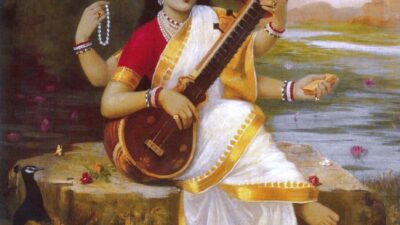
इतिहास विंग · युग-पट्टिका · Era Plate
प्राचीन काल
Ancient Era
संगीत की गहन जड़ें — वेद और उपनिषद् का युग · Deep roots of music — the age of Vedas and Upanishads
एक पंक्तिप्राचीन भारत में संगीत देवताओं की भाषा थी और समाज की आत्मा थी।
परिचय
Overviewप्राचीन काल (1200 ईसा पूर्व से पहले) भारतीय संगीत का सबसे रहस्यमय और गहरा अध्याय है। इस समय संगीत न केवल कला थी, बल्कि आध्यात्मिकता और यज्ञ का अभिन्न अंग था। ऋग्वेद में संगीत के सूत्र मिलते हैं — सामवेद तो संपूर्ण संगीत ही है। इसी काल में गंधर्व (आकाशीय गायकों) की परंपरा का जन्म हुआ। नाट्यशास्त्र (200 ई.पू. - 200 ई.के आसपास) ने संगीत, नृत्य और नाटक का सर्वप्रथम वैज्ञानिक विश्लेषण किया। भरतमुनि ने नौ रसों (भाव) की अवधारणा दी जो आज भी भारतीय संगीत और नृत्य का मेरुदंड है। इसी युग में राग की अवधारणा जन्म ले रही थी। मत्स्य पुराण और विभिन्न तांत्रिक ग्रंथों में सुर और संगीत के गहरे रहस्य दर्ज हैं। दरबार का संगीत अभी नहीं था — यह आध्यात्मिक संगीत, पूजा का संगीत, यज्ञ का संगीत था। हर नोट का अध्यात्मिक अर्थ था, हर सुर का ब्रह्मांडीय कनेक्शन था। गांधार (भारतीय) संगीत पद्धति धीरे-धीरे विकसित हो रही थी और इसमें ग्रीक संगीत का भी कुछ प्रभाव दिखता था। प्राचीन काल के संगीत को समझने के लिए हमें ऋषि परंपरा को समझना चाहिए। उपनिषदों में महर्षि नारद को संगीत का सर्वोच्च ज्ञानी माना गया है। नृत्य, संगीत और आध्यात्मिकता का यह अभेद संबंध सदियों तक बना रहा। इसी दौर में तानपुरा, वीणा, बांसुरी जैसे वाद्य यंत्र विकसित हुए और प्रत्येक का अपना आध्यात्मिक महत्व था।
अंग्रेज़ी में पढ़ें · Read in English
The ancient era (before 1200 BCE) is the most mystical and profound chapter of Indian music history. During this period, music was not merely an art but an integral part of spirituality and Vedic rituals. References to music appear in the Rigveda, while the Samaveda is essentially a musical text. The tradition of Gandharvas (celestial singers) originated in this age. The Natyashastra (around 200 BCE - 200 CE) provided the first scientific analysis of music, dance, and drama. Bharatamuni introduced the concept of Navarasas (nine emotions) which remains the foundation of Indian music and dance today.
The concept of raag was germinating during this era. Various Puranas and tantric texts contain deep secrets about sound and music. There was no court music yet — this was spiritual music, music of worship, music of rituals. Every note had spiritual significance, every sur had cosmic connection. The Gandhar (Indian) music system was slowly developing with some influence from Greek music.
To understand ancient music, we must understand the tradition of Rishis. The Upanishads consider Maharshi Narada the supreme master of music. This inseparable connection between dance, music, and spirituality persisted for centuries. During this period, instruments like tanpura, veena, and flute developed with each having spiritual significance.
काव्य-पंक्ति · The Verse
काव्य-पंक्ति
नाद ब्रह्मं तत्वं ब्रह्मा बीजं तपः सृष्टिः। सप्त स्वरा अहं ब्रह्मे सर्वे लोकाः प्रतिष्ठिताः।।
— प्राचीन संगीत शास्त्र Sound is Brahman, this is the truth; Brahma is the seed, ascetic practice is creation. The seven notes are myself (Brahman); all worlds rest upon them.
परिभाषित विशेषताएँ
Defining Characteristicsप्राचीन युग की संगीत की परिभाषा विशेषताएं यह थीं कि यह आध्यात्मिक पथ था, दरबारी मनोरंजन नहीं। हर नोट का गहरा अर्थ था। राग की अवधारणा विकसित हो रही थी। वाद्य यंत्र पवित्र माने जाते थे। संगीत यज्ञ और पूजा का अभिन्न अंग था।
अंग्रेज़ी में पढ़ें · Read in English
The defining characteristics of ancient music were that it was a spiritual path, not court entertainment. Every note had deep meaning. The concept of raag was developing. Instruments were considered sacred. Music was integral to rituals and worship.
प्रौद्योगिकी-संदर्भ
Technological Contextकोई औपचारिक 'प्रौद्योगिकी' नहीं थी। संगीत को मानव कंठ से परे ले जाने के लिए वाद्य यंत्र विकसित किए गए — वीणा, बांसुरी, नाल, ढोल इत्यादि। हर यंत्र का निर्माण हस्तकला से होता था। संगीत को पीढ़ी-दर-पीढ़ी गुरु-शिष्य परंपरा से संरक्षित रखा जाता था।
अंग्रेज़ी में पढ़ें · Read in English
There was no formal 'technology' in the modern sense. Instruments were developed to extend music beyond the human voice — veena, flute, horn, drum, etc. Each instrument was handcrafted. Music was preserved generation through generation via the guru-shishya tradition.
सामाजिक संदर्भ
Social Contextप्राचीन समाज में संगीत का स्थान सर्वोच्च था। ब्राह्मण, क्षत्रिय, वैश्य सभी संगीत का अध्ययन करते थे। संगीत शिक्षा आश्रमों में दी जाती थी। गुरु-शिष्य परंपरा सामाजिक संरचना का महत्वपूर्ण अंग थी। संगीत से जुड़ी महिलाओं (वेश्याओं) को भी सम्मान दिया जाता था।
अंग्रेज़ी में पढ़ें · Read in English
Music held the highest place in ancient society. Brahmins, Kshatriyas, and Vaishyas all studied music. Musical education was provided in ashrams. The guru-shishya tradition was an important part of social structure. Women associated with music (courtesans) were also respected.
प्रमुख कलाकार
Key Artistsसंगीत के सर्वप्रथम ज्ञानी और अविष्कारक। वीणा के जन्मदाता।
The first and foremost expert of music and its inventor. Father of the veena.
नाट्यशास्त्र के रचयिता। संगीत, नृत्य और नाटक का प्रथम वैज्ञानिक विश्लेषण।
Author of Natyashastra. First scientific analysis of music, dance, and drama.
निरुक्त के रचयिता। संगीत और भाषा के गहरे संबंध को समझने वाले पहले विद्वान।
Author of Nirukta. First scholar to understand deep connection between music and language.
ऐतिहासिक गीत
Landmark Songsसंगीत का सबसे प्राचीन रिकॉर्ड। पूरी तरह से संगीतात्मक रूप में रचित।
Oldest recorded music. Composed entirely in musical form.
गंधर्वों (आकाशीय गायकों) के गीत। सबसे प्राचीन परंपरा।
Songs of Gandharvas (celestial singers). Most ancient tradition.
संरक्षण-व्यवस्था
Patronage Modelयज्ञ और धार्मिक संस्कार ही संगीत का मुख्य संरक्षक और पृष्ठभूमि थे। आश्रम व्यवस्था में गुरु संगीतकारों को आश्रय देते थे। वेद-प्रेमी राजा-महाराजे संगीत के संरक्षक बन रहे थे, लेकिन यह दरबारी संगीत अभी नहीं बन पाया था।
अंग्रेज़ी में पढ़ें · Read in English
Rituals and religious ceremonies were the primary patron and context for music. In the ashram system, gurus provided patronage to musicians. Vedic-loving kings and rulers were becoming patrons of music, but it had not yet become court music.
प्रमुख नृत्य-शैलियाँ
Dance Forms Prominentवेदों में वर्णित नृत्य। यह संगीत के साथ अभेद रूप से जुड़ा हुआ था।
Dance described in Vedas. It was inseparably linked with music.
भाव-प्रदर्शन करने वाला नृत्य। नाट्यशास्त्र में विस्तृत।
Emotion-expressing dance. Detailed in Natyashastra.
सक्रिय परंपराएँ
Paramparas Activeसामवेद पर आधारित। अभी भी कुछ स्थानों पर जीवंत है।
Based on Samaveda. Still alive in some places.
आकाशीय संगीत की परंपरा। आध्यात्मिक मार्ग।
Tradition of celestial music. Spiritual path.
सांस्कृतिक महत्व
Cultural Significanceप्राचीन काल का संगीत भारतीय सभ्यता की आत्मा था। यह न केवल मनोरंजन नहीं था, बल्कि ज्ञान, शक्ति और मुक्ति का साधन माना जाता था। संगीत को 'नाद ब्रह्म' (संगीत ही ब्रह्म है) कहा गया। हर मंदिर, हर यज्ञ, हर धार्मिक अनुष्ठान में संगीत था। गुरु-शिष्य परंपरा इसी समय अपनी मजबूत नींव रख रही थी। परंपरा का संरक्षण, ज्ञान का प्रवाह, स्मृति से शिष्य तक — यह व्यवस्था उस समय ही बन गई जो आज तक चलती है।
अंग्रेज़ी में पढ़ें · Read in English
Ancient music was the soul of Indian civilization. It was not merely entertainment but considered a means of knowledge, power, and liberation. Music was called 'Nad Brahm' (sound is Brahman). Music existed in every temple, every ritual, every religious ceremony. The guru-shishya tradition was laying its strong foundation during this period. The preservation of tradition, the flow of knowledge, the transmission from memory to student — this system was established then and continues today.
सुनने का मार्गदर्शन
The Listening Guideप्राचीन संगीत को समझने के लिए पहले आपको यह समझना चाहिए कि यह आज का संगीत नहीं है। यह संगीत अध्यात्मिक पथ था। अगर आप सामवेद के मंत्र सुनें (जो रिकॉर्ड हैं), तो आप ध्यान करें कि हर सुर का क्या अर्थ है। नृत्य और संगीत को अलग मत देखिए — वे एक थे। आध्यात्मिक संदर्भ में सुनिए। भरतमुनि के नौ रसों को याद रखिए और महसूस कीजिए कि हर संगीत किस भाव को जगाता है। इसी काल की विरासत आज के हर राग में छिपी है।
अंग्रेज़ी में पढ़ें · Read in English
To understand ancient music, first recognize that this is not modern music. This was music as a spiritual path. When listening to Samaveda chants (which are recorded), contemplate the meaning of every note. Don't separate dance and music — they were one. Listen in spiritual context. Remember Bharatamuni's nine rasas and feel which emotion each piece evokes. The legacy of this era is embedded in every raag today.
श्रवण-कक्ष · The Listening Room
देखें-सुनें
वैदिक पारंपरिक संगीत — काफी राग में ध्यान संगीत · Bhaktivedanta Academy Mayapur · 1:01:57
सामवेद मंत्र पाठ — प्राचीन भारतीय संगीत का मूल · ammaskrishna · 8:38
रोचक तथ्य
Margin Notesसामवेद को 'संगीत का जन्मदाता' माना जाता है। यह पूरी तरह संगीत में लिखा गया वेद है। इसमें ऋचाएं (मंत्र) संगीतात्मक रूप में प्रस्तुत हैं और हर मंत्र का गायन एक विशेष सुर और ताल में होता है।
The Samaveda is considered the 'father of music.' It is the only Veda written entirely in musical form. The verses are presented musically with each mantra sung in specific notes and rhythms.
नाट्यशास्त्र 36 अध्यायों की एक विशाल किताब है जिसमें 6000 श्लोक हैं। इसमें न केवल संगीत के 22 श्रुतियां (सूक्ष्म संगीत विभाजन) का विवरण है, बल्कि नृत्य के 108 करणों (मूल गतिविधियों) का भी विस्तृत वर्णन है।
The Natyashastra is a vast book of 36 chapters containing 6000 verses. It not only describes 22 srutis (subtle musical divisions) but also provides detailed descriptions of 108 karanasof dance (basic movements).
गंधर्व संस्कृत में 'सुगंधि' और 'गायक' शब्दों का संयोजन है। प्राचीन ग्रंथों में गंधर्वों को आकाशीय संगीतकार माना गया है जो देवताओं के दरबार में नृत्य और संगीत प्रस्तुत करते हैं।
Gandharva in Sanskrit is a combination of 'fragrance' and 'singer.' In ancient texts, Gandharvas are considered celestial musicians who perform dance and music in the court of gods.
ऋग्वेद में 1028 सूक्तें (भजन) हैं और इनमें से कई संगीत और गायन के बारे में हैं। 'अप्सरस्' (अप्सरा, नर्तकी) शब्द का पहली बार ऋग्वेद में ही प्रयोग हुआ है।
The Rigveda contains 1028 suktas (hymns) and many of them are about music and singing. The word 'Apsaras' (celestial dancer) appears for the first time in the Rigveda.
महर्षि नारद को संगीत का अविष्कारक माना जाता है। उन्हें 'वीणा पाणि' (हाथ में वीणा रखने वाले) कहा जाता है। पुराणों में नारद के द्वारा की गई संगीत की शिक्षा का विस्तृत वर्णन है।
Maharshi Narada is considered the inventor of music. He is called 'Veena Pani' (one who holds the veena). The Puranas contain detailed descriptions of musical education given by Narada.
क्या आप जानते हैं?
Did You Knowप्राचीन भारत में संगीत को नौ विद्याओं में से एक माना जाता था। यह 64 कलाओं (षड्विंशति कलाओं) का अभिन्न अंग था।
In ancient India, music was considered one of the nine sciences. It was an essential part of the 64 arts.
तानपुरा को 'संगीत का पिता वाद्य' कहा जाता है, लेकिन इसका प्राचीन नाम 'तात्वरी वीणा' था। यह प्राचीन काल से ही संगीत का आधार यंत्र रहा है।
The tanpura is called the 'father instrument of music,' but in ancient times it was called 'Tatvaravina.' It has been the foundational instrument of music since ancient times.
नवरसों की अवधारणा केवल संगीत तक सीमित नहीं है — यह चित्रकला, मूर्तिकला, साहित्य और यहां तक कि योग तक विस्तृत है।
The concept of Navrasas (nine emotions) is not limited to music — it extends to painting, sculpture, literature, and even yoga.
सूक्तियाँ
Words of the Masters“संगीत मोक्ष का द्वार है। जो मनुष्य संगीत को समझता है वह ब्रह्मांड को समझता है।”
— — प्राचीन भारतीय दर्शन, Upanishads“Music is the gateway to liberation. He who understands music understands the universe.”
“नाद ब्रह्म — यह संपूर्ण ब्रह्मांड ध्वनि (नाद) से निर्मित है।”
“Nad Brahm — this entire universe is made of sound.”
— — शैव और तांत्रिक दर्शन, Tantra Texts
“जहां शब्द खत्म होते हैं, वहां संगीत शुरू होता है।”
“Where words end, music begins.”
— — भारतीय संगीत परंपरा, Classical texts
सवाल-जवाब
Questions & Answersप्राचीन काल में संगीत क्या था?
प्राचीन काल में संगीत आध्यात्मिक पथ था, केवल मनोरंजन नहीं। यह यज्ञ, पूजा और प्रार्थना का माध्यम था। संगीत को देवताओं की भाषा माना जाता था और इसका गहरा दार्शनिक अर्थ था।
नाट्यशास्त्र क्या है?
नाट्यशास्त्र भरतमुनि द्वारा रचित 36 अध्यायों की एक विशाल ग्रंथ है। इसमें संगीत, नृत्य और नाटक का वैज्ञानिक विश्लेषण है। यह 22 श्रुतियों, नौ रसों और 108 नृत्य गतिविधियों (करण) का विवरण देता है।
सामवेद संगीत क्यों महत्वपूर्ण है?
सामवेद पूरी तरह से संगीत में लिखा गया है। यह संगीत का सबसे प्राचीन रिकॉर्ड है। इसमें 1875 मंत्र हैं जो सभी संगीतात्मक नियमों के साथ गाए जाते हैं। यह दिखाता है कि संगीत केवल कला नहीं बल्कि ज्ञान है।
इतिहास
The Historyउत्पत्ति — 1500 ईसा पूर्व - 1200 ईसा पूर्व Origin
संगीत की खोज वेद-ऋषियों ने की थी। वे मानते थे कि संपूर्ण ब्रह्मांड ध्वनि (नाद) से बना है। सामवेद पूरा ही संगीत है। इसमें उपदेश देने के लिए संगीत का प्रयोग किया जाता था। हर स्वर (नोट) का अपना अर्थ था। धीरे-धीरे 22 श्रुतियों (सूक्ष्म संगीत विभाजन) की परिभाषा तय हुई।
अंग्रेज़ी में पढ़ें · Read in English
Music was discovered by Vedic Rishis. They believed the entire universe is made of sound. The Samaveda itself is music. It was used to impart spiritual knowledge. Every svar (note) had meaning. Gradually, the concept of 22 srutis (subtle divisions) was established.
विकास-यात्रा · Evolution
- वैदिक काल (1500-1000 ईसा पूर्व) ऋग्वेद और सामवेद का रचना काल। संगीत मंत्र के रूप में। कोई वाद्य यंत्र नहीं, केवल कंठ संगीत। यज्ञ और प्रार्थना का माध्यम।
- उत्तर वैदिक काल (1000-500 ईसा पूर्व) वाद्य यंत्रों का विकास। वीणा, बांसुरी, ढोल का जन्म। उपनिषदों में संगीत का दार्शनिक अध्ययन। नारद द्वारा संगीत शिक्षा।
- वर्गीकरण काल (500 ईसा पूर्व - 200 ई.) नाट्यशास्त्र की रचना। संगीत का वैज्ञानिक विश्लेषण। नौ रसों की परिभाषा। संगीत को व्यवस्थित विषय के रूप में स्थापना।
प्रमुख पड़ाव · Key Milestones
- 1500 ऋग्वेद की रचना
- 1000 सामवेद का संकलन — संगीत वेद
- 200 नाट्यशास्त्र की रचना — संगीत का प्रथम विज्ञान
नमूना-पट्टी
The Specimen Table| नाम | प्राचीन काल · Ancient Era |
|---|---|
| काल | 1500 ईसा पूर्व - 1200 ईसा पूर्व |
| प्रकार | युग · Eras |
साझा कीजिए · Share this Plate