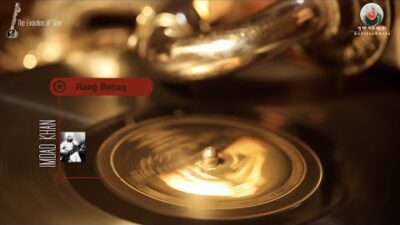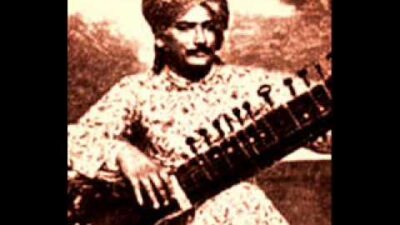
सुरबहार और सितार — इनायत ख़ाँ के विद्युत-युग तवे
Surbahar and Sitar Sides — Inayat Khan in the Electrical Era
—
शास्त्र विंग · वाद्य-पट्टिका · Instrument Plate
Surbahar
सितार से गहरा और अधिक ध्यानी संगीत वाद्य, जो धीमी और ध्यानपूर्ण रचनाओं के लिए प्रयुक्त होता है
अन्य नामसूरबहार · Bass Sitar · Vina-Sitar · Dhrupad Sitar
एक पंक्तिसुरबहार एक बड़ा, गहरी पिच वाला तार वाद्य है जो आलाप और ध्रुपद शैली के लिए विशेष रूप से उपयुक्त है।
सुरबहार एक महान और विरल भारतीय संगीत वाद्य है जो गहराई, ध्यान और आध्यात्मिकता का प्रतीक है। यह सितार का बड़ा और गहरा भाई है, लेकिन इसकी अपनी विशिष्ट पहचान और गौरव है। सुरबहार को सुनना एक आध्यात्मिक अनुभव है जो श्रोता के मन को शांत करता है और गहरे विचारों की ओर ले जाता है। सुरबहार की परंपरा बहुत प्राचीन है, परंतु इसकी लोकप्रियता सितार की तुलना में बहुत कम है। अन्नपूर्णा देवी ने इस वाद्य को विश्व मंच पर प्रदर्शित किया और इसे एक महान वाद्य के रूप में स्थापित किया। हालांकि, आजकल, सुरबहार को भुलाया जा रहा है और केवल कुछ समर्पित संगीतकार ही इसे बजाते हैं। सुरबहार सीखना एक गंभीर और दीर्घकालीन प्रतिबद्धता है। यह वाद्य उन संगीतकारों के लिए है जो संगीत को एक गहरी कलात्मक और आध्यात्मिक साधना के रूप में देखते हैं। सुरबहार की परंपरा को संरक्षित करना भारतीय संस्कृति की एक महत्वपूर्ण जिम्मेदारी है।
The surbahar is a great and rare Indian musical instrument symbolizing depth, contemplation, and spirituality. It is the larger and deeper sibling of the sitar but has its own distinct identity and glory. Listening to surbahar is a spiritual experience that calms the listener's mind and leads to profound thoughts.
The surbahar tradition is very ancient but less popular than the sitar. Annapurna Devi showcased this instrument on the world stage and established it as a great instrument. However, today the surbahar is being forgotten and only a few dedicated musicians play it.
Learning surbahar is a serious and long-term commitment. This instrument is for musicians who view music as a deep artistic and spiritual practice. Preserving the surbahar tradition is an important responsibility toward Indian culture.
काव्य-पंक्ति · The Verse
गहरे स्वरों में आत्मा की पुकार, सुरबहार बजे, दिल में उतार।
— समकालीन कवि The soul's call in deep notes, Surbahar plays, touching the heart.
Natya Shastra
तत वाद्य (Tata Vadya)
Stringed Instrument
नाट्यशास्त्र में तत वाद्य की श्रेणी में आता है, जहाँ तारों को खींचकर संगीत निकाला जाता है।
Classified as Tata Vadya in Natya Shastra, where strings are plucked to produce music.
Western
String
Plucked, fretted
पश्चिमी संगीत शास्त्र में यह एक जटिल तार वाद्य है जिसमें सहानुभूतिशील तार भी होते हैं।
In Western classification, a complex stringed instrument with sympathetic strings.
Hornbostel Sachs
321.312
Plucked lute with movable frets and sympathetic strings
सुरबहार का फिल्म संगीत में बहुत सीमित उपयोग हुआ है। इसकी गहरी और ध्यानी प्रकृति के कारण, यह सामान्य फिल्म संगीत के लिए उपयुक्त नहीं माना जाता है। हालांकि, कुछ गंभीर या आध्यात्मिक विषय पर बनी फिल्मों में सुरबहार का उपयोग किया गया है। कुछ डॉक्यूमेंट्री और कला फिल्मों में सुरबहार के प्रदर्शन दिखाए गए हैं।
Surbahar has limited use in film music. Its deep and meditative nature makes it unsuitable for typical film compositions. However, it has been used in serious or spiritual films. Some documentaries and art films have featured surbahar performances.
विवरण
सुरबहार आज एक दुर्लभ वाद्य है। सितार की लोकप्रियता के कारण, बहुत कम संगीतज्ञ सुरबहार सीखते हैं। आधुनिक समय में, सुरबहार को एक विशेष और उन्नत वाद्य माना जाता है, जिसे केवल अत्यधिक प्रतिभाशाली और समर्पित संगीतकार ही बजाते हैं। आजकल, सुरबहार के खिलाड़ी विश्व में शायद 50-100 के बीच हैं।
Surbahar is a rare instrument today. Due to sitar's popularity, few musicians learn surbahar. In modern times, it is considered a specialized and advanced instrument played only by highly talented and dedicated musicians. Currently, there are perhaps 50-100 surbahar players worldwide.
Estimated Players
50-100 globally
Revival Efforts
सुरबहार के पुनरुद्धार के लिए कुछ संगीत संस्थान काम कर रहे हैं। अन्नपूर्णा देवी जैसी महान कलाकारों की विरासत को संरक्षित करना आवश्यक है।
Some music institutions are working to revive surbahar. Preserving the legacy of great artists like Annapurna Devi is essential.
विवरण
सुरबहार एक बहुत बड़ा और भारी वाद्य है, जो सितार से लगभग 1.5 गुना बड़ा होता है। इसकी कुल लंबाई 150-180 सेंटीमीटर होती है। सुरबहार का रेज़ोनेटर (बॉडी) सितार की तुलना में बहुत बड़ा होता है, जो इसे गहरी और अधिक गूंजने वाली ध्वनि देता है। सुरबहार के गर्दन (नेक) को भी गहराई से डिज़ाइन किया जाता है। इसमें 4 मुख्य तार होते हैं जो वादक द्वारा बजाए जाते हैं, और 20-40 सहानुभूतिशील तार होते हैं जो कंपन के माध्यम से ध्वनि को सुशोभित करते हैं। सुरबहार के तार स्टील से बने होते हैं, परंतु कुछ परंपरागत कलाकार पुरानी शैली के लिए मोती की तार का भी उपयोग करते हैं।
The surbahar is a very large and heavy instrument, approximately 1.5 times bigger than a sitar. Its total length is 150-180 cm. The surbahar's resonator is much larger than a sitar's, giving it deeper and more resonant sound. The neck is also designed with greater depth. It has 4 main strings played by the artist and 20-40 sympathetic strings that enhance the sound through vibration. Surbahar strings are made of steel, though some traditional artists use pearl strings for the classical style.
Dimensions
150-180 cm
35-45 cm (at widest point)
4-6 kg
Strings Or Keys
सुरबहार में 4 मुख्य तार होते हैं जिन्हें वादक बजाता है। इसके अलावा, 20-40 सहानुभूतिशील तार होते हैं जो वाद्य के पीछे की ओर फिट होते हैं।
The surbahar has 4 main strings played by the artist. Additionally, 20-40 sympathetic strings are fitted behind the main strings.
4 main + 20-40 sympathetic strings
Steel, sometimes pearl for traditional style
Tuning
सुरबहार को आमतौर पर प कोणर (निम्न) से शुरू करके शुरु किया जाता है।
Surbahar is typically tuned starting from lower register (Pa).
Pa-Sa (lower octave), with variations by tradition
2-2.5 octaves
Construction
लकड़ी से बना हुआ बड़ा गोल तूंबा जो संगीत के मूल अनुनाद को निर्मित करता है।
Large wooden gourd-shaped resonator producing fundamental resonance.
सुरबहार की गर्दन बहुत लंबी और मजबूत होती है, जिसमें फ्रेट लगे होते हैं।
The long, sturdy neck fitted with frets.
गर्दन पर तारों के स्वर को नियंत्रित करने के लिए फ्रेट लगे होते हैं।
Frets on the neck control string pitches.
4 मुख्य तार और 20-40 सहानुभूतिशील तार।
4 main strings and 20-40 sympathetic strings.
Tonal Character
सुरबहार की ध्वनि गहरी, मेलोडिक और अत्यंत संवेदनशील होती है। यह सितार की तुलना में बहुत अधिक गूंजने वाली और प्रतिध्वन्यात्मक होती है। सुरबहार की ध्वनि में एक प्राकृतिक गर्माहट और विषाद होता है, जो ध्यान और आध्यात्मिकता को प्रेरित करता है। हर स्वर में एक गहराई और समृद्धि है।
The surbahar's sound is deep, melodic, and highly sensitive. It is much more resonant and reverberant than the sitar. The surbahar's tone has natural warmth and melancholy, inspiring contemplation and spirituality. Each note carries depth and richness.
Timbre
गहरी, गूंजने वाली, दुःख-भरी ध्वनि जिसमें अनुनाद और समृद्धि है।
Deep, resonant, melancholic tone with rich resonance.
Dynamic Range
सुरबहार की गतिशील सीमा व्यापक है, परंतु इसकी ध्वनि आमतौर पर मध्यम स्तर पर रहती है।
The surbahar has a broad dynamic range, though its volume typically remains moderate.
Comparison
एक वायलिनसेलो या वीणा के समान, परंतु भारतीय परंपरा के साथ, अधिक जटिल और गहरा।
Like a cello or vina but with Indian traditions, more complex and deeper.
विवरण
सुरबहार को बजाना एक उन्नत और जटिल कौशल है जिसमें वर्षों का अभ्यास आवश्यक है। वादक बैठता है और सुरबहार को अपने सामने रखता है, जैसे सितार के लिए। वादक दाहिने हाथ की उँगलियों से तारों को खींचता है और बायीं ओर की उँगलियों से तारों के स्वर को नियंत्रित करता है। सुरबहार की गहरी पिच के कारण, वादक को अधिक धीमी गति से बजाना होता है और प्रत्येक स्वर को लंबा खींचना होता है। आलाप (श्रवणात्मक विस्तार) में, वादक क्रमिक रूप से विभिन्न स्वरों का पता लगाता है।
Playing the surbahar is an advanced and complex skill requiring years of practice. The player sits with the surbahar in front of them, like the sitar. The right hand fingers pluck the strings while the left hand controls pitch. Due to the surbahar's deeper pitch, the player must play slower and sustain each note longer. In alap, the player gradually explores various notes.
Posture
सुरबहार को बैठकर बजाया जाता है, सितार की तरह ही, परंतु बड़ा और भारी होने के कारण बहुत सांद्रित मुद्रा की आवश्यकता होती है।
The surbahar is played sitting, similar to sitar, but requires concentrated posture due to its larger size.
Techniques
गहरे और ध्यानी संगीत की शुरुआत, जहाँ वादक क्रमिक रूप से राग के स्वरों का पता लगाता है।
The contemplative opening where the player gradually explores the raga's notes.
तेजी से बजाए जाने वाले खंड, परंतु सुरबहार में यह सितार की तरह तीव्र नहीं होता।
Faster-paced sections, though not as rapid as sitar.
एक स्वर से दूसरे स्वर तक एक सुंदर ढंग से स्लाइड करना, जो सुरबहार की विशेषता है।
Beautiful sliding from one note to another, a characteristic of surbahar.
धीमी, ध्यानी और मूल रचनाओं में गहराई से खुदाई करना।
Slow, contemplative deep exploration of compositions.
विवरण
सुरबहार के निर्माण में बहुत कौशल और समय की आवश्यकता है। पहले, सुरबहार के शरीर (रेज़ोनेटर) के लिए विशेष प्रकार की लकड़ी का चयन किया जाता है। लकड़ी को कई महीनों तक सूख जाने देते हैं। फिर, गर्दन, फ्रेट और अन्य भागों को सावधानीपूर्वक बनाया जाता है। सहानुभूतिशील तारों को गिनकर लगाया जाता है। अंत में, वाद्य को ट्यून किया जाता है और परीक्षण किया जाता है। एक अच्छा सुरबहार बनाने में 6-8 महीने लग सकते हैं।
Surbahar making requires considerable skill and time. First, special wood is selected for the resonator. Wood is dried for several months. Then, the neck, frets, and other parts are carefully crafted. Sympathetic strings are precisely fitted. Finally, the instrument is tuned and tested. A good surbahar can take 6-8 months to make.
Materials
सुरबहार के शरीर और गर्दन के लिए विशेष प्रकार की लकड़ी का उपयोग।
Special wood selected for body and neck.
4 मुख्य तार और सहानुभूतिशील तार।
Main and sympathetic strings.
फ्रेट और अन्य धातु के भाग।
Frets and metal parts.
Artisan Centers
सुरबहार निर्माण का एक प्रमुख केंद्र।
A major center of surbahar making.
सुरबहार निर्माण का एक अन्य महत्वपूर्ण केंद्र।
Another important surbahar making center.
पश्चिमबंगाल में सुरबहार की एक महत्वपूर्ण परंपरा है।
West Bengal has an important surbahar tradition.
Time To Craft
6-8 months for a quality instrument
Price Range
₹100,000-500,000+ (depending on maker and quality)
Primary Role
सुरबहार मुख्यतः एक एकल वाद्य है। यह ध्रुपद और खयाल के साथ बजाया जाता है, लेकिन आमतौर पर अन्य वाद्यों के साथ नहीं।
Surbahar is primarily a solo instrument. It is played with dhrupad and khayal but rarely with other instruments.
Solo Capability
हाँ, सुरबहार को एकल वाद्य के रूप में बजाया जाता है। वास्तव में, यह एक पूरे संगीत कार्यक्रम के लिए पर्याप्त है।
Yes, surbahar is played as a solo instrument. Indeed, it is sufficient for an entire concert.
Accompaniment For
सुरबहार को ध्रुपद गायकी के साथ बजाया जाता है।
Surbahar is played with dhrupad singing.
सुरबहार को कभी-कभी खयाल के साथ भी बजाया जाता है, हालांकि सितार अधिक आम है।
Surbahar is sometimes played with khayal, though sitar is more common.
सुरबहार मुख्यतः शास्त्रीय संगीत से जुड़ा है और लोक परंपरा में इसका कोई स्थान नहीं है। यह एक बिल्कुल शास्त्रीय और अभिजात वाद्य है जो भारतीय संगीत के उच्च कोटि के विद्यार्थियों द्वारा सीखा जाता है।
Surbahar is exclusively classical and has no place in folk traditions. It is purely a classical instrument learned by advanced students of Indian music.
उत्तर भारत में निर्मित सुरबहार, विशेषकर बनारस में।
Surbahar made in North India, especially Varanasi.
बंगाल में सुरबहार की एक विशेष परंपरा है।
Bengal has a particular surbahar tradition.
अन्नपूर्णा देवी को सुरबहार की सबसे महान कलाकार माना जाता है। वह रवि शंकर की पहली पत्नी थीं और एक महान संगीतज्ञ हैं। उन्होंने सुरबहार को एक महत्वपूर्ण एकल वाद्य बनाया।
Annapurna Devi is considered the greatest surbahar artist. She was Ravi Shankar's first wife and a great musician. She established surbahar as an important solo instrument.
प्रभा अत्रे एक प्रसिद्ध हिंदुस्तानी संगीतकार हैं जो सुरबहार पर भी कुशल हैं।
Prabha Atre is a renowned Hindustani musician skilled in surbahar.
फिरदौस अता खान एक समकालीन सुरबहार कलाकार हैं।
Firdaus Ata Khan is a contemporary surbahar artist.
सुरबहार की गहरी ध्वनि भैरव के शास्त्रीय और गंभीर प्रकृति को परिपूर्ण करती है।
Surbahar's deep tone perfectly complements Bhairav's classical nature.
यमन राग में सुरबहार की मधुर लेकिन गहरी ध्वनि बहुत प्रभावी है।
In Yaman, surbahar's melodic yet deep tone is very effective.
दरबारी राग में सुरबहार का उपयोग परंपरागत है।
Surbahar use in Darbari is traditional.
सुरबहार बनारस घराने की संगीत परंपरा से जुड़ा है।
Surbahar is connected to the Varanasi Gharana tradition.
पश्चिमबंगाल में सुरबहार की एक महत्वपूर्ण परंपरा है।
An important surbahar tradition exists in West Bengal.
विवरण
सुरबहार सीखना एक बहुत ही गंभीर और दीर्घकालीन प्रतिबद्धता है। आमतौर पर, एक विद्यार्थी पहले सितार सीखता है, फिर सुरबहार में स्थानांतरित होता है। सुरबहार सीखने के लिए एक योग्य और समर्पित गुरु की आवश्यकता होती है। प्रारंभिक चरण में, विद्यार्थी को अलाप सीखना होता है। फिर, वह क्रमिक रूप से संचार और रचना के कौशल को विकसित करता है।
Learning surbahar is a serious and long-term commitment. Usually, a student first learns sitar, then moves to surbahar. A qualified and dedicated guru is essential. In the initial stage, learners practice alap. Then, they gradually develop complex techniques and composition skills.
Beginner Steps
अधिकांश सुरबहार विद्यार्थी पहले सितार सीखते हैं।
Most surbahar students first learn sitar.
धीमी और ध्यानी आलाप के साथ शुरुआत।
Beginning with slow, contemplative alap.
विभिन्न राग में गहराई से खुदाई करना।
Deep practice of various ragas.
सामान्य अवधि
15-20 years for basic proficiency, 25+ years for mastery
संस्थान
सुरबहार की एक प्रमुख शिक्षा संस्थान।
A premier institution for surbahar education.
सुरबहार की कक्षाएँ उपलब्ध हैं।
Offers surbahar classes.
सुरबहार भारतीय संगीत की गहराई और दार्शनिकता का प्रतीक है। यह वाद्य न केवल संगीत के लिए, बल्कि आध्यात्मिक साधना के लिए भी जाना जाता है। सुरबहार के माध्यम से, भारतीय संगीत की उच्चतर परंपरा को समझा जा सकता है। यह वाद्य समय, धैर्य और समर्पण का प्रतीक है।
The surbahar symbolizes the depth and philosophy of Indian music. It is known not just for music but for spiritual practice. Through surbahar, one can understand Indian music's higher traditions. It represents time, patience, and dedication.
सुरबहार को सुनते समय, धीरज रखें और हर स्वर को सुनने में समय लें। अन्नपूर्णा देवी के प्रदर्शन से शुरुआत करें, जहाँ आप सुरबहार की पूर्ण क्षमता को समझ सकते हैं। आलाप से शुरू करें और धीरे-धीरे राग की यात्रा को समझें।
When listening to surbahar, be patient and take time to appreciate each note. Start with Annapurna Devi's performances where you can understand the instrument's full potential. Begin with alap and gradually understand the raga's journey.
श्रवण-कक्ष · The Listening Room
सुरबहार - आध्यात्मिक संबंध · 9:20
सुरबहार का इतिहास - इरशाद खान के साथ · 6:40
गहरी, गूंजने वाली, दुःख-भरी ध्वनि जिसमें अनुनाद और समृद्धि है।
सुरबहार का नाम 'सुर' (स्वर) और 'बहार' (वसंत/सुंदरता) से बना है, जिसका अर्थ है 'ध्वनि का वसंत'।
The name 'surbahar' comes from 'sur' (note) and 'bahar' (spring/beauty), meaning 'spring of sound.'
अन्नपूर्णा देवी को सुरबहार की महानतम संगीतज्ञ माना जाता है, और वह आजकल 90+ वर्ष की आयु में भी संगीत से जुड़ी हैं।
Annapurna Devi is considered the greatest surbahar musician and remains connected to music even at 90+ years.
सुरबहार एक ऐसा वाद्य है जिसमें कोई जल्दबाजी नहीं है - प्रत्येक स्वर को समय के साथ विकसित होना चाहिए।
Surbahar is an instrument with no hurry—each note must unfold with time.
सुरबहार को 'सितार का ध्यान' भी कहा जाता है क्योंकि यह गहरी और चिंतनशील है।
Surbahar is also called 'sitar's meditation' because it is deep and contemplative.
एक उचित सुरबहार बनाने में 6-8 महीने तक का समय लग सकता है और इसकी कीमत ₹100,000 से ₹500,000 या उससे भी अधिक हो सकती है।
Making a good surbahar can take 6-8 months and cost ₹100,000 to ₹500,000 or more.
सुरबहार में 40 तक सहानुभूतिशील तार हो सकते हैं, जो इसे एक अत्यंत जटिल वाद्य बनाते हैं।
Surbahar can have up to 40 sympathetic strings, making it extremely complex.
सुरबहार को बजाने के लिए अक्सर 15-20 साल का प्रशिक्षण आवश्यक होता है।
Learning surbahar often requires 15-20 years of training.
सुरबहार की ध्वनि सितार से लगभग एक ऑक्टेव गहरी होती है।
Surbahar's tone is approximately one octave deeper than sitar.
“सुरबहार सुनना माने आत्मा की भाषा सुनना।”
“Listening to surbahar means hearing the language of the soul.”
— — अन्नपूर्णा देवी
“जहाँ सितार जीवन की व्यस्तता है, वहाँ सुरबहार जीवन का ध्यान है।”
“Where sitar is life's busyness, surbahar is life's contemplation.”
— — संगीत विद्वान
सुरबहार एक बड़ा और गहरा तार वाद्य है जो हिंदुस्तानी संगीत में उपयोग किया जाता है। यह सितार का विस्तृत संस्करण है, जो ध्रुपद शैली के लिए विशेष रूप से उपयुक्त है।
सुरबहार की उत्पत्ति भारत में हुई, विशेषकर उत्तर भारत में। यह सितार के विकास के बाद आया था। कुछ संगीतविद मानते हैं कि सुरबहार को मुगल दरबार में विकसित किया गया था। धीरे-धीरे, यह एक महत्वपूर्ण ध्रुपद वाद्य बन गया।
Surbahar originated in India, particularly North India. It came after sitar's development. Some musicologists believe it was developed in Mughal courts. Gradually, it became an important dhrupad instrument.
विकास-यात्रा · Evolution
प्रमुख पड़ाव · Key Milestones
| नाम | सुरबहार · Surbahar |
|---|---|
| अन्य नाम | सूरबहार · Bass Sitar · Vina-Sitar · Dhrupad Sitar · Low-Pitched Sitar |
| उद्गम | 1700 |
| काल | 1700 ईस्वी के आसपास |
| प्रकार | वाद्य · Instruments |
अटलस में कोई पन्ना अकेला नहीं — इस वाद्य से जुड़े गीत, कलाकार, शास्त्र और कहानियाँ, सब यहाँ से खुलते हैं।
Surbahar and Sitar Sides — Inayat Khan in the Electrical Era
—
साझा कीजिए · Share this Plate
Surbahar and Sitar Sides — Inayat Khan in the Electrical Era
—