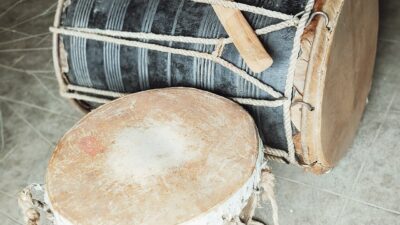
शास्त्र विंग · वाद्य-पट्टिका · Instrument Plate
ताशा
Tasha
बारात और जुलूस की जान — उत्सव की तीखी आवाज़ · Soul of the wedding procession — the sharp voice of celebration
अन्य नामतासा · ढोल-ताशा · नक्कारा (छोटा) · Taasha
एक पंक्तिताशा एक छोटा एकल-सिर वाला केटल-ड्रम है जो पतली छड़ियों से बजाया जाता है और उत्तर भारतीय विवाह जुलूसों तथा महाराष्ट्र के गणेश उत्सव की पहचान है।
परिचय
Overviewताशा उन वाद्य यंत्रों में से एक है जो अकेले बहुत कम सुने जाते हैं, लेकिन जब ढोल के साथ बजते हैं, तो एक ऐसा संगीत बनाते हैं जो आत्मा तक पहुँचता है। ढोल की गहरी 'धूम' और ताशे की तीखी 'ताड़' मिलकर एक ऐसी ताल बनाती हैं जो हर उत्सव को जीवंत बनाती है। भारत के उत्सव-प्रिय समाज में ताशे का महत्व इसी में है — यह उत्सव की घोषणा करता है। महाराष्ट्र में ढोल-ताशा पथक की परंपरा ने ताशे को एक विशेष पहचान दी है। गणेश उत्सव के दौरान, जब सैकड़ों लोगों का एक पथक एक साथ ढोल और ताशा बजाते हुए आगे बढ़ता है, तो उस ध्वनि में एक विशेष आवेग और ऊर्जा होती है जो हजारों दर्शकों को झुमाती है। यह सामूहिक संगीत का एक अनूठा उदाहरण है। उत्तर भारत में, मुहर्रम के जुलूसों में ताशे का उपयोग एक बिल्कुल अलग भाव लेकर आता है — वहाँ ताशे की ध्वनि शोक और स्मरण का प्रतीक है। यह दिखाता है कि ताशा केवल उत्सव का ही नहीं, बल्कि मानवीय भावनाओं के पूरे स्पेक्ट्रम को अभिव्यक्त करने में सक्षम है।
अंग्रेज़ी में पढ़ें · Read in English
Tasha is one of those instruments rarely heard alone, but when played with Dhol, creates music that reaches the soul. Dhol's deep 'dhoom' and Tasha's sharp 'tad' combine to create a rhythm that enlivens every festival. In India's celebration-loving society, Tasha's importance lies in this — it announces celebration.
In Maharashtra, the Dhol-Tasha pathak tradition has given Tasha a special identity. During Ganesh festival, when a pathak of hundreds of people advances together playing Dhol and Tasha, that sound carries a special impulse and energy that sways thousands of spectators. This is a unique example of collective music.
In North India, Tasha's use in Muharram processions brings a completely different emotion — there Tasha's sound is a symbol of grief and remembrance. This shows Tasha is capable of expressing not just celebration but the entire spectrum of human emotions.
काव्य-पंक्ति · The Verse
काव्य-पंक्ति
ताशे की तड़-तड़ में उत्सव की आत्मा बोलती है, ढोल संग मिलकर यह जोड़ी जीवन की गाथा खोलती है।
— लोककवि (महाराष्ट्री परंपरा) In Tasha's tad-tad speaks the soul of celebration, This pair with Dhol unfolds the tale of life's elation.
वर्गीकरण
ClassificationNatya Shastra
अवनद्ध — चर्म वाद्य यंत्र (एकल सिर)
Avanaddha — Membranophone (single-headed)
नाट्यशास्त्र के अनुसार ताशा 'अवनद्ध' वर्ग में है। एकल पर्दे वाले केटल-ड्रम के रूप में यह उत्सव वाद्यों की श्रेणी में आता है।
According to Natya Shastra, Tasha belongs to the 'Avanaddha' category. As a single-membrane kettledrum, it falls in the category of festive instruments.
Western
Percussion
Single-headed Kettledrum / Membranophone
पश्चिमी वर्गीकरण में ताशा एकल पर्दे वाला केटल-ड्रम है जो नगाड़े के छोटे संस्करण के समान है।
In Western classification, Tasha is a single-headed kettledrum similar to a smaller version of Nagara.
Hornbostel Sachs
211.11
Single-headed kettledrum with hemispherical resonating body
सिनेमा में
In Cinemaहिंदी सिनेमा में ताशे का उपयोग विवाह, जुलूस, और उत्सव दृश्यों में होता है। ताशा अक्सर पृष्ठभूमि में होता है — ढोल की प्रमुख आवाज़ के ऊपर ताशे की तीखी ध्वनि सुनाई देती है। महाराष्ट्र-आधारित फिल्मों जैसे 'अग्निपथ' (रीमेक), 'गैंग्स ऑफ वासेपुर', और गणेश-विषयक फिल्मों में ताशे की विशेष उपस्थिति है। मराठी सिनेमा में गणेश उत्सव के दृश्यों में ढोल-ताशा पथक अनिवार्य रूप से दिखाया जाता है।
अंग्रेज़ी में पढ़ें · Read in English
In Hindi cinema, Tasha is used in wedding, procession, and festival scenes. Tasha is often in the background — Tasha's sharp sound heard above Dhol's prominent voice. Maharashtra-based films like 'Agneepath' (remake), 'Gangs of Wasseypur', and Ganesh-themed films feature Tasha prominently. In Marathi cinema, Dhol-Tasha pathak is invariably shown in Ganesh festival scenes.
वर्तमान स्थिति
Modern Statusविवरण
ताशा आज भी एक जीवंत और लोकप्रिय वाद्य यंत्र है। महाराष्ट्र में गणेश उत्सव के दौरान ढोल-ताशा पथकों की बहुत बड़ी भूमिका है और यह परंपरा मजबूती से जीवित है। उत्तर भारत में विवाह बारात में ताशे की माँग बनी रहती है। हालांकि, इलेक्ट्रॉनिक संगीत और DJ संस्कृति के कारण पारंपरिक ताशे का उपयोग कुछ कम हुआ है, लेकिन विशेष अवसरों पर यह अपरिहार्य है।
अंग्रेज़ी में पढ़ें · Read in English
Tasha remains a vibrant and popular instrument today. Dhol-Tasha pathaks play a very large role during Ganesh festival in Maharashtra and this tradition survives strongly. In North India, demand for Tasha in wedding processions continues. Though electronic music and DJ culture has reduced traditional Tasha use somewhat, it remains indispensable on special occasions.
Estimated Players
Tens of thousands, especially in Maharashtra
Revival Efforts
गणेश मंडल और ढोल-ताशा पथक इस परंपरा को सक्रिय रूप से जीवित रख रहे हैं।
अंग्रेज़ी में पढ़ें · Read in English
Ganesh Mandals and Dhol-Tasha pathaks are actively keeping this tradition alive.
बनावट
Physicalविवरण
ताशा एक छोटा, हल्का, और गोल केटल-ड्रम है। इसका खोल धातु (तांबा, पीतल, या एल्युमीनियम) या मिट्टी से बना होता है और कड़ाही जैसे आकार का होता है। ऊपरी हिस्से पर एक पतली चमड़े की पर्दा होती है — आमतौर पर बकरी या भेड़ की खाल से। पर्दे को धातु के छल्ले और पतली रस्सियों या बोल्टों से कसा जाता है। ताशे का व्यास आमतौर पर २०-३५ सेंटीमीटर होता है। इसे गले में लटकाने के लिए एक रस्सी या पट्टे का उपयोग होता है। इसे दो पतली छड़ियों से बजाया जाता है जो अत्यंत तेज़ और तीखी ध्वनि उत्पन्न करती हैं।
अंग्रेज़ी में पढ़ें · Read in English
Tasha is a small, light, round kettledrum. Its shell is made from metal (copper, brass, or aluminum) or clay, in a bowl-like shape. The upper part has a thin leather membrane — usually from goat or sheep skin. The membrane is secured with metal rings and thin ropes or bolts. Tasha's diameter is typically 20-35 cm. A rope or strap is used to hang it around the neck. It is played with two thin sticks producing extremely sharp and piercing sound.
Dimensions
12-20 cm
20-35 cm (diameter)
500 grams - 2 kg
Tuning
पर्दे की कसाई — बोल्टों या रस्सियों को कस-ढीला करके
Membrane tension — by tightening or loosening bolts or ropes
High-pitched, typically tuned to complement dhol in ensemble
Fixed high pitch, limited tonal range
Construction
तांबे, पीतल, या एल्युमीनियम की कड़ाही-आकार का खोल जो ध्वनि को प्रतिध्वनित करता है।
Bowl-shaped shell of copper, brass, or aluminum that resonates the sound.
खोल के ऊपर कसी हुई पतली चमड़े की पर्दा जो ध्वनि उत्पन्न करती है।
Thin leather membrane tightly stretched over the shell that produces sound.
पर्दे को खोल पर रखने के लिए धातु का छल्ला।
Metal hoop to hold the membrane on the shell.
पर्दे को कसने और ट्यून करने के लिए रस्सियाँ या बोल्ट।
Ropes or bolts for tightening and tuning the membrane.
ताशे को गले में लटकाने के लिए मजबूत रस्सी या पट्टा।
Strong rope or strap to hang Tasha around the neck.
तेज़ और तीखी आवाज़ के लिए उपयोग की जाने वाली पतली, हल्की छड़ियाँ।
Thin, light sticks used for producing sharp, piercing sound.
ध्वनि-चरित्र
SoundTonal Character
ताशे की ध्वनि अत्यंत तीखी, ऊंची, और कानों को भेदने वाली होती है। इसकी 'तड़-तड़' या 'टन-टन' आवाज़ ढोल की गहरी आवाज़ के साथ मिलकर एक पूर्ण और उत्साहवर्धक संयोजन बनाती है। ताशे की ध्वनि में एक तात्कालिकता है — यह ध्वनि सुनते ही मन में उत्साह और उत्सव का भाव उत्पन्न होता है। महाराष्ट्र के गणेश उत्सव में ढोल-ताशे की जोड़ी की आवाज़ पूरे वातावरण को उत्सवमय बना देती है।
अंग्रेज़ी में पढ़ें · Read in English
Tasha's sound is extremely sharp, high-pitched, and ear-piercing. Its 'tad-tad' or 'tan-tan' sound combined with Dhol's deep sound creates a complete and energizing combination. Tasha's sound has an immediacy — hearing it instantly produces enthusiasm and festive feeling. The Dhol-Tasha pair at Maharashtra's Ganesh festival makes the entire atmosphere celebratory.
Timbre
तीखी, ऊंची, और तात्कालिक — उत्सव की घोषणा
अंग्रेज़ी में पढ़ें · Read in English
Sharp, high-pitched, and immediate — announcement of celebration
Dynamic Range
मध्यम से तेज़ — खुले में बहुत दूर तक सुनाई देती है
अंग्रेज़ी में पढ़ें · Read in English
Medium to loud — carries very far in open spaces
Comparison
ढोल की बास के विपरीत ट्रेबल — दोनों मिलकर पूर्ण आवाज़ बनाते हैं
अंग्रेज़ी में पढ़ें · Read in English
Treble counter to Dhol's bass — both together create complete sound
वादन-तकनीक
Playing Techniqueविवरण
ताशा बजाने की विधि में गति और सटीकता की आवश्यकता है। वादक ताशे को गले में रस्सी से लटकाता है। दोनों हाथों में पतली छड़ियाँ होती हैं। दोनों छड़ियों से बारी-बारी से पर्दे पर तेज़ प्रहार करते हुए 'तड़-तड़' की ताल बनाई जाती है। ढोल-ताशा की जोड़ी में ताशा वादक ढोल की बास ताल के ऊपर तीखी 'तिहाई' की भूमिका निभाता है। महाराष्ट्र के ढोल-ताशा पथक (ensemble) में एक ही समूह में कई ताशा वादक एक साथ बजाते हैं, जो अत्यंत शक्तिशाली और सम्मिलित ध्वनि उत्पन्न करता है।
अंग्रेज़ी में पढ़ें · Read in English
Playing Tasha requires speed and accuracy. The player hangs Tasha around the neck with rope. Both hands hold thin sticks. 'Tad-tad' rhythm is created by alternately striking the membrane with both sticks. In the Dhol-Tasha pair, the Tasha player plays the sharp 'tihai' role over Dhol's bass rhythm. In Maharashtra's Dhol-Tasha pathak (ensemble), several Tasha players in the same group play together, creating extremely powerful and combined sound.
Posture
खड़े होकर, ताशे को गले में लटकाते हुए; अक्सर चलते हुए या नृत्य करते हुए
अंग्रेज़ी में पढ़ें · Read in English
Standing with Tasha hanging around neck; often while walking or dancing
Techniques
दोनों हाथों से बारी-बारी से पर्दे पर तेज़ प्रहार — ताशे का मूल वादन।
Alternating strikes on the membrane with both hands — basic Tasha playing.
तीन बार दोहराई जाने वाली ताल जो एक 'सम' पर समाप्त होती है — ढोल के साथ संगत में।
A thrice-repeated pattern ending on 'sam' — used in ensemble with Dhol.
दोनों छड़ियों को बहुत तेज़ गति से बारी-बारी से मारते हुए निरंतर ध्वनि उत्पन्न करना।
Producing continuous sound by alternating both sticks at very high speed.
ढोल वादक के साथ सूक्ष्म तालमेल — ढोल की 'धा' पर ताशे की 'ता' का संयोजन।
Subtle coordination with Dhol player — combination of Tasha's 'ta' on Dhol's 'dha'.
एक बड़े समूह (पथक) में अन्य वादकों के साथ एकसाथ बजाना — यह एक विशेष कौशल है।
Playing together with other players in a large ensemble (pathak) — a special skill.
निर्माण-प्रक्रिया
Making Processविवरण
ताशे का निर्माण धातुकारी और चमड़ा-कारी का संयोजन है। पहले तांबे, पीतल, या एल्युमीनियम की धातु को हथौड़े से पीटकर कड़ाही का आकार दिया जाता है। आधुनिक ताशे प्रेस-मशीन से बनाए जाते हैं। फिर धातु के किनारों पर छेद किए जाते हैं जिनसे रस्सियाँ या बोल्ट पर्दे को बांधते हैं। चमड़े की गोल पर्दा बकरी या भेड़ की खाल से बनाई जाती है। खाल को सुखाकर और पतला करके खोल के व्यास से थोड़ा बड़ा काटा जाता है। फिर धातु के छल्ले पर खींचकर बांधा जाता है।
अंग्रेज़ी में पढ़ें · Read in English
Tasha making combines metalworking and leather-crafting. First, copper, brass, or aluminum metal is hammered into bowl shape. Modern Tashas are made with press machines. Then holes are made at the metal edges for ropes or bolts to secure the membrane. The circular leather membrane is made from goat or sheep hide. Hide is dried and thinned, then cut slightly larger than the shell diameter. Then stretched and bound on the metal ring.
Materials
पारंपरिक और उच्च गुणवत्ता के ताशे का खोल — बेहतर अनुरणन के लिए।
Shell for traditional and high-quality Tasha — for better resonance.
आधुनिक और हल्के ताशे के लिए — किफायती विकल्प।
For modern and lightweight Tasha — economical option.
ताशे की पर्दा के लिए — पतली और तीखी आवाज़ के लिए।
For Tasha membrane — for thin and sharp sound.
पर्दे को कसने के लिए — आधुनिक ताशे में बोल्ट प्रचलित हैं।
For tightening the membrane — bolts are common in modern Tashas.
Artisan Centers
गणेश उत्सव के कारण महाराष्ट्र में ताशे की बहुत माँग है। यहाँ ताशे और ढोल बनाने के अनेक कारखाने हैं।
Due to Ganesh festival, Maharashtra has great demand for Tasha. Numerous Tasha and Dhol making workshops exist here.
उत्तर प्रदेश में मुहर्रम और विवाह बारात के लिए ताशे बनाने वाले कारीगर।
UP artisans making Tashas for Muharram and wedding processions.
राजस्थानी लोक संगीत परंपरा के लिए ताशे बनाने के केंद्र।
Centers making Tashas for Rajasthani folk music tradition.
Time To Craft
2-5 days
Price Range
₹500-8,000
संगीत-समूह में भूमिका
Role In EnsemblePrimary Role
ढोल के साथ जोड़ी में — ढोल-ताशा — उत्सव और जुलूस का अनिवार्य संयोजन
अंग्रेज़ी में पढ़ें · Read in English
In pair with Dhol — Dhol-Tasha — indispensable combination for festivals and processions
Solo Capability
ताशा एकल बजाने में सीमित है — यह मुख्यतः समूह वाद्य है।
अंग्रेज़ी में पढ़ें · Read in English
Tasha is limited as a solo instrument — it is primarily an ensemble instrument.
Accompaniment For
उत्तर भारतीय बारात में ढोल के साथ ताशा अनिवार्य साथी है।
Tasha is an indispensable partner with Dhol in North Indian wedding processions.
गणपति विसर्जन जुलूस में ढोल-ताशा पथक का वादन महाराष्ट्र की पहचान है।
Dhol-Tasha pathak playing in Ganpati visarjan procession is Maharashtra's identity.
मुहर्रम के ताज़ियों के जुलूस में ताशे का विशेष उपयोग उत्तर भारत में प्रचलित है।
Special Tasha use in Muharram taziya processions is common in North India.
लोक संगीत में
In Folk Musicताशा उत्तर भारत के लोक संगीत में एक महत्वपूर्ण साथी वाद्य है। उत्तर प्रदेश और राजस्थान में विवाह बारात में ढोल के साथ ताशा अनिवार्य होता है। मुहर्रम के जुलूसों में ताशे का विशेष और भावनात्मक उपयोग होता है। महाराष्ट्र में ढोल-ताशा पथक एक संगठित समूह है जो गणेश उत्सव, नवरात्रि, और अन्य उत्सवों में जुलूसों का हिस्सा होता है। इसमें कई लोग एक साथ ढोल और ताशा बजाते हुए चलते हैं।
अंग्रेज़ी में पढ़ें · Read in English
Tasha is an important accompaniment instrument in North Indian folk music. In UP and Rajasthan, Tasha is mandatory with Dhol in wedding processions. In Muharram processions, Tasha has special and emotional use. In Maharashtra, the Dhol-Tasha pathak is an organized group that is part of processions during Ganesh festival, Navratri, and other celebrations. Multiple people walk together playing Dhol and Tasha.
क्षेत्रीय रूप
Regional Variantsगणेश उत्सव के लिए विशेष रूप से उपयोग। अक्सर रंगीन कपड़े और सजावट के साथ।
Used specially for Ganesh festival. Often with colorful cloth and decoration.
लखनऊ और अयोध्या के आसपास की परंपरा — मुहर्रम और विवाह में।
Tradition around Lucknow and Ayodhya — in Muharram and weddings.
राजस्थानी नगाड़ा परंपरा से जुड़ा छोटा केटल-ड्रम।
Small kettledrum connected to Rajasthani nagara tradition.
पंजाबी विवाह और लोहड़ी उत्सव में ढोल के साथ ताशे का पंजाबी रूप।
Punjabi form of Tasha used with Dhol at Punjabi weddings and Lohri festival.
प्रसिद्ध वादक
Famous Playersपुणे के एक प्रसिद्ध ढोल-ताशा पथक के नेता जिनके नेतृत्व में हज़ारों वादक हर साल गणेश उत्सव में भाग लेते हैं।
Leader of a famous Dhol-Tasha pathak from Pune, under whose leadership thousands of players participate in Ganesh festival every year.
महाराष्ट्र का एक प्रसिद्ध पारंपरिक ताशा और ढोल वादन केंद्र जिसने सैकड़ों कलाकार तैयार किए हैं।
A famous traditional Tasha and Dhol playing center in Maharashtra that has trained hundreds of artists.
पुराने ज़माने में उत्तर भारत के विशेष 'ताशची' (ताशा वादक) होते थे जो विवाह बारातों में ढोलियों के साथ काम करते थे और जिनकी अपनी एक विशेष परंपरा थी।
In older times, North India had special 'Tashchis' (Tasha players) who worked with Dhol players at wedding processions and had their own distinct tradition.
पुणे के प्रमुख गणेश पथकों के ताशा वादक जो हर साल लाखों दर्शकों के सामने प्रदर्शन करते हैं और इस परंपरा को जीवित रखते हैं।
Tasha players of major Ganesh pathaks in Pune who perform before millions of spectators every year and keep this tradition alive.
उत्तर प्रदेश के एक प्रसिद्ध मुहर्रम ताशा वादक जिनका ताशा वादन शोक और भक्ति का अद्भुत संगम था।
A famous Muharram Tasha player from UP whose playing was a wonderful confluence of mourning and devotion.
राग-उपयुक्तता
Raag Suitabilityभैरवी राग की लोक-सुलभता के कारण लोक उत्सवों में ताशे के साथ यह राग स्वाभाविक है।
Due to Bhairavi raag's folk accessibility, it is natural with Tasha at folk festivals.
काफ़ी राग की उत्सव-प्रियता ताशे के साथ जुलूसों में स्वाभाविक रूप से मेल खाती है।
Kaafi raag's festive nature naturally aligns with Tasha in processions.
खमाज राग की उत्सव-मुखरता ताशे की तीखी आवाज़ के साथ उत्सव संगीत में उपयुक्त है।
Khamaj raag's festive eloquence is suitable with Tasha's sharp sound in celebration music.
घराना-संबंध
Gharana Connectionsढोल-ताशा पथक महाराष्ट्र की एक विशेष लोक परंपरा है जिसका संबंध गणेश भक्ति से है।
Dhol-Tasha pathak is a special folk tradition of Maharashtra connected to Ganesh devotion.
सीखने का मार्ग
Learning Pathविवरण
ताशा सीखना अपेक्षाकृत सरल है। शुरुआत में छड़ियों की पकड़ और मूल ताड़न सीखना होता है। फिर धीरे-धीरे गति बढ़ाई जाती है। ढोल के साथ समन्वय सीखना एक महत्वपूर्ण चरण है। महाराष्ट्र में पथक व्यवस्था के कारण ताशा सीखना सामूहिक प्रक्रिया है — एक अनुभवी नेता के साथ समूह में सीखा जाता है।
अंग्रेज़ी में पढ़ें · Read in English
Learning Tasha is relatively simple. Initially stick grip and basic striking must be learned. Then speed is gradually increased. Learning coordination with Dhol is an important stage. In Maharashtra, due to the pathak system, learning Tasha is a collective process — learned in groups with an experienced leader.
Beginner Steps
पतली छड़ियाँ सही तरह से पकड़ना और पर्दे पर समान बल से मारना।
Correctly gripping thin sticks and striking the membrane with equal force.
नियमित 'तड़-तड़' की लय बनाना जो ढोल के साथ चल सके।
Creating regular 'tad-tad' rhythm that can work alongside Dhol.
धीरे-धीरे गति बढ़ाते हुए निरंतर और तेज़ ताड़न का अभ्यास।
Practice of continuous and fast striking while gradually increasing speed.
ढोल वादक के साथ मिलकर बजाने का अभ्यास — लय में आना।
Practice of playing together with Dhol player — coming into rhythm.
सामान्य अवधि
1-3 years for proficiency; ensemble coordination requires practice
संस्थान
गणेश मंडलों और ढोल-ताशा पथकों में सामूहिक ताशा वादन की शिक्षा।
Collective Tasha playing instruction in Ganesh Mandals and Dhol-Tasha pathak organizations.
उत्तर भारत के संगीत विद्यालयों में ताशा वादन का प्रशिक्षण।
Tasha playing instruction at local music schools in North India.
सांस्कृतिक महत्व
Cultural Significanceताशे का सांस्कृतिक महत्व उसकी सामूहिकता में है। यह अकेले का वाद्य नहीं है — यह समूह का वाद्य है, जुलूस का वाद्य है, सामाजिक एकजुटता का वाद्य है। महाराष्ट्र में गणेश उत्सव के समय पूरे शहर के युवा पथकों में शामिल होकर ताशा बजाते हैं — यह एक ऐसी सामाजिक घटना है जो जाति, धर्म, और वर्ग की सीमाओं को तोड़ती है। ताशे की आवाज़ में सामूहिकता की शक्ति है।
अंग्रेज़ी में पढ़ें · Read in English
Tasha's cultural significance lies in its collectivity. It is not a solo instrument — it is a group instrument, a procession instrument, an instrument of social solidarity. During Maharashtra's Ganesh festival, youth from across the city join pathaks to play Tasha — this is a social phenomenon that breaks boundaries of caste, religion, and class. In Tasha's sound lies the power of collectivity.
सुनने का मार्गदर्शन
The Listening Guideताशे को सुनने के लिए गणेश उत्सव के दौरान महाराष्ट्र में जाना सबसे अच्छा है। यदि यह संभव न हो, तो ढोल-ताशा पथक की रिकॉर्डिंग सुनें। ध्यान से सुनें — ढोल की गहरी आवाज़ के बीच ताशे की तीखी आवाज़ को अलग करने की कोशिश करें। यह संयोजन ही ताशे की पहचान है।
अंग्रेज़ी में पढ़ें · Read in English
To hear Tasha, going to Maharashtra during Ganesh festival is best. If not possible, listen to recordings of Dhol-Tasha pathak. Listen carefully — try to separate Tasha's sharp sound from within Dhol's deep sound. This combination is Tasha's identity.
श्रवण-कक्ष · The Listening Room
देखें-सुनें
ढोल-ताशा पथक — गणेश उत्सव, पुणे · पथक वादक · 6:30
महिला ढोल-ताशा पथक · महिला पथक · 4:50
परिचय
Identity- Year Of Origin
- 1400
वर्गीकरण
Classification- Code
- 211.11
- Description
- Single-headed kettledrum with hemispherical resonating body
- Category
- अवनद्ध — चर्म वाद्य यंत्र (एकल सिर)
- Category En
- Avanaddha — Membranophone (single-headed)
- Description
- नाट्यशास्त्र के अनुसार ताशा 'अवनद्ध' वर्ग में है। एकल पर्दे वाले केटल-ड्रम के रूप में यह उत्सव वाद्यों की श्रेणी में आता है।
- Description En
- According to Natya Shastra, Tasha belongs to the 'Avanaddha' category. As a single-membrane kettledrum, it falls in the category of festive instruments.
Hornbostel Sachs
Natya Shastra
अन्य विवरण
More Details- कड़ाही (धातु का खोल) — Metal Bowl — तांबे, पीतल, या एल्युमीनियम की कड़ाही-आकार का खोल जो ध्वनि को प्रतिध्वनित करता है। · Metal Bowl / Shell
- चमड़े की पर्दा — Leather Membrane — खोल के ऊपर कसी हुई पतली चमड़े की पर्दा जो ध्वनि उत्पन्न करती है। · Leather Membrane
- धातु के छल्ले — Metal Rings — पर्दे को खोल पर रखने के लिए धातु का छल्ला। · Metal Rings / Hoop
- रस्सी या बोल्ट — Lacing — पर्दे को कसने और ट्यून करने के लिए रस्सियाँ या बोल्ट। · Rope / Bolt Lacing
- लटकाने की रस्सी — Hanging Strap — ताशे को गले में लटकाने के लिए मजबूत रस्सी या पट्टा। · Hanging Strap
- पतली छड़ियाँ — Thin Sticks — तेज़ और तीखी आवाज़ के लिए उपयोग की जाने वाली पतली, हल्की छड़ियाँ। · Thin Sticks
- System
- पर्दे की कसाई — बोल्टों या रस्सियों को कस-ढीला करके
- System En
- Membrane tension — by tightening or loosening bolts or ropes
- Standard Tuning
- High-pitched, typically tuned to complement dhol in ensemble
- Range
- Fixed high pitch, limited tonal range
- Timbre
- तीखी, ऊंची, और तात्कालिक — उत्सव की घोषणा
Construction
Tuning
रोचक तथ्य
Margin Notesमहाराष्ट्र में ढोल-ताशा पथक की एक विशेष परंपरा है जिसमें महिलाएँ भी सक्रिय रूप से भाग लेती हैं। 'महिला ढोल-ताशा पथक' गणेश उत्सव में भाग लेने वाले सबसे उत्साहजनक और लोकप्रिय आकर्षणों में से एक हैं।
In Maharashtra, the Dhol-Tasha pathak tradition features women actively participating. 'Women's Dhol-Tasha Pathak' groups are among the most enthusiastic and popular attractions participating in Ganesh festival.
ताशे का उपयोग मुहर्रम के जुलूसों में एक विशेष शोकपूर्ण ताल के साथ होता है जिसे 'मातमी ताल' कहते हैं। यह ताल धीमी और भारी होती है और इमाम हुसैन की शहादत के शोक को व्यक्त करती है।
Tasha is used in Muharram processions with a special mourning rhythm called 'Matami Taal'. This rhythm is slow and heavy, expressing grief for the martyrdom of Imam Hussain.
पुणे के लाखबुद्धे पथक को महाराष्ट्र का सबसे पुराना और प्रतिष्ठित ढोल-ताशा पथक माना जाता है। इसकी स्थापना १९वीं सदी के अंत में हुई थी और यह गणेश उत्सव की शुरुआत के साथ ही है।
Pune's Lakhbudhe Pathak is considered Maharashtra's oldest and most prestigious Dhol-Tasha pathak. It was established in the late 19th century and is as old as the Ganesh festival itself.
एक बड़े ढोल-ताशा पथक में २०-५० ढोल और १५-३० ताशा एक साथ बजते हैं। इतने वाद्यों के एकसाथ बजने से जो ध्वनि उत्पन्न होती है उसकी तीव्रता ९०-१०० डेसिबल तक पहुँच सकती है।
In a large Dhol-Tasha pathak, 20-50 Dhols and 15-30 Tashas play together. The sound intensity produced by so many instruments playing simultaneously can reach 90-100 decibels.
ताशे की पर्दे पर मुहर्रम के लिए और विवाह के लिए अलग-अलग ट्यूनिंग की जाती है। मुहर्रम के लिए पर्दे को थोड़ा ढीला रखते हैं जिससे आवाज़ गहरी और मातमी लगे, जबकि विवाह के लिए कसकर ट्यून करते हैं।
Tasha membrane is tuned differently for Muharram and weddings. For Muharram, the membrane is kept slightly loose so the sound seems deeper and mournful, while for weddings it is tuned tightly.
इटली में भी नक्कारा (नगाड़ा और ताशे का यूरोपीय रूप) एक पारंपरिक वाद्य है जिसे गाँव के उत्सवों में बजाया जाता है। भारतीय ताशा और इतालवी नक्कारा दोनों का मूल एक ही — मध्ययुगीन इस्लामी सैन्य संगीत।
In Italy also, naccara (European form of Nagara and Tasha) is a traditional instrument played at village festivals. Indian Tasha and Italian naccara have the same origin — medieval Islamic military music.
क्या आप जानते हैं?
Did You Knowगणेश उत्सव के दौरान मुंबई में एक ही दिन में हज़ारों ढोल-ताशा पथक सड़कों पर निकलते हैं। इनकी कुल संख्या इतनी अधिक होती है कि पूरे शहर में एक अद्भुत सामूहिक संगीत का अनुभव होता है।
During Ganesh festival, thousands of Dhol-Tasha pathaks take to the streets of Mumbai in a single day. Their total number is so large that the entire city experiences a wonderful collective musical experience.
ताशे को बजाने के लिए दो पतली छड़ियों का उपयोग इसलिए होता है क्योंकि एक हाथ से पर्दे पर पूरी ऊर्जा से मारने पर पर्दा क्षतिग्रस्त हो सकती है। दो हाथों से बारी-बारी मारने से ऊर्जा विभाजित होती है और पर्दा टिकाऊ रहती है।
Two thin sticks are used to play Tasha because striking the membrane with full force from one hand could damage it. Alternating between two hands divides the energy and keeps the membrane durable.
आधुनिक ताशे में synthetic drumheads भी उपलब्ध हैं जो मौसम के प्रभाव से मुक्त हैं। पारंपरिक चमड़े की पर्दा गर्मी और नमी से प्रभावित होती है, लेकिन synthetic पर्दा हर मौसम में एक जैसी आवाज़ देती है।
Modern Tasha now also has synthetic drumheads available that are unaffected by weather. Traditional leather membranes are affected by heat and humidity, but synthetic heads produce consistent sound in all weather.
सूक्तियाँ
Words of the Masters“ढोल-ताशे की जोड़ी के बिना गणेश उत्सव अधूरा है — यह हमारी पहचान है।”
— — गणेश मंडल, पुणे“Ganesh festival is incomplete without the Dhol-Tasha pair — it is our identity.”
“ताशे की आवाज़ सुनते ही पैर थिरकने लगते हैं — यही इस वाद्य का जादू है।”
— — महाराष्ट्रीय कहावत“The moment Tasha's sound is heard, feet start tapping — this is the magic of this instrument.”
“बारात में ढोल का गुर्राना और ताशे की तड़-तड़ — यही है विवाह की असली धड़कन।”
— — उत्तर भारतीय विवाह परंपरा“Dhol's rumble and Tasha's tad-tad in the barat — this is the true heartbeat of a wedding.”
सवाल-जवाब
Questions & Answersढोल-ताशा पथक क्या है?
ढोल-ताशा पथक एक संगठित समूह है जिसमें ढोल और ताशा बजाने वाले कलाकार होते हैं। ये पथक मुख्यतः महाराष्ट्र में गणेश उत्सव के दौरान सड़कों पर जुलूस के साथ बजाते हैं। एक पथक में आमतौर पर २०-१०० या उससे भी अधिक वादक होते हैं। इन पथकों में महिलाएँ और पुरुष दोनों भाग लेते हैं। गणपति विसर्जन के दौरान हज़ारों ऐसे पथक एक साथ मुंबई और पुणे की सड़कों पर मार्च करते हैं।
ताशा और नगाड़े में क्या अंतर है?
ताशा और नगाड़ा दोनों केटल-ड्रम हैं, लेकिन इनमें महत्वपूर्ण अंतर हैं। नगाड़ा बड़ा, भारी, और जोड़े में बजाया जाता है — इसका उपयोग मंदिरों, दरबारों, और युद्धभूमि में था। ताशा छोटा, हल्का, और एकल है — इसका उपयोग लोक उत्सवों और जुलूसों में होता है। नगाड़ा गहरी और राजसी ध्वनि देता है, ताशा तीखी और ऊंची आवाज़ देता है। नगाड़ा ज़मीन पर रखकर बजाया जाता है, ताशा गले में लटकाकर।
क्या महिलाएँ ढोल-ताशा पथक में भाग ले सकती हैं?
हाँ, बिल्कुल। महाराष्ट्र में महिला ढोल-ताशा पथक एक बढ़ती हुई और सशक्त परंपरा है। पहले यह पेशा केवल पुरुषों का माना जाता था, लेकिन पिछले ३०-४० वर्षों में महिलाओं ने इसे अपनाया और आज वे इस परंपरा की सक्रिय और गर्वित वाहक हैं। पुणे, मुंबई, और नागपुर में कई महिला पथक हैं जो गणेश उत्सव में बड़े उत्साह के साथ भाग लेते हैं।
इतिहास
The Historyउत्पत्ति — मध्यकाल — १४वीं-१५वीं सदी Origin
ताशे की उत्पत्ति नगाड़े की परंपरा से हुई है। मुग़ल काल में सैन्य संगीत के रूप में छोटे केटल-ड्रम का उपयोग होता था। ये छोटे नगाड़े घोड़ों और ऊंटों पर बांधकर युद्धभूमि में बजाए जाते थे। समय के साथ ये छोटे ड्रम लोक उत्सवों में भी प्रचलित हो गए। उत्तर भारत में विवाह बारात और मुहर्रम में ताशे का उपयोग मध्यकाल से ही है। महाराष्ट्र में ढोल-ताशा पथक की परंपरा बाल गंगाधर तिलक द्वारा १८९३ में शुरू किए गए सार्वजनिक गणेश उत्सव के साथ संगठित रूप लेने लगी।
अंग्रेज़ी में पढ़ें · Read in English
Tasha's origin is from the Nagara tradition. In the Mughal period, small kettledrums were used in military music. These small drums were tied to horses and camels and played on battlefields. Over time, these small drums also became popular in folk festivals. In North India, use of Tasha at wedding processions and Muharram dates from medieval times. In Maharashtra, the Dhol-Tasha pathak tradition began taking organized form with the public Ganesh festival started by Bal Gangadhar Tilak in 1893.
विकास-यात्रा · Evolution
- मुग़ल सैन्य काल (१५०० — १८५७) छोटे केटल-ड्रम सैन्य वाद्य के रूप में। घोड़ों और ऊंटों पर बांधकर बजाया जाता था।
- लोक परंपरा में प्रवेश (१७०० — १९००) विवाह बारात, मुहर्रम, और लोक उत्सवों में ताशे का प्रचलन। क्षेत्रीय भिन्नताओं का उद्भव।
- गणेश उत्सव काल (१८९३ — १९४७) महाराष्ट्र में बाल गंगाधर तिलक के सार्वजनिक गणेश उत्सव के साथ ढोल-ताशा पथक परंपरा का संगठन।
- आधुनिक काल (१९४७ — वर्तमान) गणेश उत्सव में ढोल-ताशा पथक का विशाल विस्तार। महिला पथकों का उभार। वैश्विक स्तर पर भारतीय डायस्पोरा के बीच ढोल-ताशा परंपरा।
प्रमुख पड़ाव · Key Milestones
- 1400 मुग़ल सैन्य परंपरा में छोटे केटल-ड्रम (ताशे के पूर्वज) का व्यापक उपयोग।
- 1700 उत्तर भारत में विवाह बारात और मुहर्रम जुलूसों में ताशे का स्थापित उपयोग।
- 1893 बाल गंगाधर तिलक का सार्वजनिक गणेश उत्सव प्रारंभ — ढोल-ताशा पथक परंपरा की शुरुआत।
- 1950 स्वतंत्र भारत में गणेश उत्सव का विस्तार और ढोल-ताशा पथकों की संख्या में वृद्धि।
- 1990 महिला ढोल-ताशा पथकों का उभार — परंपरा में महिलाओं की सक्रिय भागीदारी।
- 2010 ढोल-ताशा पथक को डिजिटल और सोशल मीडिया पर पहचान — विश्वभर के भारतीय डायस्पोरा में लोकप्रियता।
नमूना-पट्टी
The Specimen Table| नाम | ताशा · Tasha |
|---|---|
| अन्य नाम | तासा · ढोल-ताशा · नक्कारा (छोटा) · Taasha · Tasa · Small Kettledrum |
| उद्गम | 1400 |
| काल | मध्यकाल — १४वीं-१५वीं सदी |
| प्रकार | वाद्य · Instruments |
इस वाद्य के गीत
Songs of this Instruments
साझा कीजिए · Share this Plate