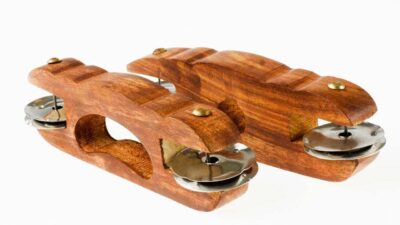
शास्त्र विंग · वाद्य-पट्टिका · Instrument Plate
खड़ताल
Khartal
मीरा का साज़ — राजस्थान का भक्ति ताल · Mira's instrument — the devotional rhythm of Rajasthan
अन्य नामकरताल · खरताल · कड़ताल · Kartaal
एक पंक्तिखड़ताल चपटी लकड़ी के दो जोड़े टुकड़े हैं जिनमें धातु के जिंगल लगे होते हैं और जिन्हें हाथ में पकड़कर ताल देने के लिए आपस में खटखटाया जाता है।
परिचय
Overviewखड़ताल — यह नाम सुनते ही राजस्थान के विशाल रेत-धोरों, नीले आकाश के नीचे गाती मीराबाई, और दरगाहों में झूमते फ़क़ीरों की छवि आँखों के सामने आ जाती है। यह वाद्य राजस्थान और गुजरात की भक्ति-धरा का सबसे विश्वस्त साथी है — सरल, सुलभ, और फिर भी असाधारण रूप से भावपूर्ण। खड़ताल का नाम संस्कृत के 'करतल' से आया है — करतल यानी हथेलियों का संगीत। सदियों पहले जब भक्त-कवियों ने राजदरबार की सीमाओं को तोड़कर आम जनता के बीच भजन-कीर्तन किया, तब उन्हें किसी जटिल और महँगे वाद्य की ज़रूरत नहीं थी। खड़ताल — दो लकड़ी के टुकड़े — ही उनका आर्केस्ट्रा था। मीराबाई के हाथों में खड़ताल केवल एक वाद्य नहीं थी, वह उनके विद्रोह, उनकी स्वतंत्रता, और उनकी भक्ति का प्रतीक थी। राजस्थान के मांगणियार और लंगा समुदायों ने खड़ताल को एक उच्च कला के स्तर पर पहुँचाया है। उनके हाथों में खड़ताल केवल ताल नहीं देती — वह एक पूर्ण संगीत भाषा बोलती है। एक कुशल मांगणियार वादक दोनों हाथों में अलग-अलग ताल चला सकता है, जिंगल की झनझनाहट और लकड़ी की खटखट को इस तरह मिला सकता है कि श्रोता तबले और मृदंग दोनों की आवाज़ महसूस करे। यह कला सीखने में वर्षों लगते हैं। आज जब राजस्थानी संगीत विश्वभर के उत्सवों में पहुँच चुका है — जोधपुर RIFF, पुष्कर मेला, और यूरोपीय विश्व संगीत उत्सव — खड़ताल उसके साथ गई है। रेगिस्तान की रात में जब एक मांगणियार खड़ताल बजाते हुए कोई पुराना लोकगीत गाता है, तो उस ध्वनि में भारत की हज़ार साल पुरानी आत्मा बोलती है।
अंग्रेज़ी में पढ़ें · Read in English
Khartal — hearing the name instantly brings images of Rajasthan's vast sand dunes, Mirabai singing under blue skies, and fakirs swaying at dargahs. This instrument is the most faithful companion of Rajasthan and Gujarat's devotional stream — simple, accessible, yet extraordinarily expressive.
Khartal's name comes from Sanskrit 'Kartala' — Kartala meaning the music of palms. Centuries ago when bhakti poets broke royal court boundaries to perform among common people, they needed no complex or expensive instrument. Khartal — two pieces of wood — was their orchestra. In Mirabai's hands, Khartal was not merely an instrument — it was the symbol of her rebellion, her freedom, and her devotion.
Rajasthan's Manganiyar and Langa communities elevated Khartal to high art. In their hands, Khartal doesn't just keep rhythm — it speaks a complete musical language. A skilled Manganiyar player can run different rhythms in both hands, combining jingle sounds and wooden clacks so that listeners feel both tabla and mridangam. This art takes years to learn.
Today as Rajasthani music has reached festivals worldwide — Jodhpur RIFF, Pushkar Mela, European World Music Festivals — Khartal has gone with it. When a Manganiyar plays Khartal singing an old folk song on a desert night, the thousand-year-old soul of India speaks in that sound.
काव्य-पंक्ति · The Verse
काव्य-पंक्ति
खड़ताल की थाप में, मीरा ने पाया राम। लकड़ी के दो टुकड़ों में, समाया ब्रह्म का नाम।।
— राजस्थानी लोक परंपरा In the clack of Khartal, Mira found the Lord. In two pieces of wood, the name of Brahma was contained.
वर्गीकरण
ClassificationNatya Shastra
घन — लकड़ी से बना ताल वाद्य
Ghana — wooden percussion idiophone
नाट्यशास्त्र के अनुसार खड़ताल 'घन' वर्ग में आती है। यह उन वाद्यों में है जो स्वयं की सामग्री से टकराकर ध्वनि उत्पन्न करते हैं। लकड़ी के टुकड़ों और धातु जिंगल का यह संयोजन इसे एक अद्वितीय वाद्य बनाता है।
According to Natya Shastra, Khartal falls in 'Ghana' class. It belongs to instruments producing sound by striking their own material. The combination of wooden pieces and metal jingles makes it a unique instrument.
Western
Percussion
Idiophone — Clapper with Jingles
पश्चिमी वर्गीकरण में खड़ताल कास्टनेट (castanets) और जिंगल-क्लैपर के बीच की श्रेणी में आती है। यह स्पेनिश कास्टनेट के भारतीय समकक्ष की तरह है।
In Western classification, Khartal falls between castanets and jingle-clappers. It is similar to the Indian equivalent of Spanish castanets.
Hornbostel Sachs
111.141.2
Concussion idiophone with jingles — flat wooden clappers with metallic jingle attachments
सिनेमा में
In Cinemaहिंदी सिनेमा में खड़ताल की ध्वनि राजस्थान, मीरा, और भक्ति का प्रतीक है। जब भी किसी फिल्म में मीराबाई का दृश्य होता है, खड़ताल की ध्वनि पृष्ठभूमि में ज़रूर सुनाई देती है। 'मीरा' (1979) में हेमा मालिनी के भजन-दृश्यों में खड़ताल विशेष रूप से प्रमुख थी। 'मीराबाई नॉट आउट' और विभिन्न टेलीविज़न धारावाहिकों में भी खड़ताल का उपयोग रहा है। राजस्थान के दृश्यों में और रेगिस्तानी लोक संगीत को दर्शाने के लिए खड़ताल की ध्वनि बार-बार उपयोग होती है।
अंग्रेज़ी में पढ़ें · Read in English
In Hindi cinema, Khartal sound symbolizes Rajasthan, Mira, and devotion. Whenever a film depicts Mirabai, Khartal sound is heard in the background. In 'Meera' (1979), Khartal was particularly prominent in Hema Malini's bhajan scenes. It has appeared in 'Mirabai Not Out' and various television serials. For Rajasthan scenes and depicting desert folk music, Khartal sound is repeatedly used.
वर्तमान स्थिति
Modern Statusविवरण
खड़ताल आज राजस्थानी लोक संगीत के साथ जीवंत है। मांगणियार और लंगा संगीतकार विश्वभर में प्रदर्शन करते हैं और खड़ताल उनके संगीत का अनिवार्य हिस्सा है। पुष्कर, जैसलमेर, और जोधपुर के संगीत उत्सवों में खड़ताल सुनाई देती है। आधुनिक फ्यूज़न संगीत में भी राजस्थानी लोक तत्वों के साथ खड़ताल का उपयोग होता है। हालांकि, पारंपरिक कारीगरी में कुछ कमी आई है और नए कारीगरों की संख्या घटी है।
अंग्रेज़ी में पढ़ें · Read in English
Khartal remains alive today with Rajasthani folk music. Manganiyar and Langa musicians perform worldwide and Khartal is an essential part of their music. Khartal is heard at music festivals in Pushkar, Jaisalmer, and Jodhpur. Modern fusion music also uses Khartal with Rajasthani folk elements. However, traditional craftsmanship has declined somewhat and the number of new artisans has decreased.
Estimated Players
Tens of thousands in Rajasthan and diaspora
Revival Efforts
राजस्थान सरकार और सांस्कृतिक संस्थाएँ लोक वाद्यों का संरक्षण कर रही हैं
अंग्रेज़ी में पढ़ें · Read in English
Rajasthan government and cultural organizations are conserving folk instruments
बनावट
Physicalविवरण
खड़ताल दो जोड़ी चपटे लकड़ी के टुकड़े होते हैं जिन्हें एक हाथ में दोनों टुकड़े पकड़कर खटखटाया जाता है। प्रत्येक टुकड़ा लगभग 15-20 सेंटीमीटर लंबा, 4-6 सेंटीमीटर चौड़ा, और 1-2 सेंटीमीटर मोटा होता है। टुकड़े के किनारों पर छोटे-छोटे धातु के जिंगल (छल्ले या डिस्क) लगे होते हैं जो खटखटाने पर अतिरिक्त झनझनाहट की ध्वनि देते हैं। उच्च गुणवत्ता की खड़ताल शीशम (rosewood), सागौन (teak), या आम की सूखी लकड़ी से बनाई जाती है। लकड़ी की मोटाई और घनत्व ध्वनि की गुणवत्ता निर्धारित करते हैं। कुछ खड़तालें सुंदर नक्काशी से सजी होती हैं। राजस्थान में खड़ताल को अक्सर चमकीले रंगों से रंगा जाता है। एक जोड़े में दो टुकड़े होते हैं और एक वादक एक हाथ में एक जोड़ा और दूसरे हाथ में दूसरा जोड़ा पकड़ता है।
अंग्रेज़ी में पढ़ें · Read in English
Khartal consists of two pairs of flat wooden pieces held in the hand — one pair per hand — and clacked together. Each piece is approximately 15-20 cm long, 4-6 cm wide, and 1-2 cm thick. Small metal jingles (rings or discs) are attached to the edges, producing additional ringing sound when clacked. High-quality Khartal is made from Sheesham (rosewood), teak, or dried mango wood. Wood thickness and density determine sound quality. Some Khartals are decorated with beautiful carvings. In Rajasthan, Khartals are often painted in bright colors. A set includes two pairs — the player holds one pair in each hand.
Dimensions
15-20 cm (length)
4-6 cm
100-300 grams per pair
Strings Or Keys
खड़ताल में कोई तार या कुंजी नहीं होती। यह एक ठोस लकड़ी और धातु का ताल वाद्य है।
Khartal has no strings or keys. It is a solid wood and metal percussion instrument.
N/A
N/A
Tuning
कोई ट्यूनिंग नहीं — लकड़ी का घनत्व और आकार ध्वनि निर्धारित करते हैं
No tuning — wood density and shape determine sound
N/A — fixed tonal quality
Fixed pitch, rhythmic instrument
Construction
चपटा और लंबा लकड़ी का मुख्य हिस्सा जो खटखटाया जाता है और मूल ताल ध्वनि उत्पन्न करता है।
The flat and long main wooden piece that is clacked and produces the primary rhythmic sound.
लकड़ी के किनारों पर लगे छोटे धातु के छल्ले या डिस्क जो अतिरिक्त झनझनाहट देते हैं।
Small metallic rings or discs attached to the edges producing additional jingle sound.
टुकड़े के ऊपरी हिस्से में खोदा गया गड्ढा जिसमें उँगलियाँ फँसती हैं और पकड़ मज़बूत होती है।
A notch carved in the upper part of the piece where fingers fit for a firm grip.
लकड़ी पर उकेरी गई सुंदर नक्काशी या रंग जो खड़ताल को सजावटी बनाते हैं। राजस्थानी खड़ताल में यह विशेष रूप से सुंदर होती है।
Beautiful carvings or colors on the wood making Khartal decorative. Particularly beautiful in Rajasthani Khartal.
ध्वनि-चरित्र
SoundTonal Character
खड़ताल की ध्वनि तीखी, खटखटाती, और जिंगल के साथ एक विशेष प्रकार की झनझनाहट से युक्त होती है। लकड़ी के टुकड़ों की 'खट-खट' ध्वनि और जिंगल की 'छन-छन' ध्वनि मिलकर एक अनोखा संयोजन बनाती हैं। राजस्थानी भजनों में खड़ताल की यह ध्वनि एक विशेष 'रेगिस्तानी' संगीत का एहसास देती है। अच्छी शीशम की खड़ताल की ध्वनि गहरी और स्पष्ट होती है। खड़ताल की ध्वनि भक्ति, उत्साह, और लोक-संगीत के रस को एक साथ जगाती है।
अंग्रेज़ी में पढ़ें · Read in English
Khartal's sound is sharp, clattering, with a special jingle undertone. The 'Khat-Khat' of wooden pieces and 'Chhan-Chhan' of jingles combine to create a unique composition. In Rajasthani bhajans, this sound gives a special 'desert music' feeling. Good Sheesham Khartal has a deep, clear sound. Khartal's sound simultaneously awakens devotion, enthusiasm, and folk music essence.
Timbre
खटखटाती, तीखी झनझनाहट — राजस्थानी रेत जैसी गर्माहट
अंग्रेज़ी में पढ़ें · Read in English
Clattering, sharp jingle — warmth like Rajasthani sand
Dynamic Range
मध्यम — खुले आँगन में और कमरे में समान रूप से सुनाई देती है
अंग्रेज़ी में पढ़ें · Read in English
Medium — heard equally well in open courtyards and rooms
Comparison
स्पेनिश कास्टनेट और जिंगल ड्रम के बीच की ध्वनि — पर अधिक गर्म और भारतीय
अंग्रेज़ी में पढ़ें · Read in English
Between Spanish castanets and jingle drum — but warmer and more Indian
वादन-तकनीक
Playing Techniqueविवरण
खड़ताल बजाना एक विशेष कौशल है जिसमें दोनों हाथों का समन्वय आवश्यक है। वादक अपने दाहिने हाथ में खड़ताल का एक जोड़ा और बाएँ हाथ में दूसरा जोड़ा पकड़ता है। प्रत्येक हाथ में, दो टुकड़े तर्जनी और मध्यमा उँगली के बीच और अँगूठे के नीचे पकड़े जाते हैं। फिर हाथ को हिलाकर दोनों टुकड़ों को आपस में टकराया जाता है। 'खट' की ध्वनि मुख्य ताल है और जिंगल की 'छन' इसे सुशोभित करती है। राजस्थान के 'सपेरा' नृत्य और 'लंगा' संगीत में खड़ताल की विशेष शैली विकसित हुई है। उस्ताद वादक दोनों हाथों को अलग-अलग ताल में चला सकते हैं — जैसे एक हाथ से 'कहरवा' और दूसरे से 'दादरा'।
अंग्रेज़ी में पढ़ें · Read in English
Playing Khartal is a specialized skill requiring coordination of both hands. The player holds one pair in the right hand and another in the left. In each hand, two pieces are held between index and middle fingers with thumb below. The hand is flipped to clack the pieces together. 'Khat' sound is the main rhythm; jingle's 'Chhan' decorates it. Rajasthan's 'Sapera' dance and 'Langa' music developed special Khartal styles. Master players can run both hands in different rhythms — one hand in 'Kaharwa' and other in 'Dadra.'
Posture
खड़े होकर या बैठकर — दोनों हाथों में खड़ताल, कोहनी थोड़ी झुकी हुई
अंग्रेज़ी में पढ़ें · Read in English
Standing or seated — Khartal in both hands, elbows slightly bent
Techniques
एक हाथ में दो टुकड़ों को एक बार खटखटाना। यह सबसे बुनियादी क्रिया है जिससे एक 'खट' की ध्वनि आती है।
Clacking two pieces in one hand once. The most basic action producing a single 'Khat' sound.
एक ही हाथ में तेज़ी से दो बार खटखटाना। इससे 'खट-खट' की दोहरी ध्वनि आती है जो ताल को भरती है।
Rapidly clacking twice in one hand. Produces a 'Khat-Khat' double sound that fills the rhythm.
दोनों हाथों को अलग-अलग समय पर क्रमशः बजाना जिससे एक संयुक्त ताल-क्रम बनता है। यह कौशल अभ्यास माँगता है।
Playing both hands alternately at different times creating a combined rhythmic pattern. This skill requires practice.
एक ही हाथ में तीन बार तेज़ खटखटाना। यह उन्नत तकनीक है जो ताल-बोलों की त्वरित श्रृंखला में उपयोग होती है।
Rapidly clacking three times in one hand. Advanced technique used in quick series of rhythmic syllables.
खड़ताल को गोलाकार गति में घुमाते हुए बजाना। यह विशेष प्रभाव देता है और दर्शकों को आकर्षित करता है। जोगी और लंगा वादक इस तकनीक का उपयोग करते हैं।
Playing Khartal in a circular swirling motion. This creates special effect and attracts audiences. Jogi and Langa players use this technique.
निर्माण-प्रक्रिया
Making Processविवरण
खड़ताल बनाना एक पारंपरिक बढ़ईगीरी कला है। सबसे पहले उपयुक्त लकड़ी — शीशम, सागौन, या आम — का चुनाव होता है। लकड़ी को अच्छी तरह सुखाना पड़ता है ताकि वह न टूटे और न मुड़े। फिर लकड़ी को आवश्यक लंबाई और चौड़ाई में काटा जाता है। आरी और रंदे से उसे चिकना और समान मोटाई में बनाया जाता है। उँगलियों के लिए गड्ढा खोदा जाता है। किनारों पर धातु के छल्ले के लिए छोटे-छोटे कटाव बनाए जाते हैं। फिर छल्ले लगाए जाते हैं। अंत में लकड़ी को रेत-घिसाई से चिकना किया जाता है और कभी-कभी रंग या वार्निश लगाई जाती है। राजस्थान में कुछ कारीगर विशेष रूप से सुंदर नक्काशी करते हैं।
अंग्रेज़ी में पढ़ें · Read in English
Making Khartal is a traditional carpentry art. First, appropriate wood — sheesham, teak, or mango — is selected. Wood must be thoroughly dried to prevent breaking or warping. Then wood is cut to required length and width. Saw and plane smooth it to even thickness. Finger groove is carved. Small cuts are made at edges for metal ring attachment. Rings are then fitted. Finally, wood is sandpapered smooth and sometimes painted or varnished. In Rajasthan, some artisans do particularly beautiful carvings.
Materials
सर्वश्रेष्ठ ध्वनि के लिए — घना और टिकाऊ, सुंदर रंग। पेशेवर खिलाड़ी इसे पसंद करते हैं।
For best sound — dense and durable, beautiful color. Professional players prefer this.
मध्यम गुणवत्ता — टिकाऊ और सुलभ।
Medium quality — durable and accessible.
किनारों पर लगाए जाने वाले छोटे धातु के छल्ले जो झनझनाहट देते हैं।
Small metallic rings attached to edges producing jingle sound.
Artisan Centers
राजस्थान के इन शहरों में खड़ताल की सर्वोत्तम कारीगरी होती है।
The best Khartal craftsmanship is found in these Rajasthan cities.
पुष्कर मेले में खड़ताल की बड़ी बिक्री होती है और यहाँ पारंपरिक कारीगर मिलते हैं।
Khartal has major sales at Pushkar Mela and traditional artisans are found here.
गुजरात में भक्ति संगीत की परंपरा के साथ खड़ताल के कारीगर यहाँ मिलते हैं।
Khartal artisans are found here with Gujarat's devotional music tradition.
Time To Craft
2-4 days per pair
Price Range
₹300–3,000
संगीत-समूह में भूमिका
Role In EnsemblePrimary Role
भजन और राजस्थानी लोक संगीत में ताल और लय प्रदान करना
अंग्रेज़ी में पढ़ें · Read in English
Providing rhythm and beat in bhajans and Rajasthani folk music
Solo Capability
खड़ताल एकल कलाप्रदर्शन में भी बजाई जा सकती है। कुशल वादक जटिल ताल-क्रम केवल खड़ताल से बजा सकते हैं।
अंग्रेज़ी में पढ़ें · Read in English
Khartal can be played in solo performances. Skilled players can perform complex rhythmic sequences with just Khartal.
Accompaniment For
राजस्थानी और गुजराती भजनों में खड़ताल की ताल अनिवार्य है। मीराबाई के भजनों में विशेष रूप से।
Khartal rhythm is essential in Rajasthani and Gujarati bhajans. Especially in Mirabai's bhajans.
लंगा, मांगणियार, और कालबेलिया संगीत में खड़ताल मुख्य ताल वाद्य है।
In Langa, Manganiyar, and Kalbelia music, Khartal is the main rhythmic instrument.
राजस्थान की सूफी परंपराओं में खड़ताल का उपयोग क़व्वाली और दरगाह संगीत में होता है।
In Rajasthan's Sufi traditions, Khartal is used in qawwali and dargah music.
लोक संगीत में
In Folk Musicराजस्थान के लोक संगीत में खड़ताल का केंद्रीय स्थान है। लंगा और मांगणियार समुदाय के वादक खड़ताल के साथ अपने विलक्षण गीत गाते हैं। पुष्कर, अजमेर, और जैसलमेर के संगीतकार पीढ़ियों से खड़ताल बजाते आ रहे हैं। गुजरात में गरबा और भजन में खड़ताल का उपयोग होता है। मध्यकालीन भक्त-कवियों — विशेषकर मीराबाई — की परंपरा ने खड़ताल को भक्ति संगीत का अनिवार्य वाद्य बना दिया।
अंग्रेज़ी में पढ़ें · Read in English
Khartal occupies a central place in Rajasthan's folk music. Langa and Manganiyar community musicians sing their extraordinary songs with Khartal. Musicians of Pushkar, Ajmer, and Jaisalmer have been playing Khartal for generations. In Gujarat, Khartal is used in Garba and bhajans. Medieval bhakti poets — especially Mirabai — made Khartal an essential instrument of devotional music.
क्षेत्रीय रूप
Regional Variantsराजस्थान में बड़ी और भारी खड़ताल प्रचलित है जो जोरदार और स्पष्ट ध्वनि देती है। अक्सर चमकीले रंगों से सजी होती है।
Large and heavy Khartal prevails in Rajasthan producing powerful and clear sound. Often decorated with bright colors.
गुजरात में छोटी और हल्की खड़ताल (करताल) प्रचलित है जो तेज़ गति के गरबा और भजन के लिए उपयुक्त है।
Small and light Khartal (Kartaal) prevails in Gujarat, suitable for fast-paced Garba and bhajans.
महाराष्ट्र में 'टाळ' नाम से जानी जाने वाली खड़ताल वारकरी संप्रदाय के अभंग और भजनों में उपयोग होती है।
Known as 'Taal' in Maharashtra, used in Warkari sect's Abhang and bhajans.
प्रसिद्ध वादक
Famous Playersमीराबाई खड़ताल की सबसे प्रसिद्ध वादक थीं। राजस्थान की इस कृष्णभक्त कवयित्री ने खड़ताल बजाते हुए अपने असंख्य भजन गाए। उन्होंने राजदरबार और सामाजिक बाधाओं को तोड़कर खुलेआम भजन-कीर्तन किया। उनकी वजह से खड़ताल भक्ति और विद्रोह दोनों का प्रतीक बन गई।
Mirabai was the most famous Khartal player. This Rajasthani Krishna-devotee poetess sang her countless bhajans playing Khartal. She broke royal court and social barriers to perform bhajans publicly. Because of her, Khartal became a symbol of both devotion and rebellion.
राजस्थान के मांगणियार समुदाय के इस उस्ताद वादक ने खड़ताल को अंतर्राष्ट्रीय मंच पर पहुँचाया। उनकी खड़ताल वादन शैली राजस्थानी लोक संगीत की पहचान बनी।
This master player of Rajasthan's Manganiyar community brought Khartal to international stages. His Khartal playing style became the identity of Rajasthani folk music.
राजस्थान के एक प्रसिद्ध खड़ताल वादक जिन्होंने इस वाद्य को एकल प्रदर्शन की श्रेणी में स्थापित किया।
A famous Rajasthani Khartal player who established the instrument in the category of solo performance.
राजस्थान के लोक-देवता रामदेवजी की भक्ति परंपरा में खड़ताल का उपयोग विशेष रूप से होता है। उनके भजनों में खड़ताल की ध्वनि अनिवार्य मानी जाती है।
Khartal is especially used in the devotional tradition of Rajasthan's folk deity Ramdevji. Khartal sound is considered essential in his bhajans.
महाराष्ट्र के वारकरी संत तुकाराम ने टाळ (खड़ताल का महाराष्ट्रीयन संस्करण) के साथ अभंग गाए। उनकी वारकरी परंपरा ने इस वाद्य को महाराष्ट्र में लोकप्रिय बनाया।
Maharashtrian Warkari saint Tukaram sang Abhang with Taal (Maharashtrian version of Khartal). His Warkari tradition popularized this instrument in Maharashtra.
राग-उपयुक्तता
Raag Suitabilityराजस्थानी भजनों में सोरठ राग के साथ खड़ताल की जोड़ी विशेष रूप से पारंपरिक है।
The pairing of Khartal with Sorath raag in Rajasthani bhajans is particularly traditional.
मीराबाई के कई भजन काफी राग में हैं जहाँ खड़ताल की ताल उनके भाव को और गहरा करती है।
Many of Mirabai's bhajans are in Kafi raag where Khartal's rhythm deepens their emotional content.
भैरवी की विदाई-भाव की प्रकृति खड़ताल की ध्वनि के साथ विरह-भजनों में अत्यंत प्रभावशाली होती है।
Bhairavi's farewell nature with Khartal sound is extremely effective in separation bhajans.
पहाड़ी राग की सरल और मधुर प्रकृति खड़ताल के साथ राजस्थानी पहाड़ी गीतों में सुंदर लगती है।
Pahadi raag's simple and melodious nature sounds beautiful with Khartal in Rajasthani mountain songs.
घराना-संबंध
Gharana Connectionsखड़ताल राजस्थान की मेवाती और मारवाड़ी लोक-परंपराओं का अभिन्न हिस्सा है।
Khartal is an integral part of Rajasthan's Mewati and Marwari folk traditions.
सीखने का मार्ग
Learning Pathविवरण
खड़ताल सीखना अपेक्षाकृत आसान है लेकिन इसमें दक्षता प्राप्त करना चुनौतीपूर्ण है। प्रारंभ में सरल एकल और दोहरी खट से शुरूआत होती है। दूसरे चरण में दोनों हाथों के समन्वय का अभ्यास होता है। तीसरे चरण में तेज़ ताल-क्रम और विशेष तकनीकें सीखी जाती हैं। अधिकांश सीख अनौपचारिक रूप से परिवार और समुदाय में होती है। राजस्थान में, मांगणियार और लंगा परिवारों के बच्चे बचपन से ही खड़ताल सीखते हैं।
अंग्रेज़ी में पढ़ें · Read in English
Learning Khartal is relatively easy but achieving mastery is challenging. Starting with simple single and double clacks, moving to two-hand coordination in the second stage, and learning fast rhythmic sequences and special techniques in the third. Most learning happens informally in family and community settings. In Rajasthan, Manganiyar and Langa children learn Khartal from childhood.
Beginner Steps
खड़ताल को सही ढंग से पकड़ना और एक बार खटखटाना सीखना।
Learning to hold Khartal correctly and clack once.
दोनों हाथों में खड़ताल पकड़कर एक-दूसरे से अलग-अलग बजाना।
Holding Khartal in both hands and playing them separately from each other.
किसी भजन या लोकगीत के साथ खड़ताल की संगत करना।
Accompanying a bhajan or folk song with Khartal.
सामान्य अवधि
1-3 months for basic playing; 1-2 years for mastery
संस्थान
राजस्थान के इस संस्थान में लोक वाद्यों की शिक्षा दी जाती है जिसमें खड़ताल भी शामिल है।
This Rajasthan institution teaches folk instruments including Khartal.
पारंपरिक रूप से यह परिवारों में पीढ़ी-दर-पीढ़ी सिखाया जाता है।
Traditionally taught generation to generation within families.
सांस्कृतिक महत्व
Cultural Significanceखड़ताल भारतीय भक्ति संगीत का लोकतांत्रिक वाद्य है। यह किसी विशेष जाति, वर्ग, या दरबार का वाद्य नहीं है — यह आम आदमी का, भक्त का, और फ़क़ीर का वाद्य है। मीराबाई ने जब राजपरिवार छोड़कर भजन गाना शुरू किया, तब खड़ताल उनके हाथ में थी। इस तरह खड़ताल सामाजिक विद्रोह और आध्यात्मिक मुक्ति का प्रतीक बन गई। राजस्थान में खड़ताल केवल संगीत नहीं है — वह पहचान है, विरासत है, और जीवन-दर्शन है।
अंग्रेज़ी में पढ़ें · Read in English
Khartal is the democratic instrument of Indian devotional music. It belongs to no particular caste, class, or court — it belongs to the common person, the devotee, the fakir. When Mirabai left the royal family to sing bhajans, Khartal was in her hand. This made Khartal a symbol of social rebellion and spiritual liberation. In Rajasthan, Khartal is not merely music — it is identity, heritage, and philosophy of life.
सुनने का मार्गदर्शन
The Listening Guideखड़ताल सुनने के लिए सबसे पहले मांगणियार या लंगा संगीतकारों की रिकॉर्डिंग सुनें। ध्यान दें कि कैसे खड़ताल की 'खट-खट' और जिंगल की 'छन-छन' मिलकर एक पूर्ण ताल बनाती हैं। फिर मीराबाई के भजनों के पारंपरिक संस्करण सुनें जहाँ खड़ताल की मुख्य भूमिका होती है। जोधपुर RIFF और पुष्कर संगीत उत्सव की रिकॉर्डिंग में खड़ताल का सर्वश्रेष्ठ राजस्थानी संदर्भ में सुना जा सकता है।
अंग्रेज़ी में पढ़ें · Read in English
To listen to Khartal, first hear recordings of Manganiyar or Langa musicians. Notice how Khartal's 'Khat-Khat' and jingle's 'Chhan-Chhan' combine to form a complete rhythm. Then listen to traditional versions of Mirabai's bhajans where Khartal has the main role. Jodhpur RIFF and Pushkar music festival recordings feature Khartal in its best Rajasthani context.
श्रवण-कक्ष · The Listening Room
देखें-सुनें
खड़ताल — राजस्थानी लोक संगीत प्रदर्शन · Manganiyar Community · varies
खड़ताल परिचय — भारतीय लोक वाद्य · Rajasthani Music Institute · varies
परिचय
Identity- Year Of Origin
- 1000
वर्गीकरण
Classification- Code
- 111.141.2
- Description
- Concussion idiophone with jingles — flat wooden clappers with metallic jingle attachments
- Category
- घन — लकड़ी से बना ताल वाद्य
- Category En
- Ghana — wooden percussion idiophone
- Description
- नाट्यशास्त्र के अनुसार खड़ताल 'घन' वर्ग में आती है। यह उन वाद्यों में है जो स्वयं की सामग्री से टकराकर ध्वनि उत्पन्न करते हैं। लकड़ी के टुकड़ों और धातु जिंगल का यह संयोजन इसे एक अद्वितीय वाद्य बनाता है।
- Description En
- According to Natya Shastra, Khartal falls in 'Ghana' class. It belongs to instruments producing sound by striking their own material. The combination of wooden pieces and metal jingles makes it a unique instrument.
Hornbostel Sachs
Natya Shastra
अन्य विवरण
More Details- मुख्य लकड़ी का टुकड़ा (Main Wooden Piece) — चपटा और लंबा लकड़ी का मुख्य हिस्सा जो खटखटाया जाता है और मूल ताल ध्वनि उत्पन्न करता है। · Main Wooden Piece
- धातु जिंगल / छल्ले (Metal Jingles) — लकड़ी के किनारों पर लगे छोटे धातु के छल्ले या डिस्क जो अतिरिक्त झनझनाहट देते हैं। · Metal Jingles / Rings
- पकड़ का गड्ढा (Finger Groove) — टुकड़े के ऊपरी हिस्से में खोदा गया गड्ढा जिसमें उँगलियाँ फँसती हैं और पकड़ मज़बूत होती है। · Finger Groove
- नक्काशी / अलंकरण (Carving / Decoration) — लकड़ी पर उकेरी गई सुंदर नक्काशी या रंग जो खड़ताल को सजावटी बनाते हैं। राजस्थानी खड़ताल में यह विशेष रूप से सुंदर होती है। · Carving / Decoration
- System
- कोई ट्यूनिंग नहीं — लकड़ी का घनत्व और आकार ध्वनि निर्धारित करते हैं
- System En
- No tuning — wood density and shape determine sound
- Standard Tuning
- N/A — fixed tonal quality
- Range
- Fixed pitch, rhythmic instrument
- Timbre
- खटखटाती, तीखी झनझनाहट — राजस्थानी रेत जैसी गर्माहट
Construction
Tuning
रोचक तथ्य
Margin Notesमीराबाई के हाथों में खड़ताल एक सामाजिक विद्रोह का प्रतीक थी। राजपूत रीति के अनुसार, राजकुल की महिलाओं को सार्वजनिक रूप से गाना-बजाना वर्जित था। लेकिन मीरा ने खड़ताल लेकर बाज़ारों और मंदिरों में भजन गाए — यह उनका स्वतंत्रता-संग्राम था।
In Mirabai's hands, Khartal was a symbol of social rebellion. According to Rajput custom, royal women were forbidden from singing-playing publicly. But Mira took Khartal and sang bhajans in markets and temples — this was her freedom struggle.
राजस्थान के मांगणियार संगीतकार परिवारों में खड़ताल एक 'पारिवारिक वाद्य' है — यह पिता से पुत्र को, माता से पुत्री को पीढ़ी-दर-पीढ़ी सौंपी जाती है। कुछ परिवारों में सौ वर्ष पुरानी खड़तालें आज भी बजाई जाती हैं।
In Manganiyar musician families of Rajasthan, Khartal is a 'family instrument' — passed from father to son, mother to daughter for generations. In some families, hundred-year-old Khartals are still played today.
खड़ताल और स्पेनिश 'कास्टनेट' में एक रोचक समानता है — दोनों लकड़ी के टुकड़े हैं जो हाथ से खटखटाए जाते हैं। संगीतशास्त्री मानते हैं कि यह संयोग नहीं बल्कि व्यापार मार्गों (silk route) के माध्यम से सांस्कृतिक आदान-प्रदान का परिणाम है।
There is an interesting similarity between Khartal and Spanish 'castanets' — both are wooden pieces clacked by hand. Musicologists believe this is not coincidence but the result of cultural exchange through trade routes (silk route).
एक उस्ताद खड़ताल वादक दोनों हाथों में अलग-अलग ताल चला सकता है। दाहिने हाथ में 'कहरवा' और बाएँ हाथ में 'दादरा' — यह पॉलीरिदम (polyrhythm) की क्षमता खड़ताल को एक जटिल वाद्य बनाती है, भले ही वह दिखने में बहुत सरल हो।
A master Khartal player can run different rhythms in each hand. 'Kaharwa' in right hand and 'Dadra' in left — this polyrhythm capability makes Khartal a complex instrument despite appearing very simple.
जैन धर्म में भी खड़ताल का उपयोग होता है। जैन पूजा (पूजा) और भक्ति में करताल (खड़ताल का दूसरा नाम) बजाई जाती है। इस प्रकार खड़ताल हिंदू, जैन, और कुछ हद तक सूफी — तीन परंपराओं की सेवा करती है।
Khartal is also used in Jainism. Kartaal (another name for Khartal) is played in Jain Puja and devotion. Thus Khartal serves three traditions — Hindu, Jain, and to some extent Sufi.
पुष्कर मेले (राजस्थान) में हर साल लाखों पर्यटक आते हैं और वहाँ खड़ताल सुनते और खरीदते हैं। इस मेले ने खड़ताल को एक वैश्विक 'सांस्कृतिक उत्पाद' बना दिया है जो दुनियाभर के संगीत प्रेमियों के संग्रह में पहुँच चुका है।
Millions of tourists come to Pushkar Mela (Rajasthan) every year, hearing and buying Khartal. This fair has made Khartal a global 'cultural product' that has reached the collections of music lovers worldwide.
क्या आप जानते हैं?
Did You Knowक्या आप जानते हैं कि खड़ताल का उपयोग जैन धर्म में भी होता है? जैन भक्ति-गीतों में 'करताल' (खड़ताल) बजाना एक पुरानी परंपरा है। इस प्रकार यह वाद्य हिंदू और जैन दोनों परंपराओं में एक साथ पवित्र है।
Did you know that Khartal is used in Jainism too? Playing 'Kartaal' (Khartal) in Jain devotional songs is an old tradition. Thus this instrument is simultaneously sacred in both Hindu and Jain traditions.
क्या आप जानते हैं कि राजस्थान के मांगणियार संगीतकारों की खड़ताल परंपरा को UNESCO की अमूर्त सांस्कृतिक विरासत की सूची में शामिल करने के प्रयास चल रहे हैं? यह राजस्थानी संगीत की वैश्विक मान्यता का प्रतीक है।
Did you know that efforts are underway to include the Khartal tradition of Rajasthan's Manganiyar musicians in UNESCO's Intangible Cultural Heritage list? This is a symbol of global recognition for Rajasthani music.
क्या आप जानते हैं कि स्पेनिश कास्टनेट और भारतीय खड़ताल में इतनी समानता है कि पश्चिमी संगीतशास्त्री इन्हें एक ही मूल के वाद्यों से विकसित मानते हैं? यह प्राचीन व्यापार मार्गों के सांस्कृतिक आदान-प्रदान का प्रमाण है।
Did you know that Spanish castanets and Indian Khartal are so similar that Western musicologists believe they evolved from instruments of the same origin? This is evidence of cultural exchange through ancient trade routes.
सूक्तियाँ
Words of the Masters“खड़ताल में मीरा की आत्मा बसती है।”
“The soul of Mira resides in Khartal.”
— — राजस्थानी लोक कथन
“जब खड़ताल बजती है, तो रेत का हर कण नाचता है।”
“When Khartal sounds, every grain of sand dances.”
— — मांगणियार संगीत परंपरा
“यह लकड़ी का टुकड़ा नहीं है — यह भक्त का हृदय है।”
“This is not a piece of wood — it is the devotee's heart.”
— — जोधपुर RIFF संगीत उत्सव
सवाल-जवाब
Questions & Answersखड़ताल क्या है और यह किस सामग्री से बनती है?
खड़ताल लकड़ी के दो जोड़े चपटे टुकड़े हैं जिनमें धातु के जिंगल-छल्ले लगे होते हैं। इसे एक हाथ में एक जोड़ा पकड़कर खटखटाया जाता है। यह मुख्यतः शीशम (rosewood), सागौन, या आम की लकड़ी से बनाई जाती है। उच्च गुणवत्ता की खड़ताल में पीतल के जिंगल होते हैं जो एक विशेष झनझनाहट देते हैं।
खड़ताल का मीराबाई से क्या संबंध है?
मीराबाई (1498-1547) खड़ताल की सबसे प्रसिद्ध वादक थीं। राजपूत रानी होते हुए भी उन्होंने राजदरबार की परंपराओं को तोड़कर खुलेआम खड़ताल बजाते हुए कृष्ण-भजन गाए। उनके हाथों में खड़ताल सामाजिक विद्रोह और आध्यात्मिक स्वतंत्रता का प्रतीक बनी। आज मीराबाई की हर छवि में खड़ताल दर्शाई जाती है।
खड़ताल और मंजीरा में क्या अंतर है?
खड़ताल और मंजीरा दोनों भक्ति संगीत के ताल वाद्य हैं लेकिन बहुत अलग हैं। मंजीरा धातु की गोलाकार थाल है जो आपस में टकराई जाती है, जबकि खड़ताल लकड़ी के चपटे टुकड़े हैं जिन पर धातु जिंगल लगे हैं। मंजीरा उत्तर-पूर्व भारत और वैष्णव परंपराओं से जुड़ी है, जबकि खड़ताल मुख्यतः राजस्थान और गुजरात की परंपराओं से। खड़ताल की ध्वनि अधिक लकड़ी-जैसी और गर्म होती है।
इतिहास
The Historyउत्पत्ति — मध्यकाल — भक्ति आंदोलन (1000-1500 ईस्वी) Origin
खड़ताल का उद्भव राजस्थान और गुजरात की भक्ति परंपराओं में हुआ। जब भक्त-कवियों ने सामान्य लोगों के बीच भजन-कीर्तन की परंपरा शुरू की, तो उन्हें एक ऐसे वाद्य की ज़रूरत थी जो सरल हो, सस्ता हो, और जो गाते-गाते बजाया जा सके। खड़ताल इन सभी आवश्यकताओं को पूरा करती थी। मीराबाई (1498-1547) के साथ यह लोकप्रिय हुई और उन्होंने इसे सामाजिक विद्रोह का प्रतीक बनाया। राजस्थान के संगीतकार समुदायों — लंगा और मांगणियार — ने इसे एक उच्च कला के रूप में विकसित किया।
अंग्रेज़ी में पढ़ें · Read in English
Khartal originated in the devotional traditions of Rajasthan and Gujarat. When bhakti poets started kirtan traditions among common people, they needed an instrument that was simple, inexpensive, and could be played while singing. Khartal fulfilled all these needs. It became popular with Mirabai (1498-1547) who made it a symbol of social rebellion. Rajasthan's musician communities — Langa and Manganiyar — developed it as a high art form.
विकास-यात्रा · Evolution
- प्रारंभिक भक्ति काल (1000-1500 ईस्वी) भक्त-कवियों ने खड़ताल को लोक-भजनों में स्थान दिया। यह एक सरल, सस्ता, और सुलभ वाद्य था जिसे कोई भी बजा सकता था। संत-कवियों ने इसे उपेक्षित और गरीब वर्गों तक भक्ति पहुँचाने का माध्यम बनाया।
- मध्यकाल — लोक कला का उत्कर्ष (1500-1800 ईस्वी) राजस्थान के मांगणियार और लंगा परिवारों ने खड़ताल को एक विशेष कला के रूप में विकसित किया। दोनों हाथों की जटिल तकनीकें और विशेष ताल-क्रम इसी काल में विकसित हुए।
- आधुनिक काल — वैश्विक मंच (1900-वर्तमान) पुष्कर मेले और विश्व संगीत उत्सवों के माध्यम से खड़ताल विश्वभर में पहुँची। राजस्थानी लोक संगीत की बढ़ती लोकप्रियता के साथ खड़ताल को नई पहचान मिली।
प्रमुख पड़ाव · Key Milestones
- 1498 मीराबाई का जन्म — उनके भजनों ने खड़ताल को भक्ति का प्रमुख वाद्य बनाया
- 1547 मीराबाई की मृत्यु — उनकी परंपरा ने खड़ताल को अमर कर दिया
- 1700 राजस्थान में मांगणियार परंपरा का उत्कर्ष — खड़ताल को उच्च लोक-कला का दर्जा
- 1979 फिल्म 'मीरा' में खड़ताल — हिंदी सिनेमा में राजस्थानी भक्ति का प्रतिनिधित्व
- 1997 जोधपुर RIFF (Rajasthan International Folk Festival) — खड़ताल को वैश्विक मंच
- 2010 UNESCO से राजस्थानी लोक संगीत की वैश्विक मान्यता — खड़ताल को सांस्कृतिक विरासत का दर्जा
नमूना-पट्टी
The Specimen Table| नाम | खड़ताल · Khartal |
|---|---|
| अन्य नाम | करताल · खरताल · कड़ताल · Kartaal · Khartaal · Wooden Castanets |
| उद्गम | 1000 |
| काल | मध्यकाल — भक्ति आंदोलन (1000-1500 ईस्वी) |
| प्रकार | वाद्य · Instruments |
जुड़े हुए पन्ने
Connected Plates · The Graph Made Visibleअटलस में कोई पन्ना अकेला नहीं — इस वाद्य से जुड़े गीत, कलाकार, शास्त्र और कहानियाँ, सब यहाँ से खुलते हैं।
जुड़े गीत · Songs
इस वाद्य के गीत
Songs of this Instruments
साझा कीजिए · Share this Plate