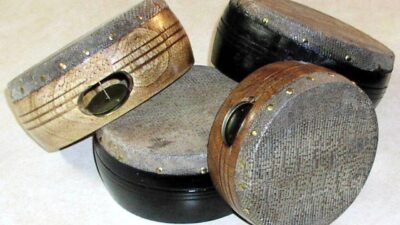
शास्त्र विंग · वाद्य-पट्टिका · Instrument Plate
खंजीरा
Khanjira
कर्नाटक संगीत का सबसे तीव्र और कुशल ताल वाद्य · The most agile and skillful percussion instrument of Carnatic music
अन्य नामखंजीरी · कंजीरा · Kanjira · Kanjeerah
एक पंक्तिखंजीरा दक्षिण भारत का एक छोटा फ्रेम-ड्रम है जो कर्नाटक शास्त्रीय संगीत में मृदंगम और घटम के साथ तीन मुख्य ताल वाद्यों में से एक है।
परिचय
Overviewखंजीरा — एक छोटा, गोल, और जादुई यंत्र जो कर्नाटक संगीत में ताल के उस आयाम को भरता है जो मृदंगम और घटम से अलग है। यह तीसरी आवाज़ है — एक ऐसी आवाज़ जो तेज़, तीखी, और असाधारण रूप से चुस्त है। जब एक खंजीरा वादक मंच पर बैठता है और उँगलियों की तूफ़ानी गति से इस छोटे से यंत्र को बजाता है, तो दर्शक अवाक रह जाते हैं — इतने छोटे यंत्र से इतनी तेज़ और जटिल ताल कैसे निकल सकती है? खंजीरा की विशेषता यह है कि यह एक हाथ में आ जाता है, लेकिन इसकी संभावनाएं असीमित हैं। एक कुशल वादक इस पर वही जटिल ताल-क्रम बजा सकता है जो मृदंगम पर बजाया जाता है — कभी-कभी और भी तेज़। 'तनि आवर्तनम' में जब मृदंगम, घटम, और खंजीरा तीनों एकसाथ अपना-अपना एकल प्रदर्शन करते हैं, तो वह एक संगीत-उत्सव का सबसे रोमांचकारी क्षण होता है। हालांकि, खंजीरा की सबसे बड़ी चिंता है उसकी खाल — मॉनीटर लिज़र्ड की पतली, पारदर्शी खाल जो इसे वह विशेष तीखी ध्वनि देती है। यह जानवर अब भारत में संरक्षित है। निर्माता विकल्प ढूंढ रहे हैं, लेकिन कोई भी विकल्प अभी तक उस मूल ध्वनि को पूरी तरह नहीं पा सका। यह एक संगीत-शिल्प और पर्यावरण-संरक्षण का जटिल संघर्ष है। हिंदी संगीत में खंजीरा का योगदान अप्रत्यक्ष लेकिन महत्वपूर्ण है। ए.आर. रहमान जैसे संगीतकारों ने दक्षिण भारतीय ताल परंपरा को हिंदी फ़िल्म संगीत में शामिल किया है, और उसमें खंजीरा की भूमिका है। यह यंत्र भारत की ताल-संपदा का एक अनमोल रत्न है।
अंग्रेज़ी में पढ़ें · Read in English
Khanjira — a small, round, and magical instrument that fills the rhythmic dimension in Carnatic music that neither mridangam nor ghatam occupies. It is the third voice — sharp, crisp, and extraordinarily agile. When a khanjira player sits on stage and plays this small instrument with stormy finger speed, audiences are speechless — how can such complex, fast rhythm emerge from such a small instrument?
Khanjira's special quality: it fits in one hand but its possibilities are limitless. A skilled player can execute on it the same complex rhythmic sequences played on mridangam — sometimes even faster. In 'tani avartanam' when mridangam, ghatam, and khanjira all perform their solos together, it is the most thrilling moment of a music concert.
However, khanjira's greatest concern is its membrane — monitor lizard's thin, translucent skin that gives it that distinctive sharp sound. This animal is now protected in India. Makers are searching for alternatives, but none have yet fully captured that original sound. This is a complex conflict between musical craft and environmental conservation.
Khanjira's contribution to Hindi music is indirect but important. Composers like A.R. Rahman have incorporated South Indian rhythmic traditions into Hindi film music, and khanjira plays a role in that. This instrument is a precious gem of India's rhythmic heritage.
काव्य-पंक्ति · The Verse
काव्य-पंक्ति
छोटे से खंजीरे में समाई बड़ी ताल, उँगलियों की तूफ़ान में ब्रह्म का कमाल।
— हिंदीगीत संपादकीय In the small khanjira resides great rhythm, In the storm of fingers, creation's wonder.
वर्गीकरण
ClassificationNatya Shastra
अवनद्ध — चमड़े से मढ़ा ताल वाद्य
Avanaddha — Membrane-covered Percussion Instrument
नाट्यशास्त्र के अनुसार खंजीरा 'अवनद्ध' वर्ग में आता है — वे यंत्र जिनमें एक खोखले ढाँचे पर चमड़ा मढ़ा होता है। इस वर्ग में मृदंगम, तबला, पखावज, और ढोलक भी आते हैं।
According to Natya Shastra, khanjira falls in 'Avanaddha' category — instruments with membrane stretched over hollow frame. This category includes mridangam, tabla, pakhawaj, and dholak.
Western
Percussion
Frame Drum / Membranophone
पश्चिमी वर्गीकरण में खंजीरा एक फ्रेम-ड्रम है — एक गोल, उथले फ्रेम पर चमड़ा मढ़ा होता है। यह टंबूरीन के समान परिवार का है, लेकिन उससे छोटा और अधिक तकनीकी।
In Western classification, khanjira is a frame drum — a round, shallow frame with stretched membrane. Same family as tambourine but smaller and more technically demanding.
Hornbostel Sachs
211.311
Single-headed frame drum without handle, played with fingers
सिनेमा में
In Cinemaहिंदी सिनेमा में खंजीरा की सीधी उपस्थिति दुर्लभ है, लेकिन दक्षिण भारतीय फ़िल्म संगीत में — विशेषकर तमिल, तेलुगु, और कन्नड़ फ़िल्मों में — यह एक परिचित यंत्र है। जब हिंदी फ़िल्मों में दक्षिण भारतीय या शास्त्रीय दृश्य होते हैं, तब खंजीरा की झनझनाहट पृष्ठभूमि में सुनाई दे सकती है। ए.आर. रहमान के संगीत में खंजीरा कभी-कभी कर्नाटक तत्वों के साथ शामिल होता है। 'भारत एक खोज' जैसी दूरदर्शन श्रृंखलाओं में दक्षिण भारतीय संगीत को दर्शाने के लिए खंजीरा का उपयोग हुआ।
अंग्रेज़ी में पढ़ें · Read in English
Khanjira's direct presence in Hindi cinema is rare, but in South Indian film music — particularly Tamil, Telugu, and Kannada films — it is a familiar instrument. When Hindi films have South Indian or classical scenes, khanjira's jingle can be heard in the background. A.R. Rahman's music sometimes includes khanjira alongside Carnatic elements. Doordarshan series like 'Bharat Ek Khoj' featured khanjira to portray South Indian music.
वर्तमान स्थिति
Modern Statusविवरण
खंजीरा की सबसे बड़ी चुनौती है मॉनीटर लिज़र्ड की खाल का संकट। भारतीय वन्यजीव संरक्षण अधिनियम के तहत यह जानवर संरक्षित है, इसलिए पारंपरिक खाल का उपयोग अवैध है। निर्माता अब इगुआना की आयातित खाल या सिंथेटिक सामग्री का उपयोग कर रहे हैं। संगीत की दृष्टि से, खंजीरा कर्नाटक संगीत में अपनी प्रतिष्ठित स्थिति बनाए हुए है और नई पीढ़ी में इसके प्रति रुचि बढ़ रही है।
अंग्रेज़ी में पढ़ें · Read in English
Khanjira's biggest challenge is the monitor lizard skin crisis. Under India's Wildlife Protection Act, this animal is protected, making traditional skin use illegal. Makers now use imported iguana skin or synthetic materials. Musically, khanjira maintains its prestigious status in Carnatic music with growing interest from new generations.
Estimated Players
Several hundred professional concert-level players; thousands of students
Revival Efforts
खंजीरा वादकों और संगीत संस्थाओं ने सिंथेटिक मेंब्रेन विकसित करने के प्रयास किए हैं। साथ ही खंजीरा एकल प्रदर्शन और वर्कशॉप से इस यंत्र की पहुँच बढ़ रही है।
अंग्रेज़ी में पढ़ें · Read in English
Khanjira players and music institutions have made efforts to develop synthetic membranes. Solo performances and workshops are also expanding khanjira's reach.
बनावट
Physicalविवरण
खंजीरा एक छोटा और अत्यंत कुशल ताल यंत्र है। इसका गोल फ्रेम जैकवुड (पनस की लकड़ी) से बना होता है, जो लगभग १७-२० सेंटीमीटर व्यास का होता है। फ्रेम की चौड़ाई लगभग ५-७ सेंटीमीटर होती है। इस फ्रेम पर मॉनीटर लिज़र्ड (गोह) की खाल मढ़ी जाती है — यह खाल अत्यंत पतली, पारदर्शी, और लचीली होती है जो तेज़ और स्पष्ट ध्वनि देती है। फ्रेम के एक ओर एक छेद होता है जिसमें एक छोटा धातु का सिक्का या घुंघरू (jingle) लगा होता है जो मृदंग की 'घाट' जैसी ध्वनि देता है। खंजीरा को एक हाथ में पकड़कर दूसरे हाथ की उँगलियों से बजाया जाता है।
अंग्रेज़ी में पढ़ें · Read in English
Khanjira is a small and highly skilled percussion instrument. Its round frame is made of jackwood (breadfruit tree) approximately 17-20 cm in diameter. Frame width is about 5-7 cm. Monitor lizard (Indian monitor) skin is stretched over this frame — thin, translucent, and flexible, producing sharp and clear sound. On one side of the frame is a hole containing a small metal coin or jingle that creates a mridangam-like 'ghat' sound. Khanjira is held in one hand and played with fingers of the other.
Dimensions
17-22 cm
5-7 cm
200-400 grams
Strings Or Keys
खंजीरा में तार या कुंजियाँ नहीं होतीं। यह चमड़े और फिंगरिंग (उँगली-तकनीक) आधारित ताल यंत्र है।
Khanjira has no strings or keys. It is a membrane and fingering-based percussion instrument.
Single membrane (one head)
Monitor lizard skin (traditional) or alternative skins
Tuning
हाथ की नमी और गर्मी से सूक्ष्म ट्यूनिंग — परंपरागत पद्धति
Subtle tuning through hand moisture and warmth — traditional method
Pitch adjusted relative to mridangam's Sa (tonic)
Primarily rhythm; pitch varies with pressure and finger technique
Construction
जैकवुड (पनस) से बना गोल फ्रेम जो यंत्र का मुख्य ढाँचा है। यह हल्का, मज़बूत, और ध्वनि-अनुकूल होता है।
Round frame made of jackwood (breadfruit tree) forming the instrument's main structure. Light, strong, and acoustically favorable.
मॉनीटर लिज़र्ड की अत्यंत पतली, पारदर्शी खाल जो फ्रेम पर मढ़ी जाती है। यह खाल खंजीरा की विशेष तीखी और स्पष्ट ध्वनि का कारण है।
Extremely thin, translucent skin of monitor lizard stretched over the frame. This skin is responsible for khanjira's distinctively sharp and clear sound.
फ्रेम में एक छेद के अंदर लगा धातु का सिक्का या छोटे घुंघरू जो बजाते समय हिलकर एक अतिरिक्त 'झनझन' ध्वनि देते हैं।
Metal coin or small bells inside a hole in the frame that jingle during playing, adding extra 'chhanchhan' sound.
चमड़े को फ्रेम पर कसकर बाँधने के लिए चमड़े की पट्टियाँ या मज़बूत धागा।
Leather strips or strong thread to tightly bind skin to frame.
ध्वनि-चरित्र
SoundTonal Character
खंजीरा की ध्वनि अत्यंत तीखी, स्पष्ट, और जीवंत होती है। मॉनीटर लिज़र्ड की पतली खाल एक विशेष 'क्रिस्प' (crisp) और 'स्नैपी' ध्वनि देती है जो किसी अन्य ताल यंत्र से भिन्न है। यह ध्वनि घटम की मिट्टी जैसी 'टोन' और मृदंगम की गहराई से अलग है — खंजीरा में एक तीखापन है जो पूरे समूह (ensemble) में सुनाई देता है। वादक हाथ की नमी और दबाव से ध्वनि की पिच को थोड़ा बदल सकता है।
अंग्रेज़ी में पढ़ें · Read in English
Khanjira's sound is extremely sharp, clear, and vibrant. Monitor lizard's thin skin produces a distinctive 'crisp' and 'snappy' sound unlike any other percussion. This sound differs from ghatam's clay 'tone' and mridangam's depth — khanjira has a sharpness audible throughout the ensemble. Players can slightly vary pitch through hand moisture and pressure.
Timbre
तीखी, क्रिस्प, और जीवंत — घटम से भिन्न, मृदंगम से हल्की
अंग्रेज़ी में पढ़ें · Read in English
Sharp, crisp, and vibrant — distinct from ghatam, lighter than mridangam
Dynamic Range
मध्यम — उँगली की शक्ति और कोण से नियंत्रित
अंग्रेज़ी में पढ़ें · Read in English
Moderate — controlled by finger force and angle
Comparison
टंबूरीन से अधिक तकनीकी, मृदंगम की तुलना में ऊँची और तीखी ध्वनि
अंग्रेज़ी में पढ़ें · Read in English
More technical than tambourine, higher and sharper sound compared to mridangam
वादन-तकनीक
Playing Techniqueविवरण
खंजीरा को बाएं हाथ की हथेली में पकड़ा जाता है — अँगूठे से फ्रेम के बाहरी किनारे को और बाकी उँगलियों से चमड़े के पीछे का भाग को सहारा दिया जाता है। दाएं हाथ की उँगलियों से — विशेषकर तर्जनी (index finger), मध्यमा (middle finger), और अनामिका (ring finger) से — अलग-अलग बिंदुओं पर थाप दी जाती है। प्रत्येक थाप से एक विशेष बोल (bol) निकलता है। खंजीरा में मूलतः तीन बोल होते हैं — 'ता' (तर्जनी से केंद्र पर), 'थी' (मध्यमा से), और 'की' (जिंगल वाले हाथ को हिलाने से)। उन्नत वादक इन बोलों के संयोजन से अत्यंत जटिल और तेज़ लय-क्रम बनाते हैं। बाएं हाथ की हथेली से मेंब्रेन को दबाकर पिच और रेज़ोनेंस को भी बदला जाता है।
अंग्रेज़ी में पढ़ें · Read in English
Khanjira is held in the left palm — thumb supports the outer rim, other fingers support behind the membrane. Right hand fingers — particularly index, middle, and ring — strike at different points. Each stroke produces a specific bol (syllable). Khanjira has three fundamental bols — 'tha' (index finger at center), 'thi' (middle finger), and 'ki' (shaking the jingle hand). Advanced players create extremely complex and fast rhythmic sequences combining these bols. Pressing the membrane with left palm also changes pitch and resonance.
Posture
पालथी मारकर बैठकर — खंजीरा बाएं हाथ की हथेली में, दाएं हाथ की उँगलियों से बजाते हुए
अंग्रेज़ी में पढ़ें · Read in English
Seated cross-legged — khanjira in left palm, playing with right hand fingers
Techniques
तर्जनी उँगली से चमड़े के केंद्र पर थाप — तेज़ और स्पष्ट ध्वनि। यह खंजीरा का सबसे बुनियादी बोल है।
Index finger strike at center of membrane — loud and clear sound. The most basic bol of khanjira.
मध्यमा उँगली से मेंब्रेन के किनारे पर हल्की थाप — तुलनात्मक रूप से कोमल ध्वनि।
Middle finger light stroke at membrane edge — comparatively gentle sound.
हाथ को हिलाकर जिंगल की 'झनझन' ध्वनि निकालना — यह खंजीरा का विशेष अनूठा तत्व है।
Shaking hand to produce jingle's 'jhanjhan' sound — this is khanjira's unique special element.
मृदंगम के 'कन्नक्कोल' (मौखिक ताल) को खंजीरा पर अनुसरण करते हुए उसे पुनः प्रस्तुत करना — उन्नत कौशल।
Following and reproducing mridangam's 'konnakkol' (spoken rhythm) on khanjira — advanced skill.
विलंबित (slow), मध्य (medium), और द्रुत (fast) गतियों में एकसमान कुशलता के साथ बजाना — खंजीरा की विशेष माँग।
Playing with equal skill in vilambit (slow), madhya (medium), and drut (fast) tempos — khanjira's special demand.
निर्माण-प्रक्रिया
Making Processविवरण
खंजीरा का निर्माण एक विशेष शिल्प है जो मुख्यतः तमिलनाडु और कर्नाटक के कुछ कारीगर परिवारों में होता है। पहले जैकवुड से गोल फ्रेम बनाया जाता है। फिर मॉनीटर लिज़र्ड की खाल को पानी में भिगोकर फ्रेम पर कसकर मढ़ा जाता है। खाल के सूखने पर वह तन जाती है और तीखी ध्वनि देती है। मुख्य चुनौती — भारत में मॉनीटर लिज़र्ड वन्यजीव संरक्षण कानून के अंतर्गत है, इसलिए पारंपरिक खाल का उपयोग कठिन हो गया है। अब कुछ निर्माता इगुआना (iguana) की खाल या सिंथेटिक सामग्री का उपयोग करते हैं।
अंग्रेज़ी में पढ़ें · Read in English
Khanjira making is a specialized craft practiced mainly by certain artisan families in Tamil Nadu and Karnataka. First, a round frame is made from jackwood. Monitor lizard skin is soaked in water and tightly stretched over the frame. As skin dries it stretches taut, producing the sharp sound. Main challenge — in India, monitor lizard is protected under wildlife conservation law, making traditional skin difficult to obtain. Some makers now use iguana skin or synthetic materials.
Materials
फ्रेम के लिए — हल्का, मज़बूत, और ध्वनि-अनुकूल।
For frame — light, strong, and acoustically favorable.
पारंपरिक रूप से उपयोग की जाने वाली खाल जो अब भारतीय वन्यजीव संरक्षण कानून के कारण प्रतिबंधित है।
Traditionally used skin now restricted due to Indian Wildlife Protection Act.
इगुआना की खाल (आयातित), सिंथेटिक मेंब्रेन — जो पारंपरिक खाल का विकल्प हैं।
Iguana skin (imported), synthetic membrane — alternatives to traditional skin.
फ्रेम के छेद में लगा धातु का टुकड़ा जो विशेष ध्वनि देता है।
Metal piece in frame hole providing distinctive sound.
Artisan Centers
कर्नाटक संगीत के केंद्रों में खंजीरा निर्माता परिवार हैं जो पीढ़ियों से यह यंत्र बनाते आ रहे हैं।
Carnatic music centers have khanjira-making families crafting this instrument for generations.
कर्नाटक संगीत की जन्मभूमि तंजावुर में खंजीरा निर्माण की पुरानी परंपरा है।
Thanjavur, birthplace of Carnatic music, has an old tradition of khanjira making.
Time To Craft
1-2 weeks
Price Range
₹1,500 (basic) — ₹15,000 (professional quality)
संगीत-समूह में भूमिका
Role In EnsemblePrimary Role
कर्नाटक शास्त्रीय संगीत में तृतीय ताल वाद्य — मृदंगम और घटम के साथ
अंग्रेज़ी में पढ़ें · Read in English
Third percussion instrument in Carnatic classical music — alongside mridangam and ghatam
Solo Capability
खंजीरा एकल 'तनि आवर्तनम' (solo percussion) में भी अपनी पहचान रखता है, हालांकि यह मुख्यतः एक समूह यंत्र है।
अंग्रेज़ी में पढ़ें · Read in English
Khanjira maintains solo identity in 'tani avartanam' (solo percussion) though primarily an ensemble instrument.
Accompaniment For
कर्नाटक शास्त्रीय गायन और सितार, वीणा, वायलिन जैसे वाद्यों के साथ खंजीरा ताल का अतिरिक्त आयाम जोड़ता है।
Khanjira adds additional rhythmic dimension alongside Carnatic classical vocal and instruments like sitar, veena, violin.
भजन, भक्ति संगीत, और मंदिर कार्यक्रमों में खंजीरा की ताल आध्यात्मिक ऊर्जा बढ़ाती है।
In bhajans, devotional music, and temple events, khanjira's rhythm enhances spiritual energy.
लोक संगीत में
In Folk Musicखंजीरा मूलतः एक शास्त्रीय कर्नाटक यंत्र है, लेकिन इसका उपयोग दक्षिण भारतीय भक्ति संगीत और लोक परंपराओं में भी होता है। तमिलनाडु के मंदिरों में भजन और कीर्तन के दौरान खंजीरा वादक ताल देते हैं। आंध्र प्रदेश में भागवत मेला (हरिकथा) जैसी परंपराओं में खंजीरा शामिल होता है। कर्नाटक के हरिदास परंपरा में भी यह यंत्र उपयोग होता है।
अंग्रेज़ी में पढ़ें · Read in English
Khanjira is primarily a classical Carnatic instrument but also used in South Indian devotional music and folk traditions. In Tamil Nadu temples, khanjira players provide rhythm during bhajans and kirtans. In Andhra Pradesh, traditions like Bhagavata Mela (harikatha) include khanjira. Karnataka's Haridasa tradition also uses this instrument.
क्षेत्रीय रूप
Regional Variantsउत्तर भारत में 'खंजीरी' नाम से एक मिलता-जुलता यंत्र है जो सूफ़ी और भक्ति संगीत में उपयोग होता है। यह खंजीरा से बड़ा और अधिक जिंगलों वाला होता है।
North India has a similar instrument called 'khanjiri' used in Sufi and devotional music. Larger than khanjira with more jingles.
सूफ़ी क़व्वाली और मुस्लिम भक्ति संगीत में इसी परिवार का 'डफ' या 'रीफ़' उपयोग होता है।
Sufi qawwali and Muslim devotional music uses 'daf' or 'riqq' from the same family.
प्रसिद्ध वादक
Famous Playersकर्नाटक संगीत के सर्वाधिक सम्मानित खंजीरा वादकों में से एक। उन्होंने इस यंत्र को एक एकल प्रदर्शन यंत्र के रूप में स्थापित किया और खंजीरा वादन की एक नई पीढ़ी को प्रशिक्षित किया। उनकी तकनीक और गति असाधारण है।
One of the most respected khanjira players in Carnatic music. He established the instrument as a solo performance instrument and trained a new generation of khanjira players. His technique and speed are extraordinary.
तमिलनाडु के महान खंजीरा वादक जिन्होंने कर्नाटक संगीत के कई दिग्गजों के साथ काम किया। उनकी गति और लय की सटीकता अद्वितीय थी। उन्हें आधुनिक खंजीरा वादन का आधार-स्तंभ माना जाता है।
Great Tamil Nadu khanjira player who worked with many Carnatic music legends. His speed and rhythmic precision were unmatched. He is considered a pillar of modern khanjira playing.
कर्नाटक खंजीरा वादन की पुरानी पीढ़ी के प्रतिनिधि। उन्होंने खंजीरा को समूह में और एकल — दोनों रूपों में प्रतिष्ठित किया।
Representative of older generation Carnatic khanjira playing. He gave khanjira prestige in both ensemble and solo forms.
युवा खंजीरा वादक जो पारंपरिक कर्नाटक शैली को आधुनिक फ्यूज़न के साथ जोड़ रहे हैं। उन्होंने खंजीरा को वैश्विक दर्शकों तक पहुँचाया है।
Young khanjira player combining traditional Carnatic style with modern fusion. He has brought khanjira to global audiences.
राग-उपयुक्तता
Raag Suitabilityकर्नाटक संगीत में भैरवी (सिंधु भैरवी) के साथ खंजीरा की ताल एक भावनात्मक गहराई जोड़ती है। इस राग के विलंबित और मध्य लय के गाने में खंजीरा बेहद उपयुक्त है।
In Carnatic music, khanjira's rhythm with Bhairavi (Sindhu Bhairavi) adds emotional depth. Khanjira is very suitable in slow and medium tempo songs of this raag.
कर्नाटक तोडी और हिंदुस्तानी तोड़ी दोनों में खंजीरा की तीखी ताल एक गहरी गंभीरता और एकाग्रता का माहौल बनाती है।
In both Carnatic Todi and Hindustani Todi, khanjira's sharp rhythm creates an atmosphere of deep seriousness and concentration.
कर्नाटक का सबसे मेलोडियस राग — शंकराभरणम में खंजीरा की ताल उत्सव और प्रसन्नता का वातावरण बनाती है।
Carnatic's most melodious raag — khanjira's rhythm in Shankarabharanam creates an atmosphere of celebration and joy.
तमिल भक्ति और शास्त्रीय संगीत में इस राग के साथ खंजीरा की ताल एक विशेष पहचान रखती है।
Khanjira's rhythm with this raag has a special identity in Tamil devotional and classical music.
घराना-संबंध
Gharana Connectionsखंजीरा का मुख्य घराना कर्नाटक शास्त्रीय संगीत की तंजावुर-केंद्रित परंपरा है। यहाँ से यंत्र का विकास हुआ और यहीं से इसके महान वादक निकले।
Khanjira's main gharana is the Thanjavur-centered tradition of Carnatic classical music. This is where the instrument developed and produced its great players.
सीखने का मार्ग
Learning Pathविवरण
खंजीरा सीखने के लिए पहले कर्नाटक ताल-प्रणाली (लय, तनम, नेरवल) को समझना आवश्यक है। प्रारंभिक चरण में बुनियादी बोल — ता, थी, की — और बेसिक ताल (आदि ताल, रूपक ताल) सीखे जाते हैं। मध्य स्तर पर जटिल मूर्च्छना और कोरैपु (cross-rhythms) सीखे जाते हैं। उन्नत स्तर पर 'तनि आवर्तनम' (एकल ताल प्रदर्शन) और मृदंगम के साथ संवाद-वादन की कला। खंजीरा की मुख्य शिक्षा गुरु-शिष्य परंपरा के माध्यम से है।
अंग्रेज़ी में पढ़ें · Read in English
Learning khanjira requires first understanding Carnatic rhythm system (laya, tanam, niraval). Beginning stage involves basic bols — tha, thi, ki — and basic talas (adi tala, rupaka tala). Intermediate level involves complex morchhana and kuraippu (cross-rhythms). Advanced level includes 'tani avartanam' (solo percussion) and dialogue-playing with mridangam. Khanjira's main teaching is through guru-shishya tradition.
Beginner Steps
पहले आदि ताल (8 बीट) को समझें और हाथ से ताल देना सीखें।
First understand adi tala (8 beats) and learn to keep time with hands.
ता, थी, की बोल सीखें और इन्हें आदि ताल में बजाएं।
Learn tha, thi, ki bols and play them in adi tala.
मृदंगम की रिकॉर्डिंग के साथ खंजीरा बजाने का अभ्यास करें।
Practice playing khanjira along with mridangam recordings.
सामान्य अवधि
3 years basic; 7-10 years for concert-level performance
संस्थान
कर्नाटक संगीत की प्रमुख संस्था जहाँ खंजीरा सहित सभी कर्नाटक ताल यंत्र सिखाए जाते हैं।
Premier Carnatic music institution teaching all Carnatic percussion instruments including khanjira.
ITC द्वारा संचालित इस संस्था में कर्नाटक और हिंदुस्तानी दोनों परंपराओं की शिक्षा होती है।
This ITC-run institution teaches both Carnatic and Hindustani traditions.
सांस्कृतिक महत्व
Cultural Significanceखंजीरा का सांस्कृतिक महत्व केवल संगीत तक सीमित नहीं है। यह यंत्र दक्षिण भारतीय मंदिर परंपरा, भक्ति आंदोलन, और कर्नाटक संगीत की उस समृद्ध विरासत का प्रतीक है जो हज़ारों वर्षों से जीवित है। जब एक खंजीरा वादक मंदिर में या कॉन्सर्ट में बजाता है, तो वह एक अटूट परंपरा का हिस्सा होता है जो भारत की सांस्कृतिक पहचान की नींव है।
अंग्रेज़ी में पढ़ें · Read in English
Khanjira's cultural significance extends beyond music. This instrument symbolizes South Indian temple tradition, the bhakti movement, and the rich Carnatic music heritage alive for thousands of years. When a khanjira player performs in a temple or concert, they are part of an unbroken tradition that is the foundation of India's cultural identity.
सुनने का मार्गदर्शन
The Listening Guideखंजीरा सुनते समय सबसे पहले इसे मृदंगम और घटम से अलग करना सीखें। खंजीरा की आवाज़ सबसे तीखी और ऊँची होती है। 'तनि आवर्तनम' (ताल एकल) में खंजीरा, मृदंगम, और घटम के बीच के संवाद को सुनें। देखें कि कैसे तीनों वादक एक-दूसरे की ताल-पंक्तियों को पहचानते हैं और उनका जवाब देते हैं। खंजीरा की गति और जटिलता पर विशेष ध्यान दें।
अंग्रेज़ी में पढ़ें · Read in English
When listening to khanjira, first learn to distinguish it from mridangam and ghatam. Khanjira's sound is the sharpest and highest. In 'tani avartanam' (percussion solo), listen to the dialogue between khanjira, mridangam, and ghatam. Observe how three players recognize and respond to each other's rhythmic lines. Pay special attention to khanjira's speed and complexity.
श्रवण-कक्ष · The Listening Room
देखें-सुनें
वी. सुरेश — खंजीरा एकल प्रदर्शन · वी. सुरेश · varies
खंजीरा वादन — मूल तकनीक · खंजीरा शिक्षक · varies
परिचय
Identity- Year Of Origin
- 1600
वर्गीकरण
Classification- Code
- 211.311
- Description
- Single-headed frame drum without handle, played with fingers
- Category
- अवनद्ध — चमड़े से मढ़ा ताल वाद्य
- Category En
- Avanaddha — Membrane-covered Percussion Instrument
- Description
- नाट्यशास्त्र के अनुसार खंजीरा 'अवनद्ध' वर्ग में आता है — वे यंत्र जिनमें एक खोखले ढाँचे पर चमड़ा मढ़ा होता है। इस वर्ग में मृदंगम, तबला, पखावज, और ढोलक भी आते हैं।
- Description En
- According to Natya Shastra, khanjira falls in 'Avanaddha' category — instruments with membrane stretched over hollow frame. This category includes mridangam, tabla, pakhawaj, and dholak.
Hornbostel Sachs
Natya Shastra
अन्य विवरण
More Details- फ्रेम (Frame) — जैकवुड (पनस) से बना गोल फ्रेम जो यंत्र का मुख्य ढाँचा है। यह हल्का, मज़बूत, और ध्वनि-अनुकूल होता है। · Frame
- चमड़ा / मेंब्रेन (Membrane) — मॉनीटर लिज़र्ड की अत्यंत पतली, पारदर्शी खाल जो फ्रेम पर मढ़ी जाती है। यह खाल खंजीरा की विशेष तीखी और स्पष्ट ध्वनि का कारण है। · Membrane
- जिंगल / घुंघरू (Jingle) — फ्रेम में एक छेद के अंदर लगा धातु का सिक्का या छोटे घुंघरू जो बजाते समय हिलकर एक अतिरिक्त 'झनझन' ध्वनि देते हैं। · Jingle
- खाल-बंधन (Skin Binding) — चमड़े को फ्रेम पर कसकर बाँधने के लिए चमड़े की पट्टियाँ या मज़बूत धागा। · Skin Binding
- System
- हाथ की नमी और गर्मी से सूक्ष्म ट्यूनिंग — परंपरागत पद्धति
- System En
- Subtle tuning through hand moisture and warmth — traditional method
- Standard Tuning
- Pitch adjusted relative to mridangam's Sa (tonic)
- Range
- Primarily rhythm; pitch varies with pressure and finger technique
- Timbre
- तीखी, क्रिस्प, और जीवंत — घटम से भिन्न, मृदंगम से हल्की
Construction
Tuning
रोचक तथ्य
Margin Notesखंजीरा को 'कर्नाटक संगीत का सबसे कठिन ताल यंत्र' माना जाता है क्योंकि इसमें बहुत कम सतह (surface area) पर बहुत अधिक विविधता पैदा करनी होती है। मृदंगम में दोनों हाथों के लिए दो बड़े मुख होते हैं, जबकि खंजीरा में केवल एक छोटा मुख — फिर भी खंजीरा वादक उतनी ही जटिल ताल बनाते हैं।
Khanjira is considered 'Carnatic music's most difficult percussion instrument' because it requires creating great variety on very limited surface area. Mridangam has two large heads for both hands, while khanjira has only one small head — yet khanjira players create equally complex rhythms.
मॉनीटर लिज़र्ड (गोह) भारत में 'Schedule I' जानवर है — यानी इसके शिकार और व्यापार पर सख्त प्रतिबंध है। खंजीरा निर्माण के लिए इस जानवर की मांग ने एक बड़ी चुनौती पैदा की है। कुछ वादकों का मानना है कि इगुआना की खाल का स्वर समान नहीं है।
Monitor lizard (Varanus) is a 'Schedule I' animal in India — meaning strict prohibition on its hunting and trade. Demand for khanjira making created a major challenge. Some players believe iguana skin doesn't produce the same tone.
कर्नाटक संगीत में 'त्रिमूर्ति' का अर्थ आमतौर पर त्यागराज, मुत्तुस्वामी दीक्षित, और श्यामा शास्त्री से लिया जाता है। लेकिन ताल वाद्यों में 'त्रिमूर्ति' है मृदंगम, घटम, और खंजीरा — ये तीनों मिलकर कर्नाटक संगीत की संपूर्ण ताल-संरचना बनाते हैं।
In Carnatic music, 'Trimurthi' usually refers to Thyagaraja, Muttuswami Dikshitar, and Shyama Shastri. But in percussion, the 'Trimurthi' is mridangam, ghatam, and khanjira — together they form Carnatic music's complete rhythmic structure.
खंजीरा के बोलों की प्रणाली तमिल में है — 'ता', 'थी', 'की', 'तम' आदि। इन्हें 'सोल्लुकट्टु' कहते हैं। एक खंजीरा वादक पहले इन्हें मुँह से बोलकर सीखता है, फिर यंत्र पर बजाता है — बिल्कुल जैसे तबला में 'बोल' होते हैं।
Khanjira's bol system is in Tamil — 'tha', 'thi', 'ki', 'tam' etc. These are called 'sollukattu'. A khanjira player first speaks these verbally, then plays on instrument — exactly like 'bols' in tabla.
प्रसिद्ध बाँसुरी वादक और संगीतकार हरिप्रसाद चौरसिया ने एक बार कहा था कि कर्नाटक ताल वादकों की गति और सटीकता उन्हें हमेशा चकित करती है — और इस समूह में खंजीरा वादक विशेष स्थान रखते हैं।
Famous flutist and musician Hariprasad Chaurasia once said that the speed and precision of Carnatic percussion players always amazes him — and in this group, khanjira players hold a special place.
क्या आप जानते हैं?
Did You Knowखंजीरा का व्यास (लगभग १८-२० सेमी) एक बड़े पिज़्ज़ा से छोटा है — लेकिन एक कुशल वादक इस पर कर्नाटक संगीत की सबसे जटिल ताल-प्रणालियाँ बजा सकता है।
Khanjira's diameter (approximately 18-20 cm) is smaller than a large pizza — yet a skilled player can perform Carnatic music's most complex rhythmic systems on it.
कर्नाटक संगीत कॉन्सर्ट में खंजीरा वादक अक्सर गायक या वाद्यवादक के पीछे बैठता है, लेकिन 'तनि आवर्तनम' में वह केंद्र में आ जाता है — यह उसका 'सोलो' क्षण होता है।
In Carnatic concerts, khanjira player often sits behind the singer or instrumentalist, but in 'tani avartanam' steps into center — this is their 'solo' moment.
कुछ युवा खंजीरा वादकों ने इस यंत्र को जैज़ और वर्ल्ड म्यूज़िक फ्यूज़न में शामिल किया है — न्यूयॉर्क और लंदन के जैज़ मंचों पर खंजीरा की तीखी ध्वनि सुनी गई है।
Some young khanjira players have incorporated this instrument into jazz and world music fusion — khanjira's sharp sound has been heard on jazz stages in New York and London.
सूक्तियाँ
Words of the Masters“खंजीरा एक छोटे से शरीर में विशाल आत्मा है।”
“Khanjira is a vast soul in a small body.”
— — कर्नाटक संगीत परंपरा से
“जब मृदंगम बोलता है, तो खंजीरा उसकी प्रतिध्वनि नहीं — उसका संवाद-साथी है।”
“When mridangam speaks, khanjira is not its echo — it is its dialogue partner.”
— — वी. सुरेश, खंजीरा वादक
“इस यंत्र में गोह की खाल है — एक लुप्तप्राय शिल्प। हमें उसका सम्मान करना होगा और विकल्प ढूंढने होंगे।”
— — समकालीन खंजीरा निर्माता“This instrument has monitor lizard skin — an endangered craft. We must respect it and find alternatives.”
सवाल-जवाब
Questions & Answersखंजीरा और टंबूरीन में क्या फ़र्क है?
खंजीरा और टंबूरीन दोनों फ्रेम-ड्रम परिवार के हैं, लेकिन दोनों में महत्वपूर्ण अंतर हैं। खंजीरा छोटा (१७-२० सेमी) है, मॉनीटर लिज़र्ड की बेहद पतली खाल से बना है, और इसमें केवल एक ही जिंगल (घुंघरू) होता है। टंबूरीन बड़ा, मोटी खाल वाला, और कई जिंगलों वाला होता है। खंजीरा कर्नाटक शास्त्रीय संगीत का एक उच्च-तकनीकी यंत्र है, जबकि टंबूरीन मुख्यतः लोक और पॉप संगीत में उपयोग होता है।
खंजीरा की मेंब्रेन (खाल) का संकट क्या है?
खंजीरा पारंपरिक रूप से मॉनीटर लिज़र्ड (गोह) की खाल से बनता है। भारत में मॉनीटर लिज़र्ड एक संरक्षित प्रजाति है और इसका शिकार और व्यापार अवैध है। इससे खंजीरा निर्माताओं के लिए पारंपरिक खाल मिलना कठिन हो गया है। वे अब इगुआना की आयातित खाल या सिंथेटिक सामग्री का उपयोग करने की कोशिश कर रहे हैं, लेकिन ध्वनि में अंतर आता है।
कर्नाटक संगीत में तीन मुख्य ताल यंत्र कौन से हैं?
कर्नाटक शास्त्रीय संगीत में तीन मुख्य ताल यंत्र हैं — मृदंगम, घटम, और खंजीरा। इन्हें कभी-कभी 'त्रिमूर्ति' कहते हैं। मृदंगम एक दोमुँहा ड्रम है जो मिट्टी और चमड़े से बना है। घटम एक मिट्टी का घड़ा है। और खंजीरा एक छोटा फ्रेम-ड्रम है। 'तनि आवर्तनम' में ये तीनों एकसाथ एकल प्रदर्शन करते हैं।
इतिहास
The Historyउत्पत्ति — मध्यकाल — दक्षिण भारत Origin
खंजीरा की उत्पत्ति का सटीक काल ज्ञात नहीं है, लेकिन इसका उल्लेख तमिल और संस्कृत ग्रंथों में मिलता है। यह यंत्र मूलतः मंदिर संगीत और भक्ति आंदोलन का हिस्सा था। 'खंजीरी' नाम फ़ारसी 'खंजरी' से आया है जिसका अर्थ 'छोटा डफ' है। ऐसा माना जाता है कि यह यंत्र मध्य पूर्व से आया और दक्षिण भारत की संगीत परंपरा में इतना घुल-मिल गया कि आज यह एक पूर्णतः भारतीय यंत्र माना जाता है।
अंग्रेज़ी में पढ़ें · Read in English
The exact origin period of khanjira is unknown, but references are found in Tamil and Sanskrit texts. The instrument was originally part of temple music and the bhakti movement. 'Khanjira' name comes from Persian 'khanjri' meaning 'small drum'. It is believed the instrument arrived from the Middle East and blended so completely into South India's musical tradition that today it is considered entirely Indian.
विकास-यात्रा · Evolution
- मंदिर युग — प्रारंभिक काल खंजीरा मंदिर संगीत और भक्ति कीर्तन का एक भाग था। इस काल में यह मुख्यतः धार्मिक आयोजनों में उपयोग होता था।
- कर्नाटक शास्त्रीय संगीत में — उन्नीसवीं सदी त्यागराज, मुत्तुस्वामी दीक्षित के काल में कर्नाटक संगीत का औपचारिक रूप बना और खंजीरा को एक मान्यता प्राप्त ताल यंत्र के रूप में स्थापित किया गया।
- बीसवीं सदी — एकल प्रदर्शन का उभार बीसवीं सदी में खंजीरा वादकों ने 'तनि आवर्तनम' में एकल प्रदर्शन की परंपरा विकसित की। पुनगुलम सुब्रमणियम और वी. सुरेश जैसे वादकों ने इसे नई ऊँचाइयों पर पहुँचाया।
- समसामयिक — वैश्विक फ्यूज़न आज खंजीरा वादक वर्ल्ड म्यूज़िक, जैज़, और फ्यूज़न के मंचों पर भी दिखाई देते हैं। यह यंत्र भारतीय ताल की वैश्विक पहचान का एक भाग बन रहा है।
प्रमुख पड़ाव · Key Milestones
- 1000 तमिल संगीत ग्रंथों में खंजीरा का उल्लेख
- 1800 कर्नाटक शास्त्रीय संगीत में खंजीरा की औपचारिक स्वीकृति
- 1900 'तनि आवर्तनम' में खंजीरा एकल की परंपरा का विकास
- 1972 भारतीय वन्यजीव संरक्षण अधिनियम — मॉनीटर लिज़र्ड संरक्षित, खाल की समस्या शुरू
- 1980 पुनगुलम सुब्रमणियम और वी. सुरेश ने खंजीरा को अंतर्राष्ट्रीय पहचान दिलाई
- 2000 खंजीरा वर्ल्ड म्यूज़िक फ्यूज़न में शामिल — वैश्विक पहुँच
नमूना-पट्टी
The Specimen Table| नाम | खंजीरा · Khanjira |
|---|---|
| अन्य नाम | खंजीरी · कंजीरा · Kanjira · Kanjeerah · Khanjiri · South Indian Tambourine |
| उद्गम | 1600 |
| काल | मध्यकाल — दक्षिण भारत |
| प्रकार | वाद्य · Instruments |
साझा कीजिए · Share this Plate