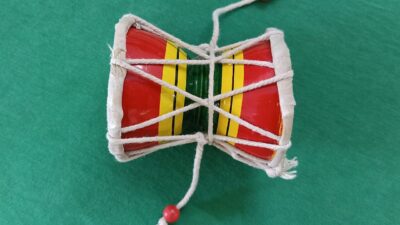
शास्त्र विंग · वाद्य-पट्टिका · Instrument Plate
डमरू
Damaru
शिव का डमरू — नाद ब्रह्म का उद्गम स्थल · Shiva's Damaru — the birthplace of Nada Brahma, the primordial sound
अन्य नामदमरू · डुगडुगी · Damru · Udukkai (South India)
एक पंक्तिडमरू शिव जी का दिव्य वाद्य यंत्र है — एक घड़े के आकार का दोहरे सिर का ड्रम जो स्वयं की ध्वनि स्वयं उत्पन्न करता है।
परिचय
Overviewडमरू केवल एक वाद्य यंत्र नहीं है — यह ब्रह्मांड के निर्माण की कहानी है, संसार की सृष्टि का उपकरण है, और भगवान शिव के हाथ में रहने वाला दिव्य प्रतीक है। पुराणों में कहा जाता है कि जब शिव ने तांडव नृत्य किया, तो डमरू से चौदह सूत्र निकले — और उन सूत्रों से ही संस्कृत भाषा का व्याकरण बना। यानी डमरू की ध्वनि से ही भाषा का जन्म हुआ, और भाषा से ज्ञान, और ज्ञान से सभ्यता। डमरू की आकृति भी गहरी प्रतीकात्मक है। इसका घड़े जैसा आकार दो त्रिभुजों का संयोजन है — एक ऊपर की ओर और एक नीचे की ओर। यह आकाश और पृथ्वी, पुरुष और प्रकृति, सृष्टि और विनाश के मिलन का प्रतीक है। बीच का पतला हिस्सा वह बिंदु है जहाँ दोनों दुनियाएँ मिलती हैं — यही 'नाद बिंदु' है। डमरू की 'डुग-डुग' ध्वनि इसी नाद का प्रतीक है। आधुनिक युग में, जब योग और ध्यान का अभ्यास विश्वभर में फैल रहा है, डमरू ने एक नई भूमिका पाई है — नाद योग का उपकरण। नाद योग की मान्यता है कि ध्वनि (नाद) ही ब्रह्मांड का मूल तत्व है, और डमरू की ध्वनि उस मूल नाद तक पहुँचने का माध्यम है।
अंग्रेज़ी में पढ़ें · Read in English
Damaru is not merely an instrument — it is the story of the universe's creation, the tool of cosmic genesis, and the divine symbol held in Lord Shiva's hand. Puranas say that when Shiva performed Tandava, fourteen sutras emerged from the Damaru — and from those sutras was born the grammar of the Sanskrit language. Meaning that from Damaru's sound was born language, from language knowledge, and from knowledge civilization.
Damaru's shape is also deeply symbolic. Its hourglass form is a combination of two triangles — one pointing up and one pointing down. This represents the meeting of heaven and earth, male and female, creation and destruction. The narrow middle is the point where both worlds meet — this is the 'Nada Bindu'. Damaru's 'dug-dug' sound symbolizes this primordial Nada.
In the modern era, as yoga and meditation spread worldwide, Damaru has found a new role — as a tool of Nada Yoga. Nada Yoga holds that sound (Nada) is the fundamental element of the universe, and Damaru's sound is the means to reach that primordial Nada.
काव्य-पंक्ति · The Verse
काव्य-पंक्ति
डमरू की डुगडुग में समाई सृष्टि की कथा, शिव के हाथ में यह नाद — ही जीवन, यही ब्रह्म, यही सत्य।
— शैव परंपरा से In Damaru's dug-dug lies the story of creation, This Nada in Shiva's hand — is life itself, is Brahma, is truth.
वर्गीकरण
ClassificationNatya Shastra
अवनद्ध — चर्म वाद्य यंत्र (स्व-प्रहारी)
Avanaddha — Membranophone (auto-struck / idiophone hybrid)
नाट्यशास्त्र में डमरू 'अवनद्ध' वर्ग में है, लेकिन यह स्वयं-आघात प्रणाली से बजता है — इसमें लगे गाँठदार डोरे हिलाने पर दोनों पर्दों से टकराते हैं।
In Natya Shastra, Damaru is in 'Avanaddha' class but uses an auto-striking mechanism — knotted cords attached to it strike both membranes when shaken.
Western
Percussion
Hourglass Drum / Auto-struck Idiophone
पश्चिमी वर्गीकरण में डमरू घड़ेदार आकार का दो-सिर वाला ड्रम है जो स्वयं-आघात से बजता है।
In Western classification, Damaru is a double-headed hourglass drum that is auto-struck.
Hornbostel Sachs
211.242.12
Double-headed hourglass membranophone with rotating pellet strikers attached to waist
सिनेमा में
In Cinemaहिंदी सिनेमा में डमरू शिव के दृश्यों का अनिवार्य प्रतीक है। जब भी भगवान शिव, तांडव नृत्य, या किसी शैव धार्मिक दृश्य का चित्रण होता है, डमरू की 'डुग-डुग' ध्वनि पृष्ठभूमि में अवश्य सुनाई देती है। 'रामायण', 'महाभारत', और 'हर हर महादेव' जैसे धार्मिक धारावाहिकों में डमरू की ध्वनि शिव की उपस्थिति का संकेत देती है। फिल्म 'तेरे नाम' के पोस्टर में सलमान खान की छवि के साथ डमरू एक प्रतीकात्मक रूप में था। धार्मिक संगीत एल्बमों में डमरू का उपयोग अत्यंत आम है।
अंग्रेज़ी में पढ़ें · Read in English
In Hindi cinema, Damaru is an indispensable symbol in Shiva scenes. Whenever Shiva, Tandava dance, or any Shaivite religious scene is depicted, Damaru's 'dug-dug' sound is invariably heard in the background. In religious serials like 'Ramayan', 'Mahabharat', and 'Har Har Mahadev', Damaru's sound signals Shiva's presence. In the film 'Tere Naam', Damaru was used symbolically with Salman Khan's image. In devotional music albums, Damaru usage is extremely common.
वर्तमान स्थिति
Modern Statusविवरण
डमरू आज भी एक जीवंत और महत्वपूर्ण वाद्य यंत्र है। धार्मिक उद्देश्यों के लिए, शिव मंदिरों और धार्मिक अनुष्ठानों में डमरू की माँग बनी हुई है। नाद योग और ध्यान परंपराओं में डमरू का उपयोग बढ़ रहा है। पर्यटन में भी डमरू एक लोकप्रिय स्मृति चिह्न है। हालांकि इसका संगीतात्मक उपयोग सीमित है, धार्मिक और आध्यात्मिक क्षेत्र में यह अपरिहार्य है।
अंग्रेज़ी में पढ़ें · Read in English
Damaru remains a vibrant and important instrument today. For religious purposes, demand for Damaru continues at Shiva temples and religious rituals. Damaru usage is increasing in Nada Yoga and meditation traditions. Damaru is also a popular souvenir in tourism. Though its musical use is limited, in religious and spiritual spheres it is indispensable.
Estimated Players
Millions use it for religious purposes; few thousand for music
Revival Efforts
नाद योग और आधुनिक ध्यान परंपराओं ने डमरू को नई पहचान दी है।
अंग्रेज़ी में पढ़ें · Read in English
Nada Yoga and modern meditation traditions have given Damaru new recognition.
बनावट
Physicalविवरण
डमरू एक घंटे के चश्मे (hourglass) जैसा दोहरे सिर वाला वाद्य यंत्र है। यह बीच में पतला और दोनों तरफ चौड़ा होता है, जिससे इसका आकार घंटे के चश्मे जैसा दिखता है। दोनों सिरों पर चमड़े की पर्दे चढ़ी होती हैं। बीच के सँकरे हिस्से पर दो गाँठदार डोरे (नोड-कॉर्ड) बंधे होते हैं। जब डमरू को हिलाया जाता है, तो ये डोरे दोनों पर्दों पर बारी-बारी से टकराते हैं और 'डुग-डुग' की ध्वनि उत्पन्न होती है। डमरू आमतौर पर छोटा — ८-१५ सेंटीमीटर — होता है और हाथ में पकड़कर बजाया जाता है। इसे लकड़ी, धातु, मिट्टी, और आधुनिक काल में प्लास्टिक से बनाया जाता है।
अंग्रेज़ी में पढ़ें · Read in English
Damaru is a double-headed hourglass drum. It is narrow in the middle and wider on both sides, giving it the hourglass shape. Both ends are covered with leather membranes. Two knotted cords are tied at the narrow waist. When shaken, these cords strike both membranes alternately, producing the 'dug-dug' sound. Damaru is typically small — 8-15 cm — and held in the hand while playing. It is made from wood, metal, clay, and in modern times plastic.
Dimensions
8-20 cm
6-12 cm (each head)
100-400 grams
Tuning
पर्दे की कसाई — पर्दों को बांधने की मजबूती से निर्धारित
Membrane tension — determined by tightness of membrane binding
Fixed pitch, not adjustable in traditional form
Single pitch per membrane, limited range
Construction
घंटे के चश्मे जैसा मुख्य खोल जो यंत्र का ढांचा है। यह बीच से पतला और दोनों सिरों पर चौड़ा होता है।
The main hourglass-shaped shell forming the instrument's frame. Narrow in middle and wide at both ends.
दोनों सिरों पर चमड़े की गोल पर्दे जो ध्वनि उत्पन्न करती हैं।
Circular leather membranes on both ends that produce sound.
बीच के पतले हिस्से से बंधे दो गाँठदार डोरे जो हिलाने पर पर्दों को स्वयं मारते हैं।
Two knotted cords attached to the narrow waist that strike the membranes automatically when shaken.
यंत्र की कमर पर बंधी पट्टी जो डोरों को पकड़ती है।
Binding at the instrument's waist that holds the cords.
धार्मिक डमरू पर अक्सर लाल-पीले रंग और शिव के प्रतीक (त्रिशूल आदि) बने होते हैं।
Religious Damaru often has red-yellow coloring and Shiva symbols (trident etc.) painted on.
ध्वनि-चरित्र
SoundTonal Character
डमरू की ध्वनि एक विशेष 'डुग-डुग' या 'धुग-धुग' होती है जो तेज़ और मर्मभेदी होती है। इसकी आवाज़ में एक आध्यात्मिक गुण है — यह ध्वनि मन को वर्तमान क्षण में लाती है और चेतना को जगाती है। छोटे आकार के बावजूद, इसकी ध्वनि तीखी और दूर तक सुनाई देने वाली होती है। शिव के तांडव में डमरू की यही तेज़ आवाज़ ब्रह्मांड के निर्माण और विनाश का प्रतीक है। डमरू की आवाज़ में एक 'नाद' है जिसे ओम के समकक्ष माना जाता है।
अंग्रेज़ी में पढ़ें · Read in English
Damaru's sound is a distinctive 'dug-dug' or 'dhug-dhug' that is sharp and penetrating. Its sound carries a spiritual quality — this sound brings the mind to the present moment and awakens consciousness. Despite small size, its sound is sharp and far-carrying. In Shiva's Tandava, this sharp sound symbolizes the creation and destruction of the universe. Damaru's sound contains a 'Nada' considered equivalent to Om.
Timbre
तीखी, मर्मभेदी, और आध्यात्मिक — ब्रह्मांडीय ध्वनि की प्रतिध्वनि
अंग्रेज़ी में पढ़ें · Read in English
Sharp, penetrating, and spiritual — echo of cosmic sound
Dynamic Range
सीमित लेकिन प्रभावशाली — हिलाने की गति से नियंत्रित
अंग्रेज़ी में पढ़ें · Read in English
Limited but impactful — controlled by shaking speed
Comparison
खड़खड़ाहट और ड्रम के बीच की ध्वनि — तीखी और लयबद्ध
अंग्रेज़ी में पढ़ें · Read in English
Sound between a rattle and a drum — sharp and rhythmic
वादन-तकनीक
Playing Techniqueविवरण
डमरू बजाने की विधि अत्यंत सरल किंतु सूक्ष्म है। यंत्र को एक हाथ (आमतौर पर दाहिना) में पकड़ा जाता है, कलाई की कमर के पास। फिर कलाई को तेज़ी से घुमाया जाता है जिससे डमरू घूमता है और दोनों गाँठदार डोरे बारी-बारी से दोनों पर्दों पर टकराते हैं। घुमाने की गति से आवाज़ की तेज़ी और लय नियंत्रित होती है। शिव के चित्रण में डमरू दाहिने हाथ में है और हलाहल ज़हर वाला कमंडल बाएं में। साधु-सन्यासी और सपेरे डमरू को आगे-पीछे झुलाते हुए भी बजाते हैं। कुछ कलाकार डमरू को बाजू में बांधकर भी बजाते हैं।
अंग्रेज़ी में पढ़ें · Read in English
The method of playing Damaru is extremely simple yet subtle. The instrument is held in one hand (usually right) near the wrist. The wrist is then rotated rapidly, making the Damaru spin so that both knotted cords alternately strike both membranes. Speed of rotation controls sound speed and rhythm. In depictions of Shiva, Damaru is in the right hand and the halahal poison vessel in the left. Sadhus and snake charmers also play it by swinging back and forth. Some performers tie Damaru to their arm while playing.
Posture
एक हाथ में पकड़कर कलाई घुमाते हुए; खड़े होकर या बैठकर
अंग्रेज़ी में पढ़ें · Read in English
Held in one hand while rotating wrist; standing or sitting
Techniques
डमरू बजाने की सबसे बुनियादी और प्रचलित विधि — कलाई को तेज़ी से घुमाकर डोरों को पर्दों से टकराना।
Most basic and common method of playing Damaru — rapidly rotating wrist to make cords strike membranes.
डमरू को आगे-पीछे झुलाकर लय बनाना — सपेरों और साधुओं की विधि।
Creating rhythm by swinging Damaru back and forth — method of snake charmers and sadhus.
एक विशेष ताल में घुमाव और रुकाव का संयोजन — 'डुग-डुग-डुग' जैसी नियमित ताल।
Combination of rotation and pause in a specific rhythm — creating regular 'dug-dug-dug' rhythm.
उन्नत वादन में दोनों हाथों में अलग-अलग डमरू पकड़कर जटिल ताल बनाना।
Advanced playing with separate Damaru in each hand to create complex rhythms.
निर्माण-प्रक्रिया
Making Processविवरण
डमरू बनाने की प्रक्रिया अपेक्षाकृत सरल है। पारंपरिक डमरू लकड़ी से बनाया जाता है। पहले लकड़ी को घड़े के आकार में खराद पर बनाया जाता है — दोनों तरफ चौड़ा और बीच में पतला। फिर दोनों सिरों को बारीक तराशकर समतल किया जाता है। चमड़े की गोल पर्दे काटी जाती हैं और सुखाई जाती हैं। पर्दों को यंत्र पर चमड़े की पट्टियों से कसकर बांधा जाता है। बीच में गाँठदार डोरे लगाए जाते हैं। धार्मिक उद्देश्य के लिए बनाए गए डमरू पर लाल-पीले रंग और शिव के प्रतीक चिह्न बनाए जाते हैं।
अंग्रेज़ी में पढ़ें · Read in English
The process of making Damaru is relatively simple. Traditional Damaru is made from wood. First, wood is lathe-turned into hourglass shape — wide on both sides and narrow in middle. Both ends are then finely shaped and leveled. Circular leather pieces are cut and dried for membranes. Membranes are tightly bound to the instrument with leather straps. Knotted cords are attached at the waist. Damaru made for religious purposes is painted red-yellow with Shiva's symbols.
Materials
पारंपरिक डमरू के खोल के लिए — हल्की और मज़बूत।
For traditional Damaru shell — light and strong.
पर्दे के लिए — धार्मिक डमरू में साँप की खाल पवित्र मानी जाती है।
For membranes — snakeskin is considered sacred in religious Damaru.
गाँठदार डोरों के लिए।
For knotted striking cords.
उच्च गुणवत्ता वाले और शाही डमरू के लिए धातु का खोल।
For high-quality and royal Damaru shells.
Artisan Centers
शिव की नगरी काशी में डमरू बनाने की सबसे समृद्ध परंपरा है। मंदिरों के आसपास के बाज़ारों में उत्कृष्ट डमरू मिलते हैं।
Kashi, Shiva's city, has the richest tradition of Damaru making. Excellent Damarus are found in markets around temples.
हिमालय की तराई में धार्मिक नगरों में भक्तों के लिए डमरू बनाने वाले कारीगर।
Artisans making Damaru for devotees in religious cities at Himalayan foothills.
महाकाल की नगरी में डमरू धार्मिक महत्व का वाद्य है और यहाँ उत्तम डमरू बनते हैं।
In the city of Mahakal, Damaru holds religious importance and excellent Damarus are made here.
Time To Craft
1-3 days
Price Range
₹100-5,000 (साधारण से उत्तम तक)
संगीत-समूह में भूमिका
Role In EnsemblePrimary Role
शैव धार्मिक अनुष्ठान और योगी परंपरा में प्रतीकात्मक और ताल वाद्य
अंग्रेज़ी में पढ़ें · Read in English
Symbolic and rhythmic instrument in Shaivite religious ritual and yogi tradition
Solo Capability
डमरू पूर्णतः एकल वाद्य यंत्र है — स्वयं की ध्वनि स्वयं उत्पन्न करता है।
अंग्रेज़ी में पढ़ें · Read in English
Damaru is a fully solo instrument — generates its own sound autonomously.
Accompaniment For
शिव भजनों और जागरणों में डमरू ताल देने का काम करता है।
Damaru provides rhythm in Shiva bhajans and jagrans.
नाद योग में डमरू की ध्वनि ध्यान की अवस्था में जाने में सहायक होती है।
In Nada Yoga, Damaru's sound helps achieve meditative states.
बीन के साथ कभी-कभी डमरू का उपयोग लय प्रदान करने के लिए।
Sometimes used with Been (pungi) to provide rhythm in snake charmer performances.
लोक संगीत में
In Folk Musicडमरू मुख्यतः एक धार्मिक और आध्यात्मिक वाद्य यंत्र है, लेकिन भारत के कुछ लोक परंपराओं में भी इसका उपयोग होता है। राजस्थान और उत्तर भारत के जोगी और साधु डमरू बजाते हुए भजन गाते हैं। सपेरे डमरू का उपयोग ध्यान आकर्षित करने और लय देने के लिए करते हैं। बंगाल में बाउल कलाकार कभी-कभी डमरू जैसे छोटे ड्रम का उपयोग करते हैं। नेपाल में डमरू बौद्ध मंत्र-संगीत में प्रयोग होता है।
अंग्रेज़ी में पढ़ें · Read in English
Damaru is primarily a religious and spiritual instrument but is also used in some Indian folk traditions. Yogis and sadhus in Rajasthan and North India sing bhajans playing Damaru. Snake charmers use Damaru to attract attention and provide rhythm. In Bengal, Baul artists sometimes use small drums similar to Damaru. In Nepal, Damaru is used in Buddhist mantra-music.
क्षेत्रीय रूप
Regional Variantsतिब्बती बौद्ध परंपरा का डमरू जो मानव खोपड़ी (कपाल) से भी बनाया जाता था — तांत्रिक अनुष्ठानों में प्रयोग।
Tibetan Buddhist Damaru made even from human skull (kapal) — used in Tantric rituals.
दक्षिण भारत का डमरू जो थोड़ा बड़ा होता है और मंदिर अनुष्ठानों में प्रयोग होता है।
South Indian Damaru slightly larger, used in temple rituals.
मिट्टी के घड़े से बना डमरू जो लोक परंपरा में प्रयोग होता है।
Damaru made from clay pot used in folk traditions.
तांबे या पीतल से बना उच्च-गुणवत्ता का डमरू जो मंदिरों और धार्मिक समारोहों के लिए।
High-quality Damaru made from copper or brass for temples and religious ceremonies.
प्रसिद्ध वादक
Famous Playersपुराणों के अनुसार, भगवान शिव ने अपने तांडव नृत्य के दौरान डमरू से ब्रह्मांड का सृजन किया। डमरू की गाँठदार आकृति से उत्पन्न १४ सूत्र ही संस्कृत के व्याकरण का आधार बने — इन्हें 'महेश्वर सूत्र' कहते हैं।
According to Puranas, Lord Shiva created the universe through his Tandava dance with the Damaru. The 14 sounds (sutras) produced by the knotted Damaru became the basis of Sanskrit grammar — called 'Maheshwara Sutras'.
आध्यात्मिक गुरु ओशो ने अपने प्रवचनों में डमरू की ध्वनि और 'नाद योग' पर बल दिया। उनके आश्रम में डमरू एक महत्वपूर्ण ध्यान उपकरण था।
Spiritual guru Osho emphasized Damaru's sound and 'Nada Yoga' in his discourses. Damaru was an important meditation tool in his ashram.
हिंदी साहित्यकार और डमरू के प्रतीकात्मक महत्व के व्याख्याकार, जिन्होंने डमरू के दार्शनिक अर्थों को जन-जन तक पहुँचाया।
Hindi literary figure and interpreter of Damaru's symbolic importance, who conveyed Damaru's philosophical meanings to the masses.
तिब्बती बौद्ध परंपरा के भिक्षु डमरू को तांत्रिक अनुष्ठानों में बजाते हैं। दलाई लामा के अनुष्ठानों में भी डमरू की उपस्थिति होती है।
Buddhist monks of Tibetan tradition play Damaru in Tantric rituals. Damaru is present even in Dalai Lama's ceremonies.
संगीतकार शंकर महादेवन ने डमरू की ध्वनि को आधुनिक हिंदी संगीत में प्रयोग करके इसे नई पहचान दिलाई है।
Musician Shankar Mahadevan has given Damaru new recognition by incorporating its sound into modern Hindi music.
राग-उपयुक्तता
Raag Suitabilityभैरव राग की प्रातःकालीन गंभीरता और शिव भैरव का डमरू-संबंध इसे स्वाभाविक जोड़ी बनाता है।
Bhairav raag's morning gravity and Shiva Bhairav's connection with Damaru makes them a natural pair.
मध्यरात्रि के गहरे राग मालकौंस में डमरू की ध्वनि एक ध्यानात्मक वातावरण बनाती है।
In the deep midnight raag Malkauns, Damaru's sound creates a meditative atmosphere.
संध्याकाल के इस राग की आध्यात्मिकता डमरू के ब्रह्मांडीय स्वभाव से मेल खाती है।
The spirituality of this evening raag matches Damaru's cosmic nature.
शिव को समर्पित इस राग में डमरू की ध्वनि का उपयोग पूर्णतः उपयुक्त है।
In this raag dedicated to Shiva, use of Damaru's sound is completely appropriate.
घराना-संबंध
Gharana Connectionsवाराणसी की शैव परंपरा में डमरू शिव पूजा का अनिवार्य अंग है।
In the Shaivite tradition of Varanasi, Damaru is an essential part of Shiva worship.
सीखने का मार्ग
Learning Pathविवरण
डमरू बजाना सीखना तकनीकी दृष्टि से सरल है, लेकिन इसके आध्यात्मिक पक्ष को समझना गहरी साधना की माँग करता है। कलाई को सही तरह से घुमाना पहले सीखना होता है। फिर विभिन्न लय और गति में डमरू बजाने का अभ्यास करना होता है। नाद योग के अभ्यासियों के लिए, डमरू की ध्वनि के साथ ध्यान करना सीखना एक महत्वपूर्ण चरण है।
अंग्रेज़ी में पढ़ें · Read in English
Learning to play Damaru is technically simple but understanding its spiritual dimension requires deep practice. First, correct wrist rotation must be learned. Then practice playing Damaru in various rhythms and speeds. For Nada Yoga practitioners, learning to meditate with Damaru's sound is an important stage.
Beginner Steps
डमरू को सही तरह से पकड़ना और कलाई को सही गति से घुमाना।
Correctly gripping Damaru and rotating wrist at proper speed.
लगातार और नियमित 'डुग-डुग' ध्वनि उत्पन्न करना।
Producing continuous and regular 'dug-dug' sound.
धीमे से तेज़ और तेज़ से धीमे — गति को नियंत्रित करके संगीत बनाना।
Creating music by controlling speed from slow to fast and fast to slow.
डमरू की ध्वनि के साथ ध्यान की अवस्था प्राप्त करने का अभ्यास।
Practice of achieving meditative state with Damaru's sound.
सामान्य अवधि
Days for basic playing; years for spiritual mastery
संस्थान
ऋषिकेश के योग विद्यालयों में नाद योग के अंतर्गत डमरू का उपयोग सिखाया जाता है।
Yoga schools in Rishikesh teach Damaru use as part of Nada Yoga.
काशी के शिव मंदिरों में पुजारियों से डमरू वादन की परंपरागत शिक्षा।
Traditional Damaru playing instruction from priests at Kashi's Shiva temples.
सांस्कृतिक महत्व
Cultural Significanceडमरू का सांस्कृतिक महत्व अत्यंत गहरा और बहु-आयामी है। शैव परंपरा में, डमरू शिव का प्रमुख प्रतीक है — त्रिशूल, डमरू, और नीलकंठ मिलकर शिव की पहचान बनाते हैं। नाद ब्रह्म की अवधारणा में, डमरू की ध्वनि 'ओम' के समकक्ष मानी जाती है — यही कारण है कि शिव के मंत्रों में डमरू की ध्वनि का आह्वान होता है। भाषाशास्त्र में, 'महेश्वर सूत्र' (शिव के डमरू से निकले सूत्र) संस्कृत व्याकरण का आधार हैं — पाणिनि ने अपनी अष्टाध्यायी में इन्हीं सूत्रों पर आधारित व्याकरण लिखा।
अंग्रेज़ी में पढ़ें · Read in English
Damaru's cultural significance is extremely deep and multidimensional. In Shaivite tradition, Damaru is Shiva's primary symbol — trident, Damaru, and Neelkantha together form Shiva's identity. In the concept of Nada Brahma, Damaru's sound is considered equivalent to 'Om' — this is why invocation of Damaru's sound occurs in Shiva's mantras. In linguistics, the 'Maheshwara Sutras' (sutras from Shiva's Damaru) are the foundation of Sanskrit grammar — Panini based his Ashtadhyayi grammar on these very sutras.
सुनने का मार्गदर्शन
The Listening Guideडमरू की ध्वनि सुनने के लिए वाराणसी के महाकाल या काशी विश्वनाथ मंदिर में जाएं और प्रातःकाल की आरती में सम्मिलित हों। डमरू की 'डुग-डुग' ध्वनि पर ध्यान केंद्रित करें — पहले तेज़-धीमी, फिर नियमित। नाद योग की दृष्टि से सुनें — इस ध्वनि को सुनते हुए ध्यान करें कि यह आवाज़ कहाँ से आती है और कहाँ जाती है। इस ध्वनि में ब्रह्मांड की गूँज है।
अंग्रेज़ी में पढ़ें · Read in English
To hear Damaru's sound, visit Mahakal or Kashi Vishwanath temple in Varanasi and join the morning aarti. Focus on the 'dug-dug' sound of Damaru — first varied, then regular. Listen from a Nada Yoga perspective — while listening, meditate on where this sound comes from and where it goes. In this sound is the resonance of the universe.
श्रवण-कक्ष · The Listening Room
देखें-सुनें
डमरू — शिव का वाद्य यंत्र और नाद ब्रह्म · नाद योग शिक्षक · 8:40
शिव तांडव स्तोत्रम् — डमरू के साथ · संस्कृत गायक · 6:15
वर्गीकरण
Classification- Code
- 211.242.12
- Description
- Double-headed hourglass membranophone with rotating pellet strikers attached to waist
- Category
- अवनद्ध — चर्म वाद्य यंत्र (स्व-प्रहारी)
- Category En
- Avanaddha — Membranophone (auto-struck / idiophone hybrid)
- Description
- नाट्यशास्त्र में डमरू 'अवनद्ध' वर्ग में है, लेकिन यह स्वयं-आघात प्रणाली से बजता है — इसमें लगे गाँठदार डोरे हिलाने पर दोनों पर्दों से टकराते हैं।
- Description En
- In Natya Shastra, Damaru is in 'Avanaddha' class but uses an auto-striking mechanism — knotted cords attached to it strike both membranes when shaken.
Hornbostel Sachs
Natya Shastra
अन्य विवरण
More Details- खोल (घड़ेदार शरीर) — Hourglass Shell — घंटे के चश्मे जैसा मुख्य खोल जो यंत्र का ढांचा है। यह बीच से पतला और दोनों सिरों पर चौड़ा होता है। · Hourglass Shell / Body
- चमड़े की पर्दे (दोनों सिरे) — Membranes — दोनों सिरों पर चमड़े की गोल पर्दे जो ध्वनि उत्पन्न करती हैं। · Leather Membranes (both heads)
- बंधन डोरे — Knotted Cords — बीच के पतले हिस्से से बंधे दो गाँठदार डोरे जो हिलाने पर पर्दों को स्वयं मारते हैं। · Knotted Striking Cords
- पट्टी (कमर बंध) — Waist Binding — यंत्र की कमर पर बंधी पट्टी जो डोरों को पकड़ती है। · Waist Binding
- रंगाई और सज्जा — Decoration — धार्मिक डमरू पर अक्सर लाल-पीले रंग और शिव के प्रतीक (त्रिशूल आदि) बने होते हैं। · Coloring and Decoration
- System
- पर्दे की कसाई — पर्दों को बांधने की मजबूती से निर्धारित
- System En
- Membrane tension — determined by tightness of membrane binding
- Standard Tuning
- Fixed pitch, not adjustable in traditional form
- Range
- Single pitch per membrane, limited range
Construction
Tuning
Timbre
तीखी, मर्मभेदी, और आध्यात्मिक — ब्रह्मांडीय ध्वनि की प्रतिध्वनि
रोचक तथ्य
Margin Notesपाणिनि के व्याकरण ग्रंथ 'अष्टाध्यायी' की शुरुआत में १४ 'महेश्वर सूत्र' हैं। कहा जाता है कि शिव ने अपने तांडव के अंत में डमरू को १४ बार बजाया और उन १४ ध्वनियों से ये सूत्र निकले। इन सूत्रों में संस्कृत के सभी स्वर और व्यंजन शामिल हैं।
Panini's grammar text 'Ashtadhyayi' begins with 14 'Maheshwara Sutras'. It is said that Shiva played the Damaru 14 times at the end of his Tandava and from those 14 sounds emerged these sutras. These sutras contain all vowels and consonants of Sanskrit.
तिब्बती बौद्ध परंपरा में डमरू मानव खोपड़ी से भी बनाया जाता था। इसे 'कपाल डमरू' कहते हैं और यह तांत्रिक अनुष्ठानों में प्रयोग होता है। इस प्रकार का डमरू सांसारिक मृत्यु और आत्मा की शाश्वतता का प्रतीक है।
In Tibetan Buddhist tradition, Damaru was also made from human skulls. Called 'Kapal Damaru', it is used in Tantric rituals. This type of Damaru symbolizes worldly death and the eternity of the soul.
डमरू की घड़े जैसी आकृति दो त्रिभुजों से बनती है — एक ऊपर की ओर (सृजन/पुरुष/शिव) और एक नीचे की ओर (विनाश/प्रकृति/शक्ति)। यह शिव-शक्ति के अभेद्य मिलन का प्रतीक है।
Damaru's hourglass shape is formed by two triangles — one pointing up (creation/male/Shiva) and one pointing down (destruction/nature/Shakti). This symbolizes the inseparable union of Shiva-Shakti.
नाद योग में माना जाता है कि जब डमरू को सही ध्यान के साथ बजाया जाता है, तो उसकी ध्वनि की आवृत्ति (frequency) मस्तिष्क की अल्फा तरंगों (alpha waves) से मेल खाती है, जो गहरी विश्राम और ध्यान की अवस्था उत्पन्न करती है।
In Nada Yoga, it is believed that when Damaru is played with proper meditation, its sound frequency aligns with the brain's alpha waves, producing states of deep relaxation and meditation.
डमरू का उल्लेख शिव पुराण, लिंग पुराण, और भागवत पुराण में मिलता है। इन सभी में शिव के डमरू को 'नाद का स्रोत' (Source of Nada) के रूप में वर्णित किया गया है।
Damaru is mentioned in Shiva Purana, Linga Purana, and Bhagavat Purana. All of them describe Shiva's Damaru as the 'Source of Nada' (primordial sound).
आधुनिक तंत्रिका विज्ञान (Neuroscience) के अनुसार, डमरू की ताल-प्रवण ध्वनि (rhythmic sound) मस्तिष्क में एंडोर्फिन (endorphin) का स्राव बढ़ाती है और चिंता कम करती है — वैज्ञानिक भाषा में डमरू की 'थेरपी' सिद्ध हो रही है।
According to modern Neuroscience, Damaru's rhythmic sound increases endorphin secretion in the brain and reduces anxiety — Damaru's 'therapy' is being scientifically proven.
क्या आप जानते हैं?
Did You Knowडमरू की 'डुग-डुग' ध्वनि ब्रह्मांडीय ध्वनि 'ओम' का एक लघु रूप मानी जाती है। नाद ब्रह्म की परंपरा में, जो ध्वनि कुछ शुरू होती है और अनंत में विलीन हो जाती है — वही डमरू करती है।
Damaru's 'dug-dug' sound is considered a miniature form of the cosmic sound 'Om'. In Nada Brahma tradition, that sound which starts from something and dissolves into the infinite — that is what Damaru does.
शिव के नटराज रूप में डमरू हमेशा ऊपरी दाहिने हाथ में होता है, जो 'अभय' (जो सृजन करता है) का प्रतीक है, जबकि ऊपरी बाएं हाथ में अग्नि होती है जो विनाश का प्रतीक है। यह सृजन और विनाश का संतुलन है।
In Shiva's Nataraja form, Damaru is always in the upper right hand, symbolizing 'abhaya' (creation), while the upper left hand holds fire symbolizing destruction. This is the balance of creation and destruction.
भारत में एक विशेष प्रकार का साधु होता है — 'डमरू वाले बाबा' — जो गाँव-गाँव घूमकर डमरू बजाते हुए शिव का नाम लेते हैं। इन्हें गाँव वाले प्रसाद और भिक्षा देते हैं।
In India there is a special type of sadhu — 'Damaru wale Baba' — who travels village to village playing Damaru and chanting Shiva's name. Villagers offer them prasad and alms.
सूक्तियाँ
Words of the Masters“जब शिव ने डमरू बजाया, तो उसकी ध्वनि से ही ब्रह्मांड का जन्म हुआ — यही है नाद का रहस्य।”
— — शिव पुराण“When Shiva played the Damaru, from its sound was born the universe — this is the mystery of Nada.”
“डमरू की आवाज़ न सिर्फ कानों तक पहुँचती है — यह आत्मा तक पहुँचती है।”
“Damaru's sound does not just reach the ears — it reaches the soul.”
— — ओशो
“महेश्वर सूत्र: अइउण्, ऋलृक्, एओङ्, ऐऔच् — ये चौदह सूत्र डमरू की चौदह ध्वनियों से जन्मे।”
— — पाणिनि की अष्टाध्यायी परंपरा“Maheshwara Sutras: Aiun, Rrlk, Eong, Aiouch — these fourteen sutras were born from Damaru's fourteen sounds.”
सवाल-जवाब
Questions & Answersडमरू से संस्कृत व्याकरण का क्या संबंध है?
पुराणों के अनुसार, भगवान शिव ने तांडव नृत्य के अंत में डमरू को १४ बार बजाया। इन १४ ध्वनियों को 'महेश्वर सूत्र' कहते हैं। पाणिनि (५०० BCE) ने इन्हीं सूत्रों को अपनी महान व्याकरण ग्रंथ 'अष्टाध्यायी' का आधार बनाया। इन सूत्रों में संस्कृत के सभी मूल ध्वनि-तत्व (वर्ण) शामिल हैं। इसलिए डमरू को संस्कृत भाषा का जन्मदाता भी माना जाता है।
डमरू और बीन (सर्प वाद्य) में क्या अंतर है?
डमरू और बीन दोनों सर्पचारकों से जुड़े वाद्य यंत्र माने जाते हैं, लेकिन दोनों बिल्कुल अलग हैं। डमरू एक ताल वाद्य (membranophone) है जो हाथ हिलाने से बजता है। बीन एक स्वर वाद्य (aerophone/wind instrument) है जो फूंककर बजाया जाता है। डमरू का मुख्य उपयोग धार्मिक है, बीन का सर्प-नियंत्रण में। दोनों का आकार और बजाने का तरीका पूरी तरह अलग है।
क्या डमरू बजाना सीखा जा सकता है?
हाँ, डमरू बजाना तकनीकी रूप से अत्यंत सरल है। मूल विधि केवल कलाई को सही तरह से घुमाना है, जो घंटों में सीखी जा सकती है। डमरू बाज़ार में आसानी से मिलता है। हालांकि, अगर आप डमरू को आध्यात्मिक उद्देश्य से सीखना चाहते हैं — नाद योग या शैव परंपरा में — तो एक गुरु का मार्गदर्शन सहायक होगा।
इतिहास
The Historyउत्पत्ति — वैदिक काल — ३००० BCE से पहले Origin
डमरू की उत्पत्ति अत्यंत प्राचीन है। पुराणों के अनुसार, शिव ने सृष्टि के आरंभ में तांडव नृत्य किया और डमरू से नाद (ब्रह्मांडीय ध्वनि) उत्पन्न की। वेदों में 'दुंदुभी' का उल्लेख है जो डमरू का प्राचीन रूप हो सकता है। सिंधु घाटी सभ्यता की मूर्तियों में भी डमरू जैसे यंत्रों के चिह्न मिलते हैं। डमरू की आकृति और उपयोग हज़ारों वर्षों में लगभग अपरिवर्तित रही है — यह शायद भारत का सबसे प्राचीन लगभग-अपरिवर्तित वाद्य यंत्र है।
अंग्रेज़ी में पढ़ें · Read in English
Damaru's origins are extremely ancient. According to Puranas, Shiva performed Tandava at the beginning of creation and produced Nada (cosmic sound) from Damaru. The Vedas mention 'dundubhi' which could be an ancient form of Damaru. Signs of Damaru-like instruments are also found in Indus Valley Civilization sculptures. Damaru's shape and use has remained almost unchanged for thousands of years — it is perhaps India's most ancient nearly-unchanged musical instrument.
विकास-यात्रा · Evolution
- वैदिक काल (३५०० — ५०० BCE) पुराणिक डमरू का शिव-परंपरा में उद्भव। महेश्वर सूत्रों की उत्पत्ति। धार्मिक अनुष्ठानों में उपयोग की शुरुआत।
- बौद्ध-जैन काल (५०० BCE — ५०० CE) बौद्ध तांत्रिक परंपरा में डमरू का प्रवेश। तिब्बती बौद्ध धर्म में विशेष महत्व प्राप्त किया।
- मध्यकाल (५०० — १७०० CE) शैव मंदिरों में डमरू का व्यापक उपयोग। नाटशास्त्र और संगीत-शास्त्र में उल्लेख। जोगी परंपरा में प्रयोग।
- आधुनिक काल (१७०० — वर्तमान) धार्मिक प्रतीक के रूप में स्थापित। नाद योग और ध्यान में नई भूमिका। पर्यटन में लोकप्रिय स्मृति चिह्न।
प्रमुख पड़ाव · Key Milestones
- 3000 पौराणिक परंपरा के अनुसार शिव का तांडव और डमरू से महेश्वर सूत्रों का उद्भव।
- 500 पाणिनि की अष्टाध्यायी में महेश्वर सूत्रों का व्याकरण आधार के रूप में प्रयोग।
- 800 शंकराचार्य के दार्शनिक कार्यों में शिव के डमरू का दार्शनिक विश्लेषण।
- 1100 तिब्बती बौद्ध धर्म में डमरू का तांत्रिक अनुष्ठानों में अनिवार्य उपकरण बनना।
- 1850 पश्चिमी पर्यटकों और नृवंशविज्ञानियों द्वारा डमरू का प्रलेखन — 'India's ancient instrument' के रूप में।
- 1970 योग आंदोलन के साथ डमरू का पश्चिमी ध्यान-परंपरा में प्रवेश।
नमूना-पट्टी
The Specimen Table| नाम | डमरू · Damaru |
|---|---|
| अन्य नाम | दमरू · डुगडुगी · Damru · Udukkai (South India) · Hourglass Drum · Shiva's Drum |
| काल | वैदिक काल — ३००० BCE से पहले |
| प्रकार | वाद्य · Instruments |
साझा कीजिए · Share this Plate