शास्त्र विंग · वाद्य-पट्टिका · Instrument Plate
डफ
Daf
सूफ़ी साज़ — दरगाह की आत्मा · The Sufi instrument — soul of the dargah
अन्य नामडफली · दफ़ · दफ · डफ़ली
एक पंक्तिडफ एक बड़ा गोलाकार फ्रेम ड्रम है जिसके किनारे पर धातु के जिंगल लगे होते हैं और जो सूफ़ी क़व्वाली, दरगाह संगीत, और होली उत्सव में प्रमुखता से बजाया जाता है।
परिचय
Overviewडफ — यह शब्द सुनते ही दरगाह का वातावरण, क़व्वाली की लहरें, और होली के रंगों की याद आती है। यह वाद्य भारत-पाकिस्तान-ईरान की साझा सांस्कृतिक विरासत का प्रतीक है — एक ऐसा वाद्य जो सीमाओं को नहीं जानता और हर दिल तक पहुँचता है। डफ की उत्पत्ति फ़ारस (आधुनिक ईरान) में हुई। जब इस्लामी सूफ़ी परंपरा भारत में आई — दिल्ली, अजमेर, और लखनऊ के रास्ते — तो अपने साथ डफ भी लाई। ख़्वाजा मुईनुद्दीन चिश्ती (1141-1230) की दरगाह अजमेर में डफ के साथ समा की परंपरा सदियों पुरानी है। यहाँ आज भी हर गुरुवार की रात क़व्वाल-पार्टी डफ की थपकन के साथ ऐसी क़व्वाली गाती है जो श्रोताओं को 'वज्द' की अवस्था में ले जाती है — एक ऐसी आनंदावस्था जहाँ आत्मा परमात्मा से मिलती है। भारत में डफ का दोहरा व्यक्तित्व है। एक तरफ यह आध्यात्मिकता का, शांति का, और भक्ति का वाद्य है — जब दरगाह में धीमे-धीमे बजाई जाती है। दूसरी तरफ यह होली का, उत्साह का, और जश्न का वाद्य है — जब होली में पागलों की तरह जोर-जोर से बजाई जाती है। यह दोहरा व्यक्तित्व भारत की विविधता का प्रतिबिंब है। नुसरत फ़तह अली ख़ाँ ने डफ को विश्वमंच पर प्रतिष्ठित किया। जब उनकी क़व्वाली 'दम मस्त क़लंदर' पीटर गैब्रियल की वर्ल्ड म्यूज़िक सूची में आई, तो पूरी दुनिया ने डफ की झनझनाहट पहली बार सुनी। उस एक वाद्य में पाँच सौ साल की सूफ़ी परंपरा बोलती थी। आज वही परंपरा 'कोक स्टूडियो' की क़व्वालियों में, रहमान की फिल्मों में, और दुनियाभर के सूफ़ी संगीत उत्सवों में जीवित है।
अंग्रेज़ी में पढ़ें · Read in English
Daf — hearing this word brings memories of a dargah's atmosphere, waves of qawwali, and Holi's colors. This instrument symbolizes the shared cultural heritage of India-Pakistan-Iran — an instrument that knows no borders and reaches every heart.
Daf originated in Persia (modern Iran). When Islamic Sufi traditions came to India — through Delhi, Ajmer, and Lucknow — they brought Daf along. The tradition of Sama with Daf at Khwaja Moinuddin Chishti's (1141-1230) dargah in Ajmer is centuries old. Even today, every Thursday night, qawwal parties sing qawwali with Daf's strokes that take listeners to the state of 'Wajd' — a state of bliss where soul meets the divine.
In India, Daf has a dual personality. On one hand, it is an instrument of spirituality, peace, and devotion — played softly in dargahs. On the other hand, it is an instrument of Holi, enthusiasm, and celebration — played loudly in Holi revelry. This dual personality reflects India's diversity.
Nusrat Fateh Ali Khan established Daf on the world stage. When his qawwali 'Dam Mast Qalandar' entered Peter Gabriel's world music list, the whole world heard Daf's jingle for the first time. In that one instrument, five hundred years of Sufi tradition spoke. Today that same tradition lives in 'Coke Studio' qawwalis, in Rahman's films, and in Sufi music festivals worldwide.
काव्य-पंक्ति · The Verse
काव्य-पंक्ति
डफ की थाप पे नाचे दिल, झूमे रूह मेरी। सूफ़ी फ़क़ीर की राह पे चले, यह डफली न्यारी।।
— सूफ़ी परंपरा To Daf's beat my heart dances, my soul sways. On the Sufi fakir's path walks, this wondrous Daf.
वर्गीकरण
ClassificationNatya Shastra
अवनद्ध — चमड़े से ढका ड्रम
Avanaddha — membrane-covered drum
नाट्यशास्त्र में फ्रेम ड्रम को 'अवनद्ध' वर्ग में रखा गया है — वे वाद्य जिनमें एक ढाँचे पर चमड़ा खींचा जाता है। हालाँकि नाट्यशास्त्र में डफ का सीधा उल्लेख नहीं है, इसके भारतीय समकक्ष 'डफली' और 'ढपली' का उल्लेख मिलता है।
In Natya Shastra, frame drums belong to 'Avanaddha' class — instruments where leather is stretched over a frame. Though Daf isn't directly mentioned in Natya Shastra, its Indian equivalents 'Daphli' and 'Dhapli' are referenced.
Western
Percussion
Membranophone — Frame Drum
पश्चिमी वर्गीकरण में डफ एक 'फ्रेम ड्रम' है — एक गोल लकड़ी के ढाँचे पर चमड़ा खींचा हुआ। इसमें अतिरिक्त जिंगल लगे होने से यह टैम्बोरीन (tambourine) के निकट है लेकिन आकार में बड़ा।
In Western classification, Daf is a 'frame drum' — leather stretched over a circular wooden frame. With added jingles, it resembles a tambourine but is larger.
Hornbostel Sachs
211.311
Frame drum with jingles — circular wooden frame with single membrane and metallic jingle rings
सिनेमा में
In Cinemaहिंदी सिनेमा में डफ की ध्वनि सूफ़ी संगीत, दरगाह, और होली के दृश्यों की पहचान है। जब भी क़व्वाली दृश्य होता है — चाहे 'पाक़ीज़ा' हो, 'उमराव जान' हो, या 'रॉकस्टार' — डफ की झनझनाहट पृष्ठभूमि में ज़रूर सुनाई देती है। होली के गीतों में डफ की तेज़ और उत्साहवर्धक ध्वनि अनिवार्य है। AR रहमान की फिल्म 'रॉकस्टार' (2011) में सूफ़ी संगीत के साथ डफ का उपयोग अत्यंत प्रभावशाली था। 'ज़िंदगी ना मिलेगी दोबारा' (2011) के होली दृश्य में डफ की ध्वनि उत्सव को जीवंत बनाती है।
अंग्रेज़ी में पढ़ें · Read in English
In Hindi cinema, Daf sound is the identity of Sufi music, dargah, and Holi scenes. Whenever a qawwali scene appears — whether 'Pakeezah,' 'Umrao Jaan,' or 'Rockstar' — Daf's jingle is certainly heard in the background. In Holi songs, Daf's fast and energetic sound is indispensable. In AR Rahman's film 'Rockstar' (2011), Daf's use with Sufi music was extremely effective. In the Holi scene of 'Zindagi Na Milegi Dobara' (2011), Daf's sound brings the celebration alive.
वर्तमान स्थिति
Modern Statusविवरण
डफ आज भी अत्यंत जीवंत और प्रासंगिक वाद्य है। सूफ़ी संगीत की बढ़ती वैश्विक लोकप्रियता के साथ डफ की माँग बढ़ी है। कोक स्टूडियो (पाकिस्तान और भारत) के क़व्वाली प्रस्तुतियों में डफ नियमित रूप से दिखाई देती है। युवा पीढ़ी में सूफ़ी संगीत के प्रति रुचि के साथ डफ सीखने की लालसा भी बढ़ी है। ईरान में डफ एक राष्ट्रीय वाद्य के रूप में प्रतिष्ठित है।
अंग्रेज़ी में पढ़ें · Read in English
Daf remains a very vibrant and relevant instrument today. With growing global popularity of Sufi music, Daf's demand has increased. In Coke Studio (Pakistan and India) qawwali performances, Daf appears regularly. Interest in learning Daf has grown alongside youth interest in Sufi music. In Iran, Daf is revered as a national instrument.
Estimated Players
Hundreds of thousands globally
Revival Efforts
सूफ़ी संगीत की वैश्विक लोकप्रियता के साथ स्वाभाविक पुनरुद्धार
अंग्रेज़ी में पढ़ें · Read in English
Natural revival with global popularity of Sufi music
बनावट
Physicalविवरण
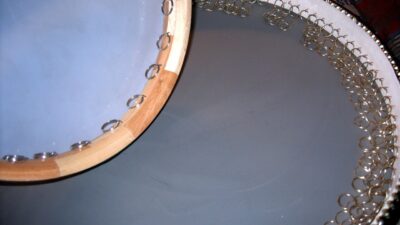
डफ एक बड़ा गोलाकार ड्रम है जिसका व्यास आमतौर पर 30 से 60 सेंटीमीटर होता है। ढाँचा मोटी और मज़बूत लकड़ी — सागौन, शीशम, या अखरोट — का बना होता है जो लगभग 5-8 सेंटीमीटर चौड़ा और 2-3 सेंटीमीटर मोटा होता है। इस ढाँचे पर बकरी, भेड़, या मछली की खाल (fish skin) का चमड़ा खींचकर लगाया जाता है। चमड़े को खींचने और बाँधने के लिए रस्सी या धातु के हुक का उपयोग होता है। ढाँचे के भीतरी किनारे पर धातु के जिंगल-छल्ले (rings) या छोटी झाँझ (cymbals) की कतार लगी होती है जो बजाने पर झनझनाहट देती है। डफ को एक हाथ से पकड़कर दूसरे हाथ की उँगलियों और हथेली से बजाया जाता है। उच्च गुणवत्ता का डफ ईरानी शैली में बनाया जाता है जहाँ चमड़ा बहुत पतला होता है।
अंग्रेज़ी में पढ़ें · Read in English
Daf is a large circular drum typically 30-60 cm in diameter. The frame is made of thick, strong wood — teak, sheesham, or walnut — approximately 5-8 cm wide and 2-3 cm thick. Goat, sheep, or fish skin leather is stretched over this frame. Rope or metal hooks are used to tighten and fasten the leather. Metal jingle rings or small cymbals line the inner edge of the frame, producing ringing sounds when played. Daf is held in one hand and played with fingers and palm of the other hand. High-quality Daf is made in Iranian style where the leather is very thin.
Dimensions
30-60 cm (diameter)
5-8 cm (frame width)
500-1500 grams
Strings Or Keys
डफ में कोई तार या कुंजी नहीं होती। यह चमड़े की झिल्ली और धातु जिंगल से युक्त ताल वाद्य है।
Daf has no strings or keys. It is a percussion instrument with leather membrane and metal jingles.
N/A
N/A
Tuning
चमड़े की तनाव-पट्टी से पिच थोड़ी समायोजित की जा सकती है — तापमान के साथ चमड़ा ढीला या सख्त होता है
Pitch slightly adjustable by leather tension — leather loosens or tightens with temperature
Variable — roughly tuned to playing context
Variable pitch range depending on leather tension
Construction
मोटी और मज़बूत लकड़ी का गोल ढाँचा जो डफ की संरचना का आधार है।
The thick, strong circular wooden frame that is the structural base of Daf.
ढाँचे पर खींचा हुआ पतला चमड़ा जो थपथपाने पर ध्वनि उत्पन्न करता है।
Thin leather stretched over the frame that produces sound when struck.
ढाँचे के भीतरी किनारे पर लगी धातु के छल्लों की कतार जो झनझनाहट देती है।
A row of metallic rings on the inner edge of the frame producing jingle sound.
चमड़े को ढाँचे पर कसकर खींचने और बाँधने के लिए रस्सी या धातु के हुक।
Rope or metal hooks to tightly stretch and fasten leather to the frame.
कुछ डफों में ढाँचे में एक छेद या उभार होता है जिसमें अंगूठा फँसाकर पकड़ा जाता है।
Some Dafs have a hole or protrusion in the frame where the thumb is inserted for grip.
ध्वनि-चरित्र
SoundTonal Character
डफ की ध्वनि तीन स्तरों की है — चमड़े की गहरी 'धुम-धुम' ध्वनि, जिंगलों की 'झन-झन', और ढाँचे की हल्की गुंजार। तीनों मिलकर एक समृद्ध और जादुई ध्वनि बनाती हैं जो सूफ़ी संगीत का हस्ताक्षर है। बड़े डफ की ध्वनि गहरी, गर्म, और गूँजदार होती है। जब एक साथ कई डफ बजाए जाते हैं — जैसे क़व्वाली में — तो एक सामूहिक ताल-लहर उत्पन्न होती है जो श्रोताओं को झुमाने पर विवश कर देती है। डफ की ध्वनि में 'जज़्बा' है — एक ऐसा उत्साह जो इसे अन्य ड्रमों से अलग करता है।
अंग्रेज़ी में पढ़ें · Read in English
Daf's sound has three layers — the leather's deep 'dhum-dhum,' jingles' 'jhan-jhan,' and frame's subtle resonance. Together they create a rich and magical sound that is Sufi music's signature. Large Daf has a deep, warm, resonant sound. When multiple Dafs play together — as in qawwali — a collective rhythmic wave is created that compels listeners to sway. Daf's sound carries 'Jazba' — an enthusiasm that distinguishes it from other drums.
Timbre
गहरी, गर्म, जिंगल-युक्त — सूफ़ी जज़्बे की आवाज़
अंग्रेज़ी में पढ़ें · Read in English
Deep, warm, jingle-laden — sound of Sufi enthusiasm
Dynamic Range
कम से उच्च — हल्की थपकन से लेकर जोरदार 'धुम' तक पूरे हॉल में गूँजती है
अंग्रेज़ी में पढ़ें · Read in English
Low to high — from gentle tapping to powerful 'dhum' resonating through entire halls
Comparison
बड़े टैम्बोरीन और ढोलक के बीच की ध्वनि — पर इससे अधिक समृद्ध और गहरी
अंग्रेज़ी में पढ़ें · Read in English
Between large tambourine and dholak — but richer and deeper than either
वादन-तकनीक
Playing Techniqueविवरण
डफ बजाना एक विशेष कौशल है। वादक डफ को बाएँ हाथ में पकड़ता है — अँगूठे को ढाँचे के अंदर या बाहरी किनारे पर रखते हुए और अन्य उँगलियाँ चमड़े को हल्के से छूती हैं। दाहिने हाथ से थपकन दी जाती है। विभिन्न स्थानों पर अलग-अलग तरीके से थपकन देकर विभिन्न ध्वनियाँ निकाली जाती हैं — केंद्र में 'धुम' और किनारे पर 'तक'। ईरानी डफ वादन में अँगुलियों और हथेली के अत्यंत जटिल संयोजन से बजाया जाता है। भारतीय क़व्वाली में डफ की भूमिका अधिक जोरदार और उत्साहपूर्ण है। होली में डफ को बहुत तेज़ और लयदार ढंग से बजाया जाता है।
अंग्रेज़ी में पढ़ें · Read in English
Playing Daf is a specialized skill. The player holds Daf in the left hand — thumb placed on the inside or outer edge of the frame while other fingers lightly touch the leather. Right hand provides strokes. Different sounds are produced by striking different positions differently — 'dhum' at center and 'tak' at edge. Iranian Daf playing uses extremely complex combinations of fingers and palm. In Indian qawwali, Daf role is more forceful and enthusiastic. During Holi, Daf is played very fast and rhythmically.
Posture
बैठकर या खड़े होकर — डफ एक हाथ में पकड़कर छाती के सामने, दूसरे हाथ से बजाते हुए
अंग्रेज़ी में पढ़ें · Read in English
Seated or standing — Daf held in one hand in front of chest, other hand playing
Techniques
हथेली से चमड़े के केंद्र में जोरदार थपकन देना। यह सबसे गहरी और गूँजदार ध्वनि देती है।
A strong palm strike at the center of the leather. Produces the deepest and most resonant sound.
उँगलियों से चमड़े के किनारे पर हल्की थपकन। एक तीखी और स्पष्ट 'तक' ध्वनि आती है।
Light finger tap at the edge of the leather. Produces a sharp, clear 'tak' sound.
डफ को हिलाकर जिंगलों की झनझनाहट उत्पन्न करना। यह ध्वनि ताल को सजाती है।
Shaking the Daf to produce jingle ring sound. This sound decorates the rhythm.
तेज़ी से बारी-बारी से दोनों हाथों से थपकन देकर एक लगातार गड़गड़ाहट उत्पन्न करना।
Rapidly alternating both hand strokes to produce a continuous rumble.
ईरानी शैली में चारों उँगलियों और हथेली के जटिल संयोजन से बजाना — इसमें 'बास' (bass), 'तोन' (tone), और 'स्नैप' (snap) तीन मुख्य ध्वनियाँ हैं।
In Iranian style, playing with complex combination of all four fingers and palm — main three sounds are 'bass,' 'tone,' and 'snap.'
क़व्वाली की विशेष लय में डफ बजाना जो धीरे-धीरे तेज़ होती है और उत्कर्ष पर जोरदार ध्वनि देती है।
Playing Daf in qawwali's special rhythm that gradually accelerates and gives powerful sound at climax.
निर्माण-प्रक्रिया
Making Processविवरण
डफ बनाना एक पारंपरिक शिल्प है जिसमें लकड़ीकारी और चर्मशिल्प दोनों का समन्वय होता है। सबसे पहले सागौन या शीशम की मोटी लकड़ी से एक गोल ढाँचा बनाया जाता है। इसके लिए पट्टियाँ भाप में मुड़ाकर जोड़ी जाती हैं। ढाँचे के आंतरिक किनारे पर धातु जिंगल-छल्लों के लिए छेद बनाए जाते हैं और छल्ले लगाए जाते हैं। फिर चमड़े को पानी में भिगोकर मुलायम किया जाता है और ढाँचे पर कसकर खींचा जाता है। चमड़े को ढाँचे से रस्सी या धातु हुक से बाँधा जाता है। जैसे-जैसे चमड़ा सूखता है, वह और कस जाता है। ईरानी डफ में मछली की खाल का उपयोग होता है जो बहुत पतली होती है।
अंग्रेज़ी में पढ़ें · Read in English
Making Daf is a traditional craft combining woodwork and leathercraft. First, a circular frame is made from thick teak or sheesham wood. Strips are steam-bent and joined. Holes are made on the inner edge for jingle rings and rings are attached. Leather is soaked in water to soften, then stretched tightly over the frame. Leather is fastened to frame with rope or metal hooks. As leather dries, it tightens further. Iranian Daf uses fish skin which is very thin.
Materials
मज़बूत और हल्की लकड़ी जो ढाँचे के लिए उपयुक्त है।
Strong and light wood suitable for the frame.
झिल्ली के लिए पतली और टिकाऊ चमड़ा — भारतीय डफ में मुख्यतः उपयोग।
Thin and durable leather for membrane — primarily used in Indian Daf.
ईरानी डफ में उपयोग — बहुत पतली, श्रेष्ठ ध्वनि गुणवत्ता।
Used in Iranian Daf — very thin, superior sound quality.
ढाँचे के भीतरी किनारे पर लगाए जाने वाले छल्ले।
Rings attached to the inner edge of the frame.
Artisan Centers
पुरानी दिल्ली में डफ और अन्य सूफ़ी वाद्यों के कारीगर मिलते हैं।
Artisans of Daf and other Sufi instruments are found in Old Delhi.
अजमेर शरीफ़ दरगाह के पास डफ निर्माण की पारंपरिक दुकानें हैं।
Traditional Daf-making shops near the Ajmer Sharif Dargah.
शिया और सूफ़ी संगीत की समृद्ध परंपरा के साथ डफ निर्माण।
Daf making with rich Shia and Sufi music tradition.
Time To Craft
3-7 days per instrument
Price Range
₹800–8,000
संगीत-समूह में भूमिका
Role In EnsemblePrimary Role
क़व्वाली और सूफ़ी संगीत में मुख्य ताल वाद्य; होली और लोक उत्सवों में उत्साह वाद्य
अंग्रेज़ी में पढ़ें · Read in English
Primary rhythmic instrument in qawwali and Sufi music; celebratory instrument in Holi and folk festivals
Solo Capability
डफ एकल प्रदर्शन में बहुत प्रभावशाली हो सकती है। ईरानी डफ वादन में एकल प्रदर्शन एक उच्च कला है।
अंग्रेज़ी में पढ़ें · Read in English
Daf can be very impressive in solo performance. Solo Daf performance in Iranian style is a high art form.
Accompaniment For
क़व्वाली में डफ और ढोलक मिलकर ताल का आधार बनाते हैं। जैसे-जैसे क़व्वाली की गति बढ़ती है, डफ की थपकन भी तेज़ होती जाती है।
In qawwali, Daf and dholak together form the rhythmic foundation. As qawwali tempo increases, Daf strokes accelerate too.
दरगाहों में 'समा' (सूफ़ी संगीत सभा) में डफ अनिवार्य है।
Daf is essential in 'Sama' (Sufi musical gathering) at dargahs.
होली में डफ की जोरदार थपकन उत्सव में जान डालती है। इसकी ध्वनि रंगों के त्योहार की पहचान है।
Daf's forceful strokes bring life to Holi celebrations. Its sound is the identity of the festival of colors.
लोक संगीत में
In Folk Musicडफ का लोक संगीत में व्यापक उपयोग है। उत्तर भारत में होली के दौरान डफ की थपकन हर गाँव में सुनाई देती है। राजस्थान में 'भपंग' के साथ डफ का संयोजन एक पारंपरिक जोड़ी है। पंजाब में भाँगड़ा के साथ डफ का उपयोग होता है। सूफ़ी परंपराओं में दरगाहों पर 'समा' के दौरान डफ अनिवार्य है। कश्मीर में 'सूफियाना कलाम' में डफ मुख्य ताल वाद्य है। मुस्लिम शादियों में 'ढोल-डफ' की जोड़ी परंपरागत है।
अंग्रेज़ी में पढ़ें · Read in English
Daf has wide use in folk music. In North India during Holi, Daf strokes are heard in every village. In Rajasthan, Daf combined with Bhapang is a traditional pair. In Punjab, Daf is used with Bhangra. In Sufi traditions, Daf is essential during 'Sama' at dargahs. In Kashmir, Daf is the main rhythm instrument in 'Sufiana Kalam.' In Muslim weddings, the 'Dhol-Daf' pair is traditional.
क्षेत्रीय रूप
Regional Variantsईरानी डफ बहुत बड़ी (50-60 cm) और मछली की खाल से बनी होती है। वादन शैली बहुत जटिल और परिष्कृत है।
Iranian Daf is very large (50-60 cm) and made with fish skin. Playing style is very complex and refined.
छोटा डफ (20-30 cm) जिसे 'डफली' कहते हैं। यह हल्का और सुलभ है — होली और त्योहारों में आम जनता द्वारा बजाया जाता है।
Small Daf (20-30 cm) called 'Daphli.' Light and accessible — played by common people during Holi and festivals.
कश्मीर में 'रूफ़' नृत्य में विशेष डफ का उपयोग होता है। इसका आकार और ध्वनि थोड़ी अलग होती है।
A special Daf is used in Kashmir's 'Ruf' dance. Its shape and sound are slightly different.
पंजाब के सिख समुदाय में होला मोहल्ला उत्सव में डफ की जोरदार भूमिका है।
Daf has a powerful role in the Punjabi Sikh community's Hola Mohalla festival.
प्रसिद्ध वादक
Famous Playersउनकी क़व्वाली में डफ और ढोलक का संयोजन विश्वप्रसिद्ध था। नुसरत ने सूफ़ी संगीत को विश्वमंच पर स्थापित किया और उनके साथ डफ की आवाज़ भी दुनिया तक पहुँची।
The combination of Daf and dholak in his qawwali was world-famous. Nusrat established Sufi music on the world stage and with him, Daf's sound also reached the world.
पाकिस्तानी-भारतीय क़व्वाल परिवार जिनकी क़व्वाली में डफ की भूमिका अत्यंत महत्वपूर्ण रही है।
Pakistani-Indian qawwal family in whose qawwali Daf has played an extremely important role.
लाहौर के इस महान क़व्वाल की प्रस्तुतियों में डफ की उत्साहपूर्ण भूमिका उनकी शैली का हस्ताक्षर थी।
In this great Lahori qawwal's performances, Daf's enthusiastic role was the signature of his style.
पाकिस्तान के इस दिग्गज क़व्वाल की प्रस्तुतियाँ डफ और क़व्वाली के बेहतरीन उदाहरण हैं।
This legendary Pakistani qawwal's performances are the finest examples of Daf and qawwali.
नुसरत के भतीजे और परंपरा के उत्तराधिकारी राहत ने क़व्वाली और बॉलीवुड दोनों में डफ के साथ सूफ़ी संगीत को जीवित रखा।
Nusrat's nephew and tradition's successor, Rahat kept Sufi music alive with Daf in both qawwali and Bollywood.
राग-उपयुक्तता
Raag Suitabilityयमन की गहरी और रात्रिकालीन प्रकृति डफ की गर्म ध्वनि के साथ सूफ़ी समा में आदर्श है।
Yaman's deep and nocturnal nature is ideal with Daf's warm sound in Sufi Sama.
काफी की लोच और भाव-संपन्नता डफ के साथ क़व्वाली में विशेष रूप से प्रभावशाली है।
Kafi's flexibility and emotional richness is particularly effective with Daf in qawwali.
खमाज की उत्सवी प्रकृति होली और लोक-उत्सव के गीतों में डफ की ताल के साथ उत्साहवर्धक है।
Khamaj's festive nature is invigorating with Daf rhythm in Holi and folk festival songs.
भैरवी की विदाई-भाव की करुणा डफ की गर्म ध्वनि के साथ सूफ़ी विरह-गीत में मार्मिक होती है।
Bhairavi's farewell poignancy with Daf's warm sound is moving in Sufi separation songs.
घराना-संबंध
Gharana Connectionsदिल्ली के हज़रत निज़ामुद्दीन और अजमेर के ख़्वाजा मुईनुद्दीन चिश्ती की दरगाहों की सूफ़ी परंपरा में डफ केंद्रीय है।
Daf is central in the Sufi traditions of the dargahs of Hazrat Nizamuddin in Delhi and Khwaja Moinuddin Chishti in Ajmer.
सीखने का मार्ग
Learning Pathविवरण
डफ सीखना अपेक्षाकृत सुलभ है। शुरुआत में सही पकड़ और मूल थपकन सीखनी होती है। डफ की विशेष बात यह है कि इसे बजाना बहुत स्वाभाविक लगता है — थपकन की इच्छा स्वाभाविक है। दूसरे चरण में केंद्र और किनारे की अलग-अलग थपकन और उनके ताल-बोल सीखे जाते हैं। तीसरे चरण में क़व्वाली के विशेष ताल-क्रम सीखे जाते हैं। ईरानी शैली सीखना एक अलग और उन्नत यात्रा है।
अंग्रेज़ी में पढ़ें · Read in English
Learning Daf is relatively accessible. Initially correct grip and basic strokes must be learned. Daf's special feature is that playing feels very natural — the impulse to tap is instinctive. Second stage involves learning different center and edge strokes and their rhythmic syllables. Third stage involves learning qawwali's special rhythmic patterns. Learning Iranian style is a separate and advanced journey.
Beginner Steps
डफ को सही ढंग से पकड़ना और पहली थपकन से ध्वनि निकालना।
Holding Daf correctly and producing sound with the first stroke.
'धुम' (केंद्र) और 'तक' (किनारे) की ध्वनियों में अंतर सीखना।
Learning to distinguish between 'dhum' (center) and 'tak' (edge) sounds.
क़व्वाली की विशेष लय में डफ बजाने का अभ्यास।
Practicing Daf in qawwali's special rhythm.
सामान्य अवधि
1-3 months for basic playing; years for qawwali or Iranian mastery
संस्थान
इस दरगाह पर हर गुरुवार की क़व्वाली में डफ सुना और सीखा जा सकता है।
At this dargah's every Thursday qawwali, Daf can be heard and learned.
ख़्वाजा की दरगाह पर सूफ़ी संगीत और डफ की जीवंत परंपरा।
Living tradition of Sufi music and Daf at Khwaja's dargah.
सांस्कृतिक महत्व
Cultural Significanceडफ भारत-पाकिस्तान-ईरान की साझा आध्यात्मिक विरासत का सबसे स्पष्ट प्रतीक है। यह सीमाओं को पार करता है — हिंदू होली में और मुस्लिम दरगाह में, दोनों जगह बजता है। डफ की ध्वनि में एक सार्वभौमिक आध्यात्मिकता है जो हर इंसान को छूती है — चाहे वह किसी भी धर्म, जाति, या देश का हो। इसीलिए सूफ़ी फ़क़ीरों ने डफ को 'इश्क की भाषा' कहा है। नुसरत से लेकर AR रहमान तक, डफ की आवाज़ में यही सार्वभौमिकता बोलती है।
अंग्रेज़ी में पढ़ें · Read in English
Daf is the clearest symbol of the shared spiritual heritage of India-Pakistan-Iran. It transcends borders — playing in Hindu Holi and Muslim dargahs alike. Daf's sound carries a universal spirituality that touches every person — regardless of religion, caste, or country. This is why Sufi fakirs called Daf 'the language of love.' From Nusrat to AR Rahman, this universality speaks in Daf's sound.
सुनने का मार्गदर्शन
The Listening Guideडफ सुनने के लिए सबसे पहले नुसरत फ़तह अली ख़ाँ की क़व्वाली 'दम मस्त क़लंदर' या 'तुम्हें दिल्लगी भूल जानी पड़ेगी' सुनें। ध्यान दें कि कैसे डफ और ढोलक मिलकर ताल बनाते हैं और जैसे-जैसे क़व्वाली की गति बढ़ती है, डफ की थपकन भी तेज़ होती है। फिर ईरानी डफ वादन सुनें और अंतर पहचानें। होली में डफ को उत्सवी संदर्भ में सुनना एक अलग अनुभव है।
अंग्रेज़ी में पढ़ें · Read in English
To listen to Daf, first hear Nusrat Fateh Ali Khan's qawwali 'Dam Mast Qalandar' or 'Tumhe Dillagi Bhool Jani Padegi.' Notice how Daf and dholak together form rhythm and how Daf strokes accelerate as qawwali tempo increases. Then listen to Iranian Daf playing and identify the difference. Hearing Daf in Holi's festive context is a different experience.
श्रवण-कक्ष · The Listening Room
देखें-सुनें
दम मस्त क़लंदर — नुसरत फ़तह अली ख़ाँ · Nusrat Fateh Ali Khan · varies
ईरानी डफ वादन — शास्त्रीय तकनीक · Iranian Daf Master · varies
परिचय
Identity- Year Of Origin
- 700
वर्गीकरण
Classification- Code
- 211.311
- Description
- Frame drum with jingles — circular wooden frame with single membrane and metallic jingle rings
- Category
- अवनद्ध — चमड़े से ढका ड्रम
- Category En
- Avanaddha — membrane-covered drum
- Description
- नाट्यशास्त्र में फ्रेम ड्रम को 'अवनद्ध' वर्ग में रखा गया है — वे वाद्य जिनमें एक ढाँचे पर चमड़ा खींचा जाता है। हालाँकि नाट्यशास्त्र में डफ का सीधा उल्लेख नहीं है, इसके भारतीय समकक्ष 'डफली' और 'ढपली' का उल्लेख मिलता है।
- Description En
- In Natya Shastra, frame drums belong to 'Avanaddha' class — instruments where leather is stretched over a frame. Though Daf isn't directly mentioned in Natya Shastra, its Indian equivalents 'Daphli' and 'Dhapli' are referenced.
Hornbostel Sachs
Natya Shastra
अन्य विवरण
More Details- गोल लकड़ी का ढाँचा (Circular Wooden Frame) — मोटी और मज़बूत लकड़ी का गोल ढाँचा जो डफ की संरचना का आधार है। · Circular Wooden Frame
- चमड़े की झिल्ली (Leather Membrane) — ढाँचे पर खींचा हुआ पतला चमड़ा जो थपथपाने पर ध्वनि उत्पन्न करता है। · Leather Membrane
- धातु जिंगल-छल्ले (Metal Jingle Rings) — ढाँचे के भीतरी किनारे पर लगी धातु के छल्लों की कतार जो झनझनाहट देती है। · Metal Jingle Rings
- चमड़ा-बंधन रस्सी / हुक (Lacing / Hooks) — चमड़े को ढाँचे पर कसकर खींचने और बाँधने के लिए रस्सी या धातु के हुक। · Lacing / Hooks
- अंगूठे का छेद / पकड़ (Thumb Hole / Grip) — कुछ डफों में ढाँचे में एक छेद या उभार होता है जिसमें अंगूठा फँसाकर पकड़ा जाता है। · Thumb Hole / Grip
- System
- चमड़े की तनाव-पट्टी से पिच थोड़ी समायोजित की जा सकती है — तापमान के साथ चमड़ा ढीला या सख्त होता है
- System En
- Pitch slightly adjustable by leather tension — leather loosens or tightens with temperature
- Standard Tuning
- Variable — roughly tuned to playing context
- Range
- Variable pitch range depending on leather tension
- Timbre
- गहरी, गर्म, जिंगल-युक्त — सूफ़ी जज़्बे की आवाज़
Construction
Tuning
रोचक तथ्य
Margin Notesईरान में डफ को एक राष्ट्रीय वाद्य का दर्जा प्राप्त है। वहाँ UNESCO की अमूर्त सांस्कृतिक विरासत सूची में ईरानी डफ को शामिल किया गया है। ईरान में डफ वादन एक विश्वविद्यालयी विषय है जहाँ विधिवत डिग्री दी जाती है।
In Iran, Daf has the status of a national instrument. Iranian Daf has been included in UNESCO's Intangible Cultural Heritage list. In Iran, Daf playing is a university subject where formal degrees are awarded.
डफ और टैम्बोरीन मूलतः एक ही परिवार के वाद्य हैं। जब सूफ़ी परंपरा पर्शिया से यूरोप पहुँची (मूर्स के माध्यम से स्पेन तक) तो डफ का ही छोटा संस्करण टैम्बोरीन बना। इस प्रकार डफ का भाई-बंधु आज पूरी दुनिया में बजता है।
Daf and tambourine are fundamentally instruments of the same family. When Sufi traditions reached Europe from Persia (through the Moors to Spain), the smaller version of Daf became the tambourine. Thus Daf's cousin now plays worldwide.
नुसरत फ़तह अली ख़ाँ की क़व्वाली 'मुस्त मुस्त' को रॉक गायक पीटर गैब्रियल ने अपने एल्बम 'Passion' में शामिल किया। इसमें डफ की झनझनाहट पश्चिमी ऑर्केस्ट्रा के साथ मिली और 'विश्व संगीत' (world music) का एक नया अध्याय खुला।
Rock singer Peter Gabriel included Nusrat Fateh Ali Khan's qawwali 'Must Must' in his album 'Passion.' The Daf's jingle mixed with Western orchestra and a new chapter of 'world music' opened.
भारत में होली के दौरान डफ और मृदंग की जोड़ी एक परंपरागत संयोजन है। 'होली खेलें रघुवीरा' जैसे पारंपरिक होली गीतों में डफ की जोरदार ताल होली की आत्मा है। ब्रज (मथुरा-वृंदावन) में होली में डफ की भूमिका सबसे विशेष होती है।
During Holi in India, the Daf and mridangam pairing is a traditional combination. In traditional Holi songs like 'Holi Khele Raghuvira,' Daf's forceful rhythm is the soul of Holi. In Braj (Mathura-Vrindavan), Daf has the most special role in Holi.
मछली की खाल (fish skin) से बना ईरानी डफ एक अनोखा वाद्य है। मछली की खाल अत्यंत पतली और पारदर्शी होती है जो अद्भुत ध्वनि गुणवत्ता देती है। लेकिन यह आर्द्रता के प्रति संवेदनशील है — बारिश में इसका उपयोग नहीं किया जा सकता।
Iranian Daf made from fish skin is a unique instrument. Fish skin is extremely thin and transparent, giving wonderful sound quality. But it is sensitive to humidity — it cannot be used in rain.
डफ के कुछ ऐतिहासिक संदर्भ इसे सूफ़ी 'समा' के केंद्रीय वाद्य के रूप में दर्शाते हैं। रूमी (13 वीं शताब्दी) के मस्नवी में डफ का उल्लेख मिलता है — 'शुनो इन नी चून शकायत मी-कुनद' में जब रूमी 'नी' (बाँसुरी) की बात करते हैं तो डफ उसकी संगत करती है।
Some historical references to Daf depict it as the central instrument of Sufi 'Sama.' Rumi's (13th century) Masnavi mentions Daf — when Rumi speaks of 'Ney' (flute) in 'Shuno in Ney,' Daf accompanies it.
क्या आप जानते हैं?
Did You Knowक्या आप जानते हैं कि ईरान में डफ को UNESCO की अमूर्त सांस्कृतिक विरासत सूची में शामिल किया गया है? यह भारतीय उपमहाद्वीप के किसी लोक वाद्य को मिली सबसे बड़ी अंतर्राष्ट्रीय मान्यताओं में से एक है।
Did you know that Daf from Iran has been included in UNESCO's Intangible Cultural Heritage list? This is one of the greatest international recognitions given to any folk instrument of the Indian subcontinent.
क्या आप जानते हैं कि डफ और यूरोपीय टैम्बोरीन एक ही मूल के वाद्य हैं? जब अरब व्यापारी और सूफ़ी फ़क़ीर यूरोप पहुँचे, तो डफ का ही छोटा संस्करण वहाँ टैम्बोरीन बना। आज जब यूरोपीय संगीतकार टैम्बोरीन बजाते हैं, वे अनजाने में डफ की परंपरा को जीवित रखते हैं।
Did you know that Daf and the European tambourine are instruments of the same origin? When Arab traders and Sufi fakirs reached Europe, the smaller version of Daf became the tambourine there. Today when European musicians play tambourine, they unknowingly keep Daf's tradition alive.
क्या आप जानते हैं कि हज़रत निज़ामुद्दीन दरगाह, दिल्ली में, सात सौ वर्षों से हर गुरुवार की रात क़व्वाली होती है जिसमें डफ अनिवार्य रूप से बजाई जाती है? यह दुनिया के सबसे पुराने और सबसे लंबे समय से चलने वाले संगीत कार्यक्रमों में से एक है।
Did you know that at Hazrat Nizamuddin Dargah, Delhi, qawwali has been held every Thursday night for seven hundred years with Daf played indispensably? This is one of the world's oldest and longest continuously running music events.
सूक्तियाँ
Words of the Masters“डफ की थाप में इश्क की भाषा है — जो सुन ले, वो मोमिन बन जाए।”
“In Daf's beat is the language of love — whoever hears it becomes a believer.”
— — सूफ़ी परंपरा
“जब निज़ामुद्दीन की दरगाह में डफ बजती है, तो पत्थर भी नाचने लगते हैं।”
“When Daf rings at Nizamuddin's dargah, even stones begin to dance.”
— — दरगाह परंपरा
“डफ सिर्फ़ वाद्य नहीं है — यह इश्क-ए-हक़ीक़ी का दरवाज़ा है।”
“Daf is not merely an instrument — it is the door to divine love.”
— — रूमी की परंपरा में
सवाल-जवाब
Questions & Answersडफ क्या है और यह कहाँ से आया?
डफ एक बड़ा गोलाकार फ्रेम ड्रम है जिसके किनारे पर धातु के जिंगल-छल्ले लगे होते हैं। इसकी उत्पत्ति फ़ारस (ईरान) में हुई और यह भारत में 12 वीं-13 वीं शताब्दी में सूफ़ी संतों के साथ आया। आज यह सूफ़ी क़व्वाली, दरगाह संगीत, और होली उत्सव में प्रमुखता से बजाया जाता है।
डफ और डफली में क्या अंतर है?
डफ और डफली मूलतः एक ही प्रकार के वाद्य हैं — दोनों जिंगल-युक्त फ्रेम ड्रम। अंतर केवल आकार में है। डफ बड़ा (30-60 cm) और अधिक शक्तिशाली होता है जो क़व्वाली और दरगाह संगीत में उपयोग होता है। डफली छोटी (20-30 cm) और हल्की होती है जो आम उत्सवों और होली में उपयोग होती है।
क़व्वाली में डफ की क्या भूमिका है?
क़व्वाली में डफ ताल का मुख्य वाहक है। ढोलक के साथ मिलकर डफ ताल का आधार बनाती है। जैसे-जैसे क़व्वाली की गति और भाव बढ़ता है, डफ की थपकन भी तेज़ होती है। उत्कर्ष पर, जब क़व्वाल 'आलाप' लेता है, डफ की ताल श्रोताओं को वज्द (रूहानी आनंद) की अवस्था में ले जाती है।
ईरानी डफ और भारतीय डफ में क्या अंतर है?
ईरानी डफ आकार में बड़ा (50-60 cm) होता है और मछली की खाल से बना होता है जो बहुत पतली होती है। वादन शैली अत्यंत जटिल और तकनीकी है जिसमें अँगुलियों के सूक्ष्म संयोजन की ज़रूरत है। भारतीय डफ में बकरी या भेड़ की खाल होती है और वादन शैली अधिक जोरदार और उत्साहपूर्ण है। ईरान में डफ एक राष्ट्रीय वाद्य है जिसे UNESCO ने मान्यता दी है।
इतिहास
The Historyउत्पत्ति — प्रारंभिक इस्लामी काल — ७ वीं से ९ वीं शताब्दी Origin
डफ फ़ारस (ईरान) और मध्य एशिया में विकसित हुआ। जब इस्लामी सूफ़ी परंपरा का उदय हुआ और सूफ़ी फ़क़ीरों ने 'समा' (सूफ़ी संगीत सभा) की परंपरा शुरू की, तो डफ उनका मुख्य वाद्य बना। 12 वीं-13 वीं शताब्दी में जब ख़्वाजा मुईनुद्दीन चिश्ती और अन्य सूफ़ी संत भारत आए, तो डफ भी उनके साथ आई। दिल्ली, अजमेर, और लखनऊ के दरगाहों में डफ की परंपरा जड़ें जमाने लगी। यहाँ इसका स्वदेशी भारतीय लोक-संगीत से संयोजन हुआ और एक नई संयुक्त परंपरा जन्मी।
अंग्रेज़ी में पढ़ें · Read in English
Daf developed in Persia (Iran) and Central Asia. When the Islamic Sufi tradition arose and Sufi fakirs started the 'Sama' tradition, Daf became their main instrument. In the 12th-13th centuries when Khwaja Moinuddin Chishti and other Sufi saints came to India, Daf came with them. In dargahs of Delhi, Ajmer, and Lucknow, Daf tradition took root. Here it combined with indigenous Indian folk music and a new composite tradition was born.
विकास-यात्रा · Evolution
- फ़ारसी उद्भव और प्रारंभिक सूफ़ी काल (600 — 1200 ईस्वी) फ़ारस में डफ का विकास और सूफ़ी समा में केंद्रीय भूमिका। रूमी के काल (13 वीं शताब्दी) में डफ को उच्चतम कलात्मक और आध्यात्मिक मान्यता मिली।
- भारत में आगमन — चिश्ती सूफ़ी काल (1200 — 1700 ईस्वी) डफ भारत में चिश्ती सूफ़ियों के साथ आई। दिल्ली और अजमेर की दरगाहों में डफ की परंपरा स्थापित हुई। भारतीय क़व्वाली शैली विकसित हुई जिसमें डफ का भारतीय लोक प्रभाव दिखा।
- आधुनिक काल — वैश्विक सूफ़ी संगीत (1900 — वर्तमान) नुसरत फ़तह अली ख़ाँ ने डफ को विश्वमंच पर प्रतिष्ठित किया। AR रहमान ने बॉलीवुड में सूफ़ी धारा में डफ को स्थान दिया। कोक स्टूडियो ने डफ को युवा पीढ़ी से परिचित कराया।
प्रमुख पड़ाव · Key Milestones
- 1141 ख़्वाजा मुईनुद्दीन चिश्ती का जन्म — जिनके साथ डफ भारत में चिश्ती परंपरा का हिस्सा बनी
- 1230 अजमेर दरगाह स्थापना — डफ-सहित सूफ़ी समा की नियमित परंपरा आरंभ
- 1325 अमीर खुसरो का युग — क़व्वाली और डफ का स्वर्णयुग दिल्ली में
- 1948 नुसरत फ़तह अली ख़ाँ का जन्म — जो डफ को विश्वमंच देंगे
- 1990 विश्व संगीत उत्सवों में नुसरत की क़व्वाली — डफ विश्वव्यापी
- 2010 UNESCO ने ईरानी डफ वादन को अमूर्त सांस्कृतिक विरासत सूची में शामिल किया
नमूना-पट्टी
The Specimen Table| नाम | डफ · Daf |
|---|---|
| अन्य नाम | डफली · दफ़ · दफ · डफ़ली · रफ़ · Daph |
| उद्गम | 700 |
| प्रकार | वाद्य · Instruments |
जुड़े हुए पन्ने
Connected Plates · The Graph Made Visibleअटलस में कोई पन्ना अकेला नहीं — इस वाद्य से जुड़े गीत, कलाकार, शास्त्र और कहानियाँ, सब यहाँ से खुलते हैं।
जुड़े गीत · Songs
इस वाद्य के गीत
Songs of this Instruments
साझा कीजिए · Share this Plate