गीत विंग · गीत-पट्टिका · Song Plate
शम्भो महादेव शंकर
Shambho Mahadev Shankar
एक ही शीर्षक में शिव के तीन नाम, और गाने वाले जी.एम. दुर्रानी — वह आवाज़ जिसे युवा मोहम्मद रफ़ी ने खुलकर अपना आदर्श माना।
भावभक्ति · तीव्र · आध्यात्मिक
भाषाhindi गतिमध्यम स्वरूपएकल पुरुष
श्रेय
The Creditsसूत्र-वाक्य · The Hook
सूत्र-वाक्य
एक ही शीर्षक में शिव के तीन नाम, और गाने वाले जी.एम. दुर्रानी — वह आवाज़ जिसे युवा मोहम्मद रफ़ी ने खुलकर अपना आदर्श माना।
In EnglishThree names of Shiva in one title, sung by G. M. Durrani — the voice a young Mohammed Rafi openly took as his model.
पट्टिका-लेख
The Monographपरिचय Overview
'शम्भो महादेव शंकर' 'विक्रमादित्य' (1945) में जी.एम. दुर्रानी का एकमात्र एकल है और 'ॐ जय जय शंकर' के बाद फ़िल्म का दूसरा शैव गीत — उस समवेत संस्करण में भी वे गाते हैं। बोल रमेश गुप्ता के, संगीत शंकरराव व्यास का। शीर्षक स्वयं एक चढ़ता हुआ आह्वान है: शम्भु, महादेव और शंकर — तीनों एक ही देवता के नाम हैं, और उन्हें एक पंक्ति में जमा देना हिंदी भजन का मानक आरंभ है।
अंग्रेज़ी में पढ़ें · Read in English
'Shambho Mahadev Shankar' is G. M. Durrani's only solo in Vikramaditya (1945) and the film's second Shaivite number after 'Om Jai Jai Shankar', which he also sings on in the group version. Ramesh Gupta wrote the words, Shankarrao Vyas the music. The title is a stacked invocation — Shambhu, Mahadev and Shankar are all names of the same god, and piling them in a single line is the standard opening move of a Hindi bhajan.
संगीत The Music
दुर्रानी की गायकी उच्चारण की स्पष्टता और एक हल्की, नियंत्रित नासिक्य गूँज पर टिकी थी — वही रफ़ी-पूर्व ग़ज़ल-और-भजन शैली, जिसमें व्यंजन सुनाई देते रहते हैं और अलंकरण पंक्ति के भीतर नहीं, उसके अंत में बैठता है। नाम-जप वाले भजन के लिए यह उपयुक्त है, जहाँ शब्द ही धुन का पूरा भार होते हैं। व्यास का शास्त्रीय प्रशिक्षण भी उसी दिशा में इशारा करता है: वे फ़िल्मी भजनों को सादी, गाई जा सकने वाली रेखाओं पर लिखते थे जिन्हें कोई अ-पेशेवर भी उठा ले। कौन-से वाद्य बरते गए और रचना किस राग में बैठी थी, यह किसी सुलभ स्रोत में दर्ज नहीं है।
अंग्रेज़ी में पढ़ें · Read in English
Durrani's technique was built on clarity of enunciation and a slight, controlled nasal ring — the pre-Rafi ghazal-and-bhajan manner, where the consonants stay audible and the ornament sits at the end of the phrase rather than through it. That suits a name-chanting bhajan, where the words are the melody's whole payload. Vyas's classical training points the same way: he tended to write film bhajans on plain, singable outlines that an amateur could carry. What instruments were used, and in what raag the piece sat, is not recorded in any accessible source.
काव्य The Poetry
यहाँ नाम लेना ही पूरी भक्ति-पद्धति है। शम्भु का अर्थ है कल्याणकारी; महादेव, महान देव; शंकर, शांति करने वाला — शिव के तीन गुण एक ही संबोधन में जमा, ताकि गायक उन तक एक साथ तीन दिशाओं से पहुँचे। भजन-परंपरा में दिव्य नामों का दोहराव प्रार्थना की भूमिका नहीं, स्वयं प्रार्थना है, और ऐसी रचना को अपना काम करने के लिए आगे लगभग किसी सामग्री की ज़रूरत नहीं पड़ती। रमेश गुप्ता — जिन्होंने फ़िल्म के दस में से नौ गीत लिखे — एक ऐसी शैली में काम कर रहे थे जिसकी सामग्री तय थी, और रुचि नवीनता में नहीं, स्थान-निर्धारण में है। यहाँ पूरा पाठ रोका गया है।
अंग्रेज़ी में पढ़ें · Read in English
Naming is the whole devotional method here. Shambhu means the benign or auspicious one; Mahadev, the great god; Shankar, the one who causes peace — three attributes of Shiva stacked into a single address, so that the singer approaches him from three directions at once. In bhajan practice the repetition of divine names is not an introduction to the prayer, it is the prayer, and a lyric like this needs almost no further content to do its work. Ramesh Gupta — who wrote nine of the film's ten songs — was working in an idiom with fixed materials, and the interest lies in placement rather than novelty. The full text is withheld here.
कहानी The Story
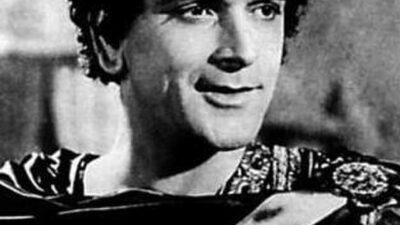
1945 तक जी.एम. दुर्रानी हिंदी फ़िल्म संगीत की सबसे अधिक अनुकरण की जाने वाली पुरुष आवाज़ों में थे; मोहम्मद रफ़ी ने, जो तब अपने कैरियर के आरंभ में थे, खुलकर कहा कि उन्होंने अपनी गायकी दुर्रानी के अनुसार गढ़ी — और यह ऋण रफ़ी की आरंभिक रिकॉर्डिंग में सुनाई देता है। शिव-भजन में उन्हें रखने पर विभाजन-पूर्व उद्योग में किसी की भौंह नहीं उठी, जहाँ मुसलमान गायक हिंदू भक्ति-सामग्री रिकॉर्ड करते थे और हिंदू गायक क़व्वाली तथा नात — यह सामान्य बात थी। 'विक्रमादित्य' में वे दो बार आते हैं — यहाँ अकेले, और अमीरबाई कर्नाटकी तथा मन्ना डे के साथ समवेत 'ॐ जय जय शंकर' में।
अंग्रेज़ी में पढ़ें · Read in English
G. M. Durrani was by 1945 one of the most imitated male voices in Hindi film music; Mohammed Rafi, then at the start of his career, said openly that Durrani was the singer he had modelled himself on, and the debt is audible in Rafi's early recordings. Casting him on a Shiva bhajan raised no eyebrows in the pre-Partition industry, where Muslim singers recorded Hindu devotional material and Hindu singers recorded qawwalis and naats as a matter of course. In Vikramaditya he appears twice — here alone, and in the group 'Om Jai Jai Shankar' beside Amirbai Karnataki and Manna Dey.
विरासत The Legacy
रिकॉर्डिंग नहीं मिली और यह गीत आज प्रचलित दुर्रानी-सामग्री में कहीं नहीं है, जिस पर उसी दशक के उनके रंजीत और बॉम्बे टॉकीज़ के काम का बोलबाला है। इसका प्रलेखीय मूल्य इस जोड़ में है: एक हिंदू राजा पर बनी प्रकाश पिक्चर्स की ऐतिहासिक फ़िल्म, संगीत एक पलुस्कर-प्रशिक्षित ब्राह्मण शास्त्रीय संगीतकार का, और उसका सबसे स्पष्ट शैव एकल उत्तर-पश्चिम सीमा प्रांत से आए एक मुसलमान गायक को — 1945 में यह व्यवस्था इतनी सामान्य थी कि उस दौर के किसी स्रोत ने उस पर टिप्पणी करना ज़रूरी नहीं समझा।
अंग्रेज़ी में पढ़ें · Read in English
The recording has not been traced and the song is absent from the Durrani material that circulates today, which is dominated by his Ranjit and Bombay Talkies work of the same decade. Its documentary value is in the pairing: a Prakash Pictures historical about a Hindu king, scored by a Paluskar-trained Brahmin classicist, giving its most explicitly Shaivite solo to a Muslim singer from the North-West Frontier — an arrangement so unremarkable in 1945 that no source of the period thought to remark on it.
वर्गीकरण
Classification- Tempo
- Medium
Genre
अन्य विवरण
More Details- https://www.hindigeetmala.net/movie/vikramaditya.htm
- https://en.wikipedia.org/wiki/Vikramaditya_(film)
- https://en.wikipedia.org/wiki/List_of_Hindi_films_of_1945
- https://myswar.co/album/vikramaditya-1945
References
रोचक तथ्य
Margin Notesफ़िल्म के शिव-समवेत गीत की तीन में से दो आवाज़ें — अमीरबाई कर्नाटकी और जी.एम. दुर्रानी — मुसलमान थीं; विभाजन-पूर्व बंबई उद्योग में भक्ति-रिकॉर्डिंग की यह एक सहज और अनकही सामान्य बात थी।
अंग्रेज़ी में पढ़ें · Read in English
Two of the three voices on the film's Shiva chorus — Amirbai Karnataki and G. M. Durrani — were Muslim, a routine and unremarked feature of devotional recording in the pre-Partition Bombay industry.
संगीतकार शंकरराव व्यास (1898–1956) ने ग्यारह वर्ष की आयु से गंधर्व महाविद्यालय में पंडित विष्णु दिगंबर पलुस्कर से शिक्षा ली, अहमदाबाद और बंबई में संगीत विद्यालय स्थापित किए, और 1937 से 1954 के बीच लगभग बत्तीस हिंदी फ़िल्मों में संगीत दिया, जिनमें अधिकांश पौराणिक या भक्तिपरक विषय थे।
अंग्रेज़ी में पढ़ें · Read in English
Composer Shankarrao Vyas (1898–1956) trained from the age of eleven under Pandit Vishnu Digambar Paluskar at the Gandharva Mahavidyalaya, founded music schools in Ahmedabad and Bombay, and scored roughly thirty-two Hindi films between 1937 and 1954, most of them mythological or devotional subjects.
'विक्रमादित्य' विक्रम द्विसहस्राब्दी समिति के अनुरोध पर बनी, जो विक्रम संवत् के दो हज़ार वर्ष पूरे होने का उत्सव मना रही थी — 1940 के दशक की उन गिनी-चुनी हिंदी फ़िल्मों में से एक जो किसी स्टूडियो की पहल से नहीं, बल्कि एक सार्वजनिक संस्था की माँग पर बनी।
अंग्रेज़ी में पढ़ें · Read in English
Vikramaditya was made at the request of the Vikram Bimillennium Committee, which was marking two thousand years of the Vikram Samvat calendar — one of the very few Hindi films of the 1940s commissioned by a public body rather than initiated by a studio.
नमूना-पट्टी
The Specimen Table| शीर्षक | शम्भो महादेव शंकर · Shambho Mahadev Shankar |
|---|---|
| फ़िल्म | विक्रमादित्य · 1945 |
| वर्ष · युग | 1945 |
| गायक | G.M. Durrani |
| गीतकार | Ramesh Gupta |
| संगीतकार | Shankar Rao Vyas |
| स्वरूप | एकल पुरुष |
| गति | मध्यम |
| भाषा | hindi |
| भाव | भक्ति · तीव्र · आध्यात्मिक |
| लोकप्रियता | Obscure |
| बोल-स्थिति | केवल झलक |
जुड़े हुए पन्ने
Connected Plates · The Graph Made Visibleअटलस में कोई पन्ना अकेला नहीं — इस गीत से जुड़े गीत, कलाकार, फ़िल्म, राग-ताल-विधा, सब यहाँ से खुलते हैं।
मिलते-जुलते गीत · Related Songs
कलाकार · The Artists
फ़िल्म · The Film
साझा कीजिए · Share this Plate