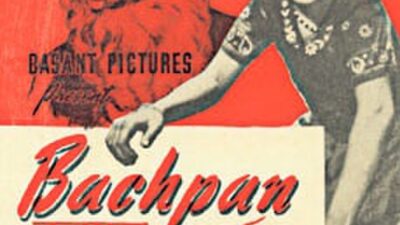
गीत विंग · गीत-पट्टिका · Song Plate
बगियों में फूल खिले हैं
Bagiyon Mein Phool Khile Hain
बगियों में फूल खिल गए हैं — भारतीय गीत की सबसे पुरानी शुरुआती पंक्ति, 1945 की एक बाल-फ़िल्म में काम पर।
भावउत्सव · चुलबुला
भाषाhindi
श्रेय
The Creditsसूत्र-वाक्य · The Hook
सूत्र-वाक्य
बगियों में फूल खिल गए हैं — भारतीय गीत की सबसे पुरानी शुरुआती पंक्ति, 1945 की एक बाल-फ़िल्म में काम पर।
In EnglishThe flowers have opened in the gardens — the oldest opening line in Indian song, doing duty in a 1945 children's film.
पट्टिका-लेख
The Monographपरिचय Overview
'बगियों में फूल खिले हैं' 'बचपन' के दस गीतों में बगिया-गीत है: यह घोषणा कि फूल खिल गए हैं — और भारतीय काव्य-परंपरा में यह घोषणा कभी केवल फूलों के बारे में नहीं होती। संगीत एस. एन. त्रिपाठी का, बोल आई. सी. कपूर के, जिन्होंने फ़िल्म की कहानी और संवाद भी लिखे। किसी गायक का नाम दर्ज नहीं हुआ और रिकॉर्ड का कोई ट्रांसफ़र प्रचलन में ज्ञात नहीं है, इसलिए यह गीत आज अपने दो श्रेयों के साथ एक शीर्षक के रूप में दर्ज है।
अंग्रेज़ी में पढ़ें · Read in English
'Bagiyon Mein Phool Khile Hain' is the garden song of Bachpan's ten-song score: an announcement that the flowers are in bloom, which in Indian poetic convention is never only about flowers. S. N. Tripathi composed it to a lyric by I. C. Kapoor, who also wrote the film's story and dialogue. No singer credit was recorded and no transfer of the disc is known to circulate, so the song is documented today as a title with its two credits.
संगीत The Music
1940 के दशक में ऋतु-गीत एक तय व्यावसायिक आकार में लिखे जाते थे — 78-आरपीएम का एक पहलू, इतना यादगार टेक कि वह अकेले बिक सके, और दो छोटे अंतरे — और संगीतकार आमतौर पर इन्हें हल्की, आगे बढ़ती लोक-धुन से पूरा करते थे, न कि किसी ऐसी रचना से जो ध्यान से सुनने की माँग करे। एस. एन. त्रिपाठी उस रंग में भी लिख सकते थे और शास्त्रीय रंग में भी; उन्होंने यहाँ कौन सा चुना, यह दर्ज नहीं है। रिकॉर्ड का कोई ट्रांसफ़र ज्ञात नहीं, और सूचियाँ केवल संगीतकार और गीतकार का नाम देती हैं — इसलिए संरचना, गायन-विन्यास, राग, ताल और लय सब अज्ञात हैं।
अंग्रेज़ी में पढ़ें · Read in English
Seasonal songs in the 1940s were written to a fixed commercial shape — one 78-rpm side, a refrain memorable enough to be sold on its own, two brief verses — and composers usually met them with a light, forward-moving folk melody rather than anything that asked for close listening. S. N. Tripathi could write in that register and in the classical one; which he chose here is not recorded. No disc transfer is known, and the catalogues note only composer and lyricist, so the arrangement, voicing, raag, taal and tempo are all simply unknown.
काव्य The Poetry
खिली हुई बगिया भारतीय गीत की सबसे अधिक बरती गई छवि है, और उसकी शक्ति एक सरल स्थानांतरण से आती है: बाहर ऋतु बदली, इसलिए भीतर कुछ बदला। ब्रज और लोक रंग में फूली बगिया आमतौर पर आगमन का संकेत देती है — प्रिय की वापसी, विवाह-ऋतु का आरंभ, बच्चे का बढ़ना — न कि वह उदासी जो यही छवि फ़ारसी-मूल की ग़ज़ल में उठाती है, जहाँ फूल मुख्यतः इसलिए खिलते हैं कि बाद में उनकी कमी खले। आई. सी. कपूर ने इन दोनों में से कौन सी दिशा ली, यह स्थापित नहीं किया जा सकता: केवल शीर्षक दर्ज है और गीत का कोई पाठ नहीं मिला, इसलिए पंक्तियों के बारे में यहाँ कोई दावा नहीं है।
अंग्रेज़ी में पढ़ें · Read in English
The blooming garden is the most heavily worked image in the Indian lyric, and its power comes from a simple transfer: the season turns outside, therefore something has turned inside. In the Braj and folk registers a bagiya in flower usually signals arrival — a beloved returning, a wedding season opening, a child growing — rather than the melancholy that the same image carries in Persian-derived ghazal, where flowers bloom mainly so that they can be missed later. Which of these two directions I. C. Kapoor took cannot be established: only the title is documented, and no text of the lyric has been located, so nothing is asserted here about the verses themselves.
कहानी The Story
'बचपन' होमी वाडिया की बसंत पिक्चर्स की फ़िल्म थी — वही स्टूडियो जो तब फ़ियरलेस नाडिया की स्टंट फ़िल्मों के लिए जाना जाता था — पर यह एक सामाजिक पारिवारिक नाटक है: भैरव (मज़हर ख़ान), जो बेटे के अंतर्जातीय विवाह के बाद कड़वे होकर पहाड़ पर अकेले रहते हैं, अपनी छोटी भांजी मधु (बेबी माधुरी) के सान्निध्य से धीरे-धीरे पिघलते हैं। मधु का दो बार अपहरण होता है — एक बार मौसी द्वारा, जो उसे धनी विकलांग कमला (बेबी शकुंतला) की सहेली बनाकर बेच देती है, और एक बार कमला की ईर्ष्यालु गवर्नेस द्वारा — और फ़िल्म का अंत गाँव के अध्यापक रमेश (बी. नांदरेकर) तथा उनकी प्रेमिका (चंद्रप्रभा) द्वारा थाने में भैरव को निर्दोष सिद्ध करने पर होता है। कहानी, संवाद और दसों गीत आई. सी. कपूर ने लिखे; संगीत एस. एन. त्रिपाठी का था।
अंग्रेज़ी में पढ़ें · Read in English
Bachpan was made by Homi Wadia's Basant Pictures, a studio then known for Fearless Nadia stunt pictures, and it is a social family drama instead: Bhairav (Mazhar Khan), embittered and living alone on a mountainside after his son married outside their caste, is slowly softened by Madhu (Baby Madhuri), the young niece a relative sends to live with him. Madhu is twice abducted — once by the aunt, who sells her as a companion to the wealthy invalid Kamla (Baby Shakuntala), and once by Kamla's jealous governess — and the film ends with the village schoolteacher Ramesh (B. Nandrekar) and his beloved (Chandraprabha) clearing Bhairav's name at the police station. I. C. Kapoor wrote the story, the dialogue and all ten song lyrics; S. N. Tripathi composed the score.
विरासत The Legacy
इस गीत का पुनःप्रकाशन नहीं हुआ और 1940 के दशक के फ़िल्म-संगीत के किसी बचे हुए संकलन में यह नहीं है; उसी संगीत के दो साथी गीतों के विपरीत, इसका कोई संग्राहक-ट्रांसफ़र सामने नहीं आया। यह जो दर्ज करता है वह है 1945 में एक छोटे स्टूडियो की गीत-सूची का आकार — एक बगिया-गीत, साथ में एक पंछी-गीत, एक त्योहारी गीत, एक भजन, एक देशभक्ति गीत और एक हास्य-गीत, जो उस दौर के दस-गीत वाले संगीत से अपेक्षित मानक विस्तार है।
अंग्रेज़ी में पढ़ें · Read in English
The song was not reissued and is not present in any surviving compilation of 1940s film music; unlike two of its companions on the same soundtrack, no collector's transfer of it has appeared. What it documents is the shape of a small studio's 1945 song list — a garden song alongside a bird song, a festival song, a bhajan, a patriotic number and a comic piece, which is the standard spread a ten-song score of the period was expected to cover.
वर्गीकरण
ClassificationGenre
अन्य विवरण
More Details- https://en.wikipedia.org/wiki/Bachpan_(1945_film)
- https://www.hindigeetmala.net/movie/bachpan_1945.htm
- https://myswar.co/album/bachpan-1945
- https://atulsongaday.me/2019/05/28/bole-re-panchhi-bole/
- https://en.wikipedia.org/wiki/S._N._Tripathi
- https://en.wikipedia.org/wiki/Homi_Wadia
References
रोचक तथ्य
Margin Notesआई. सी. कपूर ने 'बचपन' की कहानी, संवाद और दसों गीत लिखे — 1945 की किसी फ़िल्म के लिए असामान्य रूप से पूरा लेखकीय अधिकार, और जून 1946 के 'फ़िल्मइंडिया' में समीक्षा करते समय बाबूराव पटेल की आलोचना का निशाना भी।
अंग्रेज़ी में पढ़ें · Read in English
I. C. Kapoor wrote Bachpan's story, its dialogue and all ten song lyrics — an unusually complete authorial hand for a 1945 production, and the target of Baburao Patel's criticism when he reviewed the film in FilmIndia in June 1946.
वाडिया मूवीटोन बंद होने के बाद होमी वाडिया ने 1942 में बसंत पिक्चर्स की स्थापना की और 1947 में उसका अपना स्टूडियो बनाया; यह बैनर स्टंट और पौराणिक तमाशे के लिए याद किया जाता है, जिससे 'बचपन' जैसा शांत बाल-नाटक उसकी सूची में अपवाद बन जाता है।
अंग्रेज़ी में पढ़ें · Read in English
Homi Wadia founded Basant Pictures in 1942 after Wadia Movietone closed, and built its own studio in 1947; the banner is remembered for stunt and mythological spectacle, which makes a quiet children's drama like Bachpan an outlier in its filmography.
'बचपन' के दस में से नौ गीतों के गायकों के नाम कहीं दर्ज नहीं हुए। हिंदी फ़िल्म गीत कोश से निकली सूचियों में पूरे संगीत के लिए ठीक एक नाम मिलता है — 'गोकुल की एक नार छबीली' पर मुकेश।
अंग्रेज़ी में पढ़ें · Read in English
No singer credits were recorded for nine of Bachpan's ten songs. Catalogues derived from the Hindi Film Geet Kosh carry exactly one name for the whole soundtrack — Mukesh, on 'Gokul Ki Ek Naar Chhabili'.
नमूना-पट्टी
The Specimen Table| शीर्षक | बगियों में फूल खिले हैं · Bagiyon Mein Phool Khile Hain |
|---|---|
| फ़िल्म | बचपन · 1945 |
| वर्ष · युग | 1945 |
| गीतकार | I. C. Kapoor |
| संगीतकार | S. N. Tripathi |
| भाषा | hindi |
| भाव | उत्सव · चुलबुला |
| लोकप्रियता | Obscure |
| बोल-स्थिति | केवल झलक |
जुड़े हुए पन्ने
Connected Plates · The Graph Made Visibleअटलस में कोई पन्ना अकेला नहीं — इस गीत से जुड़े गीत, कलाकार, फ़िल्म, राग-ताल-विधा, सब यहाँ से खुलते हैं।
कलाकार · The Artists
फ़िल्म · The Film
साझा कीजिए · Share this Plate