शास्त्र विंग · वाद्य-पट्टिका · Instrument Plate
स्टीलपैन
Steelpan
अन्य नामस्टील ड्रम · स्टील पैन · पैन (Pan) · पिंग-पॉन्ग (Ping Pong — प्रारम्भिक नाम)
परिचय
Overviewस्टीलपैन — त्रिनिदाद का स्वरबद्ध घन वाद्य, फेंके हुए तेल-पीपे से हथौड़े द्वारा गढ़ा गया 20वीं सदी का अनोखा आविष्कार। इसकी घंटी-सी झिलमिलाती, क्रोमैटिक ध्वनि समुद्र-तट, कार्निवल और उल्लास का पर्याय है; भारतीय फ़िल्म संगीत में यह विरल पर प्रभावशाली 'रंग-वाद्य' के रूप में समुद्र-तट और छुट्टी के दृश्यों में सुनाई देता है, और भारतीय जलतरंग से इसका भाव-साम्य है।
अंग्रेज़ी में पढ़ें · Read in English
The steelpan — Trinidad's tuned idiophone, hammered from a discarded oil drum into the 20th century's most singular acoustic invention. Its bell-bright, chromatic shimmer is a byword for beach, carnival and cheer; in Indian film music it is heard rarely but tellingly as a 'colour' instrument in beach and holiday scenes, sharing a kinship of spirit with the Indian jaltarang.
वर्गीकरण
ClassificationNatya Shastra Category
घन (Ghana - solid/struck idiophones)
नाट्यशास्त्र के चार वाद्य-वर्गों में स्टीलपैन 'घन वाद्य' श्रेणी में आता है — वे ठोस वाद्य जिनका अपना शरीर ही आघात से कम्पित होकर ध्वनि उत्पन्न करता है, जिनमें न कोई खिंची हुई झिल्ली होती है (अवनद्ध) और न कोई तार (तत)। जैसे मंजीरा, घटम और जलतरंग घन वाद्य हैं, वैसे ही स्टीलपैन एक धातु का स्वरबद्ध घन वाद्य है — किन्तु यह अकेला ऐसा घन वाद्य है जो पूरी क्रोमैटिक धुन और स्वर-सामंजस्य (harmony) बजा सकता है।
Among the four instrument classes of the Natya Shastra, the steelpan belongs to the 'Ghana' (solid idiophone) category — instruments whose own solid body vibrates when struck, having neither a stretched membrane (Avanaddha) nor strings (Tata). Just as the manjira, ghatam and jaltarang are ghana vadya, the steelpan is a tuned metal idiophone — but it is unique among idiophones in being able to play a full chromatic melody and harmony.
Western Category
Tuned percussion idiophone (struck idiophone)
Western Family
Steelpan / steel drum family (Hornbostel-Sachs percussion idiophone; conceptually related to gongs, tuned metallophones and the jaltarang)
Sub Classification
बनावट
PhysicalDescription Hindi
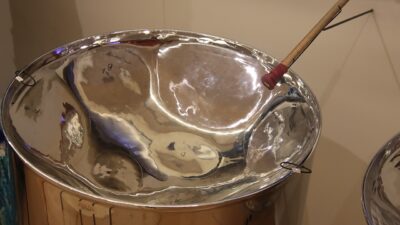
स्टीलपैन एक धातु का स्वरबद्ध ताल वाद्य है जो 55-गैलन (लगभग 200 लीटर) के इस्पात के तेल-पीपे से बनाया जाता है। पीपे का एक सिरा हथौड़े से कटोरे-नुमा भीतर की ओर धँसाया जाता है, फिर उस अवतल सतह पर अलग-अलग स्वरों के लिए छोटे-छोटे उभरे हुए 'नोट-फलक' उकेरे जाते हैं। हर फलक को हथौड़े से पीट-पीटकर एक निश्चित स्वर पर मिलाया जाता है। इसे रबड़ की नोक वाली सीधी छड़ियों ('पैन-स्टिक') से बजाया जाता है।
Description English
The steelpan is a tuned metal percussion instrument crafted from a 55-gallon (about 200-litre) steel oil drum. One end of the drum is hammered inward into a concave bowl, and small raised 'note faces' for individual pitches are then grooved into that sunken surface. Each face is hammered until it rings at a precise pitch. It is played with straight, rubber-tipped 'pan sticks'.
Body
Concave dish sunk into the head of a cylindrical steel drum, with a cut cylindrical skirt below
बेलनाकार इस्पात-पीपे के सिरे में धँसाया गया अवतल कटोरा, नीचे कटी हुई बेलनाकार 'स्कर्ट'
Mild steel (traditional 55-gallon oil drum); modern professional pans use specialised or stainless steel, often chrome-plated
मृदु इस्पात (परम्परागत 55-गैलन तेल-पीपा); आधुनिक पेशेवर पैन विशेष या स्टेनलेस इस्पात के, अक्सर क्रोम-चढ़े हुए
56-58 (drum head)
The cut cylindrical skirt acts as the resonating body — short skirt for high pans, long or full-drum skirt for bass pans
Note Faces
Varies by pan type — a tenor/lead pan carries roughly 28-32 chromatic notes
Convex facets grooved and hammered into the sunken surface; each facet is one tuned note
अवतल सतह में उकेरे और पीटे गए उभरे हुए फलक; हर फलक एक स्वरबद्ध नोट होता है। एक टेनर पैन में लगभग 28-32 क्रोमैटिक स्वर होते हैं।
Equal-tempered and fully chromatic; a full steel orchestra spans the entire pitch range from high tenor to deep bass
Note Layout
स्वर-विन्यास (spider-web / चौथाई-पंचम चक्र)
Note layout (spider-web / cycle of fourths and fifths)
आधुनिक टेनर पैन पर स्वरों को 'चौथाई और पंचम के चक्र' में सजाया जाता है — इसी को 'स्पाइडर-वेब' (मकड़ी-जाल) विन्यास कहते हैं, जिसे 1950 के दशक में एंथनी विलियम्स ने लोकप्रिय किया। इससे पड़ोसी स्वर संगीतमय रूप से निकट रहते हैं और तेज़ धुनें बजाना सहज होता है।
On the modern tenor pan the notes are arranged in a 'cycle of fourths and fifths' — the so-called 'spider-web' layout popularised by Anthony Williams in the 1950s. Musically related notes sit next to each other, which makes fast melodic runs easier.
Sticks
पैन-स्टिक
Pan sticks (mallets)
Straight wooden or aluminium sticks tipped with rubber; bass pans use larger foam or sponge tips for a rounder tone
15-20 (high pans), longer and softer for bass
Held one in each hand and struck onto the note faces; rapid alternating strokes (a 'roll') sustain a note, since a single strike decays quickly
Manufacture Process
निर्माण-प्रक्रिया
Manufacture process
1) सिंकिंग — पीपे के सिरे को हथौड़े से कटोरे-नुमा धँसाना; 2) मार्किंग/ग्रूविंग — स्वरों के फलक चिह्नित कर उभारना; 3) कटिंग — पीपे को उचित लम्बाई पर काटकर स्कर्ट बनाना; 4) बर्निंग/टेम्परिंग — आग से इस्पात को तपाना ताकि स्वर स्थिर रहें; 5) ट्यूनिंग — हर फलक को हथौड़े से पीट-पीटकर सही स्वर पर मिलाना।
1) Sinking — hammering the drum head into a concave bowl; 2) Marking/grooving — outlining and raising the note faces; 3) Cutting — trimming the drum to length to form the skirt; 4) Burning/tempering — heat-treating the steel so the notes hold; 5) Tuning — hammering each facet until it rings at the correct pitch.
Pan Types
एक पूरे स्टील-ऑर्केस्ट्रा में कई प्रकार के पैन होते हैं — टेनर/लीड पैन (सबसे ऊँचा, धुन बजाता है), डबल टेनर व डबल सेकंड्स (मध्य स्वर), गिटार व सेलो पैन (संगत/हार्मनी), और बास पैन (छह, नौ या बारह पीपों का समूह, सबसे गहरा स्वर)।
A full steel orchestra uses several pan types — the tenor/lead pan (highest, carries the melody), double tenor and double seconds (mid-range), guitar and cello pans (accompaniment/harmony), and bass pans (sets of six, nine or twelve drums for the deepest register).
ध्वनि-चरित्र
SoundTonal Character Hindi
स्टीलपैन की ध्वनि उज्ज्वल, झिलमिलाती और घंटी-सी गूँजती है, जिसमें एक लम्बी, चमकीली अनुगूँज होती है। इसका स्वर तुरन्त 'उष्ण-कटिबंधीय', समुद्र-तट, कार्निवल और छुट्टियों के दृश्यों की याद दिला देता है — यही कारण है कि फ़िल्म संगीत में इसे 'रंग भरने वाला' वाद्य माना जाता है।
Tonal Character English
The steelpan's tone is bright, shimmering and bell-like, with a long, glittering ring. Its sound instantly evokes tropical, beach, carnival and holiday imagery — which is exactly why film-music arrangers treat it as a 'colour' instrument.
Timbre
Metallic, sweet, chime-like with rich overtones and long sustain
Range
Full chromatic range across the orchestra — from a high tenor pan down to deep six-bass; a single tenor pan spans roughly two and a half octaves
Dynamic Range
Wide — from a delicate shimmering roll to a ringing, carrying fortissimo; a full steelband projects powerfully outdoors
Techniques
सुनने का मार्गदर्शन
The Listening Guideस्टीलपैन को समझने का सबसे अच्छा रास्ता है — पहले एक एकल वादन सुनिए और महसूस कीजिए कि 'रोल' से हर स्वर कैसे खिंचकर बना रहता है; फिर एक पूरा पैनोरामा-ऑर्केस्ट्रा सुनिए जहाँ टेनर से बास तक सब पैन एक ही धातु-परिवार से मिलकर विराट ध्वनि रचते हैं; और अन्त में किसी हिन्दी फ़िल्म के छुट्टी वाले गीत में इसकी पृष्ठभूमि-झिलमिलाहट पहचानिए।
अंग्रेज़ी में पढ़ें · Read in English
To understand the steelpan, first hear a solo — such as an Andy Narell pan solo — and notice how the 'roll' on each note sustains the sound. Then listen to a full steel orchestra (a Panorama performance), where high tenor pans carry the melody and bass pans anchor it from below — the whole 'band' built from one family of metal. Finally, in a Hindi-film beach or holiday song, notice how the steel drum's shimmer fills the background with cheer.
परिचय
Identity- Year Of Origin
- 1939
अन्य विवरण
More DetailsTimbre
Metallic, sweet, chime-like with rich overtones and long sustain
रोचक तथ्य
Margin Notesतेल-पीपे से वाद्य तक — द्वितीय विश्वयुद्ध के दौरान त्रिनिदाद में अमेरिकी सैन्य अड्डे थे; युद्ध के बाद वहाँ छूटे 55-गैलन तेल-पीपे स्टीलपैन की कच्ची सामग्री बने। एली मानेट ने पीपे की सतह को कटोरे-नुमा भीतर धँसाकर आधुनिक पैन को आकार दिया।
During World War II Trinidad hosted American military bases; the 55-gallon oil drums left behind afterward became the raw material of the steelpan. Ellie Mannette shaped the modern pan by sinking the drum surface inward into a bowl.
स्पाइडर-वेब स्वर-विन्यास — 1950 के दशक में एंथनी विलियम्स ने टेनर पैन पर स्वरों को 'चौथाई और पंचम के चक्र' में सजाया। इस 'मकड़ी-जाल' विन्यास से संगीतमय रूप से निकट स्वर पास-पास आ गए, जिससे तेज़ और जटिल धुनें बजाना सम्भव हुआ।
In the 1950s Anthony Williams arranged the tenor pan's notes in a 'cycle of fourths and fifths'. This 'spider-web' layout brought musically related notes next to each other, making fast and complex melodies playable.
जलतरंग से भाव-साम्य — भारतीय वर्गीकरण में स्टीलपैन 'घन वाद्य' है — ठोस, आघात से बजने वाला। इसका सबसे निकट भारतीय विचार-साथी 'जलतरंग' है, जिसमें पानी भरे चीनी-मिट्टी के कटोरे स्वरबद्ध कर धुन बजाई जाती है। दोनों ही दुर्लभ 'स्वरबद्ध घन वाद्य' हैं।
In the Indian classification the steelpan is a 'ghana vadya' — solid, sounded by striking. Its closest Indian conceptual companion is the 'jaltarang', in which water-filled porcelain bowls are tuned to play melody. Both are rare 'tuned idiophones'.
फ़िल्म संगीत में रंग-वाद्य — भारतीय फ़िल्म संगीत में स्टीलपैन प्रायः लीड नहीं, बल्कि 'रंग' के लिए आता है — समुद्र-तट, हनीमून या गोवा जैसे दृश्यों में इसकी झिलमिलाती ध्वनि छुट्टी और उल्लास का भाव जगाती है, अक्सर लातिन ताल-वाद्यों और गिटार के साथ।
In Indian film music the steelpan usually appears not as the lead but for 'colour' — in beach, honeymoon or Goa-type scenes its shimmering tone conjures holiday and cheer, often paired with Latin percussion and guitar.
सवाल-जवाब
Questions & Answersस्टीलपैन क्या है?
स्टीलपैन (स्टील ड्रम) त्रिनिदाद और टोबैगो का स्वरबद्ध ताल वाद्य है, जो 55-गैलन इस्पात के तेल-पीपे से बनाया जाता है। इसकी अवतल सतह पर अलग-अलग स्वरों के फलक उकेरे जाते हैं जिन्हें रबड़-नोक वाली छड़ियों से बजाया जाता है। भारतीय वर्गीकरण में यह 'घन वाद्य' है।
स्टीलपैन कैसे बनता है?
पीपे के सिरे को हथौड़े से कटोरे-नुमा धँसाया जाता है (सिंकिंग), फिर स्वर-फलक चिह्नित कर उभारे जाते हैं (ग्रूविंग), पीपे को उचित लम्बाई पर काटा जाता है, आग से तपाया जाता है (टेम्परिंग), और अन्त में हर फलक को पीट-पीटकर सही स्वर पर मिलाया जाता है (ट्यूनिंग)।
क्या स्टीलपैन का प्रयोग हिन्दी फ़िल्म संगीत में होता है?
हाँ, पर विरल और सजावटी रूप में। समुद्र-तट, हनीमून, गोवा या 'विदेशी' मस्ती वाले दृश्यों में अरेंजर स्टील-ड्रम की चमकीली ध्वनि जोड़ते हैं ताकि छुट्टी और उल्लास का भाव बने। यह प्रायः लीड नहीं, बल्कि 'रंग-वाद्य' के रूप में आता है।
स्टीलपैन का भारतीय समकक्ष कौन-सा वाद्य है?
भारत में इसका निकटतम विचार-साथी 'जलतरंग' है, जिसमें पानी भरे कटोरे स्वरबद्ध कर धुन बजाई जाती है। दोनों ही दुर्लभ 'स्वरबद्ध घन वाद्य' हैं जो अकेले धुन दे सकते हैं।
स्टीलपैन कहाँ से आया?
स्टीलपैन का जन्म त्रिनिदाद और टोबैगो में 1930-1940 के दशकों में हुआ। यह टैम्बू-बैम्बू और धातु के 'आयरन बैंड' से विकसित हुआ, और द्वितीय विश्वयुद्ध के बाद बचे 55-गैलन तेल-पीपों से आधुनिक रूप में आया। 1992 में इसे त्रिनिदाद-टोबैगो का राष्ट्रीय वाद्य घोषित किया गया।
नमूना-पट्टी
The Specimen Table| नाम | स्टीलपैन · Steelpan |
|---|---|
| अन्य नाम | स्टील ड्रम · स्टील पैन · पैन (Pan) · पिंग-पॉन्ग (Ping Pong — प्रारम्भिक नाम) · Steelpan (also: steel drum, pan) |
| उद्गम | 1939 |
| प्रकार | वाद्य · Instruments |
साझा कीजिए · Share this Plate