शास्त्र विंग · वाद्य-पट्टिका · Instrument Plate
सिफुं
Sifung
अन्य नामसिफुंग · सिफुं (Boro spelling) · Siphung · सिफुं गोलाव (Siphung Gwlao — long siphung)
परिचय
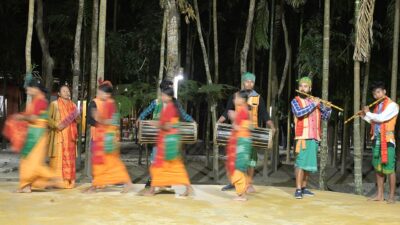
Overviewसिफुं असम की बोडो जनजाति की लंबी बाँस-बांसुरी है — पाँच छिद्रों वाली, बाँसुरी से लंबी और गहरी, जिसे मुँह के किनारे से बजाया जाता है। यह बागुरुम्बा ('तितली नृत्य') की मुख्य धुन है, जहाँ खाम ताल देता है और सिफुं व सेरजा सुर बुनते हैं; वहीं खेराई अनुष्ठान में यही सिफुं देवता के प्रति ध्यान और भक्ति का ऊँचा स्वर बन जाती है।
अंग्रेज़ी में पढ़ें · Read in English
The sifung is the long bamboo flute of Assam's Bodo people — five-holed, longer and deeper than the bansuri, played transverse at the corner of the mouth. It is the lead melody of the Bagurumba ('butterfly dance'), where the kham keeps the beat and the sifung and serja weave the tune; while in the Kherai ritual the same sifung becomes a high voice of meditation and devotion to the deity.
वर्गीकरण
ClassificationNatya Shastra Category
सुषिर (Sushira - wind instruments)
भारतीय वाद्य-वर्गीकरण की सुषिर (फूँक) श्रेणी में सिफुं आता है — यह बाँस की एक लंबी खोखली नली है जिसमें हवा फूँककर स्वर उत्पन्न किए जाते हैं। भारत सरकार के 'Indian Culture' अभिलेख में इसे 'सुषिर वाद्य' (Siphung) के रूप में सूचीबद्ध किया गया है, यद्यपि यह मूलतः बोडो जनजाति का लोक-वाद्य है, शास्त्रीय दरबारी परंपरा का नहीं।
In the Sushira (wind/blown) category of Indian organology, the sifung is a long, hollow bamboo tube sounded by blowing air across an aperture. The Government of India's 'Indian Culture' registry lists it under Sushir Vadya (Siphung), though it is fundamentally a folk instrument of the Bodo people rather than one of the classical court tradition.
Western Category
Side-blown (transverse) bamboo flute — aerophone
Western Family
Flute family; a long transverse fipple-less flute, comparable in playing position to the concert flute and the North Indian bansuri but longer and lower-pitched
Sub Classification
बनावट
PhysicalDescription Hindi
सिफुं बोडो जनजाति की एक पारंपरिक लंबी बाँस-बांसुरी है, जिसे मुँह के किनारे से (तिरछी/ट्रांसवर्स मुद्रा में) बजाया जाता है। उत्तर भारतीय बाँसुरी में जहाँ छह छेद होते हैं, वहीं सिफुं में केवल पाँच स्वर-छिद्र होते हैं और यह बाँसुरी से काफ़ी लंबी होती है, इसीलिए इसकी ध्वनि अधिक गहरी और नीची होती है। इसे 'थाई' नामक विशेष बाँस की शाखा से बनाया जाता है; लंबे प्रकार को 'सिफुं गोलाव' कहते हैं।
Description English
The sifung is a traditional long bamboo flute of the Bodo people, played side-blown (transverse) at the corner of the mouth. Where the North Indian bansuri typically has six holes, the sifung has only five melody holes and is considerably longer, giving it a deeper, lower voice. It is crafted from the branch of a special bamboo (called 'thai'); the long variety is known as the 'siphung gwlao'.
Body
Long straight cylindrical tube, side-blown
लंबी सीधी बेलनाकार नली, किनारे से फूँकी जाने वाली
Bamboo — traditionally the branch of 'thai' bamboo
बाँस — परंपरागत रूप से 'थाई' बाँस की शाखा से
66-76 (approx. 26-30 inches — notably longer than a bansuri)
The open bamboo bore itself acts as the resonating air column; both natural nodes at the ends are kept sealed
Blow Hole
बार (bar)
Bar (blowing hole)
The hole nearest the closed top node, across which the player blows; in Bodo it is called 'बार' meaning 'air/wind'. Sound is produced by directing breath across its edge.
बंद ऊपरी गाँठ के पास बना छिद्र, जिसके किनारे पर फूँक मारी जाती है; बोडो भाषा में इसे 'बार' अर्थात् 'हवा' कहते हैं।
Finger Holes
5
Five melody holes rather than the bansuri's six. Their sounded degrees are traditionally described (from the blowing end downward) as Sa, Dha, Pa, Ma and Re — a pentatonic set (Sa Re Ma Pa Dha).
पाँच स्वर-छिद्र (बाँसुरी के छह के बजाय)। परंपरागत रूप से इन्हें (फूँक-सिरे से नीचे की ओर) क्रमशः सा, ध, प, म और रे कहा जाता है — अर्थात् एक पंचस्वरीय समूह (सा रे म प ध)।
Bored directly into the bamboo body; no keys or mechanism
Node Ends
गाँठें (nodes)
Sealed nodes
Both ends of the bamboo carry natural nodes that remain closed, defining the resonating air column between the blow-hole and the finger holes.
बाँस के दोनों सिरों पर प्राकृतिक गाँठें रहती हैं जो बंद रखी जाती हैं और स्वर-स्तंभ की सीमा तय करती हैं।
Tuning
स्वर-मिलान
Tuning / pitch
No pegs or keys; pitch is fixed by bore length, node placement and hole positions. Makers produce sifungs in different scales — G, F and D-scale 'siphung gwlao' are especially associated with the Kherai ritual, which calls for a high, sweet note.
न कोई खूँटी, न कुंजी; स्वर नली की लंबाई, गाँठ-स्थिति और छिद्रों की जगह से निर्धारित होता है। निर्माता विभिन्न सप्तक-मान की सिफुं बनाते हैं — G, F और D मान की 'सिफुं गोलाव' विशेषकर खेराई अनुष्ठान से जुड़ी हैं, जिसमें ऊँचा, मधुर स्वर अपेक्षित होता है।
Frets
सिफुं में कोई फ्रेट नहीं होता; अंगुलियों से छिद्रों को खोल-बंद कर और फूँक के दबाव व कोण को नियंत्रित कर स्वर व मींड निकाले जाते हैं।
The sifung has no frets; notes and glides are produced by opening/closing the holes and controlling the angle and pressure of breath.
ध्वनि-चरित्र
SoundTonal Character Hindi
सिफुं की ध्वनि गहरी, हवादार और शांत होती है — बाँसुरी की तुलना में नीची और अधिक 'खुली' लगती है। बागुरुम्बा जैसे उल्लासमय नृत्य में यह तितली-सी थिरकती मधुर तान भरती है, तो खेराई की पूजा में यही स्वर ध्यान और भक्ति का माध्यम बन जाता है।
Tonal Character English
The sifung's tone is deep, airy and serene — lower and more 'open' than the bansuri. In joyous dances like Bagurumba it carries a sweet, butterfly-light melody, while in the Kherai worship the very same voice becomes a vehicle of meditation and devotion.
Timbre
Warm, breathy, low-register bamboo tone with a soft nasal edge
Range
Roughly a pentatonic set across one to two octaves (Sa Re Ma Pa Dha), depending on overblowing
Dynamic Range
Gentle to moderately projecting — an outdoor, festival and processional voice that carries over dancers and drums
Techniques
सुनने का मार्गदर्शन
The Listening Guideसिफुं को समझना हो तो पहले किसी बागुरुम्बा प्रस्तुति में डूबिए — खाम की थाप पर सिफुं की छोटी-छोटी दोहराती मधुर पंक्तियाँ और सेरजा की संगत पकड़िए। फिर खेराई की ऊँची, धीमी, ध्यान-मग्न तान सुनिए, जहाँ वही बाँसुरी प्रार्थना बन जाती है। इसकी लंबी नली से आती गहरी, हवादार, बाँसुरी से नीची ध्वनि पर ध्यान दीजिए।
अंग्रेज़ी में पढ़ें · Read in English
To understand the sifung, first hear a Bagurumba performance — notice how, over the kham's beat, the sifung repeats short sweet phrases while the serja moves alongside. Then hear the high, slow, meditative Kherai tune — the same flute here speaks with an entirely different soul. Attend to the deep, breathy tone of the long tube, pitched lower than the bansuri.
अन्य विवरण
More Details- Name English
- Tuning / pitch
- Description
- न कोई खूँटी, न कुंजी; स्वर नली की लंबाई, गाँठ-स्थिति और छिद्रों की जगह से निर्धारित होता है। निर्माता विभिन्न सप्तक-मान की सिफुं बनाते हैं — G, F और D मान की 'सिफुं गोलाव' विशेषकर खेराई अनुष्ठान से जुड़ी हैं, जिसमें ऊँचा, मधुर स्वर अपेक्षित होता है। No pegs or keys; pitch is fixed by bore length, node placement and hole positions. Makers produce sifungs in different scales — G, F and D-scale 'siphung gwlao' are especially associated with the Kherai ritual, which calls for a high, sweet note.
- Name
- स्वर-मिलान
Tuning
Timbre
Warm, breathy, low-register bamboo tone with a soft nasal edge
रोचक तथ्य
Margin Notesपाँच छिद्र, पाँच स्वर — सिफुं के पाँच छिद्रों को परंपरागत रूप से (फूँक-सिरे से नीचे की ओर) सा, ध, प, म और रे कहा जाता है — अर्थात् सा-रे-म-प-ध का पंचस्वरीय समूह, जो संयोगवश राग दुर्गा/भूपाली जैसे पंचस्वरों से मेल खाता है।
The sifung's five holes are traditionally named (from the blowing end downward) Sa, Dha, Pa, Ma and Re — i.e. the pentatonic set Sa-Re-Ma-Pa-Dha, which coincidentally matches pentatonic scales like raag Durga/Bhupali.
'सिफुं गोलाव' — लंबी सिफुं — लंबे प्रकार की सिफुं को 'सिफुं गोलाव' कहते हैं और इसे 'थाई' बाँस की शाखा से बनाया जाता है। खेराई अनुष्ठान के लिए प्रायः G, F या D मान की सिफुं गोलाव चुनी जाती है, क्योंकि उसमें ऊँचा, मधुर, ध्यान-योग्य स्वर होता है।
The long variety of the flute is called 'siphung gwlao', made from the branch of 'thai' bamboo. For the Kherai ritual a G, F or D-scale siphung gwlao is usually chosen, for its high, sweet, meditation-worthy note.
उत्सव का निमंत्रण — बोडो परंपरा में सिफुं की भूमिका केवल संगत की नहीं — मान्यता है कि इसकी तान युवाओं को उत्सव और मेल-मिलाप की ओर 'बुलाती' है। इसकी मधुर संवेदी ध्वनि बुइसागु और डोमाशी जैसे मौसमी उत्सवों में सुनी जाती है।
In Bodo tradition the sifung is more than accompaniment — its melody is said to 'invite' the young toward celebration and fellowship. Its sweet, sensuous sound is heard at seasonal festivals such as Bwisagu and Domashi.
दो आत्माओं वाला वाद्य — वही सिफुं बागुरुम्बा में उल्लास की तितली-तान बजाती है और खेराई की पूजा में ध्यान व भक्ति का ऊँचा, गंभीर स्वर — एक ही वाद्य, दो बिलकुल भिन्न भाव-लोक।
The same sifung plays the joyous butterfly-melody of the Bagurumba and the high, solemn note of meditation and devotion in the Kherai worship — one instrument, two entirely different worlds of feeling.
सवाल-जवाब
Questions & Answersसिफुं क्या है?
सिफुं (सिफुंग) असम की बोडो (बोरो) जनजाति की एक पारंपरिक लंबी बाँस-बांसुरी है, जिसे मुँह के किनारे से (तिरछी मुद्रा में) बजाया जाता है। इसमें पाँच स्वर-छिद्र होते हैं और यह बागुरुम्बा नृत्य तथा खेराई अनुष्ठान की मुख्य धुन-वाद्य है।
सिफुं और उत्तर भारतीय बाँसुरी में क्या अंतर है?
सिफुं में केवल पाँच छिद्र होते हैं, जबकि बाँसुरी में छह; और सिफुं बाँसुरी से काफ़ी लंबी (लगभग 26-30 इंच) होती है, इसलिए इसकी ध्वनि अधिक गहरी और नीची होती है।
सिफुं का उपयोग किन अवसरों पर होता है?
सिफुं बागुरुम्बा ('तितली नृत्य') की मुख्य धुन है और बोडो के मौसमी उत्सवों — बुइसागु और डोमाशी — में सुनी जाती है। खेराई अनुष्ठान में इसकी ऊँची, ध्यान-मग्न तान देवता के प्रति प्रार्थना का माध्यम बनती है।
सिफुं किससे बनती है और इसके छिद्र कौन-से स्वर देते हैं?
सिफुं 'थाई' नामक विशेष बाँस की शाखा से बनती है; इसके दोनों सिरों की गाँठें बंद रहती हैं और फूँकने वाले छिद्र को 'बार' कहते हैं। इसके पाँच छिद्र परंपरागत रूप से सा, ध, प, म और रे स्वर देते हैं।
नमूना-पट्टी
The Specimen Table| नाम | सिफुं · Sifung |
|---|---|
| अन्य नाम | सिफुंग · सिफुं (Boro spelling) · Siphung · सिफुं गोलाव (Siphung Gwlao — long siphung) · बोडो बाँसुरी (Bodo bamboo flute) |
| प्रकार | वाद्य · Instruments |
साझा कीजिए · Share this Plate