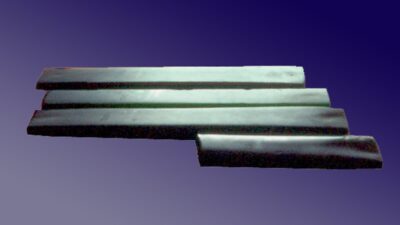
शास्त्र विंग · वाद्य-पट्टिका · Instrument Plate
सांकरजंग
Sankarjang
अन्य नामशंकरजंग शिलावाद्य · सांकरजंग लिथोफोन (Sankarjang lithophone) · Klangsteine aus Orissa (Sonorous Stones of Orissa) · ओडिशा के बजने वाले पत्थर
परिचय
Overviewसांकरजंग भारत की संगीत-यात्रा का शून्य-बिंदु है — ओडिशा के अंगुल ज़िले में मिली बैसाल्ट की वे सलाखें जिन्हें चोट देने पर पत्थर घंटी-सा गा उठता है। लगभग दूसरी–पहली सहस्राब्दी ई.पू. का यह घन वाद्य, जिसे 1971 में एक चरवाहे ने खोजा और यूल-बेमन ने भारत का सबसे प्राचीन ज्ञात वाद्य माना, न राग जानता है न ताल; यह उस आदिम क्षण की गूँज है जब मनुष्य ने निर्जीव पत्थर में भी सुर खोज लिया।
अंग्रेज़ी में पढ़ें · Read in English
The Sankarjang is the zero-point of India's musical journey — the basalt bars found in Odisha's Angul district that make stone sing like a bell when struck. This Ghana (idiophone) instrument of roughly the 2nd–1st millennium BCE, discovered by a shepherd in 1971 and judged by Yule and Bemmann to be India's earliest known instrument, knows neither raga nor taal; it is the echo of that primeval moment when humankind found pitch even in lifeless stone.
वर्गीकरण
ClassificationNatya Shastra Category
घन (Ghana - solid/struck idiophones)
सांकरजंग एक घन वाद्य है — अर्थात् एक ठोस, स्वयं-अनुनादी वाद्य जिसमें ध्वनि किसी तार या झिल्ली से नहीं, बल्कि स्वयं पत्थर के कंपन से उत्पन्न होती है। ध्यान रहे कि यह वाद्य भरत मुनि के नाट्यशास्त्र (लगभग 200 ई.पू.–200 ई.) से भी लगभग एक-डेढ़ हज़ार वर्ष पुराना है, इसलिए यह शास्त्रीय वर्गीकरण से पहले का है; परंतु अपने स्वभाव से यह स्पष्टतः घन वाद्य श्रेणी में आता है, जिसमें मंजीरा, घटम और जलतरंग जैसे वाद्य भी आते हैं।
The Sankarjang is a Ghana instrument — a solid, self-resonating idiophone in which sound arises not from a string or a membrane but from the vibration of the stone body itself. Note that this instrument predates Bharata Muni's Natya Shastra (c. 200 BCE–200 CE) by roughly one to one-and-a-half millennia, so it is older than the classical taxonomy itself; yet by its very nature it belongs unambiguously to the Ghana (struck idiophone) category, the same family as manjira, ghatam and jaltarang.
Western Category
Lithophone (struck idiophone / percussion plaques)
Western Family
Idiophone family — comparable to the xylophone, marimba, glockenspiel and other tuned percussion, but made entirely of stone; Hornbostel-Sachs 111.22 (directly struck percussion plaques)
Sub Classification
बनावट
PhysicalDescription Hindi
सांकरजंग वाद्य लंबे, पतले बैसाल्ट (काले ज्वालामुखीय) पत्थर के सलाखों/पट्टियों का समूह है, जिन्हें छील-छाँटकर और घिस-घिसकर आकार दिया गया है। सन् 1971 में एक चरवाहे को सांकरजंग गाँव में लगभग 20 ऐसी शिला-सलाखें एक साथ मिली थीं। हर सलाख की लंबाई और मोटाई अलग है — यही अंतर उनकी अलग-अलग ध्वनि (सुर) का कारण है। इन्हें आघात (चोट) से बजाया जाता है, ठीक जैसे लकड़ी के ज़ाइलोफ़ोन की पट्टियों को।
Description English
The Sankarjang instrument is a set of long, slender bars/slabs of basalt (black volcanic stone), shaped by chipping and grinding. In 1971 a shepherd found a cache of about 20 such stone bars together at Sankarjang village. Each bar differs in length and thickness — and it is precisely this difference that produces their distinct pitches. They are sounded by striking, exactly as one strikes the wooden slats of a xylophone.
Body
Long, narrow rectangular bars / slabs, some superbly polished
लंबी, पतली आयताकार सलाखें/पट्टियाँ, कुछ अत्यंत चिकनी और परिष्कृत
Basalt (hard black volcanic rock); some finds resemble polished celts/axes
बैसाल्ट (कठोर काला ज्वालामुखीय पत्थर); कुछ नमूने घिसे हुए कुल्हाड़ी/परशु जैसे लगते हैं
Varies by bar; the bars are elongated tools/blades of differing length that set the pitch
None — the stone bar is itself the resonating body; suspension or support at nodal points lets it ring freely
Strings
No strings — Sankarjang is an idiophone; the tuned stone bars themselves are the sounding elements
Not applicable — no sympathetic strings on a lithophone
Not applicable — a set of individually pitched bars, no drone element
Bow
आघातक / थपकी-छड़
Beater / striker
Traditionally another hard stone, wood, or bone striker; modern reconstructions use padded mallets
Handheld
The bars are struck a sharp blow at the centre while supported near the ends, allowing the stone to ring — not bowed
Tuning Pegs
लागू नहीं
Not applicable
There are no pegs; a bar is 'tuned' at manufacture by grinding it thinner or shorter to raise its pitch — an irreversible, sculptural form of tuning
Bridge
आधार / टेक
Support / rest
The bars must rest on soft supports (rope, cord, or a frame) at their vibrational nodes so the stone can resonate freely; laid flat on the ground the tone is deadened
Cord, wood, or earthen supports
Frets
फ्रेट का प्रश्न ही नहीं — यह एक आघात-वाद्य है। प्रत्येक सलाख एक ही निश्चित सुर देती है; सुरों की श्रेणी बनाने के लिए कई सलाखों को क्रम से रखा जाता है, ठीक जैसे जलतरंग में कटोरे या ज़ाइलोफ़ोन में पट्टियाँ।
The question of frets does not arise — this is a struck instrument. Each bar yields one fixed pitch; a scale is built by arranging several bars in order, much as bowls are arranged in the jaltarang or slats in a xylophone.
ध्वनि-चरित्र
SoundTonal Character Hindi
सांकरजंग की ध्वनि गूँजती, धातु-सी और आश्चर्यजनक रूप से 'बजने वाली' है — पत्थर से ऐसी साफ़ घंटी-नुमा टंकार की अपेक्षा कोई नहीं करता। स्वर लंबा टिकता है और वातावरण में एक प्राचीन, ध्यानमग्न आभा भर देता है। समकालीन वादक इसे 'पदार्थ के अंतर्मन की आवाज़' कहते हैं।
Tonal Character English
The Sankarjang's sound is resonant, bell-like and surprisingly 'ringing' — no one expects such a clear, metallic chime from stone. The note sustains long and fills a space with an ancient, meditative aura. Contemporary players describe it as 'the voice from the core of matter'.
Timbre
Clear, sustained, bell- or gong-like ring with a stony, mineral overtone
Range
Depends on the set — a graded row of bars can span roughly an octave or a pentatonic scale; longer bars give lower notes, shorter give higher
Dynamic Range
Moderate — from a soft, meditative tap to a bright, ringing strike; entirely acoustic, no amplification in antiquity
Techniques
सुनने का मार्गदर्शन
The Listening Guideसांकरजंग को सुनना धुन सुनना नहीं, समय सुनना है। इसकी एक टंकार को पूरी तरह गूँज जाने दीजिए और कल्पना कीजिए कि यही ध्वनि किसी प्रागैतिहासिक पठारी रात में उठी होगी। स्वरम् की 8-सलाख प्रतिकृति से शुरू कीजिए, फिर ओडिशा राज्य संग्रहालय का वृत्तचित्र देखिए — पत्थर, इतिहास और गूँज एक साथ खुलते हैं।
अंग्रेज़ी में पढ़ें · Read in English
When listening to the Sankarjang, do not expect modern melody or raga. Let a single strike ring out fully and feel that long, metallic afterglow. Imagine that this same sound rang out on some plateau night three thousand years ago. Begin with SVARAM's (Auroville) 8-bar replica demonstration, then watch the documentary on the Odisha State Museum — both history and sound open up.
परिचय
Identity- Year Of Origin
- -1000
अन्य विवरण
More DetailsTimbre
Clear, sustained, bell- or gong-like ring with a stony, mineral overtone
रोचक तथ्य
Margin Notesभारत का सबसे प्राचीन ज्ञात वाद्य — पुरातत्वविद पॉल यूल और मार्टिन बेमन ने 1988 में अपने शोध-पत्र (Archaeologia Musicalis 1, पृ. 46–50) में सांकरजंग की सलाखों को अस्थायी रूप से दक्षिण एशिया के सबसे पुराने ज्ञात वाद्य के रूप में पहचाना। यही कारण है कि किसी भी 'भारतीय वाद्यों की सूची' की शुरुआत इसी से होनी चाहिए।
In their 1988 paper (Archaeologia Musicalis 1, pp. 46–50), archaeologists Paul Yule and Martin Bemmann tentatively identified the Sankarjang bars as South Asia's earliest known musical instrument. This is why any 'list of Indian instruments' arguably ought to begin here.
अधूरी सलाखें — यानी एक 'कारख़ाना' — स्थल पर मिली कुछ सलाखें पूर्ण थीं और कुछ अधूरी — यह संकेत करता है कि सांकरजंग केवल वाद्य बजाने का नहीं, बल्कि उन्हें गढ़ने का भी स्थान था। सुर 'ट्यून' करने का अर्थ था पत्थर को घिसकर पतला या छोटा करना — एक अपरिवर्तनीय, मूर्तिकला-सी प्रक्रिया।
Some bars found at the site were finished and some unfinished — indicating that Sankarjang was a place not only of playing but of making the instruments. To 'tune' a note meant grinding the stone thinner or shorter — an irreversible, sculptural process.
दफ़न के साथ मिला संगीत — सलाखें मानव अस्थि-अवशेषों और धातु की वस्तुओं (चूड़ियाँ, चाकू) के साथ मिलीं। दफ़न-स्थल के साथ वाद्य का मिलना यह संकेत देता है कि संगीत उस समुदाय के अनुष्ठानिक और आध्यात्मिक जीवन का अंग था — केवल मनोरंजन नहीं।
The bars were found alongside human skeletal remains and metal objects (bangles, knives). An instrument found with a burial ground suggests that music was part of that community's ritual and spiritual life — not merely entertainment.
पत्थर का सुर-विज्ञान — शिलावाद्य में सुर पूरी तरह भौतिकी से तय होता है: सलाख जितनी लंबी और मोटी, स्वर उतना ही नीचा (मंद्र); जितनी छोटी और पतली, उतना ही ऊँचा (तार)। सलाख को उसके कंपन-बिंदुओं पर टिकाना ज़रूरी है, वरना गूँज दब जाती है — तीन हज़ार साल पहले भी कारीगर यह जानते थे।
In a lithophone, pitch is determined entirely by physics: the longer and thicker the bar, the lower the note; the shorter and thinner, the higher. The bar must rest on its nodal points or the ring is deadened — a fact the craftsmen understood even three thousand years ago.
सवाल-जवाब
Questions & Answersसांकरजंग क्या है?
सांकरजंग ओडिशा के अंगुल ज़िले में मिली बैसाल्ट पत्थर की सलाखों का समूह है, जिन्हें आघात करने पर सुरीली, घंटी-नुमा ध्वनि निकलती है। यह एक शिलावाद्य (लिथोफोन) है और इसे भारत का सबसे प्राचीन ज्ञात संगीत-वाद्य माना जाता है, जो लगभग दूसरी–पहली सहस्राब्दी ई.पू. का है।
सांकरजंग की खोज कैसे हुई?
सन् 1971 में सांकरजंग गाँव में एक चरवाहे को संयोगवश लगभग 20 पत्थर की सलाखें, कुल्हाड़ियाँ, मानव अस्थि-अवशेष और धातु की वस्तुएँ एक साथ मिलीं। बाद में ओडिशा राज्य पुरातत्व विभाग ने स्थल की परीक्षण-खुदाई की।
सांकरजंग किस श्रेणी का वाद्य है?
यह एक घन वाद्य (idiophone) है — अर्थात् एक ठोस, स्वयं-अनुनादी वाद्य जिसमें ध्वनि तार या झिल्ली से नहीं, बल्कि पत्थर के कंपन से उत्पन्न होती है। संरचना में यह ज़ाइलोफ़ोन जैसा है, पर पूरी तरह पत्थर का बना है (इसीलिए 'शिलावाद्य')।
सांकरजंग की मूल सलाखें अब कहाँ हैं?
मूल सलाखें ओडिशा राज्य संग्रहालय, भुवनेश्वर में संरक्षित हैं। ऑरोविल के 'स्वरम्' ध्वनि-अनुसंधान केंद्र ने इसी से प्रेरित होकर एक आधुनिक 8-सलाख वाला बजाने योग्य शिलावाद्य भी बनाया है।
क्या सांकरजंग का उपयोग फ़िल्म या शास्त्रीय संगीत में होता है?
नहीं। सांकरजंग एक प्रागैतिहासिक पुरातात्विक वाद्य है, जो हिंदुस्तानी शास्त्रीय संगीत और बॉलीवुड दोनों से हज़ारों वर्ष पुराना है और उनमें प्रयुक्त नहीं होता। इसका महत्व भारतीय संगीत की जड़ों और सांस्कृतिक विरासत के रूप में है।
नमूना-पट्टी
The Specimen Table| नाम | सांकरजंग · Sankarjang |
|---|---|
| अन्य नाम | शंकरजंग शिलावाद्य · सांकरजंग लिथोफोन (Sankarjang lithophone) · Klangsteine aus Orissa (Sonorous Stones of Orissa) · ओडिशा के बजने वाले पत्थर |
| उद्गम | -1000 |
| प्रकार | वाद्य · Instruments |
साझा कीजिए · Share this Plate