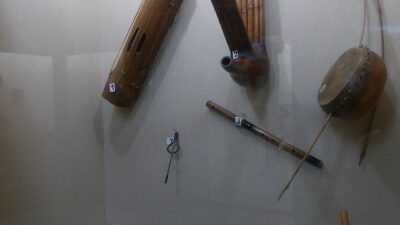
शास्त्र विंग · वाद्य-पट्टिका · Instrument Plate
फेंगलौंग
Phenglawng
अन्य नामफेंगलौंग (मिज़ो बाँसुरी) · सियारामांग चनोंगपा (मारा भाषा में) · Phenglawng (also spelled Phenglong) · Siaramang chanongpa (Mara name)
परिचय
Overviewफेंगलौंग मिज़ोरम की एक विनम्र बाँस-बाँसुरी है — एक ही पोर, एक खाँचा, और परंपरागत रूप से केवल तीन छिद्र व तीन स्वर। यह न दरबारी वाद्य है, न फिल्मी; यह पूर्वोत्तर की मौखिक लोक-धारा का वाद्य है, जो चरवाहों, झूम-खेतिहरों और उत्सवों के हाथों जीवित रहा और आज चापचार कुट जैसे उत्सवों व नई पीढ़ी के वादकों के साथ फिर सुनाई देता है।
अंग्रेज़ी में पढ़ें · Read in English
The phenglawng is a humble bamboo flute of Mizoram — a single internode, one notch, and traditionally only three holes and three notes. It is neither a court nor a film instrument; it belongs to the oral folk stream of the Northeast, kept alive in the hands of herders, jhum cultivators and festivals, and heard again today at events like Chapchar Kut and through a new generation of players.
वर्गीकरण
ClassificationNatya Shastra Category
सुषिर (Sushira - wind instruments)
नाट्यशास्त्र के चतुर्विध वाद्य-वर्गीकरण में फेंगलौंग 'सुषिर' (खोखले/वायु) वर्ग में आता है — जहाँ ध्वनि वादक की फूँक से खोखली बाँस-नली के भीतर वायु-स्तंभ के कंपन से उत्पन्न होती है, न कि तार या चर्म से।
In the Natya Shastra's four-fold classification, the phenglawng belongs to the 'Sushira' (hollow/wind) category — where sound is produced by the vibration of an air column inside a hollow bamboo tube driven by the player's breath, not by strings or membranes.
Western Category
Aerophone (edge-blown / notch flute)
Western Family
Bamboo flute family (folk end-blown notched flute, related in principle to the recorder and to other Southeast/Northeast Asian bamboo flutes)
Sub Classification
बनावट
PhysicalDescription Hindi
फेंगलौंग एक साधारण किंतु मार्मिक मिज़ो लोक बाँसुरी है, जो एक ही बाँस की पोर (इंटरनोड) से बनती है। पारंपरिक फेंगलौंग दोनों सिरों पर खुली होती है; एक सिरे पर एक कटाव/खाँचा बनाकर फूँक-छिद्र रचा जाता है और दूसरे सिरे की ओर तीन अंगुली-छिद्र बनाए जाते हैं, जिन्हें ढककर तीन भिन्न स्वर निकाले जाते हैं। इसकी निर्माण-सादगी ही इसकी आत्मा है — बाँस, चाकू और वादक की साँस के अतिरिक्त इसमें कुछ नहीं।
Description English
The phenglawng is a simple yet poignant Mizo folk flute made from a single internode of bamboo. The traditional phenglawng is open at both ends; a notch is cut at one end to serve as the blowing edge, and three finger-holes are bored toward the other end, which are covered to sound three distinct notes. Its constructional simplicity is its soul — nothing but bamboo, a knife, and the player's breath.
Body
Straight cylindrical bamboo tube, open at both ends
सीधी बेलनाकार बाँस-नली, दोनों सिरों पर खुली
Bamboo (a single internode; Mizo bamboo species locally called 'mautak' among others)
बाँस (एक ही पोर/इंटरनोड; मिज़ो में बाँस को 'माउतक' आदि कहा जाता है)
Varies by maker (roughly 25-45 cm for traditional forms; modern melodic versions longer)
The hollow bamboo bore itself acts as the resonating air column; no separate chamber
Blowing Mechanism
खाँचा/कटाव फूँक-छिद्र (edge/notch-blown) — पारंपरिक रूप से सिरे पर बने खाँचे से फूँका जाता है।
Notch / edge-blown — traditionally sounded by blowing across a notch cut at one end of the tube.
आधुनिक मिज़ो वादक अक्सर बाजू से फूँकने वाली (transverse) बाँसुरी और अधिक छिद्रों वाले संस्करण अपनाते हैं ताकि आधुनिक धुनें बजाई जा सकें।
Modern Mizo players often adopt side-blown (transverse) bamboo flutes and versions with more holes so that contemporary melodies can be played.
Finger Holes
3
मूल फेंगलौंग में केवल तीन छिद्र होते थे जो तीन अलग-अलग स्वर देते थे — यही इसकी सीमित किंतु विशिष्ट लोक-ध्वनि का आधार है। आधुनिक वादक अधिक छिद्र जोड़कर पूरी धुनें बजाते हैं।
The original phenglawng had only three holes producing three different sounds — the basis of its limited but distinctive folk voice. Modern players add more holes to play full melodies.
Tuning
मिज़ो लोक-संगीत मुख्यतः पेंटाटॉनिक (पाँच-स्वर) प्रवृत्ति का है; फेंगलौंग किसी शास्त्रीय राग-प्रणाली से बँधा नहीं, बल्कि लोक-धुनों के अनुरूप स्वरित होता है।
Mizo folk music tends toward pentatonic (five-note) contours; the phenglawng is not bound to any classical raga system but is tuned to the contours of folk melody.
Frets
बाँसुरी होने के कारण इसमें फ्रेट नहीं होते — स्वर छिद्रों को अंगुलियों से ढककर व फूँक की तीव्रता बदलकर नियंत्रित किए जाते हैं।
Being a flute, it has no frets — pitch is controlled by covering finger-holes and by varying breath pressure.
ध्वनि-चरित्र
SoundTonal Character Hindi
फेंगलौंग की ध्वनि पतली, हवादार और उदास-मीठी होती है — पहाड़ी हवा और झूम-खेतों की एकांत को समेटे हुए। इसका सीमित स्वर-विस्तार ही इसे एक सादगी-भरा, ध्यानमग्न और लोक-रंग देता है।
Tonal Character English
The phenglawng's tone is thin, airy and sweetly melancholic — carrying the solitude of hill winds and jhum (shifting-cultivation) fields. Its limited range is exactly what gives it a plain, meditative, folk character.
Timbre
Breathy, mellow, reedy bamboo tone with soft attack
Range
Narrow in the traditional three-hole form (a few adjacent notes); wider in modern multi-hole versions
Dynamic Range
Soft to moderate — an intimate, close-range instrument rather than a projecting one
Techniques
सुनने का मार्गदर्शन
The Listening Guideफेंगलौंग सुनते समय इसकी सादगी को गुण मानिए। पहले पारंपरिक तीन-छिद्र वाली धुन सुनिए, फिर आधुनिक वादकों की भरी-पूरी बाँसुरी-प्रस्तुतियाँ। चापचार कुट के मंचीय वादन में ढोल (ख्वाँग) व घंटों (दार) के साथ इसकी संगत पर विशेष ध्यान दीजिए — वहीं मिज़ो लोक-संगीत की सामूहिक आत्मा खुलती है।
अंग्रेज़ी में पढ़ें · Read in English
When you listen to the phenglawng, treat its simplicity as a virtue, not a flaw. Attune your ear to that airy, thin tone that flows like a hill breeze. First hear a traditional three-hole tune to grasp its original soul, then hear the fuller melodies of modern players. In the staged performances of Chapchar Kut, listen especially for its interplay with drum and gongs.
अन्य विवरण
More Details- System English
- Mizo folk music tends toward pentatonic (five-note) contours; the phenglawng is not bound to any classical raga system but is tuned to the contours of folk melody.
- System
- मिज़ो लोक-संगीत मुख्यतः पेंटाटॉनिक (पाँच-स्वर) प्रवृत्ति का है; फेंगलौंग किसी शास्त्रीय राग-प्रणाली से बँधा नहीं, बल्कि लोक-धुनों के अनुरूप स्वरित होता है।
- Timbre
- Breathy, mellow, reedy bamboo tone with soft attack
Tuning
रोचक तथ्य
Margin Notesतीन छिद्र, तीन स्वर — पारंपरिक फेंगलौंग की सबसे विशिष्ट बात इसकी सीमा थी — मूलतः तीन छिद्र, तीन स्वर। आधुनिक वादक अधिक छिद्र जोड़कर या बाजू-फूँक बाँसुरी अपनाकर पूरी धुनें बजाते हैं, किंतु 'असली' फेंगलौंग की पहचान उसकी सादगी में है।
The most distinctive thing about the traditional phenglawng was its limitation — originally three holes, three notes. Modern players add more holes or adopt transverse flutes to play full melodies, but the identity of the 'true' phenglawng lies in its simplicity.
बाँस की सभ्यता — मिज़ोरम की पहाड़ी जीवनशैली बाँस-प्रधान है — घर, टोकरी, झूम-औज़ार से लेकर वाद्य तक। फेंगलौंग, तुम्फित, तवतवरौत जैसे बाँस-वाद्य इसी पारिस्थितिक संस्कृति की उपज हैं, जहाँ संगीत का कच्चा माल आँगन में ही उगता है।
Mizoram's hill lifestyle is bamboo-centred — from houses, baskets and jhum tools to instruments. Bamboo instruments like the phenglawng, tumphit and tawtawrawt are products of this ecological culture, where the raw material of music grows right in the yard.
पत्ती से लेकर लौकी तक — छह हवाएँ — फेंगलौंग मिज़ो 'छह हवाओं' के परिवार का एक सदस्य है: रौछेम (लौकी-बैगपाइप), तवतवरौत (बाँस-तुरही), तुम्फित (त्रि-नलिका), फेंगलौंग (बाँसुरी), बुहचांगकुआंग (नरकट-बाँसुरी) और ह्नाहतुम (पत्ती-वाद्य)। एक ही जनजाति में वायु-वाद्यों की इतनी विविधता विरल है।
The phenglawng is one member of the Mizo 'six winds' family: Rawchhem (gourd-bagpipe), Tawtawrawt (bamboo trumpet), Tumphit (triple-tube), Phenglawng (flute), Buhchangkuang (reed flute) and Hnahtum (leaf instrument). Such a diversity of aerophones within a single tribe is rare.
सवाल-जवाब
Questions & Answersफेंगलौंग क्या है?
फेंगलौंग मिज़ोरम (पूर्वोत्तर भारत) की एक पारंपरिक बाँस बाँसुरी है। यह एक ही बाँस की पोर से बनती है, जिसके एक सिरे पर खाँचा-रूपी फूँक-छिद्र और दूसरे सिरे की ओर पारंपरिक रूप से तीन अंगुली-छिद्र होते हैं जो तीन भिन्न स्वर देते हैं।
फेंगलौंग में कितने छिद्र होते हैं?
पारंपरिक फेंगलौंग में केवल तीन छिद्र होते थे, जो तीन भिन्न स्वर देते थे। आधुनिक वादक अधिक छिद्रों वाले या बाजू-फूँक वाले बाँस-बाँसुरी संस्करण अपनाकर पूरी धुनें बजाते हैं।
फेंगलौंग किस राज्य का वाद्य है?
फेंगलौंग पूर्वोत्तर भारत के मिज़ोरम राज्य का पारंपरिक वाद्य है, जो मिज़ो (ज़ो) पहाड़ी जनजातियों की लोक-संगीत परंपरा का अंग है। मारा जनजाति इसे 'सियारामांग चनोंगपा' कहती है।
क्या फेंगलौंग हिंदुस्तानी शास्त्रीय या फिल्मी संगीत में प्रयोग होता है?
नहीं। फेंगलौंग हिंदुस्तानी राग-प्रणाली या मुख्यधारा बॉलीवुड संगीत का अंग नहीं है। यह मिज़ो लोक-संगीत का पेंटाटॉनिक वाद्य है, जो मुख्यतः लोक-धुनों, उत्सवों (जैसे चापचार कुट) और सामुदायिक प्रस्तुतियों में बजता है।
नमूना-पट्टी
The Specimen Table| नाम | फेंगलौंग · Phenglawng |
|---|---|
| अन्य नाम | फेंगलौंग (मिज़ो बाँसुरी) · सियारामांग चनोंगपा (मारा भाषा में) · Phenglawng (also spelled Phenglong) · Siaramang chanongpa (Mara name) |
| प्रकार | वाद्य · Instruments |
साझा कीजिए · Share this Plate