शास्त्र विंग · वाद्य-पट्टिका · Instrument Plate
कोंगा
Congas
अन्य नामतुम्बादोरा (Tumbadora) · कोंगा ड्रम · Conga (singular), Congas (pair/set) · Tumbadoras (Cuban name)
परिचय
Overviewकोंगा (तुम्बादोरा) क्यूबा का लंबा, पतला, एक-मुँहा हाथ-ढोल है जिसकी जड़ें अफ्रीका के कांगो-बांटू ढोलों में हैं। खुले स्वर, स्लैप और बास — इन तीन रंगों से बुना इसका 'टुम्बाओ' रूम्बा, मैम्बो, साल्सा और लैटिन जैज़ की रीढ़ बना। भारत में यह 1960-70 के दशक में आर.डी. बर्मन के लैटिन-प्रभावित फ़िल्म-संगीत के साथ आया और कैबरे व नाच-गीतों की थिरकन बन गया।
अंग्रेज़ी में पढ़ें · Read in English
The conga (tumbadora) is Cuba's tall, narrow, single-headed hand drum, rooted in the Congo-Bantu drums of Africa. Woven from three colours — open tone, slap and bass — its 'tumbao' became the spine of rumba, mambo, salsa and Latin jazz. In India it arrived in the 1960s-70s with R.D. Burman's Latin-influenced film music, becoming the groove of cabaret and dance numbers.
वर्गीकरण
ClassificationNatya Shastra Category
अवनद्ध (Avanaddha - covered / membrane instruments)
नाट्यशास्त्र के चार वाद्य-वर्गों में कोंगा 'अवनद्ध' (चर्म-मढ़े ताल-वाद्य) की श्रेणी में आता है, क्योंकि इसकी ध्वनि लकड़ी के खोल पर मढ़ी खाल को हाथों से बजाने से उत्पन्न होती है — यद्यपि यह मूलतः भारतीय नहीं, अपितु एफ्रो-क्यूबन वाद्य है।
In the four-fold Natya Shastra scheme, the conga falls under 'Avanaddha' (covered / membrane percussion), since its sound is produced by striking a skin head stretched over a wooden shell with the bare hands — though it is not indigenous to India but an Afro-Cuban instrument mapped here by function.
Western Category
Membranophone — single-headed hand drum
Western Family
Latin hand-percussion family (kin to bongos, timbales, djembe; a tall, narrow, staved barrel drum played standing or seated)
Sub Classification
बनावट
PhysicalDescription Hindi
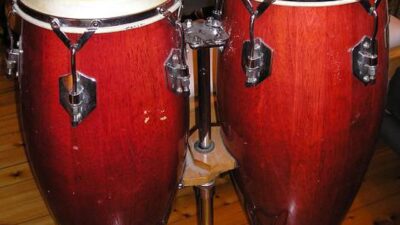
कोंगा एक लंबा, पतला, एक-मुँहा ढोल है जिसका लकड़ी या फ़ाइबरग्लास का पीपे जैसा खोल नीचे की ओर सँकरा होता है। ऊपरी मुँह पर मढ़ी खाल को हाथों से बजाया जाता है। सामान्यतः दो या तीन कोंगा एक साथ स्टैंड पर लगाकर, अलग-अलग सुरों में कसकर बजाए जाते हैं।
Description English
The conga is a tall, narrow, single-headed drum with a barrel-shaped shell of wood or fiberglass that tapers toward the bottom. The skin head at the top is struck with the bare hands. Congas are usually played in pairs or threes, mounted on a stand and tuned to different pitches.
Body
Tall, slightly bulging barrel (staved), narrowing at the base
लंबा, हल्का उभरा हुआ पीपे जैसा खोल जो नीचे की ओर सँकरा होता है
Traditionally staved hardwood (oak/ash) hooped like a barrel; modern shells often fiberglass
परंपरागत रूप से पीपे की तरह जोड़ी गई कड़ी लकड़ी की पट्टियाँ (ओक/ऐश); आधुनिक खोल प्रायः फ़ाइबरग्लास के
70-80
Open-bottomed shell; the enclosed column of air projects a deep, resonant tone
Strings
Congas have no strings — they are a membrane (skin-head) drum; the single head is the sole sounding surface
None — the conga is a hand drum with no sympathetic resonating strings
None
Head
खाल / पूड़ी
Head (skin)
Traditionally rawhide (cow, mule or water-buffalo skin); some modern heads synthetic
मानक सेट में तीन नाप: क्विंटो (सबसे छोटा, ऊँचा सुर), कोंगा/'त्रेस गोल्पेस' (मध्यम), और तुम्बा/तुम्बादोरा (सबसे बड़ा, गहरा सुर)
A standard set uses three sizes: quinto (smallest, highest pitch), conga or 'tres golpes' (medium), and tumba/tumbadora (largest, deepest pitch), roughly 11 to 12.5 inch heads
Modern congas are tuned with metal lugs and a rim (comfort-curve rim); older/traditional drums had tacked heads tuned by heating
Bow
लागू नहीं (हाथों से बजाया जाता है)
Not applicable — played with bare hands, no bow or stick
The hands themselves are the beaters
0
Struck with palms and fingers; occasionally brushes or thin sticks in studio work
Tuning Pegs
कसने के लग/बोल्ट
Tuning lugs
Metal lugs around the rim are turned with a wrench to raise or lower head tension and pitch
Bridge
लागू नहीं
Not applicable
Membrane drum — has no bridge; the head sits directly on the shell rim
Not applicable
Frets
कोंगा में सुर की कोई सीढ़ियाँ नहीं होतीं — बजाने वाला हाथ की जगह और दबाव बदलकर खुला स्वर, बंद थाप (स्लैप) और बास जैसी विभिन्न ध्वनियाँ निकालता है।
The conga has no frets or pitched keys — the player varies hand position and pressure to draw out distinct sounds: open tone, muffled/slap, and bass.
ध्वनि-चरित्र
SoundTonal Character Hindi
कोंगा की आवाज़ गर्म, गोल और नृत्य को उकसाने वाली होती है — खुले स्वर की खनकती गूँज से लेकर तेज़ 'स्लैप' की चटकार और गहरी बास तक। तीन नापों का सेट एक सुरीली ताल-पंक्ति बना देता है जो पूरे गीत को थिरकन देती है।
Tonal Character English
The conga's voice is warm, round and dance-driving — from the ringing resonance of the open tone, to the crack of a sharp slap, to a deep bass thump. A set of three sizes forms a melodic rhythm line that makes a whole song move.
Timbre
Warm, woody and resonant with a bright slap attack; pitch rises with the smaller drums
Range
Roughly low bass thump to a high, cutting quinto slap — pitched, but non-melodic
Dynamic Range
Very wide — from a whisper-soft finger touch to a loud carrying slap, entirely by hand
Techniques
सुनने का मार्गदर्शन
The Listening Guideकोंगा को समझने के लिए पहले उसके तीन बुनियादी स्वर अलग-अलग पहचानिए — खुला स्वर, स्लैप और बास। फिर 'टुम्बाओ' पैटर्न में इन्हें मिलते हुए सुनिए। किसी साल्सा रिकॉर्ड में कोंगा की परत छाँटिए, और अंत में 1970 के दशक के बॉलीवुड कैबरे गीत में वही थिरकन ढूँढिए।
अंग्रेज़ी में पढ़ें · Read in English
To understand the conga, first pick out its three sounds alone — open tone, slap and bass. Then listen for the 'tumbao', where the three weave a walking groove. Next isolate the conga layer in a salsa or Latin-jazz record, and finally trace that same pulse inside a 1970s Bollywood cabaret song.
परिचय
Identity- Year Of Origin
- 1900
अन्य विवरण
More DetailsTimbre
Warm, woody and resonant with a bright slap attack; pitch rises with the smaller drums
रोचक तथ्य
Margin Notesनाम बनाम क्यूबन नाम — जिसे बाक़ी दुनिया 'कोंगा' कहती है, क्यूबा में उसे प्रायः 'तुम्बादोरा' कहा जाता है। 'कोंगा' शब्द कार्निवल की उस ताल से आया जिस पर लोग जुलूस में नाचते थे।
What the rest of the world calls 'conga' is usually called 'tumbadora' in Cuba. The word 'conga' came from the carnival rhythm people danced to in processions.
कीलों से लग तक — पुराने कोंगा की खाल कीलों से जड़ी होती थी और सुर बाँधने के लिए उसे आग पर गरम करना पड़ता था। 1950 के दशक में धातु-लग वाली कसने-योग्य प्रणाली आने से यह सटीक और मंच-योग्य बन गया।
Old congas had heads fixed with tacks and had to be heated over a flame to tune. The metal-lug tunable system of the 1950s made the drum precise and stage-ready.
बॉलीवुड में लैटिन ताप — 1970 के दशक में आर.डी. बर्मन के वाद्यवृंद ने बोंगो-कोंगा जैसी लैटिन ताल को हिंदी गीतों में खुलकर बरता; कर्सी लॉर्ड जैसे बहुमुखी साज़िंदे इन पश्चिमी रंगों को स्टूडियो तक लाए।
In the 1970s R.D. Burman's orchestra used bongo-conga Latin percussion freely in Hindi songs; versatile session players like Kersi Lord brought these Western colours into the studio.
सवाल-जवाब
Questions & Answersकोंगा क्या है?
कोंगा एक लंबा, पतला, एक-मुँहा एफ्रो-क्यूबन हाथ-ढोल है जिसे 'तुम्बादोरा' भी कहते हैं। इसे हाथों से बजाया जाता है और यह रूम्बा, साल्सा, लैटिन जैज़ तथा फ़िल्म-संगीत का प्रमुख ताल-वाद्य है।
कोंगा और बोंगो में क्या अंतर है?
कोंगा बड़े, लंबे और गहरे सुर वाले ढोल होते हैं जो प्रायः खड़े या स्टैंड पर बजाए जाते हैं; बोंगो छोटे जोड़ीदार ढोल हैं जो गोद में रखकर ऊँचे, तीखे सुर में बजते हैं। साल्सा और बॉलीवुड-लैटिन में अक्सर दोनों साथ बजते हैं।
कोंगा भारत में कब आया?
कोंगा भारतीय शास्त्रीय या ग्रामोफोन परंपरा का हिस्सा नहीं था। यह 1960 के दशक के अंत और 1970 के दशक में लैटिन-रॉक तथा कैबरे शैली की धुनों के साथ बॉलीवुड में आया, विशेषकर आर.डी. बर्मन के प्रयोगधर्मी वाद्यवृंद के ज़रिए।
कोंगा कैसे बजाया जाता है?
कोंगा को बिना डंडे के, केवल हाथों से बजाया जाता है। हाथ की जगह और दबाव बदलकर तीन मुख्य ध्वनियाँ निकाली जाती हैं — खुला स्वर, स्लैप (थाप) और बास — जिन्हें मिलाकर 'टुम्बाओ' नामक चक्रीय पैटर्न बनता है।
नमूना-पट्टी
The Specimen Table| नाम | कोंगा · Congas |
|---|---|
| अन्य नाम | तुम्बादोरा (Tumbadora) · कोंगा ड्रम · Conga (singular), Congas (pair/set) · Tumbadoras (Cuban name) |
| उद्गम | 1900 |
| प्रकार | वाद्य · Instruments |
साझा कीजिए · Share this Plate