शास्त्र विंग · वाद्य-पट्टिका · Instrument Plate
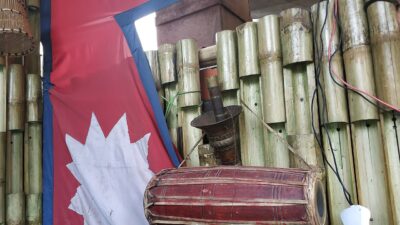
मादल
Madal
अन्य नाममादल · माँदल · Maadal · Madal (Nepali folk drum)
परिचय
Overviewमादल नेपाली एवं हिमालयी लोक-संगीत का धड़कता हृदय है — एक ही लकड़ी से खोखला किया गया द्विमुखी ढोल, जिसका एक मुख गहरी धमक और दूसरा चटख ऊँची थाप देता है, और दोनों के केंद्र पर लगी काली 'खरी' उसकी गूँज साधती है। कमर पर बँधे इस वाद्य की झूलती लय पर पूरा गाँव नाच उठता है; मगर परंपरा से निकलकर यह सिक्किम-दार्जिलिंग-असम के गोरखा समाज की पहचान बना और रणजीत गजमेर की उँगलियों से हिंदी सिनेमा तक भी पहुँचा।
अंग्रेज़ी में पढ़ें · Read in English
The madal is the beating heart of Nepali and Himalayan folk music — a double-headed drum hollowed from a single block of wood, one face giving a deep thud and the other a crisp high slap, with the black 'khari' paste at each centre tuning its resonance. Slung at the waist, its swinging groove sets whole villages dancing; emerging from Magar tradition it became the identity of the Gorkha societies of Sikkim, Darjeeling and Assam, and through Ranjit Gazmer's hands reached Hindi cinema too.
वर्गीकरण
ClassificationNatya Shastra Category
अवनद्ध (Avanaddha - membrane/covered percussion instruments)
नाट्यशास्त्र की चतुर्विध वाद्य-व्यवस्था में मादल 'अवनद्ध वाद्य' वर्ग में आता है — अर्थात् चमड़े से मढ़े हुए ताल-वाद्य। यह एक द्विमुखी (दो मुख वाला) बेलनाकार ढोल है जिसकी दोनों झिल्लियाँ हाथों से बजाई जाती हैं।
In the fourfold instrument system of the Natya Shastra, the madal belongs to the 'Avanaddha' (membrane-covered) category — that is, skin-covered rhythm instruments. It is a two-faced (double-headed) cylindrical drum whose two membranes are struck by the hands.
Western Category
Double-headed cylindrical hand drum (membranophone)
Western Family
Barrel/cylindrical two-headed drum family (comparable in playing posture to the dholak, but tuned to two distinct pitches with a central tuning paste)
Sub Classification
बनावट
PhysicalDescription Hindi
मादल एक बेलनाकार, दोनों सिरों पर चमड़े से मढ़ा हुआ लोक ढोल है। इसका खोखला ढाँचा परंपरागत रूप से एक ही लकड़ी के टुकड़े को खोखला करके बनाया जाता है (कहीं-कहीं मिट्टी/टेराकोटा का भी)। दोनों मुख अलग-अलग व्यास के होते हैं, जिससे एक ओर से गहरी (मंद्र) और दूसरी ओर से ऊँची (तार) ध्वनि निकलती है। कलाकार इसे कमर या कंधे पर पट्टे से बाँधकर, आड़ा रखकर दोनों हथेलियों-उँगलियों से दोनों मुख एक साथ बजाता है।
Description English
The madal is a cylindrical folk drum covered with skin at both ends. Its hollow shell is traditionally carved from a single block of wood (in some places clay/terracotta). The two faces are of different diameters, so one side yields a deep (bass) tone and the other a higher (treble) tone. The player slings it across the waist or shoulder with a strap, holds it horizontally, and strikes both faces simultaneously with palms and fingers.
Body
Cylindrical / slightly barrel-shaped hollow shell, played horizontally
बेलनाकार / हल्का ढोलक-नुमा खोखला ढाँचा, आड़ा रखकर बजाया जाने वाला
Single hollowed block of hardwood (traditionally khimu / khirro wood); clay-bodied variants also exist
एक ही ठोस लकड़ी को खोखला करके बनाया गया ढाँचा (परंपरागत रूप से खिमु/खिर्रो की लकड़ी); कहीं-कहीं मिट्टी का ढाँचा भी
40-60
Single enclosed cylindrical chamber, open-ended and closed by the two drumheads at either face
Heads
2 (double-headed)
Two skin membranes of unequal diameter — a smaller/higher-pitched (treble) head and a larger/lower-pitched (bass) head — struck on both sides at once
दो असमान व्यास की चमड़े की झिल्लियाँ — एक छोटी/ऊँची (तार) झिल्ली और एक बड़ी/नीची (मंद्र) झिल्ली — जिन्हें एक साथ दोनों ओर से बजाया जाता है
Goat or buffalo hide, stretched over wooden/cane hoops
प्रत्येक मुख के केंद्र में एक काली गोलाकार लेप (खरी) लगाई जाती है, जो तबले की स्याही की भाँति ध्वनि को निश्चित सुर एवं गूँज प्रदान करती है।
A black circular paste (khari) is applied to the centre of each head — much like the syahi on a tabla — which fixes the pitch and gives the drum its characteristic ringing resonance.
Lacing And Tension
तनाव-रस्सी / पट्टे
Lacing straps
Leather thongs or ropes laced lengthwise (V-shaped) along the body connect the two hoops; sliding rings or re-lacing tightens or loosens the heads to tune the drum
चमड़े या रस्सी के फंदे शरीर की लंबाई में (V-आकार में) दोनों मुखों के छल्लों को जोड़ते हैं; इन्हें कसने-ढीला करने से दोनों मुखों का सुर मिलाया जाता है
Strap
फेटा / पट्टा
Carrying strap
A cloth or leather strap worn around the waist or over the shoulder, letting the player stand, walk or dance while playing
How Held
मादल को आड़ा (क्षैतिज) रखकर पेट/कमर के सामने बाँधा जाता है; बायाँ हाथ एक मुख और दायाँ हाथ दूसरे मुख को बजाता है। इसे बैठकर गोद में रखकर भी बजाया जाता है।
The madal is held horizontally across the belly/waist; the left hand plays one head and the right hand the other. It can also be played seated with the drum resting across the lap.
Frets
यह एक ताल-वाद्य है, अतः इसमें फ्रेट या तार नहीं होते; स्वर के बजाय यह लय, थाप और बोल उत्पन्न करता है।
Being a rhythm instrument, it has no frets or strings; instead of pitch-melody it produces rhythm, strokes and spoken syllables (bols).
ध्वनि-चरित्र
SoundTonal Character Hindi
मादल की ध्वनि गर्म, मिट्टी-सी और स्पंदमान है — एक ओर गहरी धमक (मंद्र) और दूसरी ओर चटख, ऊँची थाप (तार)। इसकी लय पहाड़ी हृदय की धड़कन-सी लगती है और नाच-गान को तुरंत गति दे देती है।
Tonal Character English
The madal's tone is warm, earthy and pulsating — a deep thud (bass) on one face and a crisp, higher slap (treble) on the other. Its rhythm feels like the heartbeat of the hills and instantly propels dance and song.
Timbre
Round, woody bass balanced against a sharp, ringing treble; resonant yet dry
Range
Not a melodic instrument — two fixed relative pitches (bass head and treble head), tuned a fourth/fifth apart depending on the player
Dynamic Range
Wide for a folk drum — from soft finger-taps under a singer to full-armed strokes driving a circle dance
Techniques
सुनने का मार्गदर्शन
The Listening Guideमादल का रस लेना हो तो किसी नेपाली दोहोरी या 'रेशम फिरिरी' से शुरुआत कीजिए — सुनिए कैसे एक मुख गहरी धमक और दूसरा चटख थाप देकर झूलती छह-मात्रिक लय बुनता है। फिर एकल मादल-वादन में दोनों हाथों का संवाद पकड़िए, और अंत में मारुनी नृत्य देखिए — तब समझ आएगा कि यह ढोल सुनने का नहीं, थिरकने का वाद्य है।
अंग्रेज़ी में पढ़ें · Read in English
To understand the madal, begin with a Nepali dohori or a folk song like 'Resham Firiri' — notice how one face gives a deep thud and the other a crisp slap, weaving a swinging six-beat groove. Then hear a solo madal piece, where the dialogue between the two hands and the syllabic bols becomes clear. Finally watch a Maruni dance video — only then does it register that this is a drum meant not to be heard but to be danced to.
अन्य विवरण
More DetailsTimbre
Round, woody bass balanced against a sharp, ringing treble; resonant yet dry
रोचक तथ्य
Margin Notesनेपाल का सबसे पहचाना लोक-वाद्य — मादल को व्यापक रूप से नेपाल का सबसे प्रतीकात्मक लोक ताल-वाद्य माना जाता है। कहा जाता है कि जहाँ नेपाली लोकगीत है, वहाँ मादल है — और जहाँ मादल है, वहाँ नाच है।
The madal is widely regarded as Nepal's most emblematic folk rhythm instrument. It is said that wherever there is a Nepali folk song there is a madal — and wherever there is a madal, there is dance.
मगर समुदाय और मादल — परंपरा मादल को विशेष रूप से नेपाल के मगर समुदाय से जोड़ती है, जिनके नृत्य-गीतों में यह केंद्रीय भूमिका निभाता है। कालांतर में यह सभी नेपाली/गोरखा जातीय समूहों का साझा वाद्य बन गया।
Tradition links the madal especially with Nepal's Magar community, in whose dance-songs it plays a central role. Over time it became the shared instrument of all Nepali/Gorkha ethnic groups.
मांदर से भिन्न — नाम में समानता के बावजूद, नेपाली मादल झारखंड के आदिवासी 'मांदर' से भिन्न वाद्य है। मादल हिमालयी/नेपाली लोक का बेलनाकार, आड़ा बजाया जाने वाला ढोल है; मांदर संथाली-मुंडा परंपरा का मिट्टी-ढाँचे वाला ढोल है।
Despite the similar name, the Nepali madal is a different instrument from Jharkhand's Adivasi 'mandar'. The madal is the cylindrical, horizontally-played drum of Himalayan/Nepali folk; the mandar is the clay-bodied drum of the Santhal-Munda tradition.
कमर पर बँधा नाचता ढोल — अनेक शास्त्रीय ढोलों के विपरीत जो बैठकर बजाए जाते हैं, मादल को पट्टे से कमर पर बाँधकर खड़े-खड़े, चलते या नाचते हुए भी बजाया जाता है — यही इसे लोकनृत्य का आदर्श साथी बनाता है।
Unlike many classical drums played while seated, the madal is strapped to the waist and can be played standing, walking or even dancing — which makes it the ideal companion of folk dance.
सवाल-जवाब
Questions & Answersमादल क्या है?
मादल एक बेलनाकार, द्विमुखी (दो मुख वाला) हाथ से बजाया जाने वाला लोक ढोल है, जो नेपाली एवं हिमालयी लोक-संगीत का प्रमुख ताल-वाद्य है। इसे कमर पर पट्टे से बाँधकर आड़ा रखकर दोनों हाथों से बजाया जाता है।
मादल और झारखंड के मांदर में क्या अंतर है?
नाम में समानता के बावजूद ये अलग वाद्य हैं। मादल हिमालयी/नेपाली लोक का बेलनाकार लकड़ी का ढोल है, जबकि मांदर झारखंड की आदिवासी संथाली-मुंडा परंपरा का मिट्टी-ढाँचे वाला ढोल है।
मादल का हिंदी सिनेमा से क्या संबंध है?
दार्जिलिंग में जन्मे नेपाली-भारतीय वादक रणजीत गजमेर आर. डी. बर्मन की ताल-मंडली के सदस्य थे और उन्हें मादल की लोक-लय को हिंदी फ़िल्म-संगीत में लाने का श्रेय दिया जाता है।
मादल की ध्वनि दो अलग-अलग सुरों की क्यों होती है?
मादल के दोनों मुख जानबूझकर अलग-अलग व्यास के बनाए जाते हैं और हर मुख के केंद्र पर काली 'खरी' लेप लगाई जाती है — इससे एक ओर गहरी (मंद्र) और दूसरी ओर ऊँची (तार) ध्वनि निकलती है।
मादल किस लोक-संगीत में बजता है?
मादल नेपाली एवं गोरखा लोक-संगीत की रीढ़ है — दोहोरी, मारुनी नृत्य, सेलो, झ्याउरे और 'रेशम फिरिरी' जैसे गीतों में यह मुख्य ताल-वाद्य है। भारत में सिक्किम, दार्जिलिंग, कालिम्पोंग और असम के नेपाली समुदायों में यह प्रमुख है।
नमूना-पट्टी
The Specimen Table| नाम | मादल · Madal |
|---|---|
| अन्य नाम | मादल · माँदल · Maadal · Madal (Nepali folk drum) |
| प्रकार | वाद्य · Instruments |
साझा कीजिए · Share this Plate