शास्त्र विंग · वाद्य-पट्टिका · Instrument Plate
जोड़ी
Jori
अन्य नामजोड़ी · जोड़ी (Jodi) · जोड़ही (Jorhi) · धम्मा (Dhamma)
परिचय
Overviewजोड़ी — धम्मा और पूरा, दो ड्रमों की जोड़ी — सिख गुरबाणी कीर्तन का मूल ताल-वाद्य है। परंपरा इसे गुरु अर्जन देव जी और रबाबी सत्ता–बलवंड से जोड़ती है, जिन्होंने प्राचीन पखावज को दो में बाँटा। धम्मा पर लगे आटे की गहरी धमक और पूरे की मीठी टेर के मेल से बनी इसकी भारी, गूँजती ध्वनि सदियों तक रबाब के साथ शबद को थामे रही; विभाजन के बाद लगभग लुप्त होकर अब अमृतसरी बाज के वाहकों के हाथों पुनर्जीवित हो रही है।
अंग्रेज़ी में पढ़ें · Read in English
The jori — dhamma and poorra, a pair of drums — is the foundational rhythm instrument of Sikh Gurbani kirtan. Tradition ties it to Guru Arjan Dev Ji and the rababis Satta and Balwand, who split the ancient pakhawaj in two. Its heavy, resonant voice, born of the deep boom of dough on the dhamma married to the sweet ring of the poorra, held the shabad beside the rabab for centuries; nearly lost after Partition, it is now being revived in the hands of the bearers of the Amritsari Baaj.
वर्गीकरण
ClassificationNatya Shastra Category
अवनद्ध (Avanaddha - membranophone / covered percussion drums)
जोड़ी अवनद्ध वर्ग का वाद्य यंत्र है — अर्थात् चमड़े से मढ़ा हुआ ताल-वाद्य। यह दो अलग-अलग ढोलकनुमा ड्रमों की एक जोड़ी है जिनमें से एक बास (धम्मा) और दूसरा ट्रेबल (पूरा) की ध्वनि देता है।
The jori belongs to the Avanaddha (membranophone) category of the Natya Shastra — a leather-covered rhythm instrument. It is a matched pair of two barrel-shaped drums, one producing bass (dhamma) and the other treble (poorra) sound.
Western Category
Paired hand drum (membranophone)
Western Family
Twin-drum percussion, structurally related to the tabla pair but built on the older pakhawaj lineage
Sub Classification
बनावट
PhysicalDescription Hindi
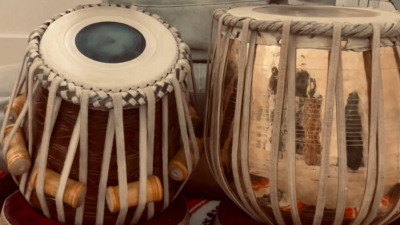
जोड़ी दो लकड़ी के ड्रमों की एक जोड़ी है — 'पूरा' (या चाठू), जो ऊँची, मीठी ट्रेबल ध्वनि देता है, और 'धम्मा', जो गहरी, गूँजती बास ध्वनि देता है। दोनों प्रायः तून (टूनी) की ठोस लकड़ी से तराशे जाते हैं और चमड़े की पुड़ी से मढ़े जाते हैं। तबले से इसका मूल भेद यह है कि धम्मा में स्थायी स्याही (गाब) के स्थान पर हर बार ताज़ा गूँधा हुआ आटा लगाया जाता है, जिससे इसकी ध्वनि तबले से कहीं अधिक गहरी और भारी होती है।
Description English
The jori is a pair of wooden drums — the 'poorra' (or chathoo), which gives a high, sweet treble tone, and the 'dhamma', which gives a deep, booming bass. Both are typically carved from solid tun wood and covered with leather heads. Its fundamental difference from the tabla is that the dhamma uses freshly kneaded wheat-flour dough (atta) applied each time, instead of a permanent black syahi (gab) paste, giving it a far deeper and heavier tone than the tabla.
Drums
Heads
पुड़ी
Pudi (drum head / skin)
Goat or buffalo hide, layered with an outer rim ring (kinaar / gajra) woven from plaited skin
प्रत्येक ड्रम के मुख पर बकरी या भैंस के चमड़े की पुड़ी मढ़ी जाती है। किनारे पर गूँथा हुआ चमड़े का 'गजरा' लगा होता है जो पुड़ी को कसे रखता है और खनकती किनारी-ध्वनि देता है।
Each drum's face is covered with a goat- or buffalo-hide head. A plaited leather rim ring (gajra/kinaar) around the edge holds the head taut and produces the ringing edge tone.
Lacing
तस्मा और गट्टे
Tasma (straps) and gatte (dowels)
पुड़ी को शरीर से चमड़े की लंबी तस्मों से बाँधा जाता है। पूरे के तनाव को लकड़ी के बेलनाकार गट्टों (लकड़ी के गुटके) को ऊपर-नीचे खिसकाकर और हथौड़ी से किनारी ठोककर सुर में मिलाया जाता है।
The heads are bound to the shells with long leather straps (tasma). The poorra's tension is tuned by sliding cylindrical wooden dowels (gatte) up or down and by tapping the rim with a hammer to reach pitch.
Tuning
पूरा को गायक या रबाब के षड्ज (सा) पर मिलाया जाता है; धम्मा बिना निश्चित पिच का गहरा बास देता है, जिसकी गहराई आटे की मात्रा से बदलती है।
The poorra is tuned to the vocalist's or rabab's tonic (Sa); the dhamma provides an unpitched deep bass whose depth is altered by the amount of dough applied.
Dimensions Note Hindi
जोड़ी के दोनों ड्रम तबले से बड़े और ऊँचे होते हैं, जिससे इसकी ध्वनि अधिक भरी और दूर तक जाने वाली होती है।
Dimensions Note English
Both jori drums are larger and taller than tabla drums, giving the instrument a fuller, more carrying sound.
ध्वनि-चरित्र
SoundTonal Character Hindi
जोड़ी की ध्वनि तबले से गहरी, भारी और अधिक गूँजती है। धम्मा का बास वक्ष में महसूस होता है और पूरे की मीठी टेर गुरबानी की धुन को सहारा देती है। खुले हाथ से बजने के कारण इसकी थाप गोल, मुलायम और घनी होती है।
Tonal Character English
The jori's tone is deeper, heavier and more resonant than the tabla's. The dhamma's bass is felt in the chest while the poorra's sweet ring supports the Gurbani melody. Because it is struck with an open hand, its stroke is round, soft and full-bodied.
Timbre
Deep, booming bass (dough-loaded dhamma) against a warm, ringing tuned treble (poorra)
Range
Poorra tuned to the tonic (Sa) of the singer/rabab; dhamma an unpitched deep bass roughly an octave-plus below
Dynamic Range
Wide and powerful — from a soft devotional pulse under kirtan to loud, carrying accompaniment that once filled open congregations without amplification
Techniques
सुनने का मार्गदर्शन
The Listening Guideजोड़ी का रस लेना हो तो किसी शबद-कीर्तन या भाई बलदीप सिंह के जोड़ी-एकल से शुरुआत कीजिए। धम्मा की गहरी 'धम्म' को वक्ष में महसूस कीजिए और पूरे की मीठी टेर को उसके ऊपर सुनिए। तबले की तीखी चोट यहाँ नहीं, बल्कि खुले हाथ की गोल, मुलायम थाप मिलेगी। रबाब के साथ जुगलबंदी में सुनिए कि ताल कैसे शबद को उठाता और थामता है।
अंग्रेज़ी में पढ़ें · Read in English
To appreciate the jori, begin with a shabad kirtan or a jori solo by Bhai Baldeep Singh. Notice how the dhamma's deep 'dhamm' resounds in the chest while the poorra's sweet ring weaves a tuned rhythm above it. Instead of the tabla's sharp strike you will hear the round, soft blow of the open hand. When the jori duets with the rabab's melody, listen to how the rhythm lifts and holds the shabad.
परिचय
Identity- Year Of Origin
- 1600
अन्य विवरण
More Details- Description English
- The poorra is tuned to the vocalist's or rabab's tonic (Sa); the dhamma provides an unpitched deep bass whose depth is altered by the amount of dough applied.
- Description
- पूरा को गायक या रबाब के षड्ज (सा) पर मिलाया जाता है; धम्मा बिना निश्चित पिच का गहरा बास देता है, जिसकी गहराई आटे की मात्रा से बदलती है।
Tuning
Timbre
Deep, booming bass (dough-loaded dhamma) against a warm, ringing tuned treble (poorra)
रोचक तथ्य
Margin Notesअमृतसरी बाज — जोड़ी और पखावज-वादन की एक विशिष्ट शैली 'अमृतसरी बाज' कहलाती है, जो अमृतसर की गुरबाणी परंपरा से जुड़ी है। भाई बलदीप सिंह को आज विश्व में इस बाज का प्रमुख वाहक माना जाता है।
A distinctive style of jori and pakhawaj playing is called the 'Amritsari Baaj', tied to the Gurbani tradition of Amritsar. Bhai Baldeep Singh is today regarded as a prime exponent of this baaj in the world.
खुला हाथ बनाम तबले की चोट — तबले पर तीखी, नुकीली चोट से स्पष्ट ध्वनि निकाली जाती है, जबकि जोड़ी पर खुली, सपाट हथेली की मुलायम गति से गोल और गहरी ध्वनि उत्पन्न होती है। इसी कारण जोड़ी की आवाज़ तबले से भारी और दूर तक जाने वाली होती है।
On the tabla a sharp, pointed strike produces a crisp sound, whereas on the jori a soft motion of the open, flat palm produces a round, deep sound. This is why the jori's voice is heavier and carries farther than the tabla's.
नामधारी परंपरा का संरक्षण — जब मुख्यधारा के कीर्तन में जोड़ी की जगह हारमोनियम और तबला ले रहे थे, तब नामधारी संप्रदाय ने अपनी संगीत परंपरा में जोड़ी और रबाब को जीवित रखा, जिससे यह विरासत आगे बढ़ती रही।
While harmonium and tabla were replacing the jori in mainstream kirtan, the Namdhari sect kept the jori and rabab alive within its music tradition, carrying the heritage forward.
पंजाब का पखावज — जोड़ी को अक्सर 'पंजाब का पखावज' कहा जाता है, क्योंकि इसका पूरा मुहावरा — बोल, परन और थाप — प्राचीन पखावज परंपरा से निकला है, केवल दो अलग ड्रमों में बँटकर।
The jori is often called 'Punjab's pakhawaj', because its entire idiom — bols, parans and stroke — descends from the ancient pakhawaj tradition, only divided into two separate drums.
सवाल-जवाब
Questions & Answersजोड़ी क्या है?
जोड़ी पंजाब का एक दो-ड्रम वाला ताल-वाद्य है, जिसमें 'धम्मा' (बास) और 'पूरा' (ट्रेबल) होते हैं। यह सिख गुरबाणी कीर्तन का पारंपरिक ताल-वाद्य है और इसे 'पंजाब का पखावज' भी कहा जाता है।
जोड़ी और तबले में क्या अंतर है?
जोड़ी तबले से बड़ी और गहरी होती है। इसके बास ड्रम धम्मा पर स्थायी स्याही के बजाय हर बार ताज़ा आटा लगाया जाता है, और इसे खुले, सपाट हाथ की मुलायम गति से बजाया जाता है, जबकि तबले पर तीखी चोट होती है — इससे जोड़ी की ध्वनि अधिक भारी और गूँजती है।
जोड़ी की उत्पत्ति कैसे हुई?
परंपरा के अनुसार जोड़ी की उत्पत्ति पाँचवें सिख गुरु, गुरु अर्जन देव जी के काल में हुई, जब दरबार के रबाबी सत्ता और बलवंड ने प्राचीन पखावज को दो अलग ड्रमों — धम्मा और पूरा — में बाँट दिया।
जोड़ी का उपयोग किस संगीत में होता है?
जोड़ी मुख्यतः सिख गुरबाणी कीर्तन और गुरमत संगीत में प्रयुक्त होती है, जहाँ यह रबाब के साथ जुगलबंदी में शबद की लय को थामती है।
जोड़ी परंपरा को किसने पुनर्जीवित किया?
1947 के विभाजन के बाद जोड़ी लगभग लुप्त हो गई थी। भाई बलदीप सिंह जैसे विद्वान-कलाकारों और नामधारी संप्रदाय ने इसे और रबाब–जोड़ी परंपरा को पुनर्जीवित किया; भाई बलदीप सिंह अमृतसरी बाज के प्रमुख वाहक माने जाते हैं।
नमूना-पट्टी
The Specimen Table| नाम | जोड़ी · Jori |
|---|---|
| अन्य नाम | जोड़ी · जोड़ी (Jodi) · जोड़ही (Jorhi) · धम्मा (Dhamma) · Jori (also: Jodi, Jorhi, Dhamma) |
| उद्गम | 1600 |
| प्रकार | वाद्य · Instruments |
साझा कीजिए · Share this Plate