शास्त्र विंग · वाद्य-पट्टिका · Instrument Plate
इडक्का
Idakka
अन्य नामएडक्का (Edakka) · इडय्क्का (Idaykka / Edaykka) · ഇടയ്ക്ക (मलयालम) · देव वाद्यम् (Deva Vadyam — 'देवताओं का वाद्य')
परिचय
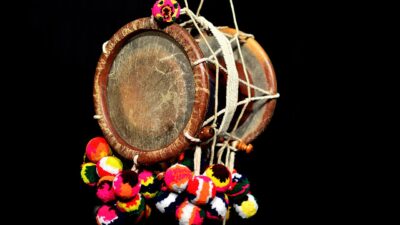
Overviewइडक्का केरल का घड़ीनुमा 'बोलने वाला ढोल' है — कटहल की लकड़ी का खोखला कोश, दोनों ओर चमड़े के मुख, और उन्हें कसती लंबी बद्धियाँ। वादक इसे बाएँ कंधे से लटकाकर दाएँ हाथ की छड़ी से एक मुख पर आघात करता है, और बाएँ हाथ के दबाव से उस स्वर को ऊपर-नीचे मोड़ता है, जिससे यह ढोल होकर भी 'गा' उठता है। सोपानम की सीढ़ियों पर अष्टपदी-गायन की संगत से लेकर पंचवाद्य के भव्य मेलम तक, इडक्का को 'देव वाद्यम्' — देवताओं का वाद्य — कहा गया है।
अंग्रेज़ी में पढ़ें · Read in English
The idakka is Kerala's hourglass 'talking drum' — a hollow jackfruit-wood shell, leather heads at both ends, and long lacing cords drawing them tight. The player hangs it from the left shoulder, strikes one head with a stick in the right hand, and bends that pitch up and down with the pressure of the left hand, so that a drum begins to 'sing'. From accompanying Ashtapadi song on the steps of the sopanam to the grand melam of panchavadyam, the idakka is honoured as a 'deva vadyam' — an instrument of the gods.
वर्गीकरण
ClassificationNatya Shastra Category
अवनद्ध (Avanaddha - covered / membranophone instruments)
अवनद्ध वर्ग में इडक्का चमड़े से मढ़ा हुआ एक घड़ीनुमा (hourglass) अवनद्ध वाद्य है, किंतु यह साधारण ताल-वाद्य नहीं — इसकी बद्धियाँ दबाकर तनाव बदलने से यह स्वर और मींड उत्पन्न करता है, इसलिए इसे 'बोलने वाला ढोल' कहा जाता है।
In the Avanaddha (membranophone) category of Natya Shastra, the idakka is a leather-covered hourglass drum. But it is no ordinary rhythm-drum — by squeezing its lacing to alter head tension, it produces distinct melodic pitches and glides (meend), which is why it is called a 'talking' or 'singing' drum.
Western Category
Hourglass variable-tension pressure drum (talking drum)
Western Family
Hourglass drum family (cognate with the damaru, timila and Tamil udukkai; distant cousin of the West African talking drum in principle of variable tension)
Sub Classification
बनावट
PhysicalDescription Hindi
इडक्का एक घड़ी (hourglass) के आकार का दो-मुखी अवनद्ध वाद्य है जिसका खोखला काष्ठ-कोश बीच में पतला और दोनों सिरों पर चौड़ा होता है। दोनों मुख चमड़े/चर्म से मढ़े होते हैं जो लंबी सूती डोरियों (बद्धियों) से आपस में कसे रहते हैं। वादक इसे बाएँ कंधे से लटकाकर पकड़ता है, दाएँ हाथ की पतली छड़ी से एक मुख पर आघात करता है, और बाएँ हाथ/बाँह से बीच की बद्धियों को दबाकर चर्म का तनाव घटाता-बढ़ाता है — यही दबाव स्वर को ऊपर-नीचे मोड़ देता है।
Description English
The idakka is an hourglass-shaped, two-headed drum whose hollow wooden shell is narrow at the waist and flares to two wide open ends. Both ends are covered with leather/parchment heads that are laced to each other by long cotton cords running the length of the body. The player suspends it from the left shoulder, strikes one head with a thin stick in the right hand, and squeezes the central lacing with the left hand/forearm to slacken or tighten the heads — and it is this pressure that bends the pitch up and down.
Body
Hourglass (twin conical bells joined at a narrow waist)
घड़ीनुमा / डमरू-सदृश (बीच में पतली, दोनों ओर चौड़ी)
Hollowed hardwood shell (traditionally jackfruit wood / plavu)
खोखली दृढ़ काष्ठ का कोश (परंपरागत रूप से कटहल/प्लावु की लकड़ी)
25-35
Twin open-ended wooden cones meeting at the waist; the two membranes and the enclosed air act together as the resonator
Strings
The idakka is a membranophone — it has no melody strings; pitch is produced by pressing the lacing that tensions the drum heads.
None. Tonal shimmer instead comes from small metal bells / brass discs sometimes attached to the lacing cords, and from the twin-membrane resonance.
No drone element; the idakka itself carries the melody in a temple ensemble.
Bow
कोल् (छड़ी)
Kol (playing stick)
Thin curved wooden beater (no bow — the idakka is struck, not bowed)
20-25
Held in the right hand, it strikes a single head; the idakka has no bow
Tuning Pegs
बद्धी / वार् (लेसिंग डोरियाँ)
Braces / lacing cords
In place of pegs, the drum is 'tuned' live by the left hand: squeezing the cotton lacing raises head tension and pitch, releasing it lowers them
Bridge
चर्म-मुख (drumhead)
Membrane heads
Two circular leather heads mounted on wooden hoops wider than the shell mouths; only a smaller inner circle of each head actually vibrates, giving a focused melodic tone
Cured animal skin / parchment on wooden hoops
Frets
इडक्का पर कोई फ्रेट या नियत स्वर-स्थान नहीं होता — वादक कान और बद्धियों के दबाव से हर स्वर, हर मींड सजीव रूप से गढ़ता है, ठीक जैसे गायक अपने कंठ से।
The idakka has no frets or fixed pitch positions — the player sculpts every note and every glide (meend) live, by ear and by lacing pressure, exactly as a singer shapes pitch with the throat.
ध्वनि-चरित्र
SoundTonal Character Hindi
इडक्का की ध्वनि मीठी, नाद-भरी और गायन के सर्वाधिक निकट मानी जाती है — एक ही आघात पर स्वर ऊपर की ओर फिसलता है और मानो कोई कंठ आलाप ले रहा हो। यही कारण है कि इसे 'गाने वाला ढोल' और 'देव वाद्यम्' कहा जाता है।
Tonal Character English
The idakka's tone is sweet, resonant and among the most voice-like of any drum — a single stroke can be made to slide upward as though a throat were taking an alap. This is precisely why it is called the 'singing drum' and 'deva vadyam' (instrument of the gods).
Timbre
Warm, humming, bell-tinged; sustains and bends unlike a fixed-pitch drum
Range
Roughly an octave to an octave-and-a-half of continuously variable pitch, controlled by lacing pressure
Dynamic Range
Soft and intimate in sopanam accompaniment to bright and carrying in temple procession ensembles
Techniques
सुनने का मार्गदर्शन
The Listening Guideइडक्का को सुनना हो तो शुरुआत किसी धीमे सोपानम या अष्टपदी से कीजिए — कान लगाकर सुनिए कि हर आघात एक स्वर है जो ऊपर की ओर फिसलता है, केवल 'धप्' नहीं। फिर एकल थानियावर्थनम् में देखिए कि एक ही ढोल कैसे लय और गायकी दोनों निभाता है। और अंत में पंचवाद्य में सुनिए, जहाँ तिमिला-मद्दलम के गर्जन के बीच इडक्का का मीठा स्वर तैरता है — यही उसकी आत्मा है।
अंग्रेज़ी में पढ़ें · Read in English
To understand the idakka, first hear a slow sopanam or Ashtapadi — notice that each stroke is not a mere thud but a pitch that glides upward. Then hear a solo thaniyavarthanam to catch how a single drum carries rhythm and melody at once. Finally hear it in panchavadyam, where the idakka's sweet tone floats between the timila and maddalam.
श्रवण-कक्ष · The Listening Room
देखें-सुनें
Idakka Unchained #KeralaTourism #Idakka · 1:41
Layavinyasam in Idakka · 11:55
Idakka vismayam | Peringode Subhramayan & party | Part 01 · 31:31
परिचय
Identity- Year Of Origin
- 1200
अन्य विवरण
More DetailsTimbre
Warm, humming, bell-tinged; sustains and bends unlike a fixed-pitch drum
रोचक तथ्य
Margin Notesएक ढोल जो राग गाता है — अधिकांश अवनद्ध वाद्य केवल ताल देते हैं, किंतु इडक्का अपवाद है। बद्धियों के दबाव से चर्म का तनाव बदलकर वादक स्पष्ट स्वर और मींड उत्पन्न करता है, जिससे यह मंदिर-गान की राग-रेखा का अनुसरण कर सकता है — इसीलिए यह विश्व के गिने-चुने 'गाने वाले ढोलों' में है।
Most membranophones give only rhythm, but the idakka is the exception. By changing head tension through lacing pressure, the player produces clear pitches and glides, letting it follow the melodic line of temple song — placing it among the world's very few 'singing drums'.
डमरू से समानता, पर बजने में भिन्न — इडक्का का घड़ीनुमा रूप अखिल-भारतीय डमरू और तमिल उडुक्कै जैसा है, किंतु डमरू गुंथी डोरियों की चोट से बजता है जबकि इडक्का को पतली छड़ी से आघात कर बद्धियों के दबाव से स्वर मोड़े जाते हैं।
The idakka's hourglass form resembles the pan-Indian damaru and the Tamil udukkai, but where the damaru is sounded by knotted cords striking the heads, the idakka is struck with a thin stick while lacing pressure bends the pitch.
पंचवाद्य का स्वर-रंग — केरल के मंदिर-उत्सवों के भव्य पंचवाद्य में तिमिला, मद्दलम, इलत्ताळम और कोम्बु के साथ इडक्का पाँचवाँ वाद्य है — और समवेत लय के बीच यही वह वाद्य है जो मधुर स्वर-रंग जोड़ता है।
In the grand panchavadyam of Kerala's temple festivals, the idakka is the fifth instrument alongside timila, maddalam, ilathalam and kombu — and amid the massed rhythm, it is the one that adds sweet melodic colour.
सोपानम की सीढ़ियों का वाद्य — 'सोपानम' अर्थात् गर्भगृह की सीढ़ियाँ; सोपान-संगीत वहीं गाया जाने वाला भक्ति-गान है, जिसमें जयदेव की अष्टपदियाँ प्रमुख हैं। इडक्का इसी गायन की मुख्य संगत है, जहाँ इसकी मींड गायक की आवाज़ में घुल जाती है।
'Sopanam' means the steps of the sanctum; Sopana Sangeetham is the devotional song performed there, with Jayadeva's Ashtapadis at its core. The idakka is the chief accompaniment to this singing, where its meend melts into the singer's voice.
सवाल-जवाब
Questions & Answersइडक्का क्या है?
इडक्का (एडक्का) केरल का एक घड़ीनुमा दो-मुखी अवनद्ध वाद्य है जिसे 'देव वाद्यम्' कहा जाता है। इसे छड़ी से बजाया जाता है और बद्धियों को दबाकर स्वर मोड़े जाते हैं, इसलिए यह ढोल होकर भी गा सकता है और मंदिर के सोपान-संगीत में मुख्य संगत का काम करता है।
इडक्का को 'बोलने वाला ढोल' क्यों कहते हैं?
क्योंकि इसके दोनों मुख लंबी बद्धियों से कसे होते हैं; वादक बाएँ हाथ से इन बद्धियों का दबाव बदलकर चर्म का तनाव घटाता-बढ़ाता है, जिससे एक ही आघात का स्वर ऊपर-नीचे फिसलता है — मानो कोई कंठ गा रहा हो।
इडक्का किस संगीत परंपरा से जुड़ा है?
इडक्का मुख्यतः केरल की मंदिर-संगीत परंपरा से जुड़ा है — सोपान-संगीत (गर्भगृह की सीढ़ियों पर अष्टपदी-गायन), पंचवाद्य, तथा कथकली, कूडियाट्टम और नंग्यार कूत्तु जैसे शास्त्रीय रंगमंच में।
क्या इडक्का हिंदी फ़िल्म-संगीत में प्रयुक्त होता है?
मुख्यधारा हिंदी फ़िल्म-संगीत में यह विरल है क्योंकि यह विशिष्ट केरलीय मंदिर-वाद्य है। कभी-कभी दक्षिण-भारतीय या आध्यात्मिक परिवेश दर्शाने के लिए इसका उपयोग होता है; मलयालम सिनेमा तथा ए. आर. रहमान जैसे संगीतकारों के प्रयोगों में यह अधिक सुनाई देता है।
इडक्का और डमरू में क्या अंतर है?
दोनों घड़ीनुमा हैं, किंतु डमरू गुंथी डोरियों की चोट से स्वयं बजता है और मुख्यतः ताल देता है, जबकि इडक्का को पतली छड़ी से आघात कर बद्धियों के दबाव से स्वर मोड़े जाते हैं — इसलिए इडक्का राग और मींड दोनों गा सकता है।
नमूना-पट्टी
The Specimen Table| नाम | इडक्का · Idakka |
|---|---|
| अन्य नाम | एडक्का (Edakka) · इडय्क्का (Idaykka / Edaykka) · ഇടയ്ക്ക (मलयालम) · देव वाद्यम् (Deva Vadyam — 'देवताओं का वाद्य') |
| उद्गम | 1200 |
| प्रकार | वाद्य · Instruments |
साझा कीजिए · Share this Plate