शास्त्र विंग · वाद्य-पट्टिका · Instrument Plate
हुड़का
Hurka
अन्य नामहुड़का (Hudka) · हुड़की (Hudki) · हुड़ुक (Huduk) · Huḍkā / Huḍukkā (medieval Sanskrit)
परिचय
Overviewहुड़का कुमाऊँ-गढ़वाल का सबसे प्राणवान लोक-वाद्य है — डमरू जैसा कमरदार, बगल में दबाकर बजने वाला छोटा ढोल, जिसकी बद्धी दबाने से स्वर 'बोल' उठता है। हुड़किया समुदाय इसी पर रातभर जागर लगाता, देवता को नचाता और रोगी को चंगा करता है, और भोर होते ही यही हुड़का हुड़किया बौल बनकर खेतों में धान-रोपाई की सामूहिक लय गढ़ता है।
अंग्रेज़ी में पढ़ें · Read in English
The hurka is the most vital folk instrument of Kumaon-Garhwal — a small, damaru-like waisted drum played clamped under the arm, its lacing squeezed to make the pitch 'speak'. On it the Hurkiya community keeps all-night Jagar vigils, makes the deity dance and heals the afflicted; and by dawn the same hurka becomes the Hudkiya-Baul, shaping the collective rhythm of rice transplantation in the fields.
वर्गीकरण
ClassificationNatya Shastra Category
आवनद्ध (Avanaddha - membranophones / skin-covered drums)
नाट्यशास्त्र के चार वाद्य-वर्गों में हुड़का 'आवनद्ध' (चमड़े से मढ़े ताल-वाद्य) वर्ग में आता है। यह डमरू-कुल का रेत-घड़ी (hourglass) आकार का दाब-वाद्य है, जिसकी दोनों झिल्लियाँ बीच की पतली कमर पर बँधे तस्मों से जुड़ी रहती हैं; कमर दबाने से स्वर बदलता है।
Among the four instrument classes of the Natya Shastra, the hurka belongs to 'Avanaddha' (skin-covered rhythm instruments). It is an hourglass-shaped variable-tension drum of the damaru family, whose two membranes are joined by lacing over a narrow waist; squeezing the waist changes the pitch.
Western Category
Hourglass variable-tension (pressure) drum
Western Family
Talking-drum / hourglass-drum family — a Himalayan cousin of the Kerala idakka, Tamil udukai/udukku and the Shaivite damaru; Hornbostel-Sachs waisted double-headed pressure drum
Sub Classification
बनावट
PhysicalDescription Hindi
हुड़का एक छोटा, हल्का, रेत-घड़ी (डमरू जैसा) आकार का लकड़ी का ढोलक है जिसे एक हाथ की बगल या कंधे के नीचे दबाकर पकड़ा जाता है और दूसरे हाथ की उँगलियों-हथेली से बजाया जाता है। इसकी बीच की पतली 'कमर' पर लिपटे चमड़े के तस्मे दबाने-ढीला करने से झिल्ली का तनाव बदलता है, जिससे स्वर ऊपर-नीचे 'बोलता' है।
Description English
The hurka is a small, light, hourglass-shaped (damaru-like) wooden drum, held clamped under one arm or the shoulder and struck with the fingers and palm of the free hand. Squeezing or releasing the leather lacing wound around its narrow central 'waist' changes the tension of the head, making the pitch bend and 'talk' up and down.
Body
Hourglass / waisted (two conical bells joined at a narrow central waist)
रेत-घड़ी / कमरदार (बीच से पतला, दोनों सिरे चौड़े — डमरू सदृश)
Seasoned hardwood shell, traditionally mango (aam) or Himalayan deodar/cedar; some regional makers use walnut or hollowed sal
पकी हुई कड़ी लकड़ी का खोल — परंपरागत रूप से आम या हिमालयी देवदार; कहीं-कहीं अखरोट या साल की लकड़ी
30-45
Two open conical cavities meeting at the waist; sound is shaped almost entirely by hand-pressure on the lacing rather than a fixed tuning
Heads
2
Both wide ends are covered with tightly stretched membranes
दोनों चौड़े सिरे कसी हुई झिल्ली से मढ़े होते हैं; एक ओर मुख्य वादन-मुख (जिसे उँगलियों से बजाया जाता है)।
Goat or sheep skin (bakri/bhed ki khaal), scraped thin and lashed to hoops
बकरी या भेड़ की पतली छिली हुई खाल, घेरे पर मढ़ी हुई
Traditional hudka membranes were sometimes made from the hide of monkey (bandar/langur) or wild goat — a widely repeated Kumaoni craft memory
Lacing
बद्धी / तस्मे
Baddhi (leather braces)
Interlaced leather thongs / cotton cord running V- or Y-shaped along the waist between the two hoops
दोनों झिल्लियों के घेरों को जोड़ने वाले चमड़े के तस्मे कमर पर लिपटे रहते हैं। बगल में दबाकर इन्हें कसा-ढीला किया जाता है, जिससे स्वर बदलता है — यही हुड़के की 'बोलती' विशेषता है।
Leather thongs linking the two head-hoops are wound over the waist. Pressing them tighter or looser with the arm raises or lowers the pitch — this is the source of the hurka's 'talking' voice.
Playing Position
वादन-मुद्रा
Playing posture
हुड़का बाईं बगल या कंधे के नीचे दबाकर पकड़ा जाता है; दाएँ हाथ की उँगलियों-हथेली से थाप दी जाती है और बाईं बाँह के दबाव से स्वर मोड़ा जाता है। खड़े होकर नाचते-गाते बजाना सामान्य है।
The hurka is clamped under the left arm or shoulder; the right hand strikes with fingers and palm while the left arm's squeeze bends the pitch. It is commonly played standing, while singing and dancing.
Striker
थाप (हाथ) / पतली छड़
Hand (thap) or thin stick
अधिकतर उँगलियों और हथेली से बजाया जाता है; कुछ वादक एक पतली छड़ (कमची) का भी प्रयोग करते हैं।
Usually played with fingers and palm; some players also use a thin cane stick (kamchi).
Tuning Mechanism
हुड़के में कोई स्थायी 'सुर' या खूँटी नहीं होती — स्वर पूरी तरह कमर पर तस्मों के दबाव से नियंत्रित होता है, इसलिए यह ताल के साथ-साथ स्वर-भाव भी व्यक्त कर सकता है।
The hurka has no fixed pitch or pegs — tone is controlled entirely by pressure on the waist lacing, so it can carry both rhythm and expressive pitch inflection at once.
ध्वनि-चरित्र
SoundTonal Character Hindi
हुड़के की ध्वनि तीखी, गूँजदार और 'बोलती' हुई होती है — दबाव से स्वर ऊपर-नीचे फिसलता है, मानो ढोल गा रहा हो। जागर में यह रहस्यमय और उन्मादक लगती है, तो हुड़किया बौल में उत्साह और श्रम-लय भर देती है।
Tonal Character English
The hurka's voice is sharp, resonant and 'talking' — pressure slides the pitch up and down as though the drum were singing. In Jagar it sounds trance-inducing and mysterious; in the Hudkiya-Baul work song it pours out energy and the pulse of collective labour.
Timbre
Dry, punchy attack with a bending, vocal glide (from waist pressure); brighter and higher than a dholak, close in family to the damaru and idakka
Range
No fixed range — a movable pitch-band roughly a fifth wide, bent continuously by hand pressure
Dynamic Range
Wide for its size — from soft narrative undercurrent in Jagar to a driving open-air pulse for hill dances, all without amplification
Techniques
सुनने का मार्गदर्शन
The Listening Guideहुड़के का रस लेना हो तो पहले एक जागर सुनिए — धीमी लय कैसे धीरे-धीरे उन्माद तक चढ़ती है, और वाद्य कैसे गायक की आवाज़ के साथ 'बात' करता है, यह देखिए। फिर हुड़किया बौल सुनिए, जहाँ वही हुड़का खेतों की श्रम-लय बुनता है। हर थाप में स्वर का मुड़ना — कमर-दाब की जादूगरी — पर कान लगाइए।
अंग्रेज़ी में पढ़ें · Read in English
To understand the hurka, first listen to a Jagar — notice how a slow pulse climbs gradually to a trance and how the drum 'converses' with the singer's voice. Then hear a Hudkiya-Baul, where the same instrument weaves the rising-falling rhythm of labour. Listen for how every stroke bends in pitch — that is the magic of the waist-squeeze.
परिचय
Identity- Year Of Origin
- 1200
अन्य विवरण
More DetailsTimbre
Dry, punchy attack with a bending, vocal glide (from waist pressure); brighter and higher than a dholak, close in family to the damaru and idakka
रोचक तथ्य
Margin Notesवाद्य से बना समुदाय — कुमाऊँ में 'हुड़किया' एक वंशगत कलाकार-समुदाय है जिसका नाम हुड़का वाद्य से आया। ये लोग जागर के जगरिया, कथा-वाचक और उपचारक — सब भूमिकाएँ एक साथ निभाते हैं।
In Kumaon the 'Hurkiya' are a hereditary performer community named after the hurka drum. They serve simultaneously as jagariya (ritual narrators), epic reciters and healers.
जागर: संगीत जो चंगा करता है — जागर एक रात्रि-अनुष्ठान है जिसमें हुड़के की लय पर देवता का 'अवतरण' माध्यम (धामी/डंगरिया) पर होता है और वह भक्तों की समस्याओं का समाधान बताता है — यहाँ हुड़का ताल-वाद्य से बढ़कर एक अनुष्ठानिक-चिकित्सकीय यंत्र बन जाता है।
Jagar is an all-night ritual in which, on the hurka's rhythm, a deity 'descends' upon a medium (dhami/dangariya) who then addresses devotees' troubles — here the hurka becomes more than a rhythm drum: a ritual-therapeutic device.
डमरू का हिमालयी भाई — रूप में हुड़का शिव के डमरू का बड़ा भाई है और मध्ययुगीन संस्कृत ग्रंथों के 'हुड़ुक्का' का सीधा वंशज। दक्षिण भारत के इडक्का-उडुक्कै इसके सगोत्र हैं — पूरे भारत में फैला एक ही दाब-वाद्य परिवार।
In form the hurka is a big brother to Shiva's damaru and a direct descendant of the 'huḍukkā' of medieval Sanskrit texts. South India's idakka and udukai are its cousins — one pressure-drum family spread across the whole subcontinent.
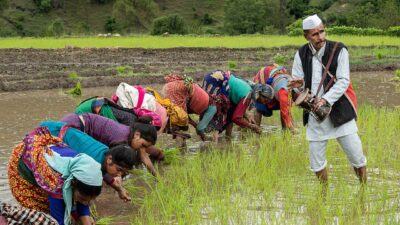
खेत में उतरी लय — हुड़किया बौल में हुड़का वादक और गायक खेत में खड़े होकर श्रमिकों को लय देते हैं; धान की रोपाई का कठिन काम एक सामूहिक नृत्य-गीत में बदल जाता है। विकिमीडिया कॉमन्स की 'हुड़किया बौल' तस्वीर इसी परंपरा को दर्शाती है।
In the Hudkiya-Baul the hurka player and singer stand in the field giving rhythm to the workers; the hard labour of transplanting rice turns into a communal dance-song. The Wikimedia Commons image 'Hudkia Bol' depicts exactly this tradition.
सवाल-जवाब
Questions & Answersहुड़का क्या है?
हुड़का (हुड़की/हुड़का) उत्तराखंड के कुमाऊँ-गढ़वाल का एक रेत-घड़ी आकार का लकड़ी का दाब-ढोल है, जिसे बगल में दबाकर और उँगलियों से बजाया जाता है। कमर पर बँधे तस्मों को दबाने से इसका स्वर बदलता है। यह जागर अनुष्ठान और हुड़किया बौल श्रम-गीत का प्रमुख लोक-वाद्य है।
हुड़का किस वर्ग का वाद्य है?
हुड़का एक आवनद्ध (चमड़े से मढ़ा ताल) वाद्य है — एक दोमुखी, कमरदार दाब-ढोल जो डमरू, इडक्का और उडुक्कै के परिवार का है। इसका स्वर स्थायी नहीं होता, बल्कि कमर के दबाव से नियंत्रित होता है।
जागर में हुड़के की क्या भूमिका है?
जागर एक रात्रि-अनुष्ठान है जिसमें हुड़किया/जगरिया हुड़के की चढ़ती लय पर देव-गाथा गाता है; इसी लय पर माध्यम (धामी) पर देवता का 'अवतरण' होता है और वह भक्तों की समस्याओं का समाधान बताता है। यहाँ हुड़का ताल के साथ-साथ अनुष्ठानिक-उपचारकीय भूमिका निभाता है।
हुड़किया बौल क्या है?
हुड़किया बौल कुमाऊँ की एक कृषि-परंपरा है जिसमें खेतों में धान की रोपाई करते समय हुड़का वादक और गायक श्रमिकों को लय देते हैं। पूरा दल हुड़के की लय पर एक साथ काम करता है, जिससे कठिन श्रम एक सामूहिक नृत्य-गीत बन जाता है।
हुड़का किस चीज़ से बनता है?
हुड़के का खोल पकी हुई कड़ी लकड़ी (आम या देवदार) से रेत-घड़ी आकार में बनता है, और इसके दोनों चौड़े सिरे बकरी या भेड़ की खाल से मढ़े जाते हैं। झिल्लियों को जोड़ने वाले चमड़े के तस्मे कमर पर लिपटे रहते हैं, जिन्हें दबाकर स्वर बदला जाता है।
नमूना-पट्टी
The Specimen Table| नाम | हुड़का · Hurka |
|---|---|
| अन्य नाम | हुड़का (Hudka) · हुड़की (Hudki) · हुड़ुक (Huduk) · Huḍkā / Huḍukkā (medieval Sanskrit) |
| उद्गम | 1200 |
| प्रकार | वाद्य · Instruments |
साझा कीजिए · Share this Plate