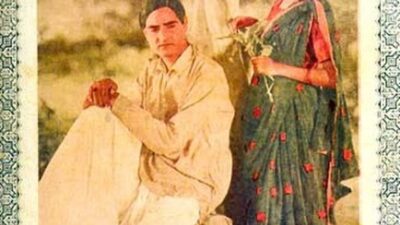
गीत विंग · गीत-पट्टिका · Song Plate
ये जी चाहता
Ye Jee Chahta
ये जी चाहता है — 1941 की फ़िल्म मासूम से एक रोमांटिक गीत।
भावरोमांटिक · Yearning
भाषाhindi-urdu स्वरूपUnknown
श्रेय
The Creditsसूत्र-वाक्य · The Hook
सूत्र-वाक्य
ये जी चाहता है — 1941 की फ़िल्म मासूम से एक रोमांटिक गीत।
In EnglishThe heart desires — a romantic lyric from the 1941 film Masoom.
पट्टिका-लेख
The Monographपरिचय Overview
1941 की सामाजिक फ़िल्म मासूम का एक गीत, संगीत मुंशी मुबारक हुसैन। शीर्षक — 'ये जी चाहता' — एक रोमांटिक या लालसा-भरे स्वर की ओर संकेत करता है। फ़िल्म की शेष संगीत-पट्टी की तरह मूल रिकॉर्डिंग अब दुर्लभ है और इस गीत का गायक प्रचलित सूचियों में दर्ज नहीं है।
अंग्रेज़ी में पढ़ें · Read in English
A song from the 1941 social drama Masoom, set to music by Munshi Mubarak Hussain. The title — 'this heart desires' — points to a romantic or longing register. As with the rest of the film's soundtrack, the original recording is now scarce and the singer for this number is not documented in the standard catalogues.
काव्य The Poetry
आरज़ू लखनवी (1873–1951) उर्दू के उन विरल कवियों में से थे जिन्होंने बीसवीं सदी में सबसे अधिक रचनाएँ कीं—सात दीवानों में लगभग पच्चीस हज़ार ग़ज़लें लिखीं। उनकी साहित्यिक प्रतिज्ञा यह थी कि वे उर्दू को अरबी और फ़ारसी के बोझ से मुक्त रखेंगे—एक सीधा रास्ता, लेकिन ग़ज़ल के औपचारिक ढाँचे के भीतर। 'ये जी चाहता' इसी सीधेपन का उदाहरण है। 'जी चाहता' उर्दू-हिंदी के रोज़मर्रा के मुहावरे में दिल की उस अनियंत्रित, बेनाम चाहत को कहते हैं जिसे तर्क और सामाजिक मर्यादा रोक नहीं पाते। ग़ज़ल में यह 'जी' या 'दिल' एक स्वायत्त पात्र है—वह जो चाहता है वह माँग सकता नहीं, पाना मुश्किल है, पर चाहना रोकना असंभव है। आरज़ू के गीतों में यह इच्छा अधूरी बात, इशारे, या अनकहे सवाल के रूप में आती है—सीधा स्वीकार नहीं, बल्कि एक भावनात्मक व्याकुलता जिसे श्रोता खुद अपने जीवन पर आरोपित कर सकें। यह उर्दू गीत की वह शक्ति है जो शब्दों से नहीं, उनके बीच की ख़ामोशी से बोलती है।
अंग्रेज़ी में पढ़ें · Read in English
Arzoo Lakhnavi (1873–1951), who wrote the lyrics for Masoom (1941), was among the most prolific and formally accomplished Urdu poets of the twentieth century—a man who authored approximately twenty-five thousand ghazals across seven published diwans with titles like Fughan-e-Arzoo and Jahan-e-Arzoo. His literary philosophy, as he articulated it himself, was to choose a straighter path: to write in Urdu without reaching for Arabic or Persian borrowings, even though he had mastered both. This plainness within the ghazal's formal structure—the radif, the maqta, the matla—was his signature. The title phrase 'ye jee chahta' belongs to an idiom deeply embedded in Urdu romantic speech: the heart (jee, dil) as an autonomous subject with its own wilful desires, desires that the rational self cannot govern. In formal Urdu poetry, the heart's desires are always excessive, always threatening propriety. In the film lyric, this excess is contained and safely expressed through music. Arzoo's lyric likely structured this longing as a series of conditional or incomplete statements—what the heart wants but cannot state plainly—using the ghazal convention of implication over declaration.
कहानी The Story
मासूम (1941), जिसे सिबतैन फ़ज़ली और एस. एफ. हसनैन ने निर्देशित किया था, भारतीय सिनेमा इतिहास में 'भारत का पहला मुस्लिम सोशल' के रूप में विज्ञापित हुई थी—यह नामकरण बॉम्बे के उस दौर की बढ़ती रुचि को दर्शाता है जब सिनेमा मुस्लिम समुदाय की कहानियों को केंद्र में लाने लगा था। फ़िल्म में अमजद, रमोला, माज़हर ख़ान, महताब, अनीस और ख्वाजा सबीर ने अभिनय किया और यह सामाजिक नाटक शैली की उन फ़िल्मों में थी जो प्रेम, मर्यादा और सामाजिक दायित्व के इर्द-गिर्द बुनी जाती थीं। संगीतकार मुंशी मुबारक हुसैन ने फ़िल्म के नौ गीत रचे, जो उर्दू साहित्यिक परंपरा में डूबे हुए थे—उनके और गीतकार आरज़ू लखनवी के साझे सांस्कृतिक संसार की देन। 'ये जी चाहता' एक अधूरी चाहत और अनकहे आकर्षण की अभिव्यक्ति है—उर्दू फ़िल्मी गीत की वह शैली जिसमें प्रेम को सीधे नहीं, बल्कि एक ठहरी हुई, भावना-भरी दूरी से देखा जाता है। इस गीत की रिकॉर्डिंग के बारे में कोई समकालीन दस्तावेज़ उपलब्ध नहीं है, लेकिन यह नौ-गीत संगीत-पट्टी का अभिन्न हिस्सा रहा होगा।
अंग्रेज़ी में पढ़ें · Read in English
Masoom (1941), directed by Sibtain Fazli and S.F. Hasnain, was marketed on Indian Screen as 'India's First Muslim Social'—a designation that placed it at the centre of the period's growing interest in Muslim community narratives within Bombay cinema. The film starred Amjad, Ramola, Mazhar Khan, Mahtab, Anees, and Khwaja Sabir, covering themes of romance, respectability, and social obligation that characterised the social-drama genre of the early 1940s. Munshi Mubarak Hussain, the composer, scored nine songs for the production, all of them shaped by the Urdu literary culture both he and lyricist Arzoo Lakhnavi shared. 'Ye Jee Chahta'—this heart desires—takes its emotional cue from the Urdu-language film's core concern: romantic longing filtered through the codes of community propriety. No contemporary production records have been traced that document the recording circumstances of this specific track, but its placement within a nine-song Urdu-inflected soundtrack indicates that it served the film's romantic narrative as an expression of unfulfilled or aspired-to desire—a mode central to the social drama of the period.
वर्गीकरण
ClassificationGenre
अन्य विवरण
More Details- https://www.hindigeetmala.net/movie/masoom_1941.htm
- https://en.wikipedia.org/wiki/Arzoo_Lakhnavi
- https://clarionindia.net/arzoo-lakhnavi-master-poet-who-wove-hindustani-poetry-with-hindi-film-songs/
References
रोचक तथ्य
Margin Notesमासूम (1941) को इंडियन स्क्रीन पर 'भारत की पहली मुस्लिम सामाजिक फ़िल्म' के रूप में विपणित किया गया था, जो एक व्यावसायिक विशिष्टता थी और फ़िल्म उद्योग की समुदाय-विशिष्ट कथात्मक फ़िल्मों में बढ़ती रुचि को दर्शाती थी।
अंग्रेज़ी में पढ़ें · Read in English
Masoom (1941) was marketed on Indian Screen as 'India's First Muslim Social,' a commercial distinction that reflected the film industry's growing interest in community-specific narrative films.
गीतकार आरज़ू लखनवी ने पचास वर्षों से अधिक के करियर में सात प्रकाशित दीवानों में लगभग पच्चीस हज़ार ग़ज़लें रचीं, जिससे वे हिंदी फ़िल्म उद्योग के लिए लिखने वाले सबसे विपुल उर्दू कवियों में से एक बन गए।
अंग्रेज़ी में पढ़ें · Read in English
Lyricist Arzoo Lakhnavi authored approximately twenty-five thousand ghazals across seven published diwans over a career spanning more than fifty years, making him one of the most prolific Urdu poets to write for the Hindi film industry.
मुंशी मुबारक हुसैन ने मासूम (1941) के लिए नौ गीत रचे, जिनमें आरज़ू लखनवी के मौलिक बोल और मिर्ज़ा ग़ालिब की एक प्रसिद्ध ग़ज़ल दोनों की स्वरबद्धता शामिल थी — जिससे एक ही साउंडट्रैक में सत्तर वर्षों की उर्दू साहित्यिक परंपरा समाहित हो गई।
अंग्रेज़ी में पढ़ें · Read in English
Munshi Mubarak Hussain composed nine songs for Masoom (1941), including settings of both Arzoo Lakhnavi's original lyrics and a famous ghazal by Mirza Ghalib—spanning seventy years of Urdu literary tradition within a single soundtrack.
नमूना-पट्टी
The Specimen Table| शीर्षक | ये जी चाहता · Ye Jee Chahta |
|---|---|
| फ़िल्म | मासूम · 1941 |
| वर्ष · युग | 1941 |
| संगीतकार | Munshi Mubarak Hussain |
| स्वरूप | Unknown |
| भाषा | hindi-urdu |
| भाव | रोमांटिक · Yearning |
| लोकप्रियता | Obscure |
| बोल-स्थिति | केवल झलक |
जुड़े हुए पन्ने
Connected Plates · The Graph Made Visibleअटलस में कोई पन्ना अकेला नहीं — इस गीत से जुड़े गीत, कलाकार, फ़िल्म, राग-ताल-विधा, सब यहाँ से खुलते हैं।
कलाकार · The Artists
फ़िल्म · The Film
साझा कीजिए · Share this Plate